


 Top Rated Course

We may not have the course you’re looking for. If you enquire or give us a call on +45 89870423 and speak to our training experts, we may still be able to help with your training requirements.
What is ISO 26000 Standard and Why It Matters?
The Knowledge Academy 12 February 2026ISO 26000 is an international guidance standard for social responsibility that helps organisations operate ethically and support sustainable development. It guides responsible behaviour by assessing impacts on society, the environment, and stakeholders, helping organisations promote transparency, human rights, and sustainability.

Training Outcomes Within Your Budget!
We ensure quality, budget-alignment, and timely delivery by our expert instructors.
Table of Contents

Ever wondered how organisations can go beyond profit and truly make a difference to society and the environment? This is where ISO 26000 comes in. Developed by the International Organization for Standardization (ISO), this globally recognised guidance standard supports organisations in adopting ethical, transparent, and sustainable practices in their everyday operations.
Its influence is undeniable. ISO 26000 has been adopted as a national standard in nearly 88 countries, shaping responsible business behaviour across the globe. In this blog, we will discuss What is ISO 26000 is, explore its core principles and objectives, and show how it can help organisations drive meaningful and lasting change. Read on to learn more.
Table of Contents
1) What is ISO 26000?
2) Objective of ISO 26000 Standard
3) Core Principles of ISO 26000
4) Seven Core Subjects of ISO 26000
5) Implementing ISO 26000 in Your Organisation
6) Benefits of Implementing ISO 26000
7) Challenges and Criticisms of ISO 26000
8) Does ISO 26000 Cover Supply Chain Responsibility?
9) How Often Should ISO 26000 Practices be Reviewed
10) Conclusion
What is ISO 26000?
The International Organization for Standardization (ISO) established ISO 26000 to offer advice on social responsibilities for businesses. However, ISO 26000 can’t be certified like other ISO standards as it aims to provide a voluntary framework for social work. It has seven core subjects that help organisations or businesses to act upon principles related to social responsibilities.
The subjects covered include anti-corruption, human rights, environment, and labour practices. By obeying ISO 26000, organisations can showcase their dedication to the environment. Thus, enhancing overall well-being and sustainable development practices.
Objectives of ISO 26000 Standard
To understand What is ISO 26000 standard, let’s look at its key objectives:
1) Promote Social Responsibility: Helping organisations align their activities with ethical, social, and environmental considerations.
2) Support Sustainable Development: Acting as a practical guide on responsible business practices.
3) Provides Universal Guidance: The standard is applicable to organisations of all sizes, industries, and locations.
4) Reflects Global Consensus: Developed by over 500 experts and adopted as a national standard by most countries worldwide.
5) Offer Guidance: Offers examples and guidance rather than compliance requirements, as ISO 26000 is not a certifiable standard.
Core Principles of ISO 26000
To grasp the essence of What is ISO 26000, it's crucial to understand its seven core principles, which form the foundation of Socially Responsible Investment and Behaviour.
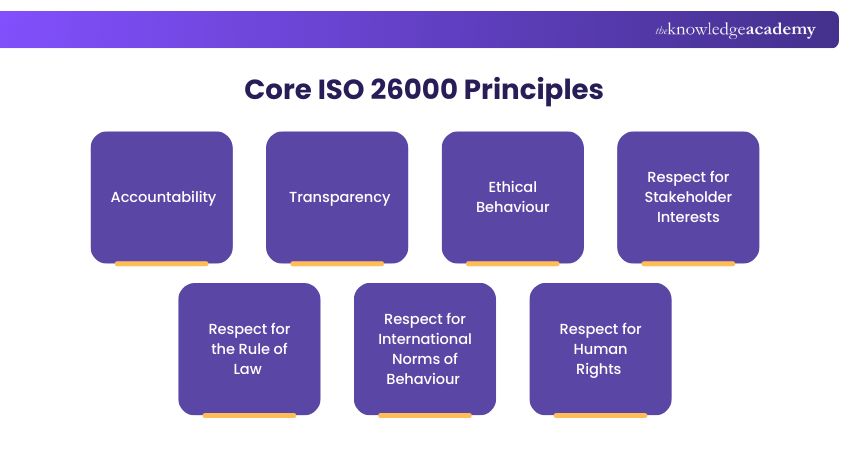
1) Accountability
Businesses can show accountability by setting up clear channels for reporting, evaluating, and addressing their social and environmental impacts. Regular audits and transparent reporting mechanisms are key to maintaining accountability.
2) Transparency
Openly sharing policies, practices, and performance indicators builds trust with stakeholders. This includes disclosing information about environmental practices, labour conditions, and community engagement efforts.
3) Ethical Behaviour
Upholding ethical standards means adhering to fair labour practices, fighting corruption, and ensuring product safety and integrity. Businesses should incorporate ethical considerations into their decision-making processes and the management of their supply chains.
4) Respect for Stakeholder Interests
Engaging with stakeholders helps businesses understand and address their diverse needs and concerns. This involves involving stakeholders in decision-making processes and actively seeking their feedback.
5) Respect for the Rule of Law
Compliance with local and international laws and regulations is essential for maintaining legitimacy and minimising legal risks. Businesses must ensure their operations align with relevant legal frameworks and standards.
6) Respect for International Norms of Behaviour
Embracing global standards and best practices promotes consistency and coherence in social responsibility efforts. Businesses can participate in industry initiatives and adhere to international guidelines to demonstrate their commitment to global norms.
7) Respect for Human Rights
Protecting and promoting human rights across all business activities is paramount. This includes ensuring fair treatment of employees, safeguarding against discrimination, and respecting the rights of communities affected by business operations.
Build strong ethical foundations and understand social responsibility clearly with ISO 26000 Foundation Training today!
Seven Core Subjects of ISO 26000
ISO 26000 provides a roadmap for businesses to navigate the complexities of social responsibility through seven ISO 26000 Core subjects:
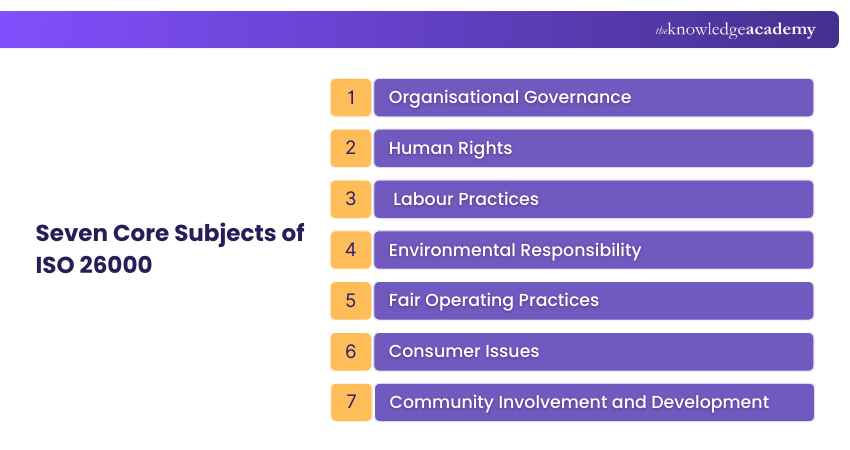
1) Organisational Governance
Organisational governance involves the systems and processes by which decisions are made to achieve objectives. Ethical leadership, transparency, and accountability are crucial. For instance, Patagonia exemplifies this by openly communicating its values and ensuring clear accountability.
2) Human Rights
Respecting human rights is fundamental. There are two main categories:
a) Civil and Political Rights: Including the rights to life, liberty, equal treatment under the law, and freedom of expression.
b) Economic, Social, and Cultural Rights: Including the right to work, food, health, education, and social security.
Conducting due diligence to identify human rights risks and addressing grievances is essential. Microsoft's human rights policies serve as a good example.
3) Labour Practices
Labour practices cover all policies related to work, including recruitment, promotion, training, health, and safety. Fair wages and safe working conditions are emphasised. IKEA's "People & Planet Positive" strategy promotes fair labour practices and employee well-being.
4) Environmental Responsibility
Minimising environmental footprints is key, which involves reducing pollution, conserving resources, and mitigating climate change. Tesla's commitment to sustainable energy through electric vehicles and renewable energy products sets a strong example.
5) Fair Operating Practices
Ethical business conduct builds trust and ensures long-term success. This includes preventing corruption, ensuring fair competition, and responsible marketing. The Body Shop's ethical sourcing and fair-trade practices are noteworthy.
6) Consumer Issues
Protecting consumers is vital for building trust and loyalty. This includes providing accurate product information, fair labelling, and responsive customer service. TOMS Shoes' "One for One" model, donating shoes for every pair purchased, highlights consumer-focused social impact.
7) Community Involvement and Development
Organisations should engage in philanthropy, volunteerism, and community development to contribute to societal well-being. Unilever's Sustainable Living Plan demonstrates active community engagement and development efforts.
Implementing ISO 26000 in Your Organisation
Incorporating ISO 26000 requires a systematic process of integrating social responsibility into an organisation's fundamental activities. The following are essential steps to lead the implementation process:
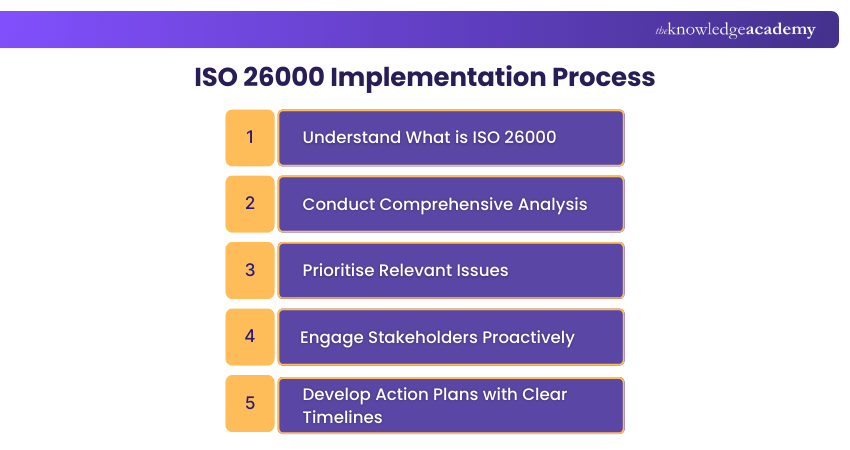
1) Understand What is ISO 26000
To ensure everyone thoroughly understands ISO 26000, it’s essential to use engaging online resources and training courses that actively involve managers and employees. This could include interactive online modules and workshops to ensure a solid grasp of the principles.
2) Conduct Comprehensive Analysis
For a comprehensive analysis of your organisation's status across the seven core subjects of ISO 26000, you should involve both internal and external experts to ensure a thorough assessment. Collecting data through surveys, interviews, and site visits will provide a detailed understanding.
3) Prioritise Relevant Issues
Recognise and rank social responsibility concerns that are most appropriate to your company. This includes understanding activities particularly related to social, environmental, and economic. Focusing on the key issues allows for the efficient allocation of resources and impactful results.
4) Engage Stakeholders Proactively
To understand stakeholder's needs and concerns, organisations are required to engage with them. This can be done by conducting surveys, facilitating groups, and participating directly in discussions. Stakeholder engagement ensures that your social responsibility is aligned with the needs and interests of those affected by your actions.
5) Develop Action Plans with Clear Timelines
Create strategies to fill the gaps that have been identified and enhance your social responsibility practices. These plans need to have defined goals, concrete steps, designated individuals, and set execution schedules. Clear action plans can ensure that social responsibility initiatives are structured and measurable.
Lead with purpose and responsibility with Corporate Social Responsibility CSR Training – Join now!
Benefits of Implementing
ISO 26000 Certification Let’s explore the practical and strategic benefits it brings for organisations committed to social responsibility:
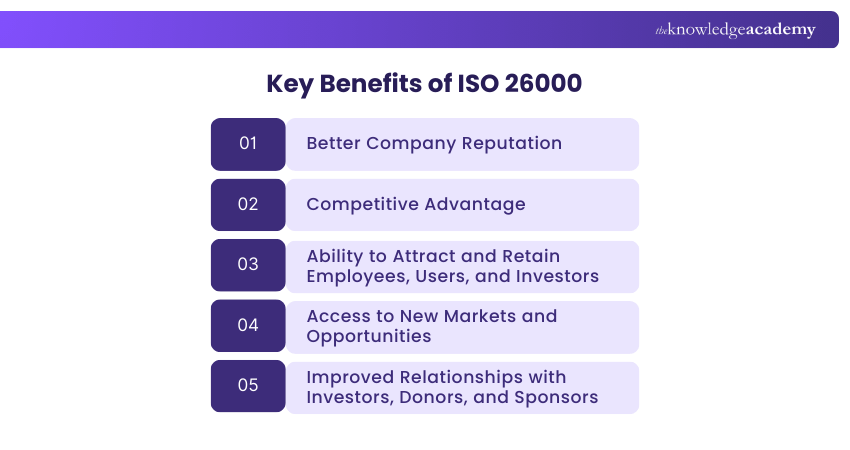
1) Better Company Reputation
ISO 26000 shows that an organisation operates with values beyond making a profit. This helps to build trust and credibility with customers, stakeholders, and the wider public, leading to a better company reputation.
2) Competitive Advantage
Demonstrating a transparent commitment to ethical and socially responsible practices helps organisations to stand out in the highly competitive market. This differentiation can influence purchasing decisions and long-term partnerships.
3) Ability to Attract and Retain Employees, Users, and Investors
Socially responsible organisations create a positive appeal amongst employees, users, and investors. This leads to higher employee retention and promotes a strong customer loyalty across the organisation.
4) Access to New Markets and Opportunities
Many governments and industries prefer working with ethically and socially responsible organisations. This helps to create growth and partnership opportunities, fostering a sense of motivation and engagement amongst the employees.
5) Improved Relationships with Investors, Donors, and Sponsors
A strong focus on sustainable and ethically responsible practices makes organisations more attractive to investors, donors, and sponsors. It increases the eligibility for ethical funding and collaboration opportunities.
Challenges and Criticisms of ISO 26000
Although ISO 26000 has advantages, it has met certain obstacles and received criticism. Have a look here:
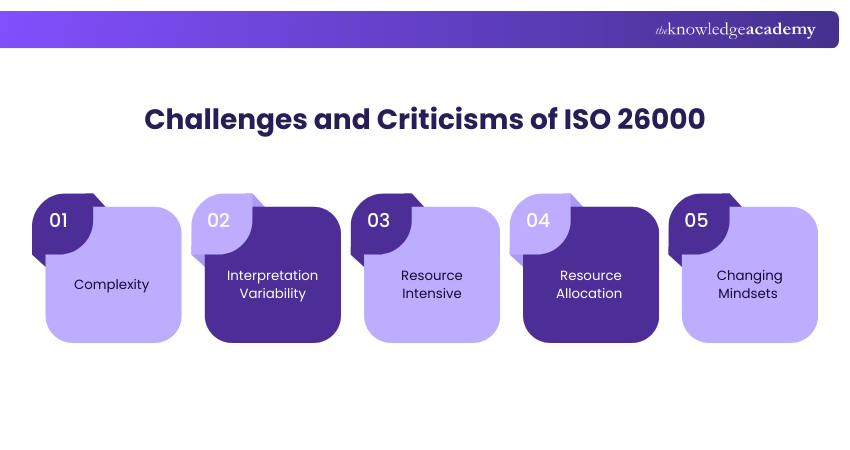
1) Complexity
Some small and medium-sized enterprises may find the extensive scope of ISO 26000 too much to handle. This can make prioritising and implementing recommended practices more challenging.
2) Interpretation Variability
Various organisations may interpret and apply the guidelines in various ways, resulting in dissimilarities in social responsibility practices. This leads to inconsistency in social responsibility practices across industries.
3) Resource Intensive
Some organisations may need more support to implement ISO 26000 due to the need for substantial resources, such as time, money, and expertise. Smaller organisations may struggle to commit necessary resources without external support.
4) Resource Allocation
Implementing ISO 26000 requires significant resources, including time, skilled employees, and financial investments. This means organisations need to allocate budget for training, process changes, and stakeholder engagement.
5) Changing Mindsets
Adopting social responsibility creates a cultural shift in the organisation. Encouraging employees and leaders to embrace ethical and socially responsible values can be challenging if profit-driven mindset is deeply embedded.
Take your auditing skills to a professional level with ISO 9001 Internal Auditor Training. Start now!
Does ISO 26000 Cover Supply Chain Responsibility?
Yes, ISO 26000 does cover supply chain responsibility. It is covered through guiding organisations to assess supplier practices, set ethical policies, monitor compliance, and collaborate with suppliers. This reduces social and environmental risks while building a resilient and responsible supply chain.
How Often Should ISO 26000 Practices be Reviewed?
ISO 26000 practices should be reviewed regularly, most often annually or semi-annually. Also, whenever significant organisational, regulatory, or stakeholder changes occur, ensure continued relevance and improvement.
Conclusion
Understanding What is ISO 26000 is about recognising the role organisations play in creating a fair and sustainable world. Embedding social responsibility into everyday business operations helps to build trust, strengthen stakeholder relationships, and create long-term value. This is a practical roadmap fostering responsible growth and leading with integrity to make a positive impact on society.
Lead with social responsibility and build ethical business practices with ISO 26000 Training – Join today!
Frequently Asked Questions
Is ISO 26000 Mandatory?

ISO 26000 is not mandatory. It serves as a voluntary guidance standard to help organisations adopt socially responsible practices. Unlike other ISO standards, it cannot be used for certification and does not impose requirements but instead provides flexible guidelines for ethical operations.
Is Third-party Auditing Required for ISO 26000?
ISO 26000 is a guidance standard, not a certifiable management system. This means it does not require a formal third-party audit for certification. Organisations can choose to have an independent assessment.
What are the Other Resources and Offers Provided by The Knowledge Academy?
The Knowledge Academy takes global learning to new heights, offering over 3,000+ online courses across 490+ locations in 190+ countries. This expansive reach ensures accessibility and convenience for learners worldwide.
Alongside our diverse Online Course Catalogue, encompassing 19 major categories, we go the extra mile by providing a plethora of free educational Online Resources like Blogs, eBooks, Interview Questions and Videos. Tailoring learning experiences further, professionals can unlock greater value through a wide range of special discounts, seasonal deals, and Exclusive Offers.
What is The Knowledge Pass, and How Does it Work?
The Knowledge Academy’s Knowledge Pass, a prepaid voucher, adds another layer of flexibility, allowing course bookings over a 12-month period. Join us on a journey where education knows no bounds.
What are the Related Courses and Blogs Provided by The Knowledge Academy?
The Knowledge Academy offers various ISO 26000 Training, including the ISO 26000 Social Responsibility Training and ISO 26000 Foundation Training. These courses cater to different skill levels and provide comprehensive insights into Types of Corporate Social Responsibility.
Our Health & Safety Blogs cover a range of topics related to ISO 26000, offering valuable resources, best practices, and industry insights. Whether you are a beginner or looking to advance your Social Responsibility skills, The Knowledge Academy's diverse courses and informative blogs have got you covered.

The Knowledge Academy


Global Training Provider
The Knowledge Academy is a world-leading provider of professional training courses, offering globally recognised qualifications across a wide range of subjects. With expert trainers, up-to-date course material, and flexible learning options, we aim to empower professionals and organisations to achieve their goals through continuous learning.

Upcoming Health & Safety Resources Batches & Dates
Date
 ISO 26000 Foundation Training
ISO 26000 Foundation Training
Fri 16th Oct 2026
ISO 26000 Foundation Training
Fri 18th Dec 2026

 If you wish to make any changes to your course, please


