


 Top Rated Course

We may not have the course you’re looking for. If you enquire or give us a call on +45 89870423 and speak to our training experts, we may still be able to help with your training requirements.
Types of Leadership Styles: A Complete Guide
Elizabeth Clark 14 July 2026Leadership Styles are methods managers use to guide teams, including transformational, transactional, autocratic, democratic, and laissez-faire approaches. These styles influence team behaviour and decision-making, shaping overall performance. Understanding them helps leaders adapt effectively and achieve better results.

Training Outcomes Within Your Budget!
We ensure quality, budget-alignment, and timely delivery by our expert instructors.
Table of Contents

Ever had a manager who made work feel exciting, clear, and easy to follow, while another left you confused and unmotivated? That difference often comes down to how they lead. Understanding the Types of Leadership Styles helps you see what truly drives team success. It also shows why the right approach can completely change how a team performs.
In today’s fast-paced workplace, one approach does not fit every situation. This blog explores the importance of Leadership Styles and different approaches, helping you choose the right one and build a more productive, motivated team.
Table of Contents
1) A Brief Introduction to Leadership
2) Different Types of Leadership Styles
3) How Do You Develop Your Own Leadership Style?
4) Importance of Knowing Your Leadership Style
5) Which Leadership Style is the Best?
6) How to Find Your Leadership Style?
7) Conclusion
A Brief Introduction to Leadership
Leadership is the ability to motivate, influence, and empower individuals or teams to achieve shared goals. It goes beyond simple authority, focusing on guiding others, building trust, and helping team members reach their full potential. Effective leadership is practical, develops people, and can be demonstrated at any level, regardless of formal position.
To lead effectively, it is important to understand different Leadership Styles, each with its own strengths and challenges. Democratic Leadership encourages collaboration, autocratic leadership supports quick decisions, and Laissez-faire Leadership allows greater independence. Strong leaders adapt their approach to suit their teams and organisational needs, creating a positive and productive environment.

Different Types of Leadership Styles
Leadership is a multifaceted concept encompassing various approaches to lead and influence individuals or groups towards achieving common goals. These Leadership Styles highlight how leaders guide teams in different ways. Let’s delve into some prominent leadership types:
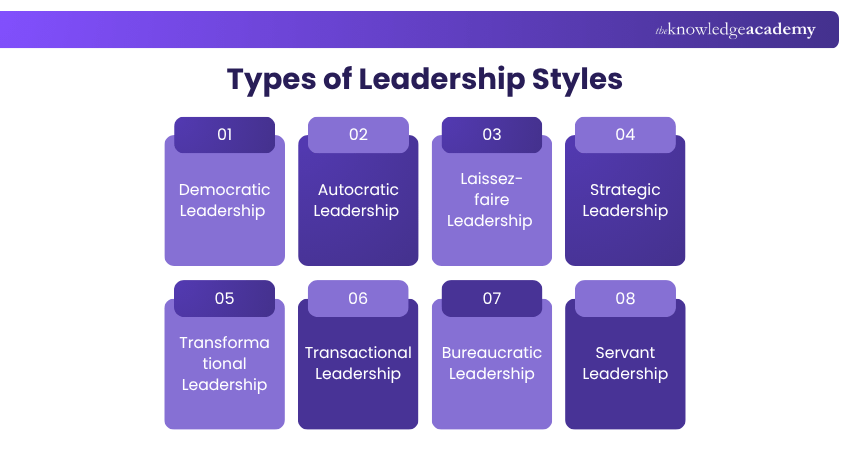
1) Democratic Leadership
Democratic Leadership involves team members in decision-making and encourages open communication across all levels. Among the Types of Leadership Styles, this approach values ideas, feedback, and collaboration, helping build trust, improve engagement, and create shared responsibility within teams.
Characteristics:
a) Participation: They involve team members in decisions to improve engagement
b) Communication: They encourage open discussions and idea sharing
c) Delegation: They distribute responsibilities with trust
d) Creativity: They support diverse perspectives and innovation
2) Autocratic Leadership
Autocratic Leadership is a directive style where leaders make decisions independently with minimal team involvement. Among the Types of Leadership Styles, it is often used in urgent situations to ensure quick decisions, though it may limit creativity and employee engagement if overused.
Characteristics:
a) Authority: They make decisions without team involvement
b) Control: They closely supervise tasks and processes
c) Direction: They provide clear instructions and expectations
d) Efficiency: They focus on quick decision-making and results
3) Laissez-faire Leadership
Laissez-faire Leadership allows team members to work independently with little supervision or interference. Among the Types of Leadership Styles, this approach relies on trust and autonomy, making it suitable for experienced professionals but challenging when clear direction is required.
Characteristics:
a) Autonomy: They give employees full independence
b) Trust: They rely on team capabilities
c) Freedom: They allow flexible working approaches
d) Minimal Guidance: They provide limited oversight
4) Strategic Leadership
Strategic Leadership focuses on guiding organisations towards long-term goals while aligning team efforts with business objectives. Leaders encourage forward thinking, innovation, and adaptability, ensuring teams are prepared to respond effectively to changes and challenges in the market.
Characteristics:
a) Vision: They focus on long-term direction
b) Planning: They align actions with strategy
c) Adaptability: They respond to change effectively
d) Collaboration: They encourage teamwork for success
5) Transformational Leadership
Transformational Leadership inspires and motivates teams by creating a strong vision and encouraging innovation. Leaders focus on personal development, engagement, and long-term success, helping individuals exceed expectations and contribute meaningfully to organisational growth and positive change.
Characteristics:
a) Inspiration: They motivate teams with a clear vision
b) Development: They support personal growth
c) Innovation: They encourage new ideas
d) Influence: They build trust and engagement
Empower yourself to lead confidently with our Women's Leadership Training – Join now!
6) Transactional Leadership
Transactional Leadership is based on clear structures, defined roles, and performance-based outcomes. Leaders manage teams through rewards and consequences, ensuring tasks are completed efficiently, though this approach may not always encourage creativity or long-term thinking.
Characteristics:
a) Structure: They define clear roles and expectations
b) Rewards: They motivate through incentives
c) Performance: They focus on measurable outcomes
d) Control: They ensure task completion
7) Bureaucratic Leadership
Bureaucratic Leadership follows established rules, procedures, and hierarchical structures. Leaders focus on maintaining consistency and compliance, making it suitable for regulated environments, although it may limit flexibility, innovation, and quick decision-making in dynamic situations.
Characteristics:
a) Rules: They strictly follow procedures
b) Hierarchy: They maintain clear authority levels
c) Consistency: They ensure uniform processes
d) Stability: They prioritise predictable outcomes
8) Servant Leadership
Servant Leadership prioritises the needs, growth, and well-being of team members. Leaders focus on supporting others, building trust, and fostering collaboration, which helps create a positive, inclusive environment where employees feel valued and motivated to perform effectively.
Characteristics:
a) Empathy: They understand team needs
b) Support: They prioritise employee growth
c) Listening: They encourage open communication
d) Community: They build strong team relationships
9) Charismatic Leadership
Charismatic Leadership relies on a leader’s personality, confidence, and communication skills to influence and inspire teams. Leaders create strong emotional connections and motivate individuals through enthusiasm and vision, although this may lead to dependency on the leader.
Characteristics:
a) Influence: They inspire through personality
b) Communication: They clearly express ideas
c) Confidence: They build trust with conviction
d) Connection: They create emotional bonds
10) Situational Leadership
Situational Leadership focuses on adapting leadership approaches based on team needs, experience, and task complexity. Among the Types of Leadership Styles, it allows leaders to adjust direction and support, making it highly effective in dynamic and changing environments.
Characteristics:
a) Flexibility: They adapt leadership style
b) Assessment: They evaluate team readiness
c) Support: They balance guidance and autonomy
d) Collaboration: They involve team members when needed
11) Visionary Leadership
Visionary Leadership focuses on setting a clear direction for the future and inspiring teams to achieve long-term goals. Among the Types of Leadership Styles, it helps leaders communicate purpose, encourage innovation, and align team efforts to drive meaningful progress and organisational success.
Characteristics:
a) Vision: They define future goals clearly
b) Innovation: They encourage new ideas
c) Communication: They share goals effectively
d) Empowerment: They inspire team involvement
12) Coach-style Leadership
Coach-style Leadership emphasises developing team members through guidance, feedback, and mentoring. Leaders focus on improving skills, building confidence, and helping individuals achieve their goals, creating a culture of continuous learning and long-term performance improvement.
Characteristics:
a) Development: They focus on skill growth
b) Feedback: They provide constructive input
c) Guidance: They mentor team members
d) Goals: They support the achievement of targets
Understand the dynamics of effective communication with our Executive Leadership Presence Training – Join now!
13) Supportive Leadership
Supportive Leadership focuses on employee well-being and creating a positive, inclusive work environment. Leaders offer encouragement, actively listen to concerns, and build strong relationships, helping improve engagement, morale, and overall team performance.
Characteristics:
a) Empathy: They care about employee needs
b) Encouragement: They motivate and support
c) Communication: They promote openness
d) Collaboration: They build teamwork
14) Delegative Leadership
Delegative Leadership gives team members authority to make decisions and take ownership of their work. Leaders provide support when needed but largely allow employees to manage tasks independently, making it effective for skilled and self-motivated teams.
Characteristics:
a) Autonomy: They allow team members to make decisions independently
b) Trust: They rely on employee’s skills and judgement
c) Minimal Supervision: They provide limited guidance unless needed
d) Ownership: They encourage accountability for results
15) Participative Leadership
Participative Leadership involves employees in decision-making processes, encouraging collaboration and shared responsibility. Leaders value feedback and ideas, creating an inclusive environment that improves engagement, trust, and overall team performance.
Characteristics:
a) Involvement: They include team members in decision-making processes
b) Collaboration: They promote teamwork and shared responsibility
c) Feedback: They actively seek opinions and suggestions
d) Engagement: They create a sense of ownership among employees
16) Adaptive Leadership
Adaptive Leadership focuses on helping teams respond effectively to change, uncertainty, and complex challenges. Leaders encourage flexibility, learning, and innovation, enabling organisations to adjust strategies and remain competitive in evolving environments.
Characteristics:
a) Flexibility: They adjust their approach based on changing situations
b) Problem-solving: They encourage innovative solutions to challenges
c) Learning: They promote continuous improvement and development
d) Resilience: They support teams through uncertainty and change
17) Authentic Leadership
Authentic Leadership is based on honesty, transparency, and strong personal values. Leaders build trust by being genuine, self-aware, and consistent, fostering meaningful relationships and a positive work culture within teams.
Characteristics:
a) Transparency: They communicate openly and honestly
b) Integrity: They act according to strong ethical values
c) Self-awareness: They understand their strengths and limitations
d) Trust-building: They create genuine and meaningful relationships
18) Organisational Leadership
Organisational Leadership focuses on aligning people, processes, and strategies to achieve business goals. Leaders ensure coordination across teams, improve efficiency, and guide organisations towards long-term success through structured planning and collaboration.
Characteristics:
a) Alignment: They connect team efforts with organisational goals
b) Coordination: They ensure smooth collaboration across teams
c) Strategic Focus: They prioritise long-term success
d) Efficiency: They optimise processes and performance
Gain an understanding of business transactions recorded for accounting purposes with our Business Administration Course – Register now!
How do You Develop Your Own Leadership Style?
Developing a unique and effective Leadership Style is a journey of self-discovery, continuous learning, and intentional growth. Aspiring leaders can follow these essential tips to develop their own style:
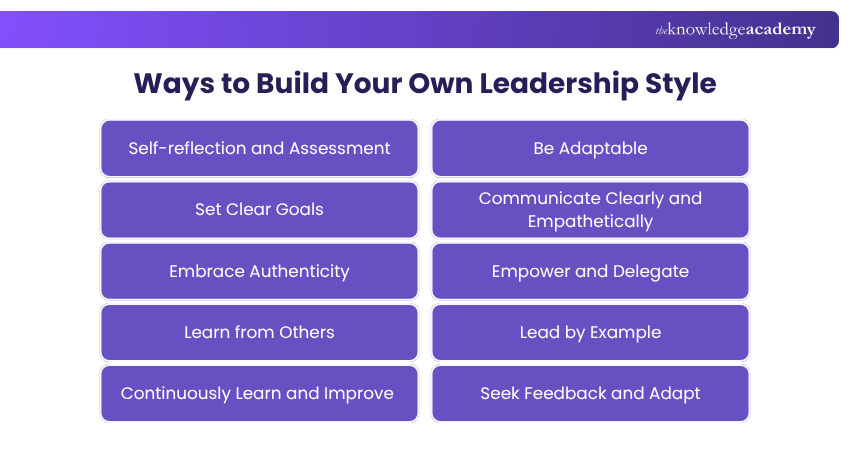
1) Self-reflection and Assessment
Begin by reflecting on your values, strengths, weaknesses, and experiences. Additionally, seek feedback from colleagues, mentors, and team members to gain different perspectives on your approach.
2) Set Clear Goals
Define your Leadership goals and the impact you want to create as a leader. Setting clear objectives will help guide your development process. It will also help you shape your style towards achieving your vision.
3) Embrace Authenticity
Authenticity is the cornerstone of effective Leadership Qualities. Be true to yourself and lead with integrity. Embrace your unique qualities and experiences. These attributes can set you apart as a leader and foster genuine connections with your team.
4) Learn from Others
Study the styles of successful leaders you admire, both within your industry and beyond. Also, identify the aspects of their style that resonate with you and consider how you can integrate those elements into your own style.
5) Continuously Learn and Improve
Invest in your personal and professional development. Attend workshops, seminars or training programmes to enhance your skills and knowledge. Seek mentorship from experienced leaders who can offer guidance and support on your journey.
6) Be Adaptable
Effective leaders are adaptable and versatile. Understand that different situations and teams may require different approaches. Moreover, be open to adjusting your style based on the needs of your team and the challenges at hand.
7) Communicate Clearly and Empathetically
Communication is vital for Leadership success. Develop strong communication skills, both in conveying your vision and actively listening to your team members' perspectives. Moreover, show empathy and understanding to build trust and rapport.
8) Empower and Delegate
Encourage the growth and development of your team members by empowering them with responsibilities and autonomy. delegate tasks and trust your team to deliver results. Creating a culture of trust and empowerment fosters a sense of ownership among team members.
9) Lead by Example
Actions speak louder than words. Lead by example and embody the values you wish to see in your team. Demonstrate a strong work ethic, resilience, and a willingness to learn from mistakes.
10) Seek Feedback and Adapt
Regularly seek feedback from your team to assess the effectiveness of your style. Be open to constructive criticism and use it as an opportunity for growth. Continuously refine and adapt your approach based on feedback and experiences.
Build your decision-making competencies and learn to use logic to make decisions with our Leadership and Management Course – Join now!
Importance of Knowing Your Leadership Style
Understanding your Leadership Style is crucial for effective management and fostering a positive work environment. It enables you to tailor your approach, provide meaningful guidance, and make informed decisions. Awareness of your Leadership Style also sheds light on how employees perceive you, aiding in addressing potential areas for improvement.
For instance, if feedback suggests an oppressive atmosphere, it may indicate an autocratic style requiring adjustment. Recognising your Leadership Style, along with understanding various Leadership Models, fosters self-reflection and empowers proactive enhancements. Importantly, it allows you to anticipate challenges associated with specific types, encouraging continuous development and creating a workplace where employees feel heard and valued.
Which Leadership Style is the Best?
There is no one Leadership Style that works well for every organisation or situation. Furthermore, there is no single correct way to lead, and leaders might have to adjust their approach depending on the situation. It is essential to understand the different Leadership Styles and their individual pros and cons. Several factors can influence the most suitable Leadership approach, such as:
a) The type of organisation, mature or focused on growth, impacts its nature
b) The category of task, whether it is repetitive or innovative
c) The team's level of experience and skill
d) The character of the leader
Taking these factors into account can assist in deciding on the most appropriate Leadership Style or a blend of styles to implement.
Strengthen ethical decision-making and values-based leadership skills with our Ethical Leadership Training – Join now!
How to Find Your Leadership Style?
Choosing a Leadership Style that fits your personality can greatly improve your success as a leader. The way you lead your team, whether big or small, greatly impacts how they see you. Below are a few suggestions to assist you in getting started:
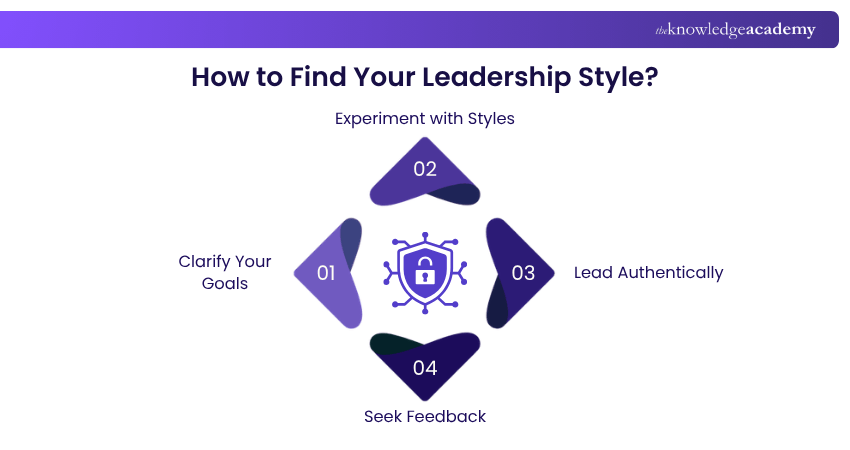
a) Clarify Your Goals: Clearly state your desired outcomes. Having a clear vision simplifies communication and motivates your team to support your direction.
b) Experiment with Styles: There are various styles of Leadership available. Experimenting with various methods is the most effective way to determine what is most effective for you and your team.
c) Lead Authentically: Leadership is not about being flawless; it's about being real. When you lead with enthusiasm and a clear goal, others are naturally attracted to you and what you have to say.
d) Seek Feedback: Proactively seek and welcome feedback. As a leader, it is essential to be open to changing your strategy in response to feedback in order to continually improve.
By taking these factors into account, you can create a Leadership approach that is effective for you and encourages and energises your team.
Conclusion
Understanding the Types of Leadership Styles helps you become a more effective and adaptable leader. Each style offers unique strengths that influence team performance and decision-making. By recognising and applying the right approach, you can build stronger teams, drive success, and create a positive, productive work environment.
Learn to motivate your team with our Staff Motivation Training – Register today!
Frequently Asked Questions
Can a Leader Use Multiple Leadership Styles?

Yes, a leader can use multiple Leadership Styles depending on the situation, team needs, and goals. Adapting styles helps leaders respond effectively, improve team performance, and handle challenges with flexibility while maintaining strong communication and direction.
When Should Autocratic Leadership be Used?
Autocratic leadership should be used in urgent situations where quick decisions are required, such as during crises or tight deadlines. It is also effective when tasks need strict control, clear direction, or when team members lack experience and require strong guidance.

Elizabeth Clark


Senior Leadership Trainer and Business Strategist
Elizabeth Clark is a senior trainer and strategist with a strong background in leadership, business management, and operational improvement. With more than 15 years of experience, she has worked with leaders across industries to enhance their influence, communication, and strategic planning skills. Her writing is known for being insightful and focused on real-world leadership challenges.
View Detail

 If you wish to make any changes to your course, please


