


 Top Rated Course

We may not have the course you’re looking for. If you enquire or give us a call on +45 89870423 and speak to our training experts, we may still be able to help with your training requirements.
Revenue Optimisation and Its Strategies for Business Growth
The Knowledge Academy 16 July 2026Revenue Optimisation is a strategic, data-driven approach to maximise income by analysing demand, customer behaviour, and pricing for long-term profitability. It involves analysing demand, adjusting prices, improving sales processes, and enhancing customer experience to drive sustainable growth and profitability.

Training Outcomes Within Your Budget!
We ensure quality, budget-alignment, and timely delivery by our expert instructors.
Table of Contents

Have you ever wondered why some businesses seem to make the most out of every sale while others struggle to grow? The answer lies in the understanding of What is Revenue Optimisation and how it shapes smarter business decisions. It is not simply about increasing prices or selling more, but about finding the right balance between demand, pricing, and customer value.
It helps businesses identify missed opportunities, improve customer experiences and maximise profits without unnecessary costs. By using data and insights effectively, organisations can bring steady growth and foster long-term success. In this blog, you will learn about What is Revenue Optimisation, its best practices, how to optimise it and more. Let’s begin!
Table of Contents
1) What is Revenue Optimisation?
2) Key Areas for Revenue Optimisation
3) How to Optimise Your Revenue?
4) Best Practices for Revenue Optimisation
5) Factors That Affect Revenue Management
6) Future Trends for Revenue Optimisation
7) What is Revenue Enhancement?
8) What is an Example of Revenue Maximisation?
9) Conclusion
What is Revenue Optimisation?
Revenue Optimisation is a process used by businesses to manage pricing, customer demand, and sales strategies to maximise long-term revenue. It focuses on using data-driven insights, such as pricing analysis and demand forecasting, to deliver the right product or service at the right price.
Primarily, Revenue Optimisation aims to achieve two main goals: increasing sales and improving profitability. It is not about selling more, but about ensuring each sale generates the highest possible value while maintaining a balance between price, volume, and costs.

Key Areas for Revenue Optimisation
Now that you know What is Revenue Optimisaton, it’s time to learn about the key focus areas. By emphasising the following areas, you can significantly boost your revenue and drive sustainable business growth:
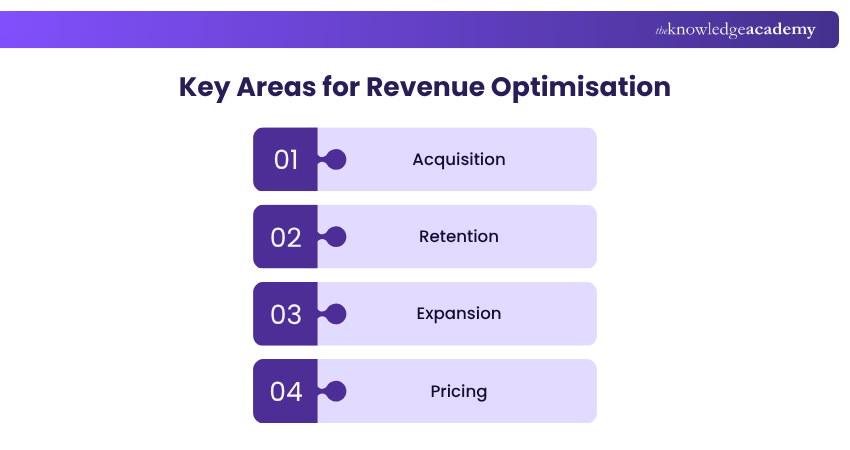
1) Acquisition
Customer acquisition focuses on attracting potential buyers and converting them into loyal, paying customers. To strengthen your acquisition strategy, start by developing clear buyer personas and ideal customer profiles that target high-value prospects. Collaborate with cross-functional teams to identify audiences most likely to engage and benefit with minimal support.
Additionally, you must assess revenue and Return on Investment (ROI) across acquisition channels to ensure cost efficiency. Focus your resources on high-performing channels that deliver measurable returns with the least financial input.
Unlock the secrets to successful investing – join our Investment and Trading Training now!
2) Retention
Retention is the tactic of keeping existing customers engaged and faithful to a brand and maximising their lifetime value. After all, keeping current customers engaged is more cost-efficient than gaining new ones. A robust customer retention plan emphasises on providing top-notch customer service, starting from making the purchase to ensuring product expectations are aligned throughout the marketing and sales process.
Key questions to consider include:
a) Is your product meeting your customers’ expectations?
b) Does the value of your product match what customers paid for it?
c) Do your customers know how to reach your company if issues arise?
d) Do customers feel their feedback is heard and addressed?
Addressing these questions helps build customer loyalty and encourages purchases. To improve retention, businesses should offer personalised resources, such as tutorials and training that suit their product and audience. Additionally, using feedback systems like surveys, reviews, and social listening helps refine products, meet customer needs, and identify new revenue opportunities.
3) Expansion
Existing customers are more likely to check out new products and spend more than new customers. Therefore, in the long term, expansion revenue is more sustainable than acquisition revenue.
Expansion revenue is generated through upselling and cross-selling to existing customers. Many strategies to improve your expansion efforts overlap with those for improving customer retention: you need to consider customer feedback and ensure they are attaining success with their current product.
You can then make them purchase more by promoting similar products. If a customer has had a positive experience with your company and product, they are likely to continue doing business with you. Simple communication can lead to more sales.
Learn pricing tactics with our Revenue Management Training today!
4) Pricing
Optimising your pricing strategy to maximise revenue isn't as straightforward as it seems; setting a price that boosts sales doesn’t always equate to maximum profits, nor does the highest price.
It’s important to take these questions into consideration:
a) How much value do your customers place on your product?
b) How essential is your offering to your customers?
c) What can your customers afford to pay, and what are they willing to pay?
You can influence responses by bundling products or offering bulk options, though this may not suit every strategy. Pricing affects both earnings and brand perception, so monitoring competitors is important. Focus on maximising profit per sale and customer, while supporting retention and repeat purchases, even if it means earning less initially to build loyalty.
Learn how to manage risks and maximise property profits with Real Estate Risk Management Training – Join now!
How to Optimise Your Revenue?
Optimising your revenue requires a balanced approach that focuses on customers, pricing, operations, and strategy. By improving efficiency and making informed decisions, businesses can increase both sales and profitability. Let’s look at some effective ways to optimise your revenue below:
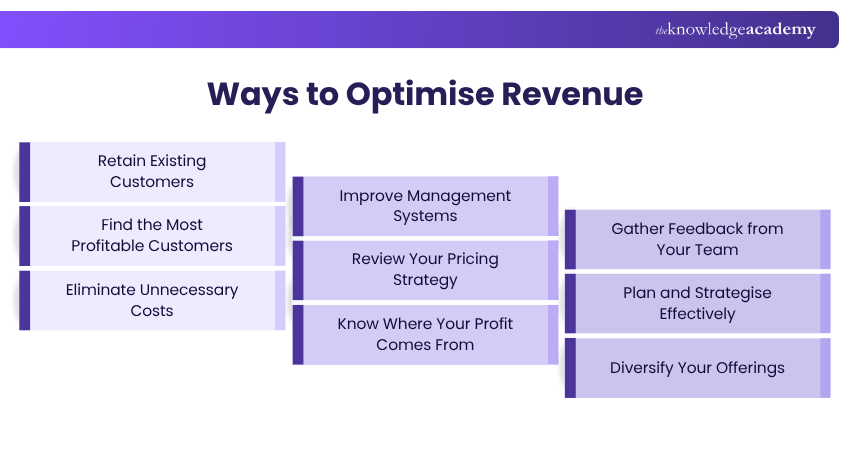
1) Retain Existing Customers: Customer retention plays a crucial role in improving profitability. Satisfied customers are more likely to make repeat purchases, reducing the need for costly customer acquisition and increasing long-term revenue.
2) Find the Most Profitable Customers: Identify and target customers who bring the highest value. Segment your audience, analyse buying behaviour, and focus on customers with strong lifetime value to maximise returns.
3) Eliminate Unnecessary Costs: Improving operational efficiency helps reduce unnecessary expenses. This enables businesses to maintain competitive pricing while protecting profit margins.
4) Improve Management Systems: Efficient management systems reduce delays, improve cash flow, and build trust. Regularly review processes, identify inefficiencies, and refine operations to enhance overall business performance.
5) Review Your Pricing Strategy: Evaluate your pricing structure to improve profit margins. Adjust prices based on demand, competition, and product performance to balance sales volume and profitability.
6) Know Where Your Profit Comes From: Understanding which products, services, and customers generate the most profit helps guide informed business decisions. Also, it supports better investment, marketing, and cross-selling strategies.
7) Gather Feedback from Your Team: Frontline staff provide valuable insights into customer behaviour and experiences. Their feedback can help improve products, services, and business performance.
8) Plan and Strategise Effectively: A clear plan is essential for maximising profitability. Use market research and customer insights to develop strategies that guide business growth and reduce unnecessary risks.
9) Diversify Your Offerings: Expanding into new products, services, or markets can increase revenue streams. Diversification helps businesses grow, reduce risk, and improve long-term profitability.
Gain practical insights through real-world case studies and hands-on simulations. Join our Investment Banking Training now!
Best Practices for Revenue Optimisation
Adopting the right practices is essential to achieve consistent and sustainable revenue growth. Let’s look at the key ones below for helping you understand What is Revenue Optimisation better:
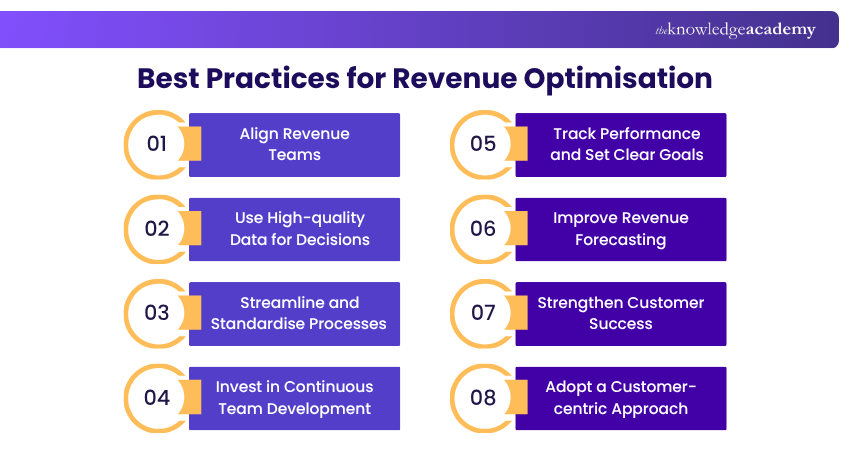
1) Align Revenue Teams
Ensure strong alignment between marketing, sales, and customer success teams. Shared goals, regular collaboration, and integrated tools help create a seamless customer journey and improve overall efficiency. This reduces internal silos and ensures teams work towards the same revenue objectives.
2) Use High-quality Data for Decisions
Accurate and reliable data is critical for effective decision-making. It helps teams understand customer behaviour, improve targeting, and build stronger strategies across sales, marketing, and customer success. Also, better data quality reduces errors and supports more confident business decisions.
3) Streamline and Standardise Processes
Create clear and consistent workflows across teams. Use automation to reduce errors, improve efficiency, and ensure smooth transitions between different stages of the customer journey. This helps eliminate bottlenecks and improve overall operational consistency.
4) Invest in Continuous Team Development
Provide ongoing training and development opportunities to keep teams updated with tools, trends, and strategies. Also, cross-functional learning improves collaboration and performance. Skilled teams are better equipped to adapt to changes and deliver stronger results.
5) Track Performance and Set Clear Goals
Define Key Performance Indicators (KPIs) and monitor them regularly. Tracking progress helps identify areas of improvement and ensures all teams contribute towards shared revenue objectives. Clear goals also improve accountability and focus across the organisation.
6) Improve Revenue Forecasting
Use data and predictive insights to enhance forecasting accuracy. Reliable forecasts support better planning, resource allocation, and long-term strategy development. Accurate forecasting also helps businesses prepare for risks and opportunities.
7) Strengthen Customer Success
Customer success should be treated as a core part of revenue growth. Focus on retention, reducing churn, and identifying upselling opportunities to increase customer lifetime value. Strong customer relationships lead to higher loyalty and repeat business.
8) Adopt a Customer-centric Approach
Place the customer at the centre of all strategies. Reducing friction, personalising experiences, and improving satisfaction can lead to higher conversions, loyalty, and long-term revenue growth. This approach ensures that business decisions always align with customer needs and expectations.
Price it right and profit at every turn. Sign up for our Costing and Pricing Training and boost your bottom line!
Factors That Affect Revenue Management
Revenue is shaped by numerous internal and external elements. Nearly every decision made within an organisation can ultimately impact revenue. Here are the main factors pertaining to What is revenue Optimisation:
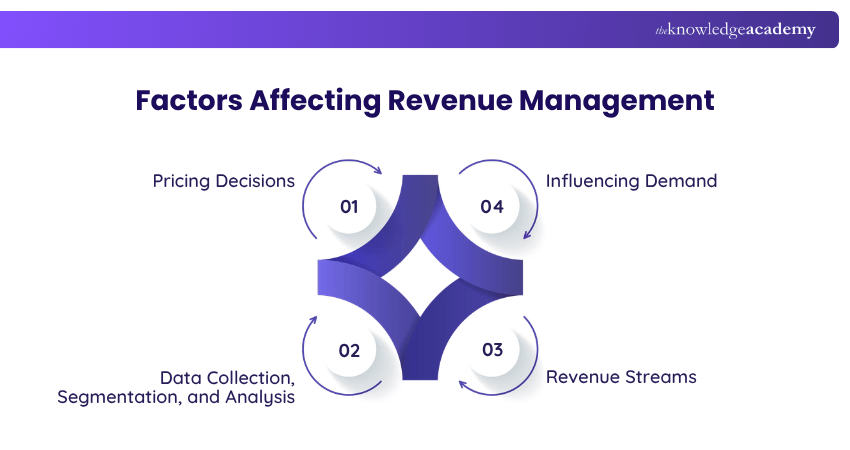
1) Pricing Decisions
More sales don’t always mean higher revenue. Effective Revenue Optimisation starts with understanding that lower prices can sometimes devalue a product in the eyes of consumers. For example, if Company A reduces prices on its smartphone accessories, customers might perceive them as low quality, which can lead to reduced sales.
Therefore, pricing decisions must be guided by proper data and customer insights rather than market cliches. While competitor benchmarking helps, the real key lies in analysing customer behaviour, value perception and purchase patterns to determine optimal pricing.
2) Data Collection, Segmentation and Analysis
Understanding your customers begins with collecting the right kind of data. Businesses must focus on gathering information that supports segmentation. Segmentation divides customers into meaningful groups like age, income, location, or buying habits.
For example, Company A might target younger urban buyers who frequently spend on consumables, while Company B might focus on older, high-value customers. Meanwhile, forecasting uses sales history and market trends to predict future performance.
3) Revenue Streams
Revenue generation can occur through multiple channels, each forming a unique revenue stream. These include personal selling, direct sales, outsourcing, e-commerce, reselling, and white labelling. The ideal mix depends on the business model and target audience.
For instance, Company B, after analysing its audience, might rely heavily on e-commerce and personal selling to reach affluent customers aged 30 to 45. Diversifying revenue streams helps reduce dependency on a single source.
4) Influencing Demand
While you cannot create demand from nothing, you can stimulate and guide it through strategic marketing. Successful Demand Management combines brand awareness, engagement and retention tactics to sustain interest.
Techniques include Social Media Marketing, influencer partnerships, targeted ads, and creative content strategies such as blogs, podcasts and videos. These efforts help maintain visibility, strengthen brand identity and convert interest into sales.
Explore modern strategies and portfolio planning for smarter investing with our Investment Management Course – Join now!
Future Trends for Revenue Optimisation
As technology and market dynamics continue to grow, Revenue Management and optimisation will witness transformations in the future. Here’s a look at some of the future trends:
1) Pricing Influenced by Sustainability
As consumers grow more eco-conscious, businesses will integrate sustainability into their pricing tactics. Products and services emphasising sustainability may command higher prices, driven by the rising demand from environmentally aware customers. Price Skimming allows businesses to set high initial prices before gradually lowering them.
2) Enhanced Attention to Data Privacy and Security
As data plays a vital role in Revenue Optimisation, prioritising privacy and security is crucial. Sticking with regulations and maintaining transparent data-handling practices builds customer trust, ultimately boosting revenue.
3) Augmented Reality (AR) and Virtual Reality (VR)
AR and VR technologies will change the shopping experience, thus impacting pricing strategies. Virtual storefronts and immersive product experiences can explain premium pricing and create options for upselling.
4) Hyper-personalisation
Hyper-personalisation has surpassed traditional personalised marketing by leveraging real-time data to create unique customer experiences. By understanding each customer’s journey and preferences, businesses can more effectively customise their offerings and pricing strategies.
5) Progress in AI and Machine Learning
While Artificial Intelligence (AI) and Machine Learning (ML) are already part of today’s Revenue Optimisation platforms, advanced algorithms will enhance customer behaviour predictions. This allows businesses to adjust strategies and set real-time prices based on demand, inventory, and competitor pricing.
6) Shift Toward Valuing Experience More Than Products
Companies are beginning to realise that consumers experience value as much as the products themselves. This adjustment will require a re-evaluation of pricing strategies, emphasising the value of the customer experience.
Identify currency trends for global growth with Foreign Exchange Training – Sign up now!
What is Revenue Enhancement?
In business terms, revenue enhancement refers to the process of increasing income generated from existing revenue streams. This doesn’t always mean boosting sales or prices. It can also involve reducing costs, improving efficiency or boosting customer value. Revenue enhancement essentially addresses two major challenges businesses face in driving growth:
1) The high cost and effort of constantly acquiring new customers
2) The limited window of profitability after acquisition
What is an Example of Revenue Maximisation?
Revenue Maximisation happens when a business changes its pricing or sales strategy to earn the highest possible income. For example, a streaming service may offer a limited-time discount to attract more subscribers. Even though each customer pays a little less, the large number of new subscribers increases total revenue. This helps the company bring in more money overall while growing its customer base.
Conclusion
Understanding What is Revenue Optimisation is critical for any business owner because this is where data, strategy and creativity meet. It’s the ongoing pursuit of maximising income without compromising on profitability. By analysing trends, fine-tuning pricing and expanding customer value, businesses can carve out new paths to smarter growth. In essence, it’s about doing more with less.
Become familiar with all crucial aspects of investing and trading. Join our Investment and Trading Training now!
Frequently Asked Questions
What is the Distinction Between Revenue Management and Revenue Optimisation?

Revenue Management determines prices according to the demand to maximise revenue. On the flip side, Revenue Optimisations takes it a step further by utilising data and tactics to improve pricing, sales, and marketing initiatives throughout the whole customer experience.
Why is Revenue Optimisation Important?
Revenue Optimisation helps in maximising profitability by improving pricing, sales, and customer strategies. It aids businesses in making data-driven decisions to grab every revenue opportunity.

The Knowledge Academy


Global Training Provider
The Knowledge Academy is a world-leading provider of professional training courses, offering globally recognised qualifications across a wide range of subjects. With expert trainers, up-to-date course material, and flexible learning options, we aim to empower professionals and organisations to achieve their goals through continuous learning.


 If you wish to make any changes to your course, please


