


 Top Rated Course

We may not have the course you’re looking for. If you enquire or give us a call on +45 89870423 and speak to our training experts, we may still be able to help with your training requirements.
What Is Facility Management Software? Features, Benefits & Uses
The Knowledge Academy 12 February 2026Facility management software helps organisations manage assets and buildings efficiently while cutting costs, ensuring compliance, and improving daily operations. It centralises key tasks and provides real-time visibility across facilities. This allows teams to work faster, make informed decisions and maintain smooth day-to-day operations.

Training Outcomes Within Your Budget!
We ensure quality, budget-alignment, and timely delivery by our expert instructors.
Table of Contents
Facility Management Software is the heart of the smooth operation of buildings, assets, and daily tasks. It aids corporations in keeping good order, minimising hazards, and enhancing the effectiveness of the whole operation. The blog reads on to find out how Facility Management Software works and the reason it has become a necessity for today's businesses.
Table of Contents
1) What is Facility Management Software?
2) Importance of Facility Management Software
3) Features of Facilities Management Software
4) Types of Facility Management Software
5) Top Facility Management Software
6) Benefits of Using Facilities Management Software
7) How do I Choose the Best Facility Management Software for my Organisation?
8) Conclusion
What is Facility Management Software?
Facility Management (FM) software, also known as Computer-aided Facilities Management (CAFM) software, is an essential tool for Facility Managers. It supports the functions of facilities management by helping implement maintenance programs for assets, equipment, and facilities.
This software significantly reduces inefficiencies and automates routine processes, ensuring optimal use of the current workforce, budget, and schedule. By doing so, it enables Facility Managers to more effectively manage their continuous responsibilities, incorporating Facilitation Techniques to streamline operations and enhance overall productivity.
Importance of Facility Management Software
Facilities operate in intricate environments where interruptions caused by delays, inefficiencies, and compliance gaps can be quite expensive. Facility Management Software not only delivers real-time visibility but also simplifies maintenance, assets and entire operations through automation and control.
The absence of an FMS leads to organisations mostly depending on spreadsheets along with human practices, which result in overlooking maintenance, unexpected failures, and increasing operational costs. Properly executed FMS solutions tackle these problems by:
a) Reducing Downtime: The applications of preventive maintenance enable the team to find the problems early, and thus, there will be no more interruptions to operations.
b) Improving Allocation of Resources: It makes sure that the staff, equipment and materials are the ones that are being used in the most efficient and cost-effective way possible.
c) Increasing Compliance and Safety: It monitors governing laws, schedules inspections, and ensures compliance with safety measures so that the risks are reduced.
d) Boosting Management with Better Decisions: It grants access to up-to-the-minute information and analysis, which helps in making long-term planning and performance improvement.
Features of Facilities Management Software
Choosing the right FMS means understanding the features that can best serve your business needs. Here are some of the key features to look for:

1) Asset Management
Tracks and manages physical assets, ensuring they are properly maintained and utilised.
2) Maintenance Scheduling
Automates the scheduling of regular maintenance tasks to prevent downtime and extend the life of assets.
3) Work Order Management
Manages work orders efficiently, from creation to completion, ensuring timely resolution of issues.
4) Inventory Control
Keeps track of inventory levels, ensuring that necessary supplies and parts are always available.
5) Resource Planning
Using the data from the past, the software for facility management can not only anticipate-but also improve-future needs.
6) Mobile Accessibility
Allows access to the system via mobile devices, ensuring that staff can manage tasks on the go.
7) Reporting and Analytics
Offer detailed reports and analytics to help managers make informed decisions.
8) Integration Capabilities
It integrates with various systems, such as accounting, HR, and ERP systems, to provide a seamless workflow.
Start your SCADA Training today and enhance your industrial control skills.
Types of Facility Management Software
Many facility management software solutions manage operations such as maintenance, designing of spaces, controlling of energy, and the whole workplace functioning in general.
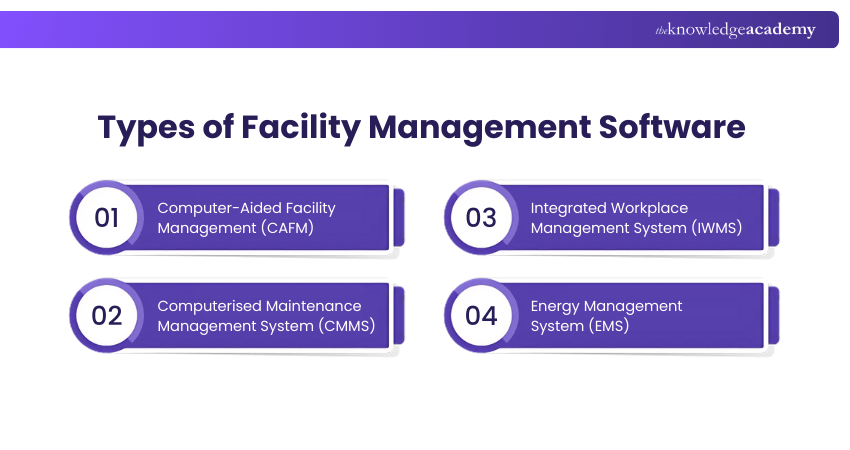
Computer-Aided Facility Management (CAFM)
From one instance, CAFM allows businesses to schedule and manage space, assets and resources, shining light on all the operational activities involved with facility management.
Computerised Maintenance Management System (CMMS)
CMMS is software for managing work orders, maintenance activities, and preventive tasks that keep equipment working and lower downtime.
Integrated Workplace Management System (IWMS)
IWMS brings together real estate, maintenance, space, and resource management into one system which is very suitable for companies having extensive or more than one site facilities.
Energy Management System (EMS)
On the other hand, the EMS makes use of sophisticated software and logic to look after the building energy use, systems and devices, thus bringing this energy use to a position that makes it operate at optimum efficiency and cut down on energy costs.
Top Facility Management Software
When it comes to choosing the best Facility Management Software, there are several top contenders. Here’s a closer look at ten leading options:
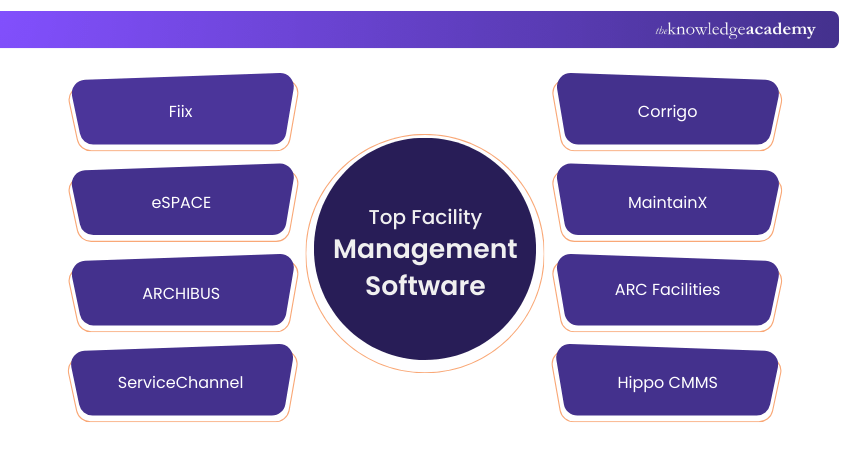
1) Fiix
Fiix serves as a valuable tool for Facility Managers aiming to enhance asset performance with straightforward reporting and analytics. Utilise the power of Fiix Foresight, a cutting-edge AI engine for maintenance, to unlock deeper insights and make sensible choices based on robust data
Key Features:
1) Monitor key performance indicators across all sites using a variety of dashboards.
2) Seamlessly merge data from both production and corporate systems for a comprehensive view.
3) Efficiently organise assets and components with the use of QR codes and barcodes for easy tracking.
Free Version: Available with limited features.
Pricing: The price starts at £35 per user per month for the basic plan; custom pricing for enterprise solutions.
Platform Compatibility: Compatible with web, iOS, and Android platforms.
2) eSPACE
eSPACE stands out as a comprehensive CAFM (Computer-aided Facility Management) solution that empowers Facility Managers to meticulously oversee everything from asset depreciation timelines to billing for rentals. It’s celebrated for its exceptional customer service, intuitive interface, and streamlined work order management.
Key Features:
1) Organise and visualise events on a unified master calendar.
2) Receive timely notifications for restocking and scheduled maintenance tasks.
3) Interface with a variety of Internet of Things (IoT) systems for facilities management.
Free Version: Free version with limited features.
Pricing: Paid plans start at approximately £50 per month, with additional costs depending on the number of users and specific features required.
Platform Compatibility: Available for both iOS and Android devices.
3) ARCHIBUS
ARCHIBUS is a notable and multifaceted Integrated Workplace Management System (IWMS) that controls the dimensions of space, real estate, assets and facility operations through a common platform that fits the needs of large or complex organisations.
Key Features:
1) Streamlines space, real estate and occupancy planning.
2) Manages assets and maintenance with preventive scheduling and work orders.
3) Integrates with CAD, BIM and ERP systems for better data flow.
4) Offers dashboards and reports for cost control and compliance tracking.
Free Version: Not publicly listed
Pricing: Enterprise tier, with pricing available upon request
Platform Compatibility: Cloud-based or on-premise with a web interface, integrates with CAD and BIM, and works on both desktop and mobile browsers
4) ServiceChannel
ServiceChannel provides Facility Managers with a robust platform to ensure operational efficiency across all sites and offers a centralised system to assess facility performance. It enhances asset reliability through prompt maintenance and effective issue resolution.
Key Features:
1) Streamline expenditures by accessing comprehensive, asset histories in one place.
2) Identify top-tier vendors with the aid of the Contractor Scorecard.
3) Adhere to environmental standards and maintain energy efficiency.
Free Version: Not provided
Pricing: The price starts at £80 per user per month
Platform Compatibility: Web, iOS, Android
5) Corrigo
Corrigo stands out for its robust capabilities in managing a high volume of work orders and overseeing extensive vendor networks. Facility Managers value its precise tracking features for Certificates of Insurance (COIs), warranties, and financial planning.
Key Features:
1) Precisely identify repair and maintenance requirements.
2) Maintain dispatch records with geolocation-based check-ins.
3) Reduce superfluous costs through intelligent machine learning algorithms.
Free Version: Not provided
Pricing: Pricing starts at £50 per user per month.
Platform Compatibility: Available on Windows, macOS, iOS, Android
6) MaintainX
MaintainX is a manufacturer that offers a modern maintenance and asset-management platform designed specifically for industrial and facility teams. Its features include effortless management of work orders, scheduling of preventive maintenance, and an overall perspective of assets and operations at the site.
Key Features:
1) Create, assign and track work orders across all facilities.
2) Schedule preventive maintenance to minimise downtime.
3) Manage assets, parts and inventory in real time.
4) Allow technicians to update tasks and upload photos via mobile.
5) Generate dashboards and reports for performance and compliance insights.
Free Version: Available (entry-level plan offered).
Pricing: Paid plans vary; check their site for current rates.
Platform Compatibility: Accessible via web, iOS and Android (mobile-first).
7) ARC Facilities
ARC Facilities is a premier facilities management software tailored for educational institutions, healthcare facilities, government edifices, and various other sectors. It’s highly regarded for its straightforward implementation process and stellar customer support. The software includes features to boost organisational efficiency and ensure compliance with regulations.
Key Features:
1) Detailed maps for facilities and equipment.
2) Comprehensive floor and emergency response plans.
3) Proactive maintenance scheduling for equipment.
4) Secure document storage solutions.
5) Convenient mobile platform access.
6) Efficient contact management system.
Free Version: Not available.
Pricing: Pricing starts from £50 per user per month
Platform Compatibility: Web, iOS, Android
8) Hippo CMMS
Hippo CMMS is a straightforward yet powerful cloud-based maintenance and asset management tool suitable for any type of facility, including offices, hospitals, and schools.
Key Features:
1) Streamlines work orders with easy creation, assignment and tracking.
2) Schedules preventive maintenance to reduce equipment downtime.
3) Tracks assets, parts and inventory with real-time updates.
4) Generates reports and maintenance histories for better planning.
Free Version: Offers a free trial.
Pricing: Plans start at approximately US $40 per month for basic features.
Platform Compatibility: Accessible via web, iOS and Android for desktop and mobile use.
9) Fabrico
Manufacturing and Industrial viewers form the target users for Fabrico, a unified and completely cloud-based CMMS and maintenance management solution.
Key Features:
1) Provides unified asset hierarchies for clear equipment management.
2) Automates preventive maintenance scheduling across plant operations.
3) Offers mobile access with QR-code scanning for instant work order updates.
4) Delivers dashboards and analytics for performance and maintenance insights.
Free Version: Entry-level plan (free for plant-based) is available.
Pricing: Tiered monthly plans in Light, Full and Enterprise options depending on plant size and needs.
Platform Compatibility: Cloud-based and accessible on web and mobile (Android and iOS) for smooth plant floor and remote use.
Take your facilitation skills to the next level with our Facilitation Skills Training today!
Benefits of Using Facilities Management Software
Facilities Management Software (FMS) offers a transformative approach to managing work orders and assets, providing Facility Managers with a digital solution that replaces traditional paper-based systems. Here’s a refined overview of the benefits:
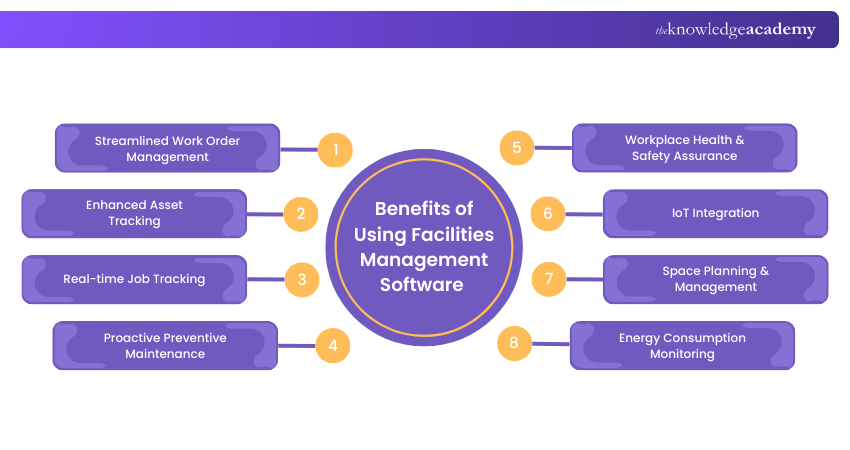
1) Streamlined Work Order Management:
a) Simplifies the process of assigning, planning, and scheduling work orders.
b) Offers a single view for prioritising tasks, assessing workforce availability, and allocating jobs to the right professionals.
2) Enhanced Asset Tracking:
a) Ensures better management of assets ranging from appliances to vehicles, using IoT devices and tagging options.
b) Maintains an asset register for tracking maintenance, usage, and depreciation.
3) Real-time Job Tracking:
a) Allows for the real-time logging and tracking of maintenance jobs, enhancing workforce management.
b) Provides digital checklists for engineers, ensuring thorough task completion.
4) Proactive Preventive Maintenance:
a) Facilitates the planning and scheduling of preventive maintenance, reducing repair costs and downtime.
b) Aids in the implementation of preventive maintenance strategies to maintain a conducive workplace environment.
5) Workplace Health & Safety Assurance:
a) Makes conducting regular risk assessments more efficient, addressing key health and safety challenges.
b) Enables routine logging of safety inspections to ensure occupant safety.
6) IoT Integration:
a) Harnesses IoT device data for condition-based or preventive maintenance strategies.
b) Improves space management and occupant well-being by leveraging IoT data.
7) Space Planning & Management:
a) Assists in organising, planning, and managing physical spaces to enhance productivity and well-being.
b) Helps identify over-occupied or underutilised spaces, leading to cost savings.
8) Energy Consumption Monitoring:
a) Utilises trackers and smart meters to monitor energy consumption, identifying areas for usage reduction.
b) Supports greener facility operations by providing insights into energy usage patterns.
Advance your career with industry-ready supply chain skills with our Supply Chain Management Training- Join today!
How do I Choose the Best Facility Management Software for my Organisation?
Selecting the suitable facility management software entails first recognising the dimensions, requirements and tasks of your company that you intend to make more efficient. Determine if you need functionalities like maintenance scheduling, asset tracking, space planning, or compliance monitoring.
Next, check for differences among software packages regarding the applicability, access from mobile devices, tools for reporting, compatibility with building layouts and the presence of trials or customer support. Pick a product that is easily upgradable, simple to use, and fits your operational needs.
Conclusion
Facility Management Software enables organisations to operate in a smoother, safer and more efficient manner. By using the appropriate and efficient tools, teams can minimise downtime, adhere to regulations and make wise decisions daily. As your business expands, selecting the correct software becomes a prerequisite for long-term prosperity.
Elevate your skills with our professional Industry Training - Register today and get started!
Frequently Asked Questions
What KPIs can be Measured Using Facility Management Software?

Some of the KPIs that facility management software can help to measure are a backlog of deferred work orders, average work order completion time, number of active or completed work orders and preventive maintenance compliance rate.
How Does Technology Impact Facilities Management?
Technology revolutionises facilities management by streamlining operations, enhancing efficiency, and reducing costs. It enables real-time monitoring, predictive maintenance, and data-driven decision-making, ensuring optimal management of buildings, assets, and resources.
What are the Other Resources and Offers Provided by The Knowledge Academy?
The Knowledge Academy takes global learning to new heights, offering over 3,000+ online courses across 490+ locations in 190+ countries. This expansive reach ensures accessibility and convenience for learners worldwide.
Alongside our diverse Online Course Catalogue, encompassing 19 major categories, we go the extra mile by providing a plethora of free educational Online Resources like Blogs, eBooks, Interview Questions and Videos. Tailoring learning experiences further, professionals can unlock greater value through a wide range of special discounts, seasonal deals, and Exclusive Offers.
What is The Knowledge Pass, and How Does it Work?
The Knowledge Academy’s Knowledge Pass, a prepaid voucher, adds another layer of flexibility, allowing course bookings over a 12-month period. Join us on a journey where education knows no bounds.
What are the Related Courses and Blogs Provided by The Knowledge Academy?
The Knowledge Academy offers various Industry Training, including Facilities Management Training, Facilitation Skills Training, Product Management Training and Supply Chain Management Training. These courses cater to different skill levels, providing comprehensive insights into Facilitation Techniques.
Our Business Skills Blogs cover a range of topics related to Facilities Management, offering valuable resources, best practices, and industry insights. Whether you are a beginner or looking to advance your Business skills, The Knowledge Academy's diverse courses and informative blogs have got you covered.

The Knowledge Academy


Global Training Provider
The Knowledge Academy is a world-leading provider of professional training courses, offering globally recognised qualifications across a wide range of subjects. With expert trainers, up-to-date course material, and flexible learning options, we aim to empower professionals and organisations to achieve their goals through continuous learning.

Upcoming Business Skills Resources Batches & Dates
Date
 Facilities Management Training
Facilities Management Training
Fri 28th Aug 2026
Facilities Management Training
Fri 20th Nov 2026

 If you wish to make any changes to your course, please


