


 Top Rated Course

We may not have the course you’re looking for. If you enquire or give us a call on +45 89870423 and speak to our training experts, we may still be able to help with your training requirements.
Careers in Music Production: Job Roles and Skills
The Knowledge Academy 11 March 2026Careers in Music Production involve creative and technical roles where professionals shape music through recording, arrangement, sound design, and mixing. They work with artists and engineers to refine tracks using digital tools and studio techniques. Career paths include studios, film, media, live events, and independent production work.Title: Careers in Music Production

Training Outcomes Within Your Budget!
We ensure quality, budget-alignment, and timely delivery by our expert instructors.
Table of Contents

Are you an aspiring Musician, a tech-savvy enthusiast, or simply someone with a passion for music? If yes, then it’s time to explore various Careers in Music Production. In a world where every note has a purpose and every sound speaks a language of its own, the role of a Musicians is instrumental, shaping the sonic landscape of the Music industry. Want to know how? Read this blog to learn everything about Careers in Music Production. Also, explore various skills required to build a successful career.
Table of Contents
1) What is Music Production?
2) Career Paths in Music Production
a) Music Producer
b) Audio Engineer
c) Sound Designer
d) Music Arranger
e) Composer for Media
3) Skills and Knowledge Required for a Successful Music Career
4) Conclusion
What is Music Production?
Music Production is the art and science of bringing Musical ideas to life. It's a process of translating raw emotions and creative visions into meticulously crafted compositions that resonate with audiences worldwide. From the initial spark of inspiration to the final mix that captivates listeners, Musicians are the architects who construct the auditory tapestries that define genres, trends, and eras.
Music Production is not a static field, it's an ever-evolving art form that adapts to technological advancements, shifts in musical trends, and the emergence of new creative expressions. As technology progresses, the tools available for production continue to expand, enabling musicians to explore innovative sounds and techniques that push the boundaries of sonic possibility.

Career Paths in Music Production
The world of Music Production is diverse and dynamic, offering a plethora of career paths for individuals passionate about shaping and crafting soundscapes. From working behind the scenes to playing a pivotal role in the creation of hit records, Careers in Music Production span a range of roles that cater to different skills, interests, and creative visions. So, let’s explore various career paths within the domain of Music Production:
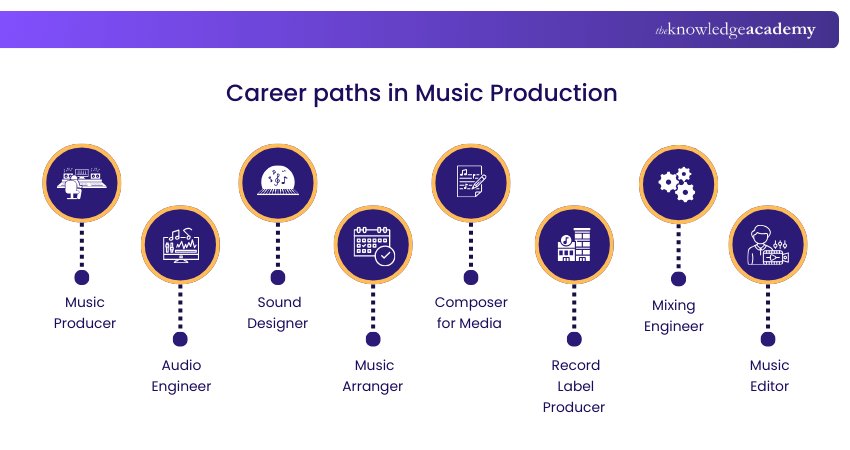
1) Music Producer
The Music Producer is the head of creative and technical music production, collaborating with artists to develop songs out of their ideas into final records. They manage recording, make important choices concerning arrangement, instrumentation and sound, and assist artists to achieve the tone and quality they want in their disks.
Their position is a combination of artistic vision and work at the studio to develop musical projects in various styles and environments.
2) Audio Engineer
Audio Engineers are technical experts responsible for recording, editing, mixing, and mastering music. They operate the recording equipment, capture clean and high-quality audio, and blend different tracks together to create a balanced and engaging mix.
Audio Engineers also handle post-production tasks, applying effects, EQ, and compression to enhance the sonic quality of the recordings. Their technical proficiency is essential for delivering polished and professional sound.
3) Sound Designer
Sound Designers are important in creating the audio experience in various media including films, games, commercials as well as other visual projects. To enhance mood, emotion and story, they make, manipulate and mix sounds to make every scene seem more immersive.
They create the ambient layers, effects and Foley, which gives the production a richness and reality that adds to the overall effect.
Learn the art of Music with our comprehensive Guitar Course – Register now and become a Guitarist!
4) Music Arranger
Music Arrangers are skilled at transforming musical compositions into different arrangements. They decide how instruments interact, create harmonies, and structure musical pieces to achieve specific emotional effects.
Arrangers may work on orchestral scores, adapt songs for different genres, or create intricate vocal arrangements. Their work showcases versatility and a deep understanding of musical structure and instrumentation.
5) Composer for Media
Composers for media specialise in creating original music for various visual platforms, including films, TV shows, commercials, and video games. They collaborate with directors, producers, and creators to develop music that enhances the narrative and atmosphere of the visual content.
With the help of Music Production Software, composers must be adept at interpreting visual cues and translating them into musical compositions that captivate audiences and enhance storytelling.
6) Record Label Producer
A Record Label Producer oversees the production process of multiple artists signed to a record label. They work closely with artists to ensure that their music aligns with the label's artistic vision and commercial goals.
Record Label Producers collaborate with Music Producers, engineers, and marketing teams to ensure that the artist's music is well-produced and strategically positioned in the market.
7) Mixing Engineer
While Audio Engineers handle the technical aspects of recording, Mixing Engineers specialise in crafting the final mix of a song. They balance individual tracks, apply effects, and create a cohesive sonic blend that showcases each element of the composition.
Mixing Engineers emphasise clarity, depth, and spatial placement. Thus, they ensure that the music sounds balanced and compelling across different playback systems.
8) Music Editor
A Music Editor works closely with composers, producers and directors to select, organise and fine-tune music for a project. They make sure that the tracks adjust to the time, mood and emotional transitions of films, TV shows, games or any other media and make accurate changes where necessary.
Music Editors are also involved in editing audios to fit the visuals and address any technical challenges to ensure the audio track is effective in the finished work.
Join our Mixing and Mastering Course today for a rewarding career in Music Production!
Skills and Knowledge Required for A Successful Music Career
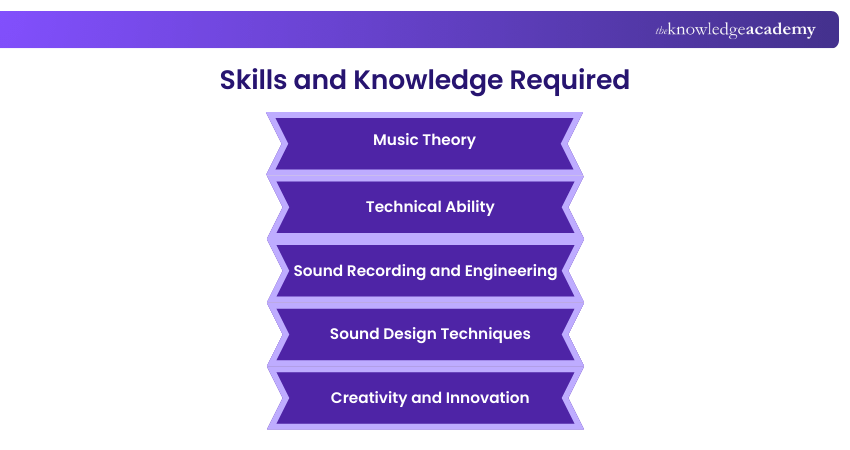
A successful Career in Music Production requires a diverse set of skills and an in-depth understanding of various aspects of the music creation process. If you are aspiring to Become a Music Producer, Audio Engineer, Sound Designer, or any other role within the field, mastering these skills and acquiring essential knowledge is crucial for achieving excellence and staying competitive in the ever-evolving music industry.
So, let’s delve into exploring the key skills and knowledge areas necessary to thrive in the world of Music Production:
1) Music Theory
A strong foundation in music theory is required for understanding the fundamental principles of melody, harmony, rhythm, and structure. Understanding scales, chords, and musical terminology empowers you to make informed decisions while arranging, composing, and producing music.
2) Technical Ability
Music producers require strong technical skill, beginning with proficiency in the use of Digital Audio Workstations (DAWs), such as Pro Tools, Logic Pro, Ableton Live or FL Studio. The skill required of you is that you should be able to record, edit, mix and master in your preferred software. Moreover, knowing about audio plugins, virtual instruments and the MIDI programming can assist you in shaping and refining your sound.
3) Sound Recording and Engineering
For roles like Audio Engineers and Recording Specialists, a strong grasp of microphone placement, signal flow, and studio acoustics is essential. Understanding how to capture high-quality sound and manage recording sessions effectively is vital for producing professional results.
4) Sound Design Techniques
Sound Designers need to have a creative approach to manipulating and creating audio. Familiarity with sound synthesis, sound effects libraries, Foley Art, and sound manipulation techniques allows you to craft unique and immersive sonic experiences.
5) Creativity and Innovation
Music Production is an art form that thrives on creativity. The ability to think outside the box, experiment with new sounds, and push creative boundaries distinguishes exceptional producers and creators.
6) Marketing and Branding
Branding and marketing are essential talents to every music professional who desires to shine out among the crowd in an overcrowded industry. This means having a clear identity, marketing your work and reaching your audience through platforms and channels.
Good branding allows you to express yourself, your style, and values, and effective marketing makes sure your music is available to the right audience and at the right time.
Conclusion
Careers in Music Production offer a symphony of possibilities, each note resonating with the unique talents and aspirations you bring to the table. Whether you're drawn to the role of a Music Producer, an Audio Engineer sculpting sonic perfection, a Sound Designer weaving immersive narratives, or a Composer painting emotions with melodies, your journey is yours to compose. The right Music Production Tips can help you navigate these different paths and excel in your chosen role.
Learn everything about Music Production with our Music Production Training and kickstart your career!
Frequently Asked Questions
Is Music Production a Good Career?

Yes. Music production can be a rewarding career for those who are passionate about music and willing to develop both creative and technical skills. It offers varied opportunities in recording, media, live sound and digital platforms, though it can be competitive and may require persistence to build a steady income and reputation.
Do You Need a Degree to Work in Music Production?
No, a degree is not always required to work in music production. Many professionals build successful careers through practical experience, technical skills, networking, and a strong portfolio rather than formal qualifications.
What are the Other Resources and Offers Provided by The Knowledge Academy?
The Knowledge Academy takes global learning to new heights, offering over 3,000+ online courses across 490+ locations in 190+ countries. This expansive reach ensures accessibility and convenience for learners worldwide.
Alongside our diverse Online Course Catalogue, encompassing 17 major categories, we go the extra mile by providing a plethora of free educational Online Resources like Blogs, eBooks, Interview Questions and Videos. Tailoring learning experiences further, professionals can unlock greater value through a wide range of special discounts, seasonal deals, and Exclusive Offers.
What is The Knowledge Pass, and How Does it Work?
The Knowledge Academy’s Knowledge Pass, a prepaid voucher, adds another layer of flexibility, allowing course bookings over a 12-month period. Join us on a journey where education knows no bounds.
What are the Related Courses and Blogs Provided by The Knowledge Academy?
The Knowledge Academy offers various Hobbies & Interests Courses, including the Music Production Course, Filmmaking Course and Piano Course. These courses cater to different skill levels, providing comprehensive insights into Music Theory.
Our Business Skills Blogs cover a range of topics related to Music Production, offering valuable resources, best practices, and industry insights. Whether you are a beginner or looking to advance your Music skills, The Knowledge Academy's diverse courses and informative blogs have got you covered.

The Knowledge Academy


Global Training Provider
The Knowledge Academy is a world-leading provider of professional training courses, offering globally recognised qualifications across a wide range of subjects. With expert trainers, up-to-date course material, and flexible learning options, we aim to empower professionals and organisations to achieve their goals through continuous learning.

Upcoming Business Skills Resources Batches & Dates
Date
 Music Production Course
Music Production Course
Fri 22nd May 2026
Music Production Course
Fri 21st Aug 2026
Music Production Course
Fri 13th Nov 2026

 If you wish to make any changes to your course, please


