


 Top Rated Course

We may not have the course you’re looking for. If you enquire or give us a call on +49 8000101090 and speak to our training experts, we may still be able to help with your training requirements.
What is NEFT: A Guide to National Electronic Funds Transfer
The Knowledge Academy 20 April 2026National Electronic Funds Transfer (NEFT) is an RBI-managed system enabling secure bank-to-bank money transfers in India, operating 24/7 in half-hourly batches. It allows individuals and businesses to transfer funds between bank accounts across the country. NEFT supports safe digital payments without minimum or maximum transfer limits.

Training Outcomes Within Your Budget!
We ensure quality, budget-alignment, and timely delivery by our expert instructors.
Table of Contents
Have you ever needed to send money to someone in another city and wondered which bank transfer option to choose? With digital banking becoming part of everyday life, transferring money has become faster and more convenient than ever. This is where understanding What is NEFT becomes useful, as it is one of the most used ways to transfer funds between bank accounts across India.
Whether you are paying bills, sending money to family, or completing business transactions, knowing What is NEFT can make your banking experience smoother and more secure. It allows users to transfer money electronically without visiting a bank branch, making every day financial transactions simple and reliable.
Table of Contents
1) What is NEFT?
2) How Does a NEFT Transfer Work?
3) Who Can Utilise NEFT?
4) Key Features of NEFT
5) NEFT Transfer Limit
6) Factors Influencing NEFT Settlement Duration
7) NEFT Service Charges
8) Transfer Money Using NEFT
9) Advantages of NEFT Payments
10) Is NEFT Transfer Safe?
11) What is the Difference Between NEFT and RTGS?
12) Conclusion
What is NEFT?
NEFT stands for National Electronic Funds Transfer. It's a nationwide payment system in India that allows electronic money transfers between bank accounts across the country. To use NEFT, banks and their branches must be part of the NEFT network. The Reserve Bank of India (RBI) regularly updates the list of banks and financial organisations that are part of the NEFT system.
Payment methods in India have been evolving pretty quickly. Now, a unified banking framework exists that has made money transfers more structured, reliable, and efficient. It supports the country’s rapidly growing financial landscape. Unlike other systems, such as Real-time Gross Settlement (RTGS), NEFT transactions are not settled in real-time but in batches, making them more suitable for smaller transactions.

How Does a NEFT Transfer Work?
NEFT operates through a secure, batch-based system that connects all participating banks. Here are the key steps of the process to help you better understand how NEFT works:
a) Initiation: The sender begins the transfer by submitting a NEFT request through their bank. They provide details like the beneficiary’s account number, name, branch and the amount to be transferred.
b) Processing: The sender’s bank forwards the request to the NEFT system during the next scheduled batch. The system processes and organises the transaction based on the beneficiary bank.
c) Interbank Transfer: NEFT then sends the transaction to the beneficiary’s bank in its designated batch. The beneficiary’s bank receives the instruction and credits the amount to the beneficiary’s account.
d) Confirmation: Once the transfer is complete, both parties receive confirmation. If any issue occurs, the sender is notified along with the reason for the failure.
Who Can Utilise NEFT?
NEFT is available to individuals, businesses, and non-account holders, making it versatile for various transactions. Here are the key groups who can utilise NEFT:
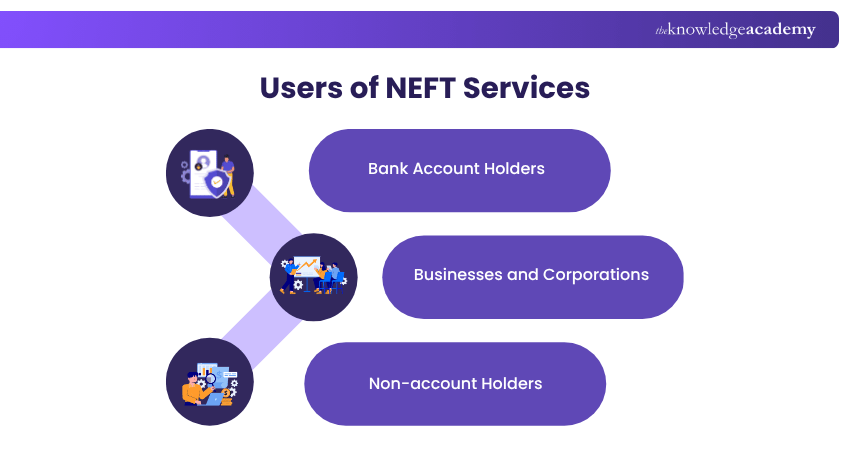
1) Bank Account Holders
Any individual with an account at a participating bank can use NEFT to make transfers via online banking. It offers a fast and secure way to send funds.
2) Businesses and Corporations
Businesses can use NEFT for bulk payments to employees, suppliers, and vendors, offering a cost-effective solution. It helps streamline Financial Operations.
3) Non-account Holders
Non-account holders can initiate NEFT transfers through the bank using cash or cheque, but the process may take longer. This option ensures a wider audience will have access to NEFT.
Gain expertise in analysing market trends and competitor strategies. Join our Revenue Management Training now!
Key Features of NEFT
NEFT offers several features that make it a convenient, reliable, and user-friendly way to transfer money. Some of the key features include:
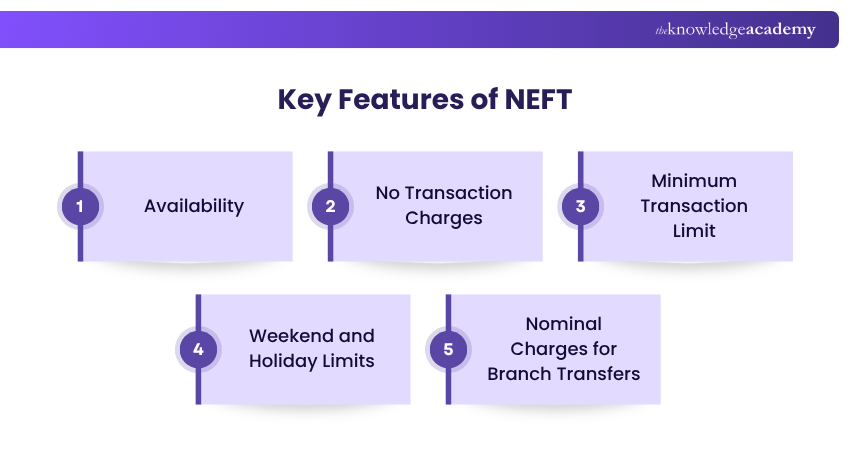
1) Availability:
As per guidelines from the Reserve Bank of India, the NEFT facility is available 24/7. Users can transfer funds at any time, including weekends and bank holidays.
2) No Transaction Charges:
NEFT transactions initiated through internet banking or mobile banking apps usually do not attract any charges, making it a cost-effective digital payment method.
3) Minimum Transaction Limit:
The minimum amount for an NEFT transfer can start from ₹1. The maximum transfer limit generally ranges between ₹10 lakh and ₹25 lakh, depending on the customer segment and the bank’s policies.
4) Weekend and Holiday Limits:
On certain days, such as the second and fourth Saturdays, Sundays, or RTGS holidays, some banks may apply different limits. In such cases, the maximum transfer amount may be limited to ₹2 lakh.
5) Nominal Charges for Branch Transfers:
If an NEFT transaction is carried out by visiting a bank branch instead of using online banking channels, banks may apply small service charges for processing the transfer.
NEFT Transfer Limit
The NEFT transfer limit is quite flexible, with no minimum amount. It allows transfers starting from just ₹1 and has no RBI-mandated maximum limit. However, individual banks may set their own daily limits based on account type, such as ₹10 lakh for retail customers, and may also impose transaction-wise caps, often around ₹2 lakh per transfer.
Factors Influencing NEFT Settlement Duration
Here are the factors influencing NEFT settlement:
1) Cut-off Times
a) Each batch has a set cut-off time.
b) Transfers started after the cut-off will be processed in the next available batch.
c) This secures all transactions in a batch and processes them together, causing small delays for late transfers.
2) Banking Operational Hours
a) NEFT is only available during the working hours of banks, typically Monday to Friday.
b) Transactions cannot be processed on bank holidays or weekends.
c) Transactions made outside banking hours will be processed on the next banking day.
3) Technical Disruptions
a) NEFT is generally reliable, but any technical issues (server downtimes, connectivity problems) can delay processing.
b) These disruptions, though rare, can affect both transaction initiation and settlement times.
4) RBI Regulations
a) Reserve Bank of India (RBI) regulates the NEFT system, and any updates from them can impact processing times.
b) New policies or adjustments in RBI regulations may alter cut-off times or batch schedules, leading to delays or faster processing.
Learn the secrets of international finance with our expert-led Foreign Exchange Training - Sign up now!
NEFT Service Charges
There are no charges for receiving money through NEFT. However, sending money via NEFT may involve a small fee, depending on the transfer amount. These are the fee structures of NEFT:
a) Transfers up to ₹10,000: ₹2.50
b) ₹10,001 to ₹1,00,000: ₹5.00
c) ₹1,00,001 to ₹2,00,000: ₹15.00
d) Above ₹2,00,000: ₹25.00
Transfer Money Using NEFT
NEFT allows individuals and businesses to transfer money electronically between bank accounts across India using the internet or mobile banking. Follow these steps to transfer money using NEFT:
1) Log In:
Open your bank’s internet banking website or banking application and log in using your credentials.
2) Add Beneficiary:
Go to the “Fund Transfer” section and select “Add New Beneficiary.” Enter the recipient’s name, bank account number, and IFSC code.
3) Wait for Beneficiary Activation:
Some banks require a short waiting period, usually between 30 minutes and a few hours, before a new beneficiary becomes active.
4) Initiate the Transfer:
Select the activated beneficiary, enter the amount you want to send, and choose NEFT as the transfer method.
5) Confirm the Transaction:
Verify the transfer using the OTP or transaction password sent to your registered mobile number.
6) Receive Confirmation:
After successful verification, the bank processes the transaction and provides a confirmation message or transaction reference number.
Learn strategies for profitable Cryptocurrency trading with our Cryptocurrency Trading Training – Join today!
Advantages of NEFT Payments
Here are the key advantages of NEFT payments:
a) Fast and Secure: NEFT ensures safe and reliable money transfers. Funds are sent to the receiver’s account quickly, reducing unnecessary delays.
b) Available 24/7: You can transfer money anytime, day or night, on weekends or even bank holidays, through online or mobile banking.
c) Nationwide Reach: NEFT connects almost all banks across India, making it easy to send money anywhere in the country without location concerns.
d) Transaction Alerts: Both the sender and receiver get SMS notifications once the transfer is successfully completed.
e) Multiple Uses: Apart from regular fund transfers, NEFT can be used to pay credit card bills, insurance premiums, EMIs, or receive inward remittances.
Is NEFT Transfer Safe?
Yes, NEFT is very safe. It is governed by the Reserve Bank of India (RBI) and uses secure banking systems to protect your information. Since the money moves directly between verified bank accounts, the risk of fraud or error is very low.
What is the Difference Between NEFT and RTGS?
NEFT and Real-time Gross Settlement (RTGS) are both systems used to send money between bank accounts. The main difference is speed and amount. NEFT takes a little time because it works in batches, while RTGS sends money right away in real time. NEFT has no minimum limit, but RTGS is for large payments where you must send at least ₹2 lakh.
Conclusion
Understanding What is NEFT helps individuals and businesses transfer money securely and efficiently between bank accounts across India. This digital payment system makes everyday transactions such as bill payments, business transfers, and sending money to family or friends simple, reliable, and convenient through online and mobile banking.
Become familiar with all crucial aspects of investing and trading with our Investment and Trading Training – Join today!
Frequently Asked Questions
Is NEFT Free for all Banks?

Yes, NEFT is free when you transfer money online through the internet or mobile banking. The Reserve Bank of India (RBI) has made online NEFT transfers free to support digital payments. But if you do it by visiting a bank branch, some banks may charge a small fee. It’s good to check with your bank first.
How Does NEFT Work Internationally?
NEFT is mainly used for transferring money within India and cannot be used directly for sending funds abroad. For international transfers, banks use systems like SWIFT or wire transfers. Some banks link these systems with NEFT to allow money from abroad to reach Indian accounts easily.
What are the Other Resources and Offers Provided by The Knowledge Academy?
The Knowledge Academy takes global learning to new heights, offering over 3,000+ online courses across 490+ locations in 190+ countries. This expansive reach ensures accessibility and convenience for learners worldwide.
Alongside our diverse Online Course Catalogue, encompassing 17 major categories, we go the extra mile by providing a plethora of free educational Online Resources like Blogs, eBooks, Interview Questions and Videos. Tailoring learning experiences further, professionals can unlock greater value through a wide range of special discounts, seasonal deals, and Exclusive Offers.
What is The Knowledge Pass, and How Does it Work?
The Knowledge Academy’s Knowledge Pass, a prepaid voucher, adds another layer of flexibility, allowing course bookings over a 12-month period. Join us on a journey where education knows no bounds.
What are the Related Courses and Blogs Provided by The Knowledge Academy?
The Knowledge Academy offers various Investment and Trading Training, including Investment Banking Training, Revenue Management Training, and Foreign Exchange Training. These courses cater to different skill levels, providing comprehensive insights into Foreign Portfolio Investment (FPI).
Our Business Skills Blogs cover a range of topics related to NEFT, offering valuable resources, best practices, and industry insights. Whether you are a beginner or looking to advance your Digital Banking knowledge, The Knowledge Academy's diverse courses and informative blogs have got you covered.

The Knowledge Academy


Global Training Provider
The Knowledge Academy is a world-leading provider of professional training courses, offering globally recognised qualifications across a wide range of subjects. With expert trainers, up-to-date course material, and flexible learning options, we aim to empower professionals and organisations to achieve their goals through continuous learning.

Upcoming Business Skills Resources Batches & Dates
Date
 Investment Banking Training Course
Investment Banking Training Course
Fri 14th Aug 2026
Investment Banking Training Course
Fri 6th Nov 2026

 If you wish to make any changes to your course, please


