


 Top Rated Course

We may not have the course you’re looking for. If you enquire or give us a call on +49 8000101090 and speak to our training experts, we may still be able to help with your training requirements.
What is Historical Fiction? Elements, Types and Tips
The Knowledge Academy 01 April 2026Historical fiction is a genre where fictional stories are set in real historical periods, blending imagined characters with actual events and settings. It brings the past to life through vivid and engaging immersive narratives. It helps readers deeply connect with history in a more meaningful, memorable, and impactful way.

Training Outcomes Within Your Budget!
We ensure quality, budget-alignment, and timely delivery by our expert instructors.
Table of Contents
Stories have always been a way to explore the past, but some go beyond facts to create experiences. If you are wondering What Is Historical Fiction, it is a genre that blends real historical settings with imaginative storytelling to make history engaging and relatable.
By weaving together fact and fiction, this genre allows readers to see history through a human lens, filled with emotions, conflicts, and perspectives. Let us now explore how historical fiction works, its key elements, and why it continues to captivate readers.
Table of Contents
1) What is Historical Fiction?
2) Important Features of Historical Fiction
3) Key Elements of Historical Fiction
4) Different Types of Historical Fiction
5) Tips for Crafting Historical Fiction
6) Selecting Historical Fiction Books for Children
7) How is Historical Fiction Different From Historical Non-fiction?
8) Conclusion
What is Historical Fiction?
Historical fiction is a literary genre in which the story takes place in the past. Historical novels capture the details and essence of the time period being explored as accurately as possible for authenticity, including social norms, customs, manners, and traditions. Numerous novels in this genre tell fictional stories involving actual historical figures or events. Essentially, historical fiction combines crucial elements of fiction and non-fiction narratives.

Important Features of Historical Fiction
These are the most important features of historical fiction:
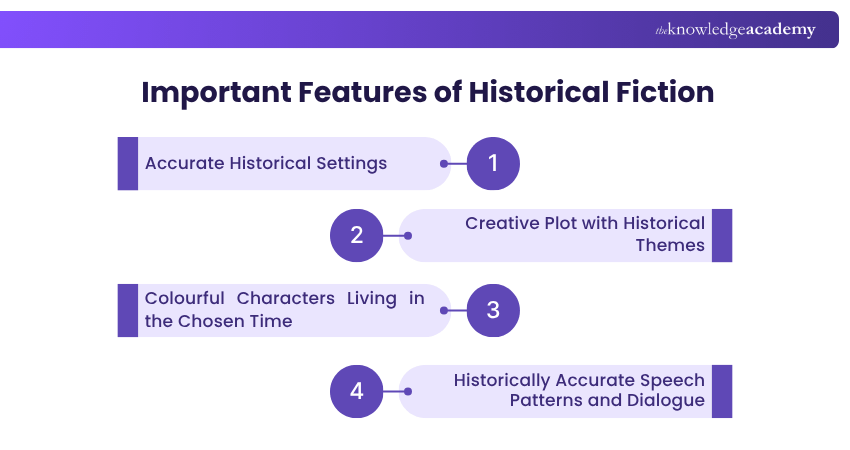
1) Accurate Historical Settings: The most vital feature of historical fiction is a historically accurate setting. This may be a specific event, year, or notable period identifiable by its unique social norms and experiences. Examples of settings you could use in historical fiction include London in the 1920s or the UK during World War II. These historically accurate settings and dates differentiate historical fiction from other genres.
2) Creative Plot with Historical Themes: Fantasy and imagination are essential ingredients of historical fiction. A creative plot that combines fictional events with historical events of the time is a vital feature. For example, the novel 'The Book Thief' by Markus Zusak follows the life of a young girl who's a passionate reader set in Nazi Germany during World War II.
3) Colourful Characters Living in the Chosen Time: Similarly to the plot features of historical fiction, the characters in historical fiction can be fictional, real or both. While it's okay to let your imagination run wild with fictional characters, they must all speak, look, and act in ways reflective of the era.
4) Historically Accurate Speech Patterns and Dialogue: The speech and behavioural patterns must reflect the traditions of that real-time period. They should spotlight the status and class of the characters speaking in the story. For example, characters in the 1920s UK would not use modern-day American slang words and also wouldn't reference current technologies.
Key Elements of Historical Fiction
Historical fiction relies on several core elements that create an accurate and engaging picture of the past. Each element helps build a believable world while supporting a compelling story.
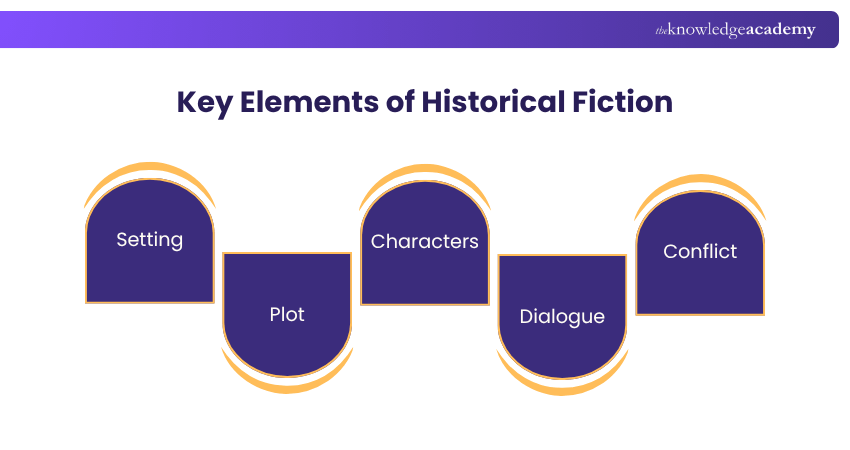
1) Setting
The setting must be based on a real historical period and a believable location from that time. Writers use accurate cultural and social details to bring the era to life.
Example: A story set in New York during the Great Depression might show long breadlines and widespread job loss. A novel set in Paris in World War II may portray occupation and resistance activity.
2) Plot
The plot combines invented events with real historical situations in a way that feels true to the period. Major historical moments often guide or influence the story.
Example: A novel set in London in 1666 may follow fictional families while including the Great Fire as a major event. The fire naturally shapes characters’ experiences.
3) Characters
Characters must act, speak, and think in ways that reflect the beliefs and expectations of the era. Their backgrounds should remain consistent with real historical conditions.
Example: A story about Mary Tudor must acknowledge her royal lineage and religious challenges. These factors shaped her life and cannot be changed without losing accuracy.
4) Dialogue
Dialogue should use language that fits the time period while remaining clear for modern readers. It should reflect class, culture, and regional differences.
Example: British soldiers in the Revolutionary War would speak using vocabulary from the eighteenth century. They would not use modern slang or expressions.
5) Conflict
Conflicts should arise from real struggles faced during that historical era, such as war, politics, or social limits. These pressures drive the story and shape character decisions.
Example: A German soldier heading to the Eastern Front may feel fear and moral tension. His conflict reflects the harsh realities of World War II.
Tell stories that matter - join our Journalism Course and shape the future of media today!
Different Types of Historical Fiction
While every work of historical fiction must be set in the past, there's still lots of freedom and flexibility to play with in terms of form and themes. Here's a list of the various types of historical fiction.
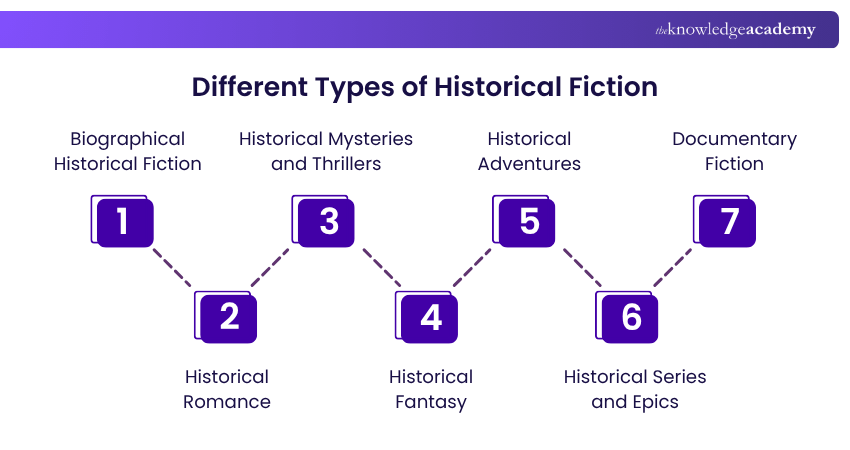
1) Biographical Historical Fiction
This subgenre recounts a fictionalised story of a real person's life. Biographical historical fiction can also narrate stories about a specific group of people. A good example is Charles Johnson’s 'Middle Passage,' which details the horrors of the slave trade.
2) Historical Romance
Historical romance narrates love stories set in the past. 'Gone with the Wind' by Margaret Mitchell is a famous example which follows a young woman and widow named Scarlett O’Hara during the Civil War.
3) Historical Mysteries and Thrillers
This style shares the themes and tropes of contemporary mystery and thriller genres, but the main difference is that it is set in the past. A fascinating example is ‘The Mystery of Mrs. Christie’ by Marie Benedict. This is a fictionalised account of the real disappearance of the famous detective fiction author Agatha Christie.
4) Historical Fantasy
Historical fantasy equips authors with the freedom to change specific details of the past while holding onto others. For instance, ‘Outlander’ written by Diana Gabaldon, tells the story of Claire Randall, a nurse working during World War II who finds herself transported back in time to 18th-century Scotland.
5) Historical Adventures
These stories describe journeys, such as Homer's 'Odyssey', which details the past victories of the Greek hero. Another great example of this style is ‘The Three Musketeers’ by Alexandre Dumas which is set in 17th century France and relates the adventures of d’Artagnan and his three friends, the musketeers Athos, Porthos, and Aramis.
6) Historical Series and Epics
These are narratives that encompass several eras, often in many different settings. For instance, Frank Delaney's 'Ireland' covers all the tales historically significant to the country, from ancient kings to 20th century triumphs.
7) Documentary Fiction
Documentary fiction (also known as docufiction) is the cinematographic combination of fiction and documentary. This film genre's goal is to capture reality as it is while introducing fictional elements into the narrative.
Build skills for independent career success with Personal Development Courses now!
Tips for Crafting Historical Fiction
Now that you’ve explored the essential features, components and categories of historical fiction, it’s time for some expert tips. The tips listed below will help you get started and create a momentum for your writing.
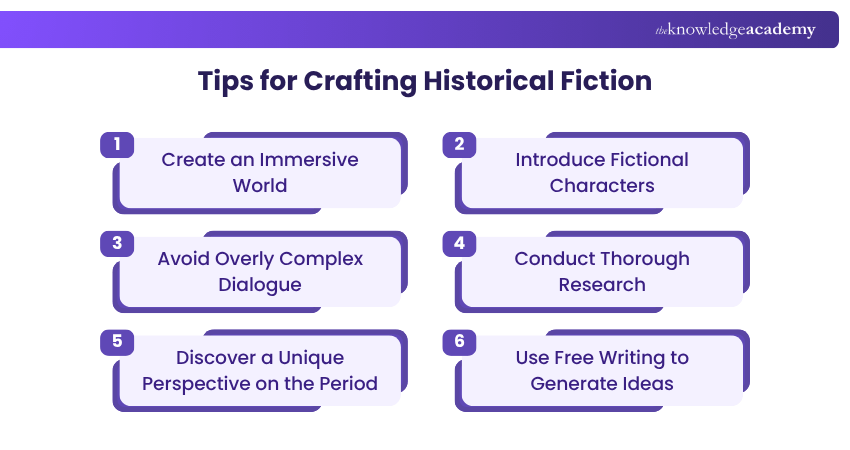
1) Create an Immersive World
Immersive World-building makes historical fiction more authentic and gives readers a reason to keep revisiting. The details of the world must provide readers with some historical context and balance it with familiar, relatable details to keep the story grounded. However, it's advisable not to add information just to fill pages. Every part of the world-building must advance the story.
2) Introduce Fictional Characters
Even if you are writing about true events, creative liberties are more than welcome. Introducing fictional characters to complement actual historical figures can help you drive the story along, inject genuine personality, and keep it entertaining.
3) Avoid Overly Complex Dialogue
Different historical eras contain different vocabulary and grammatical structures. While you must include occasional words and phrases to reinforce the historical setting, don’t include so many that the novel becomes a chore to read.
4) Conduct Thorough Research
On top of getting the historical facts right, the smaller details are vital too. You can write an inventory of the details that you haven’t researched but should check. Likely, these will be small things such as colour of buildings during those times or how much a stable boy earned in medieval times. Such accuracy will keep a reader interested and lend greater credibility to the story.
5) Discover a Unique Perspective on the Period
You can consider using a historical time period as a backdrop and putting fictional characters within that world. Conversely, you can choose a fictional event and put real-world historical characters in it. In case of a series, you can bring the fictional and real-world characters together in a later instalment to create more excitement.
6) Use Free Writing to Generate Ideas
If you’re keen on writing historical fiction but don’t know where to begin, here's something you must try: Spend 15 minutes on your notebook writing about a time period or historical event that interests you. Note any assumptions you may have about the period, cultural depictions of it from other books and movies, and what precisely fascinates you about this moment in history.
Explore the craft of speedwriting in our detailed Speed Writing Course - Register now!
Selecting Historical Fiction Books for Children
Learning about and reading historical fiction is a powerful way to engage children in both literacy skills and historical events. It helps them interpret events that occurred at a time far removed from their own life experience. When exploring Fiction vs Nonfiction, historical fiction offers a unique way to blend imaginative storytelling with real-world events. Here are some perfect pieces of historical fiction for kids:
1) Journey of the Pale Bear by Susan Fletcher: Based on a true story, this book relates the tale of a polar bear sent by the King of Sweden as a gift to the King of England. In it, the character Arthur is put in the bear’s cage as punishment, but the two become friends and go on an exciting but perilous journey to the bear’s new home.
2) Private Peaceful by Michael Morpurgo: Told from the perspective of Private Tommo Peaceful, this book follows the 24 hours he spent at the frontline during WW1, and captures his memories of his family and his village life.
3) The Bicycle Spy by Yona Zeldis McDonough: The story follows bicycle-loving Marcel who's upset about the Nazi invasion of France cancelling the Tour de France. Then he finds himself in a position where he must make a dangerous bicycle journey to pass important information.
4) Little House on the Prairie by Laura Ingalls Wilder: Based on the author’s own life, the story follows the story of the Ingalls family. In it, they leave their little house in the Big Woods of Wisconsin and travel to Kansas with the hope of building a new home.
How is Historical Fiction Different from Historical Non-fiction?
Historical non-fiction presents the past using verified facts, records, and credible sources. It avoids invented characters or events and focuses on accuracy. The goal is to inform and document real history.
Historical fiction, on the other hand, blends real settings with imaginative storytelling. Writers create characters and scenarios while staying true to the time period. This makes the narrative more engaging and emotionally driven.
Conclusion
Historical fiction offers a unique way to experience the past by blending facts with compelling storytelling. If you have ever wondered What Is Historical Fiction, it is a genre that brings history to life through imagination and emotion. By combining authenticity with creativity, it continues to captivate readers and make history more engaging and memorable.
Expand your Creative Writing skills and learn to overcome storytelling challenges in our comprehensive Creative Writing Course – Sign up now!
Frequently Asked Questions
What are the Tips on Researching and Writing Historical Fiction?

Focus on thorough research using reliable sources to accurately understand the time period, including both major events and everyday details. Keep the storytelling engaging by weaving research naturally into the narrative without overwhelming the reader.
What are Some Popular Historical Fiction Books?
Some popular historical fiction books include The Women by Kristin Hannah, The Briar Club by Kate Quinn, and The Fox Wife by Yangsze Choo. Other notable titles like Long Island by Colm Tóibín also showcase the genre’s rich storytelling and historical depth.
What are the Other Resources and Offers Provided by The Knowledge Academy?
The Knowledge Academy takes global learning to new heights, offering over 3,000+ online courses across 490+ locations in 190+ countries. This expansive reach ensures accessibility and convenience for learners worldwide.
Alongside our diverse Online Course Catalogue, encompassing 17 major categories, we go the extra mile by providing a plethora of free educational Online Resources like Blogs, eBooks, Interview Questions and Videos. Tailoring learning experiences further, professionals can unlock greater value through a wide range of special discounts, seasonal deals, and Exclusive Offers.
What is The Knowledge Pass, and How Does it Work?
The Knowledge Academy’s Knowledge Pass, a prepaid voucher, adds another layer of flexibility, allowing course bookings over a 12-month period. Join us on a journey where education knows no bounds.
What are the Related Courses and Blogs Provided by The Knowledge Academy?
The Knowledge Academy offers various Personal Development Courses, including the Time Management Training, Speed Writing Course, and Self-Publishing Course. These courses cater to different skill levels, providing comprehensive insights into Improving Focus and Concentration.
Our Business Skills Blogs cover a range of topics related to Historical Fiction, offering valuable resources, best practices, and industry insights. Whether you are a beginner or looking to advance your Storytelling skills, The Knowledge Academy's diverse courses and informative blogs have got you covered.

The Knowledge Academy


Global Training Provider
The Knowledge Academy is a world-leading provider of professional training courses, offering globally recognised qualifications across a wide range of subjects. With expert trainers, up-to-date course material, and flexible learning options, we aim to empower professionals and organisations to achieve their goals through continuous learning.

Upcoming Business Skills Resources Batches & Dates
Date
 Fiction Writing Course
Fiction Writing Course
Fri 14th Aug 2026
Fiction Writing Course
Fri 6th Nov 2026

 If you wish to make any changes to your course, please


