


 Top Rated Course

We may not have the course you’re looking for. If you enquire or give us a call on +49 8000101090 and speak to our training experts, we may still be able to help with your training requirements.
What is Transformational Leadership? A Complete Guide
Benjamin Walker 08 April 2026Transformational leadership inspires and empowers teams to achieve exceptional results, drive innovation, and build a strong, shared organisational vision. It motivates employees through trust, clear communication, and purpose. This approach helps organisations adapt, improve performance, and achieve long-term success.

Training Outcomes Within Your Budget!
We ensure quality, budget-alignment, and timely delivery by our expert instructors.
Table of Contents

Transformational Leadership emerges as a powerful paradigm characterised by its ability to inspire, motivate, and drive positive change within organisations. When exploring what Transformational Leadership is, it becomes clear that this approach goes beyond traditional management by fostering innovation, building trust, and empowering individuals to reach their full potential. Discover how it inspires growth and creates lasting organisational impact.
Table of Contents
1) What is Transformational Leadership?
2) Four components of Transformational Leadership
3) Characteristics of a Transformational Leader
4) The Advantages of Transformational Leadership
5) Transformational Leadership Weaknesses and Solutions
6) How does Transformational Leadership Differ from Transactional Leadership?
7) When is Transformational Leadership Most Effective?
8) Conclusion
What is Transformational Leadership?
Transformational Leadership is a leadership style that encourages innovation and supports organisational change to achieve long-term success. Leaders inspire their teams by setting a clear vision, leading by example, and building trust through authenticity and strong values.
This approach focuses on empowering employees by giving them ownership of their work and the freedom to make decisions without constant supervision. Transformational Leaders also recognise new trends and guide their teams in adapting to changes, especially in evolving business and technology environments.
In addition, this leadership style promotes creativity, critical thinking, and continuous improvement. Through mentorship and development, it helps build future leaders who can drive innovation and maintain a culture of growth and adaptability.

Four Components of Transformational Leadership
Transformational Leadership is based on four essential components that help leaders inspire teams, encourage innovation, and drive meaningful organisational change. These elements, often called the “four I’s,” work together to improve performance, build trust, and create a strong sense of purpose within teams. Let’s explore the four components in detail:
a) Personalised Consideration
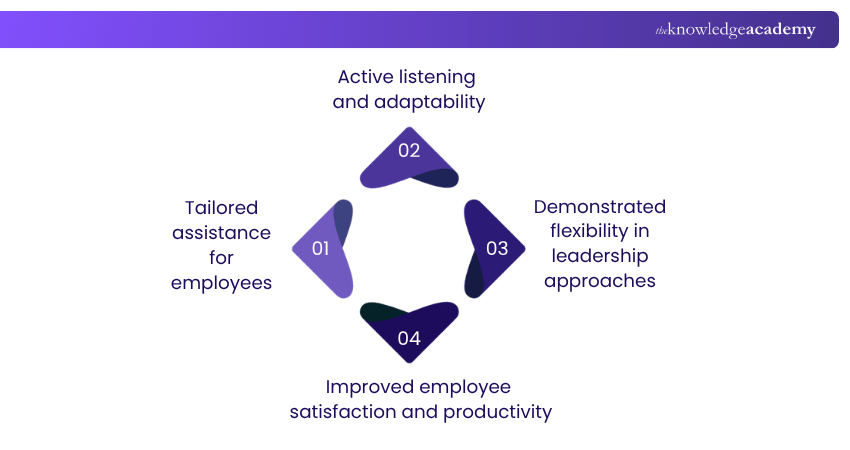
Personalised consideration focuses on understanding and supporting each employee individually. Transformational Leaders recognise that every team member has different goals, strengths, and motivations.
They provide mentorship, offer guidance, and create opportunities for growth. By building strong relationships and offering personalised support, leaders improve engagement, confidence, and overall performance within the team.
b) Exemplary Influence
Exemplary influence refers to leaders acting as role models for their teams. Transformational Leaders demonstrate integrity, strong values, and ethical behaviour in everything they do.
Their actions build trust and respect, encouraging employees to follow their example. This creates a culture of accountability and commitment, where team members align with shared values and organisational goals.
c) Intellectual Stimulation
Intellectual stimulation encourages employees to think creatively and challenge existing processes. Transformational Leaders promote innovation by welcoming new ideas and supporting different perspectives.
They create an environment where questioning assumptions and learning from mistakes is encouraged. This helps teams develop better solutions, improve processes, and adapt to change more effectively.
d) Vision Articulation
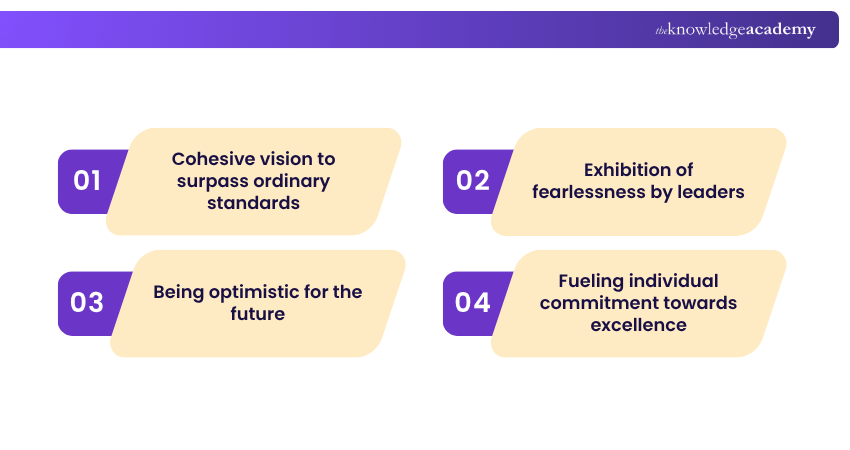
Vision articulation involves communicating a clear and inspiring future goal. Transformational Leaders motivate their teams by connecting daily tasks to a larger purpose and direction.
By sharing a strong vision and maintaining optimism, they inspire employees to perform beyond expectations. This shared sense of purpose helps teams stay focused, driven, and aligned with organisational success.
Strengthen the assessment of learning outcomes with this Instructional Design Training – Register Today!
Characteristics of a Transformational Leader
Transformational Leaders demonstrate key qualities that help them inspire teams, drive change, and build a strong organisational culture. Some of the main characteristics include:
1) Inspirational Mindset: They motivate employees by encouraging creativity, new ideas, and innovative thinking, helping teams go beyond routine work.
2) Strong Vision: They have a clear and compelling vision for the future and communicate it effectively, so employees understand their purpose and direction.
3) Empowerment of Employees: They build trust and give employees the freedom to make decisions, promoting ownership and confidence in their roles.
4) Adaptability to Change: They remain open to new ideas and approaches, enabling teams to respond effectively to changing business environments.
5) Focus on Development: They support continuous learning by mentoring and guiding employees, helping them grow both professionally and personally.
6) Effective Communication: They communicate clearly and consistently, ensuring alignment between individual efforts and organisational goals.
7) Integrity and Authenticity: They lead by example, demonstrating honesty and strong values, which builds trust and credibility within the team.
8) Collaborative Approach: They encourage teamwork and create an inclusive environment where every individual feels valued and heard.
The Advantages of Transformational Leadership
Transformational Leadership offers several benefits that help organisations improve performance, build strong teams, and adapt to change effectively. Some of the key advantages include:
1) Higher Employee Retention: Transformational Leaders create a positive work environment where employees feel valued and motivated, helping organisations retain talent and reduce turnover costs.
2) Improved Employee Engagement: By giving employees a clear role and purpose, leaders increase motivation and commitment, encouraging individuals to contribute actively to organisational goals.
3) Better Problem-solving and Innovation: These leaders are skilled at identifying gaps or challenges and finding effective solutions, which supports innovation and continuous improvement.
4) Stronger Organisational Culture: Transformational Leadership promotes trust, collaboration, and shared values, helping build a cohesive and supportive workplace environment.
5) Enhanced Productivity and Performance: Motivated and empowered employees are more likely to perform at higher levels, contributing to improved overall organisational success.
6) Greater Adaptability to Change: With a strong vision and openness to new ideas, transformational leaders help organisations respond effectively to changes in the business environment.
Transformational Leadership Weaknesses and Solutions
While Transformational Leadership offers many benefits, it also has certain limitations if not managed properly. Understanding these weaknesses and applying the right solutions can help leaders maintain balance and effectiveness.
1) Lack of Focus on Tasks: Transformational Leaders often emphasise vision and inspiration, which may lead to unclear roles or missed details.
Solution: Set clear goals, define responsibilities, and track progress regularly to maintain structure.
2) Overemphasis on Long-term Vision: Focusing heavily on future goals can result in neglecting short-term objectives and daily operations.
Solution: Combine long-term vision with short-term milestones to ensure steady progress.
3) Risk of Employee Burnout: High expectations and continuous motivation can make employees feel pressured or overworked.
Solution: Promote work-life balance, recognise efforts, and provide adequate support to avoid burnout.
4) Lack of Structure and Guidance: Encouraging independence may leave some employees unsure about tasks or expectations.
Solution: Provide clear instructions, regular feedback, and structured processes alongside empowerment.
5) Dependence on Employee Alignment: This leadership style works best when employees share the leader’s vision. If they do not, effectiveness may reduce.
Solution: Communicate the vision clearly and involve employees in decision-making to build alignment.
6) Ignoring Important Details: Leaders may focus more on big-picture ideas and overlook critical operational details.
Solution: Balance strategic thinking with attention to detail and assign team members to manage execution.
Enhance your leadership skills with our Leadership and Management Course – Sign Up!
How does Transformational Leadership Differ from Transactional Leadership?
Transformational Leadership and Transactional Leadership differ mainly in their approach to managing people, motivating teams, and achieving organisational goals. While one focuses on inspiring change, the other emphasises structure and consistency.
1) Approach: Transformational Leadership inspires employees through a shared vision and encourages creativity and innovation. In contrast, Transactional Leadership follows a structured, top-down approach with clearly defined roles and processes.
2) Motivation Style: Transformational Leaders focus on intrinsic motivation by building trust, supporting personal development, and empowering employees. Transactional Leaders rely on extrinsic motivation, using rewards for performance and penalties for failure.
3) Focus and Goals: Transformational Leadership aims for long-term growth, innovation, and organisational change. Transactional Leadership focuses on short-term goals, efficiency, and completing tasks within set guidelines.
4) Leadership Style: Transformational Leaders are visionary, supportive, and encourage independent thinking. Transactional Leaders are task-oriented, focusing on compliance, routine, and maintaining stability.
5) Organisational Impact: Transformational Leadership drives change and helps organisations adapt and grow. Transactional Leadership maintains the status quo by ensuring processes run smoothly and targets are met consistently.
When is Transformational Leadership Most Effective?
Transformational Leadership is most effective in situations where organisations need to adapt and move beyond routine ways of working. It plays a key role during periods of significant change, such as restructuring or market disruption, where strong direction and a clear vision are needed to guide teams forward. In such environments, leaders help employees stay aligned and focused despite uncertainty.
This leadership style is particularly valuable in innovation-driven industries like technology and healthcare, where continuous improvement and creative thinking are essential. It also works well when organisations aim to transform their culture, encouraging more collaboration and flexibility across teams.
Additionally, transformational leadership is highly effective when employee engagement is low or when organisations are experiencing growth. By connecting individual roles to a broader purpose, leaders can rebuild motivation and strengthen commitment, especially in teams that are open to change and willing to take initiative.Motivate and inspire your team by signing up for our Leadership Courses now!
Conclusion
Transformational Leadership stands as a beacon of inspiration and innovation in today’s dynamic organisational landscape. Understanding what is Transformational Leadership highlights how authenticity, collaboration, and continuous growth empower teams to achieve success, drive positive change, and shape the future of leadership across diverse industries.
Frequently Asked Questions
How can I work for the Transformational Leadership Council?

To contribute to the Transformational Leadership Council, start by researching their current initiatives and areas of focus. Consider contacting the council to express your interest and inquire about opportunities for involvement. Showcase your relevant skills, experiences, and passion for Transformational Leadership in your communication.
What is the Transformational Leadership Council?
The Transformational Leadership Council (TLC) is a prestigious organisation comprising thought Leaders, innovators, and influencers dedicated to promoting and advancing Transformational Leadership principles. It serves as a platform for collaboration, networking, and sharing best practices among its members, who include CEOs, authors, speakers, and experts from various fields.
What are the other resources and offers provided by The Knowledge Academy?
The Knowledge Academy takes global learning to new heights, offering over 3,000+ online courses across 490+ locations in 190+ countries. This expansive reach ensures accessibility and convenience for learners worldwide.
Alongside our diverse Online Course Catalogue, encompassing 17 major categories, we go the extra mile by providing a plethora of free educational Online Resources like Blogs, eBooks, Interview Questions and Videos. Tailoring learning experiences further, professionals can unlock greater value through a wide range of special discounts, seasonal deals, and Exclusive Offers.
What is the Knowledge Pass, and how does it work?
The Knowledge Academy’s Knowledge Pass, a prepaid voucher, adds another layer of flexibility, allowing course bookings over a 12-month period. Join us on a journey where education knows no bounds.
What are the related Leadership courses and blogs provided by The Knowledge Academy?
The Knowledge Academy offers various Leadership Courses, including Leadership Skills, Creative Leader Thinking and Creative and Analytical Thinking. These courses cater to different skill levels, providing comprehensive insights into Leadership Qualities.
Our Leadership Training blogs cover a range of topics related to Leadership and analytical thinking, offering valuable resources, best practices, and industry insights. Whether you are a beginner or looking to advance your Leadership skills, The Knowledge Academy's diverse courses and informative blogs have you covered.

Benjamin Walker


Leadership Development Coach and Management Consultant
Benjamin Walker is a leadership coach and business consultant with over 18 years of experience in guiding organisations through strategic growth and transformation. He specialises in developing leadership capabilities at all levels, from emerging managers to executive teams. Benjamin’s work focuses on practical leadership, team dynamics, and performance management.
View Detail
Upcoming Business Skills Resources Batches & Dates
Date
 Leadership Skills Training
Leadership Skills Training
Fri 31st Jul 2026
Leadership Skills Training
Fri 2nd Oct 2026
Leadership Skills Training
Fri 27th Nov 2026

 If you wish to make any changes to your course, please


