


 Top Rated Course

We may not have the course you’re looking for. If you enquire or give us a call on +49 8000101090 and speak to our training experts, we may still be able to help with your training requirements.
Getting Back into Work: 11 Expert Tips to Restart Your Career
The Knowledge Academy 10 April 2026Plan your return to work by updating skills and resume, networking, exploring flexible roles, and considering a phased approach for confidence. Stay positive and set clear, realistic goals for yourself ahead and stay focused. Take small, consistent steps each day to rebuild your momentum and confidence gradually over time.

Training Outcomes Within Your Budget!
We ensure quality, budget-alignment, and timely delivery by our expert instructors.
Table of Contents

Stepping back into the professional world after a break can feel both exciting and uncertain. Whether your time away was for personal growth, caregiving, or a career reset, Getting Back into Work is all about rediscovering your strengths and finding the right path forward.
With the right mindset and a clear plan, returning to work can open doors to new opportunities and renewed confidence. In this blog, we’ll explore practical steps to help you transition smoothly and make your comeback a success.
Table of Contents
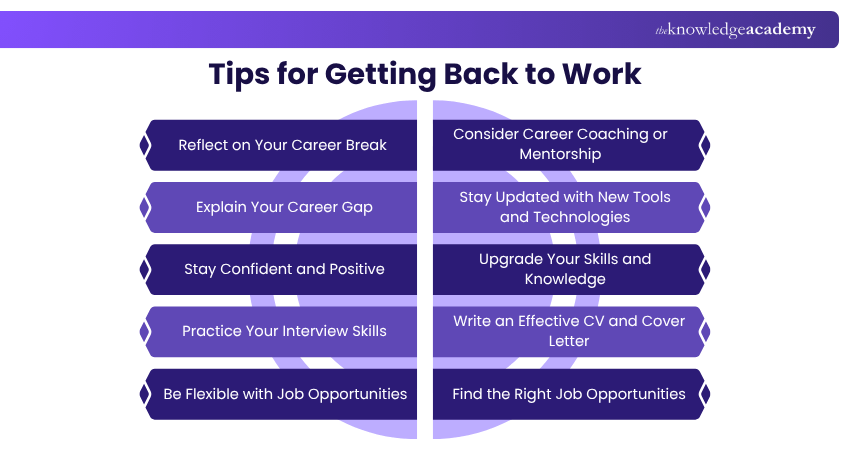
1) Useful Tips for Getting Back to Work
a) Reflect on Your Career Break
b) Explain Your Career Gap
c) Stay Confident and Positive
d) Practice Your Interview Skills
e) Be Flexible with Job Opportunities
f) Consider Career Coaching or Mentorship
g) Stay Updated with New Tools and Technologies
h) Upgrade Your Skills and Knowledge
i) Write an Effective CV and Cover Letter
j) Find the Right Job Opportunities
2) Common Mistakes to Avoid When Returning to Work
3) Conclusion
Useful Tips for Getting Back to Work
Here are some practical tips to help you make a smooth transition and confidently re-enter the workforce.
1) Reflect on Your Career Break
Before getting back into job hunting, take some time to reflect on your career break and consider How to Effectively Include Career Break in Resume. What were the reasons for your time away? How have you grown or changed during this period? Understanding these aspects can help you frame your break positively and confidently when discussing it with potential employers.
2) Explain Your Career Gap
When updating your CV or during job interviews, be prepared to explain your career break briefly. Keep it concise and focus on any activities you undertook during the break, such as volunteering, freelancing, or taking courses. This demonstrates that you were proactive and continued to develop yourself professionally.

3) Stay Confident and Positive
Confidence is key when re-entering the workforce. Believe in your abilities and the value you bring to a potential employer. Remember that many people take breaks for various reasons and successfully return to work. Maintain a positive attitude and reassure yourself that you have the skills and experience to succeed.
4) Practice Your Interview Skills
Interviewing can be nerve-wracking, especially if you haven't done it in a while. Practice your interview skills with friends or family members. Consider common interview questions and how you would respond, particularly those relating to your career break. This preparation can help you feel comfortable and confident during actual interviews.
Discover how to navigate your career in a post-pandemic world with "A Way Back to Work"
5) Be Flexible with Job Opportunities
Flexibility can open up more opportunities when you're returning to work. Be open to different types of roles, work arrangements, or even industries. Sometimes, a temporary or part-time position can be a stepping stone to a full-time role. Showing flexibility can make you more attractive to potential employers.
6) Consider Career Coaching or Mentorship
If you're unsure about how to navigate your return to work, consider seeking help from a Career Coach. A professional can provide personalised advice, help you identify your strengths, and guide you through the job search process. They can also help you with interview preparation and CV writing, increasing your chances of success.
7) Stay Updated with New Tools and Technologies
The workplace evolves rapidly, and new software and tools are constantly being introduced. Spend some time familiarising yourself with the latest technology and industry trends relevant to your field. Online courses, webinars, and tutorials can be invaluable resources. Being up-to-date shows potential employers that you're proactive and ready to hit the ground running.
Supercharge your personal development journey today. Join our comprehensive Personal Development Courses now!
8) Upgrade Your Skills and Knowledge
In addition to staying current with technology, consider updating your skills and knowledge more broadly. Take advantage of certifications and workshops to enhance your expertise. This not only boosts your confidence but also makes your CV stand out. Highlighting recent learning experiences can demonstrate your commitment to professional growth.
9) Write an Effective CV and Cover Letter
Your CV and cover letter are your first impression of potential employers. Ensure they are up-to-date, well-structured, and tailored to each job application. Emphasise your skills, achievements, and any relevant experience during your career break. Use action verbs and quantify your accomplishments where possible. By taking the time to write the perfect cover letter, you can enhance your application, boosting your chances of securing an interview.
10) Find the Right Job Opportunities
Searching for job opportunities can be difficult, but there are many resources available to help. Use online job boards, company websites, and professional networking sites like LinkedIn to find openings. Attend job fairs, industry events, and networking gatherings to meet with employers and other professionals in your field. Networking can often lead to unadvertised job opportunities.
11) Prepare for a Smooth Return to Work
Prepare yourself mentally and practically for returning to work. Ensure you have the necessary documentation, such as updated identification and references. Plan your daily routine to accommodate your new work schedule and consider any logistical aspects such as childcare or commuting. Being organised and ready can help ease the transition and reduce stress.
Common Mistakes to Avoid When Returning to Work
One common mistake is hiding or downplaying your career break. Treating it as a weakness can create doubts about your growth and continuity. Instead, present it confidently and show how you stayed productive during that time.
Another mistake is failing to highlight what you did during the break. Whether it’s upskilling, freelancing, or personal development, these efforts should be clearly showcased. Avoid sounding apologetic and focus on the value you gained.
Lastly, not tailoring your resume or reconnecting with your network can limit opportunities. Generic applications often go unnoticed in competitive markets. Taking a targeted and proactive approach can improve your chances significantly.
Conclusion
Getting Back into Work is a journey that takes patience, confidence, and the right approach to succeed. By avoiding common mistakes and focusing on your strengths, you can create new opportunities and move forward with clarity. Hope this helped you feel more prepared and inspired to take the next step in your career.
Learn techniques to boost self-motivation with our Motivation and Goal Setting Training - Join today!
Frequently Asked Questions
Is Networking Important for Getting Back Into Work?

Yes, networking is crucial for Getting Back Into Work. It helps you connect with potential employers, learn about job opportunities, and get referrals from people in your industry.
What Strategies Should I Follow to Address Concerns About my Career gap During Interviews?
Be honest and concise about your career gap, focusing on any constructive activities you undertook, like courses or volunteering. Emphasise how these experiences have made you a better candidate for the job.
What are the Other Resources and Offers Provided by The Knowledge Academy?
The Knowledge Academy takes global learning to new heights, offering over 3,000+ online courses across 490+ locations in 190+ countries. This expansive reach ensures accessibility and convenience for learners worldwide.
Alongside our diverse Online Course Catalogue, encompassing 17 major categories, we go the extra mile by providing a plethora of free educational Online Resources like Blogs, eBooks, Interview Questions and Videos. Tailoring learning experiences further, professionals can unlock greater value through a wide range of special discounts, seasonal deals, and Exclusive Offers.
What is The Knowledge Pass, and How Does it Work?
The Knowledge Academy’s Knowledge Pass, a prepaid voucher, adds another layer of flexibility, allowing course bookings over a 12-month period. Join us on a journey where education knows no bounds.
What are the Related Courses and Blogs Provided by The Knowledge Academy?
The Knowledge Academy offers various Personal Development Courses, including the Time Management Training, Supervisor Training, and Building Business Relationships Course. These courses cater to different skill levels, providing comprehensive insights into Planning.
Our Business Skills Blogs cover a range of topics related to Getting Back into Work, offering valuable resources, best practices, and industry insights. Whether you are a beginner or looking to advance your Communication skills, The Knowledge Academy's diverse courses and informative blogs have got you covered.

The Knowledge Academy


Global Training Provider
The Knowledge Academy is a world-leading provider of professional training courses, offering globally recognised qualifications across a wide range of subjects. With expert trainers, up-to-date course material, and flexible learning options, we aim to empower professionals and organisations to achieve their goals through continuous learning.

Upcoming Business Skills Resources Batches & Dates
Date
 Getting Back into Work Course
Getting Back into Work Course
Fri 10th Jul 2026
Getting Back into Work Course
Fri 2nd Oct 2026

 If you wish to make any changes to your course, please


