


 Top Rated Course

We may not have the course you’re looking for. If you enquire or give us a call on +49 8000101090 and speak to our training experts, we may still be able to help with your training requirements.
Fire Safety Risk Assessment Checklist: A Complete Guide
Michael Jones 05 March 2026A Fire Safety Risk Assessment Checklist is crucial for potential fire hazards identification and addressal in any building or premises. It includes key elements, such as fire prevention, emergency response, and safety measures to protect people, property, and assets. A comprehensive approach guarantees everyone’s safer environment.

Training Outcomes Within Your Budget!
We ensure quality, budget-alignment, and timely delivery by our expert instructors.
Table of Contents
In a world where fire accidents can cause irreversible damage, having an effective Fire Safety Risk Checklist is no longer optional, it is a necessity! Statistics show that most workplace fires are preventable with the right planning, and businesses that implement fire safety measures experience a significant risk reduction.
Picture yourself fully prepared to handle a fire emergency, knowing exactly what steps to take to protect your employees, property, and assets. This blog will take you through the five essential steps of creating a comprehensive Fire Safety Risk Checklist.
Table of Contents
1) What is a Fire Risk Assessment?
2) Why Conduct a Fire Risk Assessment?
3) Comprehensive Fire Safety Risk Assessment Checklist
4) Fire Risk Assessment Example
5) Conclusion
What is a Fire Risk Assessment?
Fire Risk Assessment is a systematic process used for fire hazard identification in a building or workplace. It evaluates those hazard risks that are causing harm and determines appropriate safety measures for risk reduction and elimination. It’s a legal requirement in many places and helps ensure the safety of people, property, and assets from fire-related incidents.
For example, in an office building, a fire risk assessment might reveal blocked emergency exits, outdated fire extinguishers, or overloaded electrical sockets. On the basis of findings, the organisation can then have their exit routes cleared, old equipment replaced, and proper usage of electrical outlets enforced.

Why Conduct a Fire Risk Assessment?
Conducting a fire risk assessment is essential for safe building environment maintenance. The key reasons behind this are:
1) Fire Hazard Identification: Helps spot potential ignition, fuel, and oxygen source that could ignite fire spread.
2) Lives Protection: Ensures the safety of employees, visitors, and residents through the fire-related injuries or fatality risk reduction.
3) Legal Requirement Comply: Many countries legally require workplace and residential building fire risk assessments.
4) Property Damage Reduction: Prevents costly buildings, equipment, and asset damage through early risk identification and addressal.
5) Emergency Preparedness Improvement: Supports effective fire evacuation plan creation and ensures the functionality and accessibility of fire safety equipment.
Prepare for the unexpected – Take control with expert Fire Extinguisher Training!
Comprehensive Fire Safety Risk Assessment Checklist
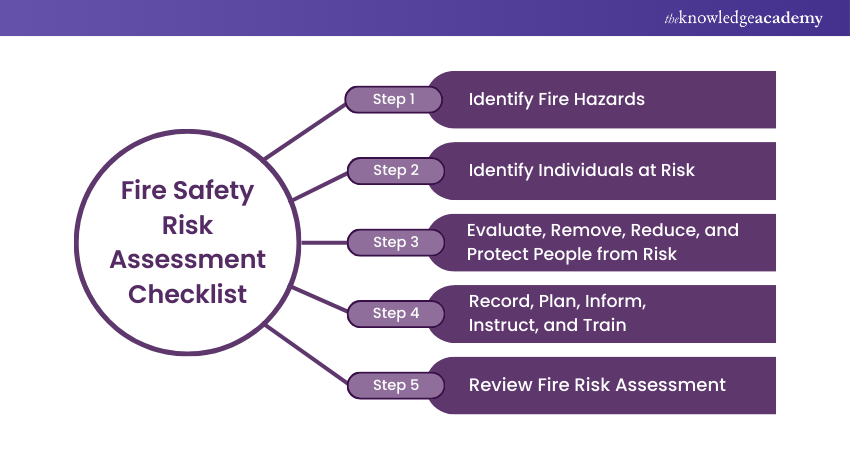
Conducting a Risk Assessment can often feel overwhelming. Here is a breakdown of five key Fire Safety Risk Assessment Checklist:
Step 1: Identify Fire Hazards
Identifying fire hazards is the foundation of the fire risk assessment step. This process involves element recognition that could contribute to a fire. They are typically categorised as
Sources of Ignition: Items or activities that can cause a fire to start. Common examples include:
a) Open flames
b) Electrical equipment
c) Heating appliances
d) Hot surfaces
e) Smoking materials
Sources of Fuel: Any materials that can burn and sustain a fire. These include:
a) Paper and cardboard
b) Wooden structures or furniture
c) Flammable liquids like paint or solvents
d) Textiles and soft furnishings
e) Waste materials
Sources of Oxygen: Elements that can feed a fire, such as:
a) Natural airflow through doors and windows
b) Mechanical ventilation systems
c) Oxygen supplies used in certain medical or industrial processes
1) Potential Sources of Ignition: Electrical equipment, heating systems, naked flames, smokers' materials, cooking appliances, etc.
2) Fuel Sources: Flammable liquids and gases, combustible materials such as paper and wood, waste storage areas, etc.
3) Oxygen Sources: Natural air flow, oxygen cylinders, air conditioning systems, etc.
Step 2: Identify Individuals at Risk
The second step is the individual identification at the highest potential risk. This includes the identification of:
a) Employees working in close fire hazard proximity
b) Unfamiliar visitors with the premises and the Fire Safety procedures
c) Individuals with mobility issues or other disabilities may require assistance during an evacuation
d) People working alone or in isolated areas
e) Children or elderly individuals who may need additional help
Step 3: Evaluate, Remove, Reduce, and Protect People from Risk
The third step is evaluating, removing, reducing, and protecting individuals at potential risk. This includes performing the following actions:
a) Evaluate the fire starting likelihood and its causing harm.
b) Fire hazards removal and reduction where possible. For example, they can maintain electrical equipment, safely store flammable materials, and enforce a no-smoking policy.
c) Protect individuals by ensuring adequate means of escape. Clearly marked exit routes should always be provided and kept free from obstructions.
d) Suitable fire detection and alarm systems.
e) Consider the need for an automatic sprinkler system or other fire suppression systems.
Become a Certified Fire Risk Assessor- Sign up for our Fire Risk Assessment Training today!
Step 4: Record, Plan, Inform, Instruct, and Train
The fourth step in the Fire Safety and Risk Management Guide is to record the findings of your Fire Safety Risk Assessment. Next, inform, instruct, and train people to ensure they are prepared for a fire emergency. It includes the following steps:
1) Record all the findings of your Risk Assessment and the actions you have taken. Keep this record in a safe and accessible place.
2) Develop a clear and detailed emergency fire evacuation plan
3) Inform all staff and visitors about the identified risks, your Fire Safety plan, and the procedures to follow in the event of a fire
4) Provide appropriate instruction and training to staff about Fire Safety in the workplace, including fire drills
Step 5: Review Fire Risk Assessment
The fifth step is to review and update your Risk Assessment regularly by doing the following:
a) Make sure to review your Risk Assessment regularly (at least annually), and when any significant changes occur in your premises or procedures
b) Update your Risk Assessment and procedures as necessary following your review
Be the guardian of your workplace- Register for our Fire Marshal Training Today!
Conclusion
A thorough Fire Safety Risk Assessment is crucial for life and property protection. By following the Fire Safety Risk Assessment Checklist and considering your specific circumstances, you can ensure a comprehensive evaluation concerning the risk of fire. Moreover, understanding and being prepared for fire emergencies is a legal obligation and a critical safety and well-being responsibility.
Prevent injury at workplace- Kickstart your Manual Handling At Work Training today!
Frequently Asked Questions
Is Conducting a Fire Risk Assessment a Legal Requirement?

Yes, conducting a fire risk assessment is a legal requirement under the Regulatory Reform (Fire Safety) Order 2005. Employers, landlords, and building owners must perform the fire risk assessment and implement safety measures to protect people from workplace and public building fire hazards.
How Frequently Should a Fire Risk Assessment Be Conducted?
While regulations don't specify exact intervals, it's recommended to have a fire risk assessment conducted on an annual basis. Additionally, there should be a consistent review of assessments whenever there are significant workplace changes, such as new equipment or processes, or after any fire-related incidents.
What are the Other Resources and Offers Provided by The Knowledge Academy?
The Knowledge Academy takes global learning to new heights, offering over 3,000+ online courses across 490+ locations in 190+ countries. This expansive reach ensures accessibility and convenience for learners worldwide.
Alongside our diverse Online Course Catalogue, encompassing 17 major categories, we go the extra mile by providing a plethora of free educational Online Resources like Blogs, eBooks, Interview Questions and Videos. Tailoring learning experiences further, professionals can unlock greater value through a wide range of special discounts, seasonal deals, and Exclusive Offers.
What is Knowledge Pass, and how does it work?
The Knowledge Academy’s Knowledge Pass, a prepaid voucher, adds another layer of flexibility, allowing course bookings over a 12-month period. Join us on a journey where education knows no bounds.
What are the Related Courses and Blogs Provided by The Knowledge Academy?
The Knowledge Academy offers various Fire Safety Training, including Fire Safety Training, Fire Warden Training, Fire Extinguisher Training and Fire Risk Assessment Training. These courses cater to different skill levels, providing comprehensive insights into the Fire Safety System.
Our Health & Safety Blogs cover a range of topics related to Fire Safety, offering valuable resources, best practices, and industry insights. Whether you are a beginner or looking to advance your Fire Safety skills, The Knowledge Academy's diverse courses and informative blogs have you covered.

Michael Jones


Health and Safety Consultant and Compliance Trainer
Michael Jones is a seasoned health and safety expert with more than 15 years of experience in workplace safety, risk management, and compliance training. He has worked across construction, manufacturing, and corporate sectors, helping organisations meet legal requirements and create safer working environments. Michael’s training and writing are known for being practical, clear, and aligned with UK regulations.

Upcoming Health & Safety Resources Batches & Dates
Date
 Fire Safety Training
Fire Safety Training
Fri 20th Mar 2026
Fire Safety Training
Fri 1st May 2026
Fire Safety Training
Thu 7th May 2026
Fire Safety Training
Thu 23rd Jul 2026
Fire Safety Training
Fri 24th Jul 2026
Fire Safety Training
Thu 1st Oct 2026
Fire Safety Training
Fri 23rd Oct 2026

 If you wish to make any changes to your course, please


