


 Top Rated Course

We may not have the course you’re looking for. If you enquire or give us a call on +49 8000101090 and speak to our training experts, we may still be able to help with your training requirements.
Dietary Fiber: What It Is and Why You Need It
Scarlett Adams 11 December 2025Dietary Fibre supports regular digestion, heart health, and blood sugar control while helping you feel full longer and maintain a healthy weight naturally. Found in fruits, vegetables, whole grains and legumes, Dietary Fibres are essential for daily health and can lower the risk of chronic illnesses when eaten in the right amounts.

Training Outcomes Within Your Budget!
We ensure quality, budget-alignment, and timely delivery by our expert instructors.
Table of Contents

Ever finished a meal and wondered why you're still hungry? Or had that annoying, bloated feeling that just won't go away? It might not be what you ate, but what you missed. That missing piece could be Dietary Fibre. It is the quiet hero that keeps your belly happy, your cravings under control, and your energy more stable throughout the day.
The best part is you do not need a fancy diet or special ingredients to get more Dietary Fibre. It is already in foods you probably enjoy, like apples, oats, lentils, and crunchy vegetables. With a few simple changes to your meals, you can feel lighter, more energised and way more comfortable from the inside out.
Table of Contents
1) Understanding Dietary Fibre
2) Types of Dietary Fibre
3) How Much Fibre Do You Need?
4) Health Benefits of a Fibre-rich Diet
5) Ways to Increase Your Fibre Intake
6) Sources of Dietary Fibre
7) Conclusion
Understanding Dietary Fibre
Dietary Fibre is a type of carbohydrate found in Plant-based Foods. Unlike other carbohydrates, fibre cannot be broken down or absorbed by your body. Alternately, it passes within your digestive system and helps clean it out. Fibre plays an important role in keeping your stomach and intestines healthy and clean.
There are two different types of fibre: soluble and insoluble. Both types are important and give several benefits. Most of the plant-based foods contain a mix of both soluble and insoluble fibre.

Types of Dietary Fibre
Dietary Fibre is mainly divided into two different types, each playing an important role in supporting digestion and overall health. Let us begin with soluble fibre.

Soluble Fibre
Soluble fibre dissolves in water and turns into a gel-like substance in your intestine. It helps slow down digestion and can make you feel full for longer. This type of fibre is useful for reducing blood sugar levels and cholesterol. Foods high in soluble fibre includes oats, apples, citrus fruits, carrots and beans.
Insoluble Fibre
Insoluble fibre does not dissolve in water. It adds bulk to your stool and helps it move more quickly through the digestive system. This can avoid constipation and keep your intestine movements regular. Good sources of insoluble fibre include whole grains, nuts, seeds, green beans and cauliflower
Shape your future with the latest fitness knowledge with our Nutrition And Fitness Training – Join today!
How Much Fibre do you Need?
The amount of fibre you need depends on your age and gender. In general, adults should aim for the following:
1) Men under 50 years: Need to consume 30 to 38 grams of fibre per day
2) Women under 50 years: Need to consume 21 to 25 grams of fibre per day
3) Men over 50 years: Need to consume 30 grams of fibre per day
4) Women over 50 years: Need to consume about 21 grams of fibre per day
Most people fall short of these recommendations. Making small changes to your meals can help you get enough fibre without much effort.
Health Benefits of a Fibre-rich Diet
Eating enough fibre gives a vast range of health benefits. It helps to supports your Digestive System, heart health and Weight Management. Here are some of the important benefits:
Promotes Bowel Health
Fibre plays a crucial role in promoting bowel health by helping to form soft, bulky stools that are easier to pass. This reduces the risk of Constipation, Haemorrhoids, and Diverticulitis. Regular fibre intake improves overall daily comfort, making digestion smoother and more predictable.
Contributes to Longevity
A fibre-rich diet is linked to a longer, healthier life. It’s associated with a lower risk of heart disease, cancer, stroke, and other serious conditions. Including fibre in daily meals helps prevent a range of common health problems and supports overall well-being as you age.
Regulates Blood Sugar Levels
Fibre helps regulate blood sugar levels by slowing down the absorption of sugar into the bloodstream. This contributes to more stable glucose levels, especially after meals. It's particularly beneficial for individuals with diabetes or those looking to manage their blood sugar effectively.
Let your journey spark a fellow person’s breakthrough. Sign up for our Life Coach Training now!
Helps Lower Cholesterol Levels
Soluble fibre helps Lower Bad Cholesterol (LDL) by binding with it in the digestive tract and removing it from the body. This action supports heart health and significantly lowers the risk of developing heart disease over time.
Aids in Maintaining a Healthy Weight
Fibre helps you feel full longer without adding extra calories to your meals. Including it in a 7-Day Meal Plan For Muscle Gain can reduce the likelihood of overeating or snacking between meals,, making it easier to manage weight over the long term and maintain healthier eating habits.
Ways to Increase Your Fibre Intake
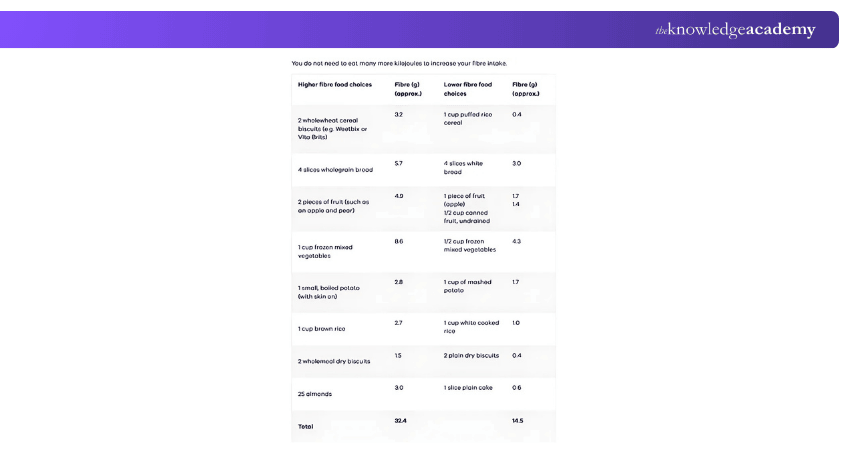
By making small changes in your diet or food can help you eat more fibre every day. These are some easy and practical ways to increase your fibre intake.
Fibre-packed Breakfast
1) Start your morning with foods like oatmeal, bran cereals, or whole wheat toast
2) Add chia seeds or flaxseeds to smoothies for an extra fibre boost
3) Keeps you full and energised for longer
Opt for Whole Grains
1) Replace white rice, bread, and pasta with whole grain versions
2) Choose options like brown rice, quinoa, whole wheat pasta, or barley
3) Whole grains support digestion and keep you feeling satisfied
Add Fibre to Baked Goods
1) Use whole wheat flour instead of white in recipes
2) Add oats, nuts, or grated vegetables like carrots to muffins and pancakes
3) A simple way to make your favourite treats more nutritious
Include More Legumes in Meals
1) Add lettuce, chickpeas and beans to soups, salads and curries
2) Both are rich in fibre and Protein, making meals more filling
3) Easy to cook, versatile and budget-friendly
Eat Plenty of Fruits and Vegetables
1) Enjoy a colourful variety each day to boost fibre intake
2) Keep the skin on fruits like apples and pears where most fibre is found
3) Great for snacks, sides, or main dishes
Choose Fibre-rich Snacks
1) Snack on raw vegetables, popcorn, trail mix, or whole grain crackers
2) These options are more filling and healthier than processed snacks
3) Helps keep your energy steady between meals
Your wellness journey starts right here with our Active and Healthy Lifestyles Training – Join now!
Sources of Dietary Fibre
There are many natural foods that are excellent sources of Dietary Fibre. Here are some common examples:

Try to add a different food in your meals throughout the week. The more natural and less processed your food is, the more fibre it is likely to have.
Conclusion
Dietary Fibre plays an important role in good health. It aids digestion, lowers the risk of chronic diseases, and helps maintain a healthy weight. Despite its importance, many people don’t get enough fibre. The good news? Increasing fibre is easy with small changes. Choose whole foods, eat more fruits and vegetables, and be mindful. You'll enjoy lasting health benefits and feel better every day.
Turn everyday food into lasting wellness. Join our Nutrition Course – Today!
Frequently Asked Questions
What Does Dietary Fibre Mean on a Food Label?

When "Dietary Fibre" appears on a food label, it refers to the total amount of fibre in a single serving of that product.
1) It includes both types of fibre
2) It helps you understand how much fibre you're consuming
3) Foods with 3g or more of fibre per serving are considered a good source
What is the Difference Between Dietary Fibre and Normal Fibre?
Dietary Fibre refers specifically to the fibre found in plant-based foods that humans eat. It is different from "normal" or industrial fibres like cotton or polyester, which are used in clothing and materials. In nutrition, fibre always refers to Dietary Fibre that benefits your health.
What are the Other Resources and Offers Provided by The Knowledge Academy?
The Knowledge Academy takes global learning to new heights, offering over 3,000+ online courses across 490+ locations in 190+ countries. This expansive reach ensures accessibility and convenience for learners worldwide.
Alongside our diverse Online Course Catalogue, encompassing 19 major categories, we go the extra mile by providing a plethora of free educational Online Resources like Blogs, eBooks, Interview Questions and Videos. Tailoring learning experiences further, professionals can unlock greater value through a wide range of special discounts, seasonal deals, and Exclusive Offers.
What is The Knowledge Pass, and How Does it Work?
The Knowledge Academy’s Knowledge Pass, a prepaid voucher, adds another layer of flexibility, allowing course bookings over a 12-month period. Join us on a journey where education knows no bounds.
What are the Related Courses and Blogs Provided by The Knowledge Academy?
The Knowledge Academy offers various Healthy Lifestyles Training, including the Nutrition Course and Active and Healthy Lifestyles Training, and the Nutrition and Fitness Training. These courses cater to different skill levels, providing comprehensive insights into How Much Water Should you Drink a Day.
Our Health & Safety Blogs cover a range of topics related to Healthy Lifestyles, offering valuable resources, best practices, and industry insights. Whether you are a beginner or looking to advance your Health & Safety knowledge, The Knowledge Academy's diverse courses and informative blogs have got you covered.
Upcoming Health & Safety Resources Batches & Dates
Date
 Nutrition Course
Nutrition Course
Fri 27th Mar 2026
Nutrition Course
Fri 19th Jun 2026
Nutrition Course
Fri 4th Sep 2026
Nutrition Course
Fri 4th Dec 2026

 If you wish to make any changes to your course, please


