


 Top Rated Course

We may not have the course you’re looking for. If you enquire or give us a call on +49 8000101090 and speak to our training experts, we may still be able to help with your training requirements.
Top 13 Creative Writing Tips for Beginners and Aspiring Writers
The Knowledge Academy 10 March 2026Creative writing tips enhance storytelling by strengthening plot structure, improving descriptive language, and inspiring imagination to craft engaging stories. It serves as a roadmap to help writers enhance their creativity, refine their voice, cultivate originality and confidence in storytelling, transforming it into a meaningful pursuit.

Training Outcomes Within Your Budget!
We ensure quality, budget-alignment, and timely delivery by our expert instructors.
Table of Contents

As a writer, you might have countless ideas swirling in your head but struggle to put them into words, or you might think they are not good enough. The journey to finding your voice takes practice, patience and guidance. That is where Creative Writing Tips come into the picture. They act as stepping stones to help you move from finding raw inspiration to creating polished narratives.
Whether you dream of writing short stories, novels, or poetry, the right tips can make the process more enjoyable. They are about unlocking your imagination, building confidence, and learning how to express yourself in ways that resonate with readers. In this blog, you will explore Creative Writing Tips to help you transform your ideas into a meaningful piece of work.
Table of Contents
1) What is Creative Writing?
2) Why is Creative Writing Important?
3) Top 13 Creative Writing Tips
4) Can Creative Writing Improve Communication Skills?
5) Conclusion
What is Creative Writing?
Creative Writing is a form of artistic expression that encourages writers to use their imagination to mix personality, flair, and originality into their work. At its core, it is about building narratives through characters, narratives, or vivid descriptions that resonate with readers and spark emotion.
Creative Writing allows you to break free from rigid rules and explore endless possibilities. It gives you the freedom to experiment with genres, such as fiction, poetry, screenplays, or even personal essays, while developing your unique voice. Embracing creativity and invention helps writers craft stories that inspire, express ideas and perspectives authentically and memorably.

Why is Creative Writing Important?
Creative Writing is a powerful form of self‑expression, allowing ideas, emotions, and stories to flow freely. It enriches narratives through character development, imagination, and emotional connection, while also serving as a journey of self‑discovery. Let's look at the important reasons that emphasise its importance below:
1) Self-expression: Helps to articulate and express thoughts, feelings, and experiences in meaningful and authentic ways.
2) Skill Development: Provides structured opportunities to practice literary techniques, experiment with styles, and refine storytelling abilities.
3) Creative Thinking: Encourages exploring new ideas, genres, and styles, fostering innovation and adaptability.
4) Communication Skills: Strengthens clarity, improves storytelling, and enhances the ability to connect with readers across personal and professional contexts.
Top 13 Creative Writing Tips
Whether you are an aspiring writer exploring creative expressions or a wordsmith refining your craft, Creative Writing opens a boundless world of imagination. But learning it requires dedication, practice, and a willingness to deepen your creativity. Let’s look at the crucial Creative Writing Tips below to help you sharpen your skills and grow as a writer:
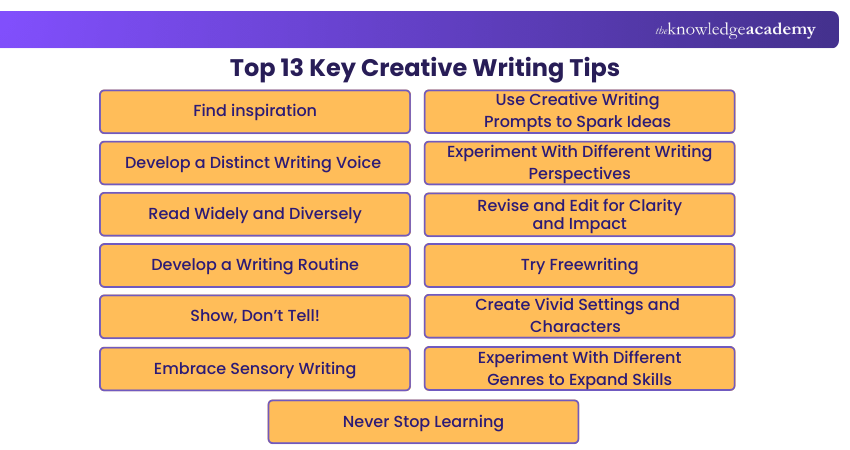
1) Find inspiration
Embarking on a Creative Writing journey begins with the essential step of finding inspiration. This can come from countless sources, such as personal experiences, passions, or even everyday moments. Inspiration hides in the ordinary, waiting to spark ideas that can grow into powerful narratives. Taking time to reflect on what truly resonates with you helps to discover these sparks and set the foundation for authentic storytelling.
Additionally, introspection is key to identifying unique perspectives and emotional reservoirs that shape your voice as a writer. Tapping into your encounters, reflections, and curiosities will help you create a reservoir of ideas that can fuel engaging stories. This process of self‑discovery sets the tone for a fulfilling creative journey, where you become both the architect and the explorer of the imaginative worlds you build.
2) Develop a Distinct Writing Voice
Imagine walking through an art gallery filled with paintings, each canvas marked by the artist’s unique style and perspective. Similarly, writers have their own signature, known as the “writer’s voice.” This voice is shaped by experiences, beliefs, and personality, serving as the lens through which you view the world and express your thoughts. It is about embracing your authenticity to make your writing truly yours.
Finding your voice takes exploration and practice. Reading different authors helps you recognise the diversity of voices in literature. Also, experiment with styles, tones, and perspectives to discover what feels most natural to you. Over time, this process of self‑discovery refines your voice, enabling you to craft writing that resonates with readers and reflects your individuality.
3) Read Widely and Diversely
Reading nourishes the mind with a wide variety of words, ideas, and perspectives. To nurture your writing skills, expose yourself to diverse genres and styles, and step outside your comfort zone by exploring fiction, non‑fiction, classics, and modern works. Each genre offers unique storytelling techniques, and blending old with modern styles helps you understand both timeless traditions and contemporary voices.
Also, reading across cultures and disciplines expands your horizons. Literature from different parts of the world reveals fresh perspectives and narrative styles, while history books, biographies, and essays provide valuable insights that can improve your storytelling. This diversity strengthens vocabulary and expression, giving your writing more depth, clarity, and authenticity.
4) Develop a Writing Routine
A writing routine helps you stay committed to your craft by setting aside dedicated time and space to write regularly. Establishing clear goals gives your routine purpose and direction. Choosing a time that aligns with your natural rhythm, whether in the morning or evening, and designating a distraction‑free space ensures your creativity has room to develop.
It is important to start with small and manageable steps and focus on consistency. Some days you may write more, while other days you might brainstorm. Every effort keeps your creative muscles active. Also, avoid unrealistic expectations and allow flexibility to adjust your routine as needed. This steady practice builds discipline, helps you grow as a writer, and reinforces the importance of following Creative Writing Tips.
5) Show, Don’t Tell!
“Show, Don’t Tell” is about drawing readers into the world of your story through vivid details. It is about expressing emotions through actions, dialogue, and sensory cues. Rather than describing a scene in plain terms, it allows readers to experience it by imagining pictures with words that evoke the overall atmosphere of the setting and emotion.
Sensory details are a powerful tool for this technique. For example, don’t just say it’s raining; instead describe the cool drops tapping against the window or the earthy scent rising from the ground. Similarly, replace passive phrases with dynamic ones, such as “She sprinted” which conveys urgency far better than “She was dashing.” Weaving in gestures, conversations, and subtle actions allows readers to feel the emotions without being told outright.
Bring your words to the world and publish confidently with the Self Publishing Course now!
6) Embrace Sensory Writing
Writing is about creating an experience for your reader. Sensory details allow you to move beyond simple description and immerse readers in the world you’re building. It invites readers to feel the rustling of leaves in a magical forest, the scent of damp earth, or the warmth of sunlight on skin. Engaging sight, sound, smell, touch, and taste helps to transform your writing into something vivid and memorable.
Think of sensory writing as painting with words. A crisp bite of an enchanted apple or the cool breeze brushing against your face adds depth and authenticity to your storytelling. Using these details makes your scenes richer, your characters more relatable, and your narratives more immersive. When readers can experience your world through multiple senses, they live your story.
7) Use Creative Writing Prompts to Spark Ideas
Writer’s block can stall the most passionate of storytellers, but creative prompts are a powerful way to reignite imagination. Random word pairings, unusual scenarios, or even a single sentence pulled from a book can spark fresh ideas. These exercises push you beyond your comfort zone, encouraging you to explore themes and characters you might never have considered.
Prompts train your mind to think creatively and flexibly. Whether it’s linking “butterfly” and “mechanic” in a short scene or asking a friend for a quirky situation, prompts lead to surprising stories. Sometimes the best narratives emerge from the most unusual beginnings. Embracing prompts, alongside Creative Writing Tips helps you cultivate a habit of curiosity and unlock new pathways for storytelling.
8) Experiment With Different Writing Perspectives
Perspective shapes how a story is told and shifting it can completely transform its emotional impact. Rewriting a familiar tale from another character’s point of view, such as hearing “Little Red Riding Hood’s” story from the wolf, can reveal hidden depths and fresh interpretations. Exploring perspectives in this way helps you uncover unique angles that make your narratives more engaging and memorable.
Exploring different perspectives challenges you to step into new voices and experiences. Whether it’s imagining the Trojan War through a soldier’s family or retelling a novel from the villain’s viewpoint, experimenting with perspective stretches your storytelling skills and helps you discover unique angles that resonate with readers.
9) Revise and Edit for Clarity and Impact
The first draft is the beginning of the writing journey. Revision allows you to refine your ideas, sharpen your language, and ensure your story flows smoothly. Editing for clarity, style, and grammar transforms raw writing into polished work that communicates effectively. Each revision is an opportunity to elevate your writing from ordinary to impactful.
This process is not about perfection but progress. Each round of revision strengthens your writing, helping you achieve precision and impact. Embracing editing as part of the craft helps you build discipline and move closer to using the language more proficiently. Over time, this habit of revising will shape you into a more confident and versatile writer.
Turn imagination into stories and begin your fiction adventure today with the Fiction Writing Course – Sign up!
10) Try Freewriting
Overthinking often blocks creativity, and freewriting is the antidote to it. Setting a timer and writing continuously without worrying about grammar, spelling, or structure allows your thoughts to flow freely onto the page. This practice bypasses self‑criticism and unlocks hidden ideas. It encourages spontaneity, helping you capture raw emotions and thoughts before they slip away. Over time, freewriting builds confidence by reminding you that every idea has value.
It’s a powerful way to discover new themes, characters, or storylines you might not have found through structured writing. Freewriting keeps your creative muscles active and reminds you that inspiration often comes when you let go of control. Even if the words feel chaotic, they can spark unexpected connections that lead to meaningful stories. Embracing the mess can help you open yourself to creativity without limits.
11) Create Vivid Settings and Characters
Engaging all five senses is the key to bringing settings to life. Let characters interact naturally with their surroundings, showing the environment through actions and observations. Settings also carry emotional weight; a deserted beach at sunset conveys serenity, while a bustling city street in the rain can evoke tension or melancholy. Use these contrasts to mirror the emotions of your characters.
It is important to go beyond stereotypes by exploring their quirks, flaws, and motivations. Their conflicts and desires should drive the narrative, making them relatable and compelling. As the story unfolds, allow characters to evolve or succumb to weaknesses. Their growth adds depth and resonance. Together, vivid settings and dynamic characters create immersive worlds that captivate readers, demonstrating the effectiveness of using Creative Writing Tips.
12) Experiment With Different Genres to Expand Skills
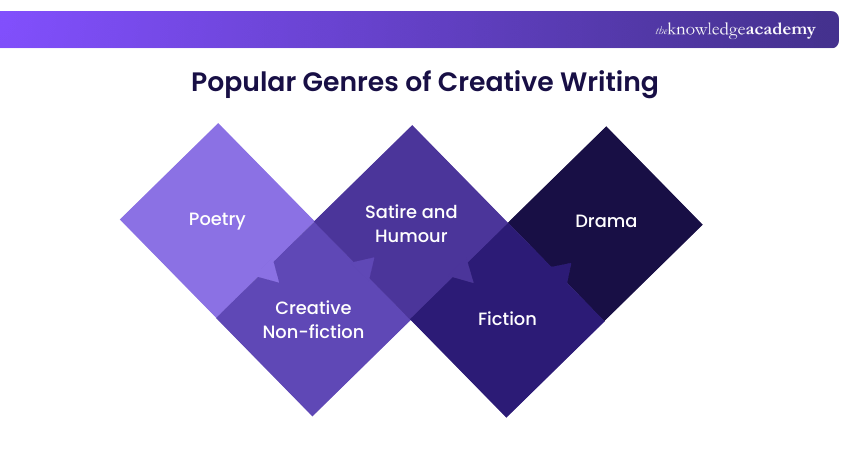
Experimenting with new genres liberates your creativity by presenting fresh challenges and opportunities. Each genre invites you to build different creative muscles, such as poetry sharpens imagery, mystery hones suspense, and science fiction expands world‑building. The skills you gain in one genre enrich your writing in another, making you a more versatile and imaginative writer.
To experiment effectively, immerse yourself in the genre you’re exploring. Read widely to understand its conventions, themes, and audience expectations. Then study the techniques that define it, such as the pacing of a thriller or the structure of a romance. This exploration broadens your horizons and nurtures growth, helping you evolve into a more adaptable and confident writer.
13) Never Stop Learning
A writer’s journey thrives on curiosity and continuous learning. Staying curious about the world, people, and history fuels your imagination and ensures your stories resonate deeply with readers. As trends, technology, and reader preferences evolve, embracing change keeps your writing relevant and fresh. Also, read across diverse subjects to expand your knowledge about storytelling.
It is important to invest in your craft through books, courses, workshops, and online resources. Utilise Creative Writing Tips and seek feedback from peers, mentors, and editors since constructive criticism highlights blind spots and sharpens your skills. Committing to lifelong learning refines your technique and cultivates resilience and adaptability, ensuring your writing continues to grow and inspire.
Transform your understanding of customer sentiment with our cutting-edge Sentiment Analysis Training – Elevate your insights and enhance decision-making!
Can Creative Writing Improve Communication Skills?
Creative Writing is a practice that strengthens how we express ourselves. Regularly engaging with words, ideas, and narratives helps to organise thoughts effectively and communicate with clarity. It builds fluency and confidence in expressing complex emotions and ideas. With consistent practice, one can communicate effortlessly in both personal and professional settings.
Creative Writing trains the mind to think critically, structure information clearly, and connect with audiences on a deeper level. The skills you gain from Creative Writing spill over into everyday communication. Thus, cultivating creativity and precision in language improves your ability to engage, persuade, and inspire others while developing essential communication skills.
Conclusion
Embracing Creative Writing Tips is about enhancing imagination, improving communication, and discovering your authentic voice as a writer. From finding inspiration and experimenting with genres to refining your drafts, each tip serves as a stepping stone towards growth and creativity. This makes Creative Writing a lifelong journey of discovery and impact.
Unlock your potential and start your development journey with Personal Development Courses today!
Frequently Asked Questions
Can Creative Writing be a viable career path, and what opportunities exist within this field?

Yes, Creative Writing can be a viable career path with diverse opportunities. Writers can pursue roles in content creation, journalism, advertising, publishing, or even become novelists. Freelancing, blogging, and scriptwriting for various media also offer avenues for creative writers to thrive and make a living from their passion.
What are some common challenges writers face in the Creative Writing process, and how can they overcome them?
Writers often encounter challenges such as writer's block, lack of inspiration, or self-doubt. To overcome these hurdles, writers can try techniques like free writing, setting realistic goals, seeking feedback, and taking breaks to refresh their creativity.
What are the other resources and offers provided by The Knowledge Academy?
The Knowledge Academy takes global learning to new heights, offering over 3,000+ online courses across 490+ locations in 190+ countries. This expansive reach ensures accessibility and convenience for learners worldwide.
Alongside our diverse Online Course Catalogue, encompassing 17 major categories, we go the extra mile by providing a plethora of free educational Online Resources like Blogs, eBooks, Interview Questions and Videos. Tailoring learning experiences further, professionals can unlock greater value through a wide range of special discounts, seasonal deals, and Exclusive Offers.
What is The Knowledge Pass, and How Does it Work?
The Knowledge Academy’s Knowledge Pass, a prepaid voucher, adds another layer of flexibility, allowing course bookings over a 12-month period. Join us on a journey where education knows no bounds.
What are related courses and blogs provided by The Knowledge Academy?
The Knowledge Academy offers various Personal Development courses, including Organisational skills training, Emotional Intelligence Training, and Report Writing Course. These courses cater to different skill levels, providing comprehensive insights into Journalism.
Our Business Skills blogs cover a range of topics related to Creative Writing, offering valuable resources, best practices, and industry insights. Whether you are a beginner or looking to advance your Creative Writing skills, The Knowledge Academy's diverse courses and informative blogs have you covered.

The Knowledge Academy


Global Training Provider
The Knowledge Academy is a world-leading provider of professional training courses, offering globally recognised qualifications across a wide range of subjects. With expert trainers, up-to-date course material, and flexible learning options, we aim to empower professionals and organisations to achieve their goals through continuous learning.

Upcoming Business Skills Resources Batches & Dates
Date
 Speed Writing Course
Speed Writing Course
Fri 21st Aug 2026
Speed Writing Course
Fri 13th Nov 2026

 If you wish to make any changes to your course, please


