


 Top Rated Course

We may not have the course you’re looking for. If you enquire or give us a call on +49 8000101090 and speak to our training experts, we may still be able to help with your training requirements.
A Beginner's Guide to B2B Affiliate Marketing
James Smith 14 February 2026Are you looking to boost sales with Affiliate Marketing? This powerful strategy connects businesses with partners who earn commissions by driving high-quality leads. In this blog, we will discover how B2B Affiliate Marketing fuels growth, from building lucrative partnerships to scaling outreach for maximum impact.

Training Outcomes Within Your Budget!
We ensure quality, budget-alignment, and timely delivery by our expert instructors.
Table of Contents

Feeling stuck with lead generation? Traditional Marketing not delivering the results you want? It’s time to explore B2B Affiliate Marketing! This strategy adapts the proven Affiliate Marketing Model to the B2B space, where influencers and industry experts promote your product or service to their audience, earning commissions for qualified leads or sales.
B2B Affiliate Marketing is a powerful way to expand your reach, target specific niches, and boost your bottom line. Ready for a cost-effective, results-driven marketing approach? This beginner’s blog will equip you with everything you need to get started. Let’s dive in!
Table of Contents
1) What is B2B Affiliate Marketing?
2) Why Start a B2B Affiliate Marketing Program?
3) How to Determine If a B2B Affiliate Program Is Right for You?
4) Benefits of B2B Affiliate Marketing
5) Setting Up an Affiliate Program
6) Commission Structures in B2B Affiliate Marketing
7) Tips for Starting a B2B Affiliate Program
8) Conclusion
What is B2B Affiliate Marketing?
In a B2B Affiliate Marketing program, you collaborate with respected content creators—such as influential industry bloggers, social media personalities, website owners, and email marketing publishers. These affiliates promote your B2B company on their own channels.
Affiliates strategically place links to your website within their content. When someone converts—whether by becoming a qualified lead or making a purchase—due to clicking on an affiliate’s link, you reward that affiliate with a commission. By incentivising affiliates with commissions for every sale, you foster brand growth and encourage their active participation in promoting your business, which plays a crucial role in B2B Marketing.

Why Start a B2B Affiliate Marketing Program?
Here are a few key reasons why you should consider starting a B2B Affiliate Marketing Program to grow your business:
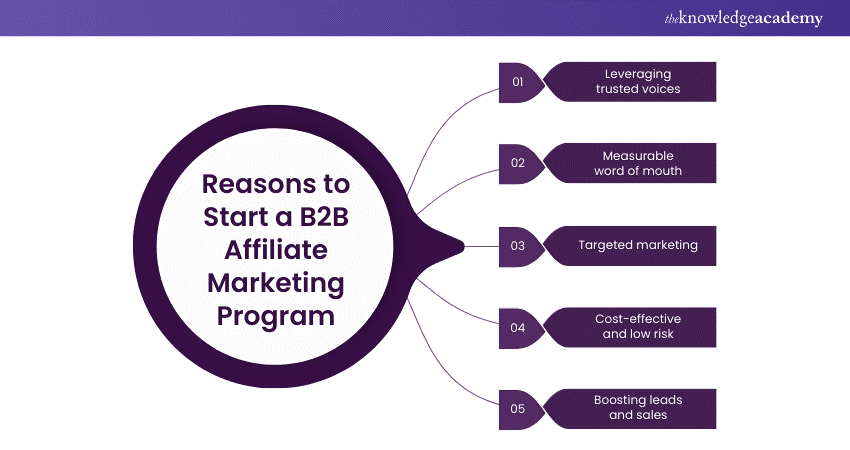
a) Leveraging Trusted Voices: Affiliate Marketing taps into the power of word-of-mouth. Consumers inherently trust industry authorities and peers more than direct brand messages. When affiliates endorse your B2B company, their recommendations carry weight, and they’re likely to share the message with their networks.
b) Measurable Word of Mouth: B2B Integrated Marketing efforts should be data-driven. Setting up an affiliate program allows precise tracking. You can attribute sales to specific affiliates, monitor the impact of affiliate links, and calculate commission payouts. This transparency simplifies ROI measurement.
c) Targeted Marketing: Affiliates can guide prime leads through your sales funnel. Choose affiliates who resonate with your target audience and hold credibility in your niche. B2B decision-makers pay attention when trusted affiliates endorse your brand.
d) Cost-effective and Low Risk: Paying affiliates only for successful lead generation or sales minimises risk. You invest in results, making it an efficient marketing strategy.
e) Boosting Leads and Sales: Customise affiliate links to direct potential customers to specific landing pages optimised for your program. Vary the landing page designs based on each affiliate partner’s audience to directly generate high-quality B2B leads.
Boost your Digital Marketing skills with our Influencer Marketing Course!
How to Determine If a B2B Affiliate Program Is Right for You?
To ensure your B2B Affiliate Marketing strategy is effective and sustainable, review successful Affiliate Marketing Examples and consider these key points before launching your program:
1) High Customer Retention: Affiliate sales are most profitable if they lead to loyal, long-term customers, maximising value over time.
2) Healthy Profit Margins: Affiliate Marketing is ideal for businesses with high profit margins, such as software providers or subscription services.
3) Clear Target Audience: Define your core audience and identify trusted niche content creators they follow. It’s helpful if you already have connections with some of these creators to ease partnership building.
4) Relevant Affiliates: Seek affiliates whose marketing channels align with your brand, driving qualified traffic directly to your site.
5) Indirect Promotion: Affiliates should be able to promote your offerings subtly within their content, reaching potential customers outside of their immediate networks.
6) Competitive Commissions: Be prepared to offer competitive, cash-based commissions each time an affiliate drives a sale.
7) Aligned with Sales Cycle: Plan how your affiliate program will integrate into your B2B sales cycle, including the time frame for which affiliates can earn commissions after a link click.
Benefits of B2B Affiliate Marketing
Implementing a B2B Affiliate Marketing program can offer numerous benefits for your business. Here are the key advantages:
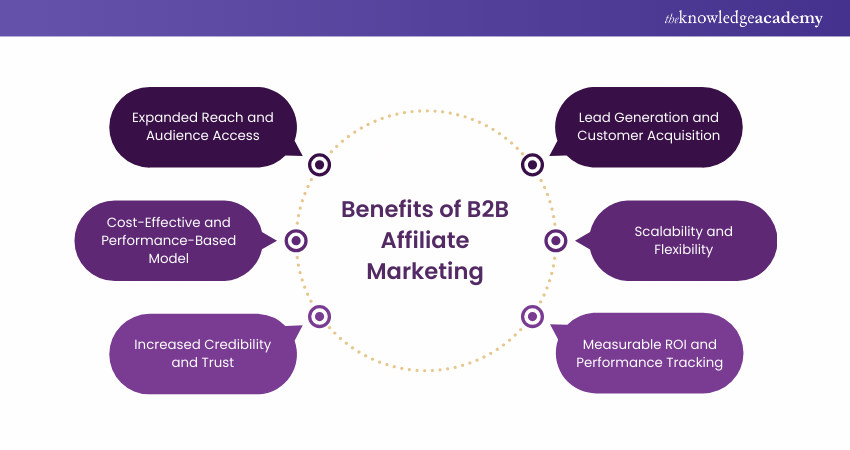
1) Expanded Reach and Audience Access: Affiliates help you reach new, industry-relevant audiences by promoting your products or services to their networks. This exposure allows you to connect with potential customers beyond traditional marketing channels.
2) Cost-Effective and Performance-Based Model: With Affiliate Marketing, you only pay for results, making it budget-friendly and ensuring an efficient allocation of resources.
3) Increased Credibility and Trust: Affiliates with established reputations can lend credibility to your brand. Their recommendations positively influence potential clients, strengthening your industry standing.
4) Lead Generation and Customer Acquisition: Affiliates bring in high-quality leads from their established networks, boosting customer acquisition and business growth.
5) Scalability and Flexibility: This model is adaptable, allowing you to scale as you expand into new markets or adjust as business needs evolve.
6) Measurable ROI and Performance Tracking: With clear metrics, you can assess ROI and make data-driven adjustments, continuously optimising your strategy for better results.
A well-designed B2B Affiliate Program is not only cost-effective but also builds credibility, generates leads, and remains adaptable to your changing business needs.
Setting Up an Affiliate Program
Creating a successful B2B Affiliate Program involves a structured approach to ensure effective tracking and management of affiliates. Here’s how to get started:
1) Establish Program Goals and Commission Structure
a) Define the primary objectives of your B2B Affiliate Program, such as lead generation, sales, or specific performance metrics.
b) Create a competitive commission structure that motivates affiliates and aligns with your business objectives.
2) Choose Affiliate Management Software
a) Select a suitable affiliate management platform designed specifically for B2B Affiliate Programs.
b) Look for features such as real-time analytics, commission tracking, and a user-friendly interface for both merchants and affiliates.
3) Develop Marketing Materials and Resources
a) Create targeted marketing collateral tailored for a B2B audience, including business-focused content, whitepapers, and industry-specific resources.
b) Ensure affiliates have access to a comprehensive library of promotional materials.
4) Implement Strong Communication Strategies
a) Utilise communication tools to maintain direct contact with affiliates, such as in-app messaging, email updates, or newsletters.
b) Keep affiliates informed with regular updates about new products, promotions, and any changes to the affiliate program.
5) Monitor Performance and Optimise the Program
a) Use tracking and reporting features to assess affiliate performance in real time.
b) Identify top-performing affiliates and refine your program based on their success. Analyse data to uncover effective strategies.
By following these steps, you can create a thriving B2B Affiliate Program that effectively reaches your target audience and drives business growth.
Boost your online visibility and drive targeted traffic with our expert-led Search Engine Marketing (SEM) Training – Join now!
Commission Structures in B2B Affiliate Marketing
Below are the major commission structures in B2B Affiliate Marketing:
1) Pay-Per-Sale (PPS)
a) How It Works: Affiliates earn a commission for every sale their referral generates.
b) Use Case: Commonly used in B2B for high-value products or long-term contracts.
>2) Pay-Per-Lead (PPL)
a) Focus: Rewards affiliates for each qualified lead, such as a potential client filling out a form or downloading content.
b) Benefit: Effective for businesses aiming to build a pipeline of interested prospects.
3) Pay-Per-Click (PPC)
a) Traffic Model: Pays affiliates based on the number of clicks on their referral links.
b) Adaptation: Although popular in B2C, PPC can suit B2B when promoting awareness-focused campaigns.
4) Pay-Per-Email Signup
a) Goal: Compensates affiliates for every new email subscriber obtained through their efforts.
b) Advantage: Helps expand email lists and engage new audiences.
5) Pay-Per-Quiz Completion
a) Engagement-Based: Affiliates earn a reward when referrals complete a quiz or survey.
b) Purpose: Ideal for businesses wanting pre-qualified leads or audience insights.
6) Tiered Commission Structures
a) Incentive Tiers: Different commission rates based on performance levels.
b) Example: Affiliates earn more for exceeding certain sales or lead thresholds.
7) Hybrid Models
a) Flexible Approach: Combines various models, such as PPS and PPL, to incentivise multiple actions.
b) Advantage: Encourages affiliates to generate both sales and leads.
8) Lifetime or Recurring Commissions
a) Long-Term Earning: Affiliates receive ongoing commissions as long as the referred customer remains active.
b) Best For:It is best for subscription services or recurring contracts, common in B2B.
9) Performance Bonuses
a) Additional Rewards: Offers bonuses for consistently meeting high performance benchmarks.
b) Goal: Encourages affiliates to maintain commitment and increase efforts over time.
Selecting a commission structure depends on your business goals, target market, and the types of actions you want affiliates to drive. It's also important to consider how these structures align with your Cash Conversion Cycle, as optimising cash flow can enhance affiliate performance and overall business efficiency. Using a mix of models allows you to attract diverse affiliates and reward them fairly for contributing to your success.
Start your affiliate marketing journey with the Affiliate Marketing Guide—download now!
Tips for Starting a B2B Affiliate Program
Here are essential tips for launching a successful B2B Affiliate Program:
1) Identify Affiliates' Role in the Buyer’s Journey
Start by mapping out your buyer’s journey and pinpointing where affiliates can make the biggest impact. For instance, some affiliates may excel at building brand awareness, while others are better suited for driving conversions at later stages.
Aligning affiliates with specific stages, whether it’s awareness, consideration, or decision. It will help maximise their effectiveness and tailor their approach to your audience’s needs at each stage.
2) Establish Strategic Affiliate KPIs
Define clear performance indicators that align with your affiliate program goals. If your primary objective is lead generation, focus on KPIs like the number of qualified leads or conversion rates.
For revenue-driven goals, track sales volume, customer acquisition cost (CAC), and return on investment (ROI). Well-chosen KPIs help you measure success, reward top performers, and identify areas for improvement in your program.
3) Determine Sources for B2B Affiliates
Finding the right affiliates involves looking beyond traditional channels. Seek out thought leaders, industry experts, or complementary businesses who already reach your target audience. Networking events, social media, and LinkedIn groups can be valuable resources for identifying affiliates.
Additionally, consider partners whose expertise aligns with your product—such as Consultants, Software Reviewers, or Industry Publications—to increase credibility and reach.
4) Consider Existing Customers as Affiliates
Happy, loyal customers are often willing to recommend your products and services to others. Inviting these customers to join your affiliate program can be highly effective, as they already have firsthand experience with your brand and products.
Their genuine recommendations can carry more weight and increase trust among new prospects, especially in B2B markets where peer recommendations are influential.
5) Offer Competitive Affiliate Commissions
To attract and retain quality affiliates, it’s essential to set commission rates that reflect the value they bring. Research the commission structures within your industry to ensure your rates are competitive.
Remember, higher commissions often lead to stronger promotion and commitment from affiliates, making it worthwhile to invest in them. Be transparent about commission terms to set clear expectations and build trust.
6) Define Commission Rules Carefully
Set up commission rules that are clear and fair. Specify the actions that qualify for commissions—such as leads or completed sales—and outline any conditions, like the minimum sale amount or required customer engagement.
Define payment schedules and frequency as well. By establishing these details upfront, you’ll minimise potential disputes and help affiliates feel confident in their earnings.
7) Create Your Own Affiliate Network
Establishing an in-house affiliate network can give you more control over program dynamics and foster closer connections with affiliates. A private network allows you to personalise communication, provide tailored resources, and build stronger brand alignment.
Unlike external networks, managing affiliates in-house enables better oversight of performance and brand representation.
8) Select the Right Affiliate Software
Affiliate management software simplifies program tracking, payment processing, and performance reporting. Look for software that supports real-time analytics, easy communication, and secure commission tracking.
Features like dashboards, customisable reporting, and integration with CRM tools can improve both the affiliate and program manager experience, leading to more successful partnerships.
9) Educate Affiliates on Your Sales Cycle
Ensure affiliates understand your B2B sales process, which may involve longer decision-making cycles and multiple stakeholders compared to B2C sales. Providing training on your product’s unique value proposition and typical customer journey will help affiliates engage prospects more effectively.
Equip them with resources on your sales cycle so they can guide prospects through it, increasing the chances of conversions.
10) Use Data to Refine Your Program
Regularly analyse performance data to identify strengths and opportunities within your affiliate program. Track which affiliates drive the most value and explore why they’re successful, then use this insight to refine your strategies.
Whether it’s tweaking commission rates, targeting specific customer segments, or adjusting marketing materials, data-driven changes can help optimise your program over time.
By carefully implementing these steps, you’ll build a B2B Affiliate Program that not only attracts quality affiliates but also drives sustainable growth. This structured approach ensures you’re supporting affiliates with the resources and guidance they need to succeed while continuously improving your program’s performance
Understand essential Digital Marketing tools for effective online campaigns with our Digital Marketing Tools Training today!
Conclusion
The world of B2B Affiliate Marketing is brimming with potential, offering a win-win for both businesses and affiliates. By implementing the strategies outlined in this guide, selecting the right partners, and creating high-quality content, you can unlock a powerful lead generation tool and propel your B2B brand to new heights. So, are you ready to give it a try?
Unlock your digital potential with our comprehensive range of Digital Marketing Training!
Frequently Asked Questions
What is the Biggest Problem in Affiliate Marketing?

A major challenge in Affiliate Marketing is generating trust with audiences. Affiliates need to balance promoting products they believe in with earning commissions, while consumers might be wary of overly promotional content.
Why B2B is More Profitable?
B2B transactions typically involve larger order values compared to B2C. Even with lower sales volume, the higher margins per sale can lead to greater profitability for B2B companies
What are the Other Resources and Offers Provided by The Knowledge Academy?
The Knowledge Academy takes global learning to new heights, offering over 3,000+ online courses across 490+ locations in 190+ countries. This expansive reach ensures accessibility and convenience for learners worldwide.
Alongside our diverse Online Course Catalogue, encompassing 19 major categories, we go the extra mile by providing a plethora of free educational Online Resources like Blogs, eBooks, Interview Questions and Videos. Tailoring learning experiences further, professionals can unlock greater value through a wide range of special discounts, seasonal deals, and Exclusive Offers.
What is The Knowledge Pass, and How Does it Work?
The Knowledge Academy’s Knowledge Pass, a prepaid voucher, adds another layer of flexibility, allowing course bookings over a 12-month period. Join us on a journey where education knows no bounds.
What are the Related Courses and Blogs Provided by The Knowledge Academy?
The Knowledge Academy offers various Digital Marketing Courses, including the Affiliate Marketing Course, Campaign Planning Training, and Google Ads Certification. These courses cater to different skill levels, providing comprehensive insights into Strategic Marketing Planning.
Our Digital Marketing Resources cover a range of topics related to Affiliate Marketing, offering valuable resources, best practices, and industry insights. Whether you are a beginner or looking to advance your Affiliate Marketing skills, The Knowledge Academy's diverse courses and informative blogs have got you covered.

James Smith


Digital Marketing Manager and Trainer
James Smith is a digital marketing professional with over a decade of experience in SEO, content strategy, paid media and analytics. He has supported both SMEs and global brands in transforming their digital presence. James’s writing and training are rooted in results-driven tactics and the latest marketing trends.
View Detail
Upcoming Digital Marketing Resources Batches & Dates
Date
 Affiliate Marketing Course
Affiliate Marketing Course
Fri 18th Sep 2026
Affiliate Marketing Course
Fri 4th Dec 2026

 If you wish to make any changes to your course, please


