


 Top Rated Course


We may not have the course you’re looking for. If you enquire or give us a call on +357 26030221 and speak to our training experts, we may still be able to help with your training requirements.
Keyboard vs Piano: Understanding the Key Differences
The Knowledge Academy 11 March 2026This Keyboard vs Piano blog explains how pianos deliver authentic touch and tone, while keyboards offer portability, multiple sounds, and ease of use. It highlights key differences in sound quality and overall learning experience. Discover which instrument truly best suits your musical goals, available space, and personal budget.

Training Outcomes Within Your Budget!
We ensure quality, budget-alignment, and timely delivery by our expert instructors.
Table of Contents
Choosing between a Keyboard vs Piano can feel overwhelming, especially for beginners. Both instruments look similar, but keyboard and piano offer very different playing experiences and benefits. Understanding these differences is key to making the right choice.
In this blog, we’ll break down sound, touch, cost, and versatility in simple terms. Whether you're learning for fun or aiming for formal training, this comparison will help you decide. Let’s explore what truly sets them apart.
Table of Contents
1) Keyboard vs Piano: Key Differences
a) Touch and Sensation
b) Sound Quality
c) Key Action (Weighted vs Unweighted)
d) Number of Keys
e) Weight and Portability
f) Connectivity
2) Conclusion
Keyboard vs Piano: Key Differences
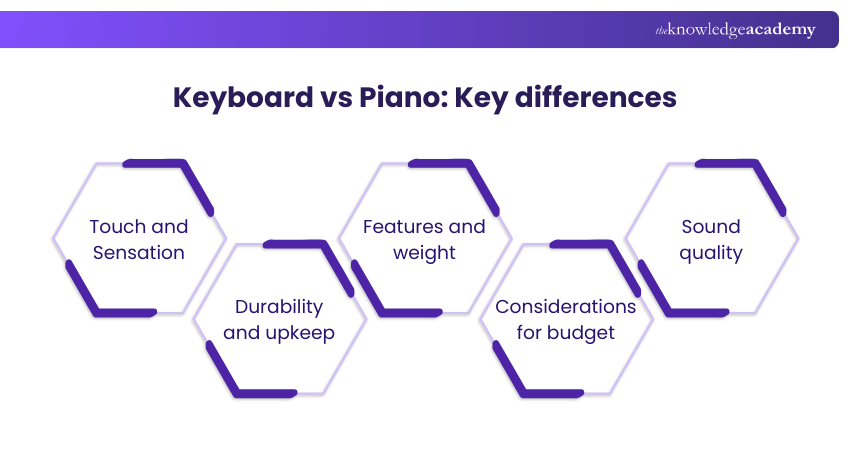
In this section, we'll explore the main difference between keyboard and piano. Understanding these distinctions will help you choose the instrument that aligns best with your preferences and goals.
1) Touch and Sensation
The touch and feel of keys can significantly impact your playing experience. Pianos offer weighted keys that mimic the feel of an acoustic Piano, providing a more authentic touch sensation. Keyboards, on the other hand, come with various key types, from semi-weighted to synth-action, catering to different preferences and playing styles.

2) Sound Quality
The sound quality of Pianos is unparalleled, with rich, resonant tones that fill the room and evoke deep emotions. However, the sound quality may vary based on the different Types of Pianos. Keyboards offer a vast array of sounds, from realistic Piano simulations to exotic instruments and electronic effects. It provides endless sonic possibilities for creative expression.
3) Key Action (Weighted vs Unweighted)
Action refers to how keys respond to touch and produce sound. Pianos feature graded hammer action, where keys are heavier in the lower register and lighter in the higher register. It simulates the feel of an acoustic Piano. Keyboards offer different types of action, including weighted, semi-weighted, and non-weighted, providing options for players of all levels.
Learn how to play Keyboard with our Keyboard Instrument Course - Join today!
4) Number of Keys
The number of keys is another important factor when comparing keyboard and piano. Pianos generally have 88 keys and spans over seven octaves that allow for a variety of expressions and repertoire. Keyboards come in different sizes, ranging from compact 25-key controllers to full-sized 88-key models. It caters to different needs and skill levels. Learning How to Clean Piano Keys is essential to maintaining their appearance and functionality over time.
5) Weight and Portability
Keyboards have a plethora of features like built-in sounds, effects, and recording capabilities. It offers versatility and flexibility to explore different musical genres. They are also lighter and more portable, ideal for musicians on the go. Pianos have fewer features compared to Keyboards. It has a timeless elegance and presence that can elevate any performance or space.
6) Connectivity
Digital keyboards often offer versatile connectivity options, making them easy to integrate with modern setups. Many models include features such as MIDI connectivity, Bluetooth, microphone inputs, and USB ports, allowing players to record, connect to devices, or use external sound systems seamlessly. These connections greatly expand a keyboard’s functionality beyond traditional piano use.
7) Types of Keyboards and Pianos
Keyboards come in several forms, including MIDI keyboards, synthesizers, and portable models, typically offering a wide range of sounds and lightweight designs suited for beginners or mobile players. Digital pianos, on the other hand, include upright, stage, and console models, designed to replicate the acoustic piano’s weighted action and authentic feel for more advanced or technique-focused musicians.
8) Price Range
Keyboards generally range from £50 to £4,000, making them accessible for beginners and those seeking affordable, versatile options. Digital pianos, offering more realistic sound and feel, typically fall between £300 and £10,000, reflecting their higher build quality and performance‑focused features.
Master advanced Piano techniques with our Piano Course - Register today!
9) Maintenance
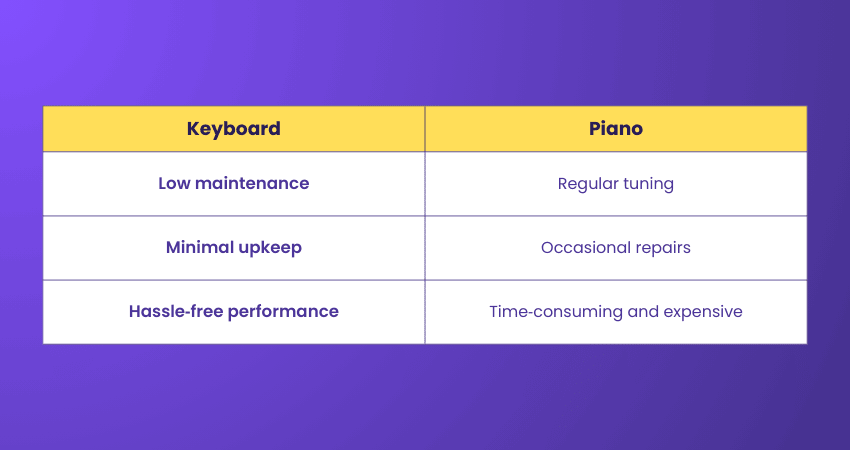
Maintaining a Piano requires regular tuning, regulation, and occasional repairs, which can be time-consuming and expensive. Keyboards are low-maintenance instruments, requiring minimal upkeep and offering hassle-free performance for busy musicians or casual players.
10) Ideal Player
Your playing style, musical goals, and lifestyle will ultimately determine which instrument is right for you. Pianos are well-suited for classical pianists, serious students, or those seeking a traditional playing experience. Keyboards are ideal for versatile musicians, producers, or anyone looking for a portable, multifunctional instrument to explore different genres and sounds.
11) Keyboard Benefits and Drawbacks
Keyboards are portable, compact, and offer many built‑in sounds for versatile use. They typically have unweighted or semi‑weighted keys that feel light and easy to play. However, this lighter action may limit players who want to develop proper piano techniques.
12) Piano Benefits and Drawbacks
Digital pianos provide a realistic playing feel with weighted hammer‑action keys. They support better technique development and closely mimic acoustic piano response. However, they are heavier, less portable, and generally more expensive than keyboards.
Conclusion
In the end, choosing between a Keyboard vs Piano comes down to your goals, space, and budget. Both instruments offer unique advantages that can support your musical journey. Pick the one that inspires you to play consistently and enjoy every note.
Give wings to your dream to become a Music Producer with our Music Production Course – Join now!
Frequently Asked Questions
Keyboard vs Piano? Which instrument is better for a beginner?

Keyboards are often preferred due to their affordability, portability, and versatility in sound options. They offer built-in lessons and accompaniments, making learning more interactive. Pianos are more expensive and provide a more authentic playing experience. It can be beneficial for developing proper techniques from the start.
Can a Keyboard replace a Piano for serious practice and performance?
Keyboards offer convenience and versatility. However, they may not fully replace the experience of playing a Piano, especially for serious practice and performance. Pianos provide a nuanced touch response and rich sound quality that is hard to replicate with electronic Keyboards.
What are the Other Resources and Offers Provided by The Knowledge Academy?
The Knowledge Academy takes global learning to new heights, offering over 3,000+ online courses across 490+ locations in 190+ countries. This expansive reach ensures accessibility and convenience for learners worldwide.
Alongside our diverse Online Course Catalogue, encompassing 19 major categories, we go the extra mile by providing a plethora of free educational Online Resources like Blogs, eBooks, Interview Questions and Videos. Tailoring learning experiences further, professionals can unlock greater value through a wide range of special discounts, seasonal deals, and Exclusive Offers.
What is The Knowledge Pass, and How Does it Work?
The Knowledge Academy’s Knowledge Pass, a prepaid voucher, adds another layer of flexibility, allowing course bookings over a 12-month period. Join us on a journey where education knows no bounds.
What are the Related Courses and Blogs Provided by The Knowledge Academy?
The Knowledge Academy offers various Hobbies & Interests Courses, including the Music Production Course, Mixing and Mastering Course, and Piano Course. These courses cater to different skill levels, providing comprehensive insights into Different Types of Pianos.
Our Business Skills Blogs cover a range of topics related to Keyboard vs Piano, offering valuable resources, best practices, and industry insights. Whether you are a beginner or looking to advance your Tone Control Skills, The Knowledge Academy's diverse courses and informative blogs have got you covered.

The Knowledge Academy


Global Training Provider
The Knowledge Academy is a world-leading provider of professional training courses, offering globally recognised qualifications across a wide range of subjects. With expert trainers, up-to-date course material, and flexible learning options, we aim to empower professionals and organisations to achieve their goals through continuous learning.


 If you wish to make any changes to your course, please


