


 Top Rated Course

We may not have the course you’re looking for. If you enquire or give us a call on +357 26030221 and speak to our training experts, we may still be able to help with your training requirements.
What is Content Management: A Complete Guide for Businesses
James Smith 09 February 2026Content Management is the process of creating, organising, managing, and delivering digital content efficiently using systems and workflows. It keeps content accurate, secure, and accessible across platforms. With the right tools, teams collaborate efficiently and deliver consistent content to the right audience at the right time.

Training Outcomes Within Your Budget!
We ensure quality, budget-alignment, and timely delivery by our expert instructors.
Table of Contents
Ever pour time into creating content, only to wonder where it lives, who updated it last, or if anyone even saw it? In a world full of blogs, posts, and updates, Content Management keeps everything organised, consistent, and under control instead of scattered and confusing.
In this blog, we explain What is Content Management, why it matters and the benefits. You will explore its lifecycle and strategies, along with practical ways to manage content more effectively.
Table of Contents
1) What is Content Management?
2) The Importance of Content Management
3) Structured vs Unstructured Content
4) Key Components of Content Management
5) Content Management Lifecycle
6) Benefits of Content Management
7) Strategies for Successful Content Management
8) Content Management Systems and Tools
9) Content Management Best Practices
10) What are the Three Pillars of Content Strategy?
11) What are the 3 E's of Content Marketing?
12) Conclusion
What is Content Management?
Content Management is the structured process of creating, organising, editing, storing, and publishing digital content such as text, images, and videos across different platforms. It covers the entire content lifecycle, ensuring information remains accurate, secure, compliant, and easy to access at every stage.
This process is usually supported by a Content Management System (CMS), which helps manage workflows, storage, and user permissions without requiring advanced technical skills. A CMS typically includes a Content Management Application (CMA) for creating and editing content, and a Content Delivery Application (CDA) that stores, compiles, and publishes content efficiently to users.

The Importance of Content Management
To make headway in the current content network, you need a well-organised plan to convey your content in the most captivating manner. Here are some suggestive pointers to help you manage your content effectively.
1) Reduction in Operating Costs
Having control over the content you deliver is essential for maintaining brand clarity and trust. The content you publish should align with your business goals and messaging. By setting clear guidelines such as style guides and colour palettes, you ensure consistent tone, quality, and visual identity across all content.
2) Enhanced Control Over Content
Having control over the content that you deliver is very important. The content that you put out needs to align with your business goal. You can control the quality of your content by framing guidelines like a style guide and colour palette to maintain consistency in the tonality of your content.
3) Streamlined Delivery
Directing the content to the intended audience is essential. To achieve the desired engagement, you will need to identify the audience with whom the content will resonate. Once you've determined the target audience, you will need strategies for grabbing their attention so that they will consume and engage with your content.
4) Increased Efficiency
Consistency is critical in Content Management. To stay consistent with your content, you need to be efficient in creating enough content to post regularly. Strategising a content creation timeline based on relevance can help you plan a posting schedule.
It is essential to understand that consistency is about something other than publishing content daily. It is about sticking to the planned frequency of publishing.
5) Improved Customer Service
When creating content for clients, it is important to consider their needs and preferences. Providing excellent customer service helps adapt content to these expectations and is essential for retaining clients. It also builds trust, improves satisfaction, and strengthens long-term customer relationships.
Know the various Elements of the Marketing Mix with our Introduction to Marketing Training- Today!
Structured vs Unstructured Content
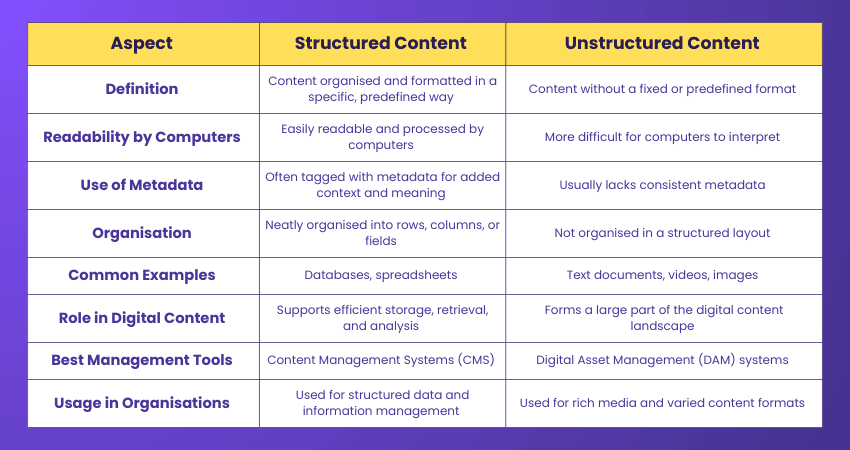
Content is mainly divided into structured and unstructured types. Structured content follows a clear format that computers can easily read, often using metadata for added context. Examples include databases and spreadsheets, where information is neatly organised into rows and columns.
Unstructured content has no fixed format and includes text documents, images, videos, and audio files. Organisations usually manage a mix of both, using tools like CMS platforms for structured content and DAM systems for handling unstructured assets more effectively.
Key Components of Content Management
Content Management is the process of efficiently creating, organising, and distributing digital content across different platforms. It involves many key components to ensure that content is accessible, relevant, and valuable to the target audience.
Here are some key points on What is Content Management:
1) Content Creation:
Developing text, images, videos, and other digital materials.
2) Content Storage:
Organising content in a central system (CMS) for easy access.
3) Content Editing:
Reviewing and refining content to ensure quality and accuracy.
4) Content Publishing:
Distributing content across various channels like websites, social media, and emails.
5) Content Distribution:
Sharing content with the target audience via multiple platforms.
6) Content Personalisation:
Customising content to specific audience segments for better engagement.
7) Content Analytics:
Tracking performance to assess effectiveness and optimise future strategies.
8) Content Governance:
Establishing guidelines and policies to maintain consistency and compliance.
Learn to analyse market trends and identify opportunities with our Marketing Research Training – Join now!
Content Management Lifecycle
Content Management is a process that can be easily strategised in a pattern that increases productivity in the following manner:
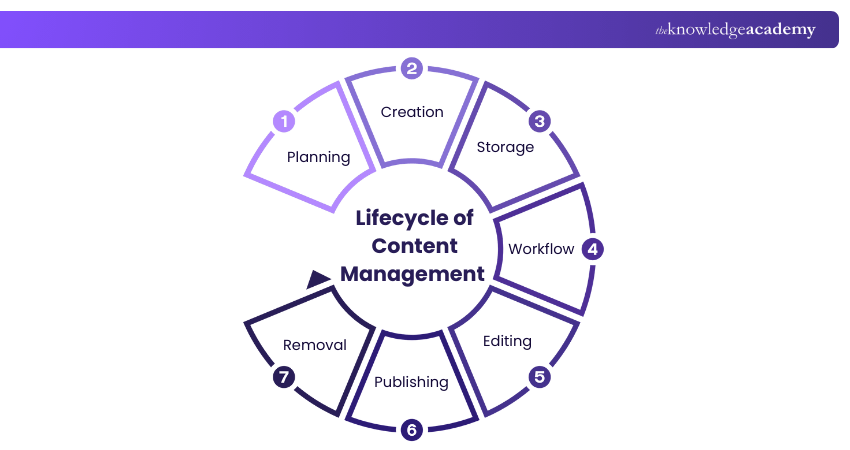
1) Planning
Planning defines the topics, tone, and purpose of your content while identifying the target audience. This stage sets clear goals, aligns content with business objectives, and ensures consistency, making it the foundation for effective Content Management and meaningful audience engagement.
2) Creation
Creation is the stage where planned ideas are developed into actual content. Content is written, designed, or produced following the defined structure, ensuring it meets objectives, reflects the intended tone, and delivers clear, consistent value that resonates with the target audience.
3) Storage
Once the contents are created, you will need to save the documents securely so that they can be posted or edited. You should save the documents so that they are editable so that you can incorporate future changes as and when you need them. They should be saved with the appropriate file names so that you can easily access and organise them.
4) Workflow
Content Management involves several people collaborating in a team effort to provide captivating and engaging content. Workflow facilitates each member's systematic contributions to the project. This also helps maintain consistency among the projects as the team gets accustomed to each other's work style.
5) Editing
The final step before publishing in Content Management is editing. It is the most essential stage, involving double-checking content for linguistic, grammatical, and spelling errors. Such mistakes can reduce credibility. Overall, editing ensures the content is clear, concise, and aligned with predefined goals.
6) Publishing
Publishing is the stage where content is released to its intended audience. It involves making content live across platforms such as websites, social media, or email channels, ensuring it is accessible, timely, clearly presented, and in the right format to reach and engage users effectively.
7) Removal
Removal, also known as archiving, is the final stage of the content lifecycle. It involves withdrawing outdated or underperforming content to keep information accurate and relevant, helping organisations maintain fresh digital experiences that align with changing audience needs and brand direction.
Gain knowledge of how to implement an Integrated Marketing strategy with our Integrated Marketing Training- Today!
Benefits of Content Management
A Content Management System (CMS) simplifies creating, managing, and publishing digital content while improving collaboration and control. Below are the key advantages of using a CMS:
1) No Coding Required:
A CMS allows non-technical users to create and update content using visual, user-friendly editors, removing the need for coding knowledge.
2) Streamlined Workflows and Collaboration:
Multiple users can work on content simultaneously with defined roles, approval workflows, and version control, reducing delays and confusion.
3) Cost and Time Efficiency:
By minimising reliance on developers for routine updates and using ready-made templates, organisations save time and reduce overall development costs.
4) Built-in SEO Support:
Most CMS platforms include SEO-friendly features or plugins that help optimise content, URLs, and metadata to improve search engine visibility.
5) Centralised Content Management:
All content and digital assets, such as images and videos, are stored in one place, making management, updates, and reuse more efficient.
6) Scalability and Flexibility:
A CMS can easily grow with your needs, allowing new pages, features, or integrations to be added as the website expands.
7) Omnichannel Content Delivery:
Content can be distributed consistently across websites, mobile apps, and social media platforms from a single system.
8) Enhanced Security and Access Control:
CMS platforms provide built-in security features, regular updates, and user permissions to protect content and manage access safely.
Strategies for Successful Content Management
Content Management strategies define how content is created, organised, published, and delivered. They ensure that every piece of content supports business goals while meeting audience expectations. A strong strategy keeps workflows structured, improves consistency, and makes scaling content across channels far more efficient.
The following strategies highlight how organisations can manage content effectively without creating confusion, duplication, or disconnected messaging.
1) Identify Your Content Channels
This step involves deciding where your content will be published, such as websites, blogs, social media platforms, mobile apps, or internal systems based on business goals. Identifying the right channels ensures content reaches its intended audience effectively and remains consistent across touchpoints and user journeys.
2) Prioritise Mapping
Content mapping connects content to specific objectives like lead generation, thought leadership, or Search Engine Optimisation (SEO). By planning what content supports each goal and stage of the customer journey, organisations avoid duplication, reduce inefficiencies, and deliver more relevant experiences.
3) Utilise Appropriate Technology
Choosing the right tools, such as a CMS with drag-and-drop editing, previews, and workflow controls, enables teams to publish efficiently and manage content at scale. The right technology empowers non-technical users, streamlines collaboration, and supports scaling content efforts across multiple platforms.
4) Define Your Target Audience
Understanding who your audience is, what they need, and how they consume content is essential for creating relevant experiences. Clear audience definition helps tailor tone, format, and messaging, ensuring content resonates, builds trust, and drives meaningful engagement over time.
Gain insights into consumer behaviour in the mobile landscape. Join our Mobile Marketing Course – Today!
Content Management Systems and Tools
In Content Management, having the right systems and tools is essential. Smaller organisations with fewer assets can often manage with simple file-sharing solutions. However, as the volume of content grows, more advanced systems become necessary.
Effective tools help keep content organised, up-to-date, and easy to find when needed. They ensure everything stays compliant, licensed, and properly tagged for smooth retrieval. Let’s take a closer look at the various systems and tools that support effective Content Management.

Web Content Management Systems (CMS)
If you are looking to Manage content for a website, you can use Web Content Managment Systems which permit you to create and manage websites. They provide storage for website files and enable you to make changes to a live website.
Enterprise Content Management Systems (ECM)
If you run an enterprise, you would require an Enterprise Content Management System. It would allow you to store and manage your content at an enterprise level. It will also allow you to store and organise other digital files that are relevant to the organisation.
If you run an enterprise, you would require an ECM. It would allow you to store and manage your content at an enterprise level. It will also allow you to store and organise other digital files that are relevant to the organisation.
Digital Asset Management Systems (DAM)
Digital Asset Management is a type of CMS that allows you to store and manage digital assets like images, videos and audio files. It helps you keep track of digital content, allowing you to have it organised and easy to access.
Social Media Content Management
Social Media Content Management is a framework that helps design and publish content on social media platforms like Facebook, Instagram and Twitter. They help you formulate your social media strategies, enabling you to have clarity and manage engagement.
Mobile Content Management (MCM)
If you are someone who is always on the go, then Mobile Content Management is for you. MCM allows you to manage your content from smartphones, tablets and other smart devices on the move.
Document Management System (DMS)
Paper is becoming obsolete, and tracking business files on paper is now a thing of the past. A Document Management System (DMS) provides a paperless way to manage, store, and track documents in the cloud. It automates the processes of uploading, processing, and sharing documents, eliminating the need for printing, copying, or scanning.
Benefits of a DMS:
1) Eco-Friendly:
Digitally organise content, reducing paper usage and promoting sustainability.
2) Security:
A DMS gives multiple layers of security to ensure sensitive documents remain protected.
3) Mobile Advantage:
Access and edit your documents from any place, ensuring flexibility and remote work capabilities.
Boost your marketing skills to to take your business to the next level with our Marketing Courses, Sign-up Now!
Content Management Best Practices
To manage digital content effectively, it's important to follow certain practices that help keep things organised and aligned with business goals. Here are some simple best practices to improve Content Management:
Know Your Audience:
1) Understand who your audience is
2) Identify their needs and preferences
3) Create content that is relevant and engaging for your target audience
Have a Content Strategy:
1) Develop a clear strategy for content creation and delivery
2) Ensure the content aligns with business goals and audience expectations
Use a Content Calendar:
1) Plan and schedule content in advance
2) Ensure consistent posting across all platforms
Set Up Content Governance:
1) Define clear roles for content creation, approval, and publishing
2) Ensure content quality and accountability
Focus on SEO:
1) Apply SEO best practices to improve search visibility
2) Reach a broader audience by optimising content for search engines
Organise Content Clearly:
1) Structure content in a way that is easy to manage
2) Make content reusable across different channels
Update Content Regularly:
1) Review and refresh content periodically.
2) Keep it fresh, accurate, and relevant.
What are the Three Pillars of Content Strategy?
The three pillars of content strategy are:
1) Communication:
Clear, consistent messaging to engage and grow audiences.
2) Experiences:
Creating meaningful, engaging experiences for the audience.
3) Operations:
Efficient Content Management, ensuring smooth creation, delivery, and analysis.
What are the 3 E's of Content Marketing?
The 3 E's of content marketing are:
1) Educate:
Share useful information that helps your audience learn or solve problems.
2) Engage:
Create content that encourages your audience to interact, like commenting or sharing.
3) Excite:
Make content that sparks interest and excitement, keeping your audience entertained.
Focusing on these three areas will help you connect with your audience and make your content more impactful.
Conclusion
Understanding What is Content Management is vital for managing digital content effectively in today’s fast-paced world. With the right strategies, tools, and workflows, Content Management helps organisations stay organised, maintain consistency, and deliver relevant content on time, improving engagement, efficiency, and long-term digital success across platforms.
Learn the basics of Marketing Budget and its importance with our Marketing Budget Course – Join now!
Frequently Asked Questions
Why Do We Need to Manage Content?

Managing content helps keep information organised, accurate, and up to date. It ensures consistency, improves SEO, and makes it easier for people to find and understand. Good Content Management also helps businesses engage audiences, build trust, and stay relevant while making work more efficient.
How Does Version Control Work in Content Management?
Version Control in Content Management grants the ability to streamline workflow and enhance collaboration between teams. It allows multiple team members to work on the same content without conflicts and overwriting each other's work. Any changes made to a document can be reviewed and reverted if need be.
What are the Other Resources and Offers Provided by The Knowledge Academy?
The Knowledge Academy takes global learning to new heights, offering over 3,000+ online courses across 490+ locations in 190+ countries. This expansive reach ensures accessibility and convenience for learners worldwide.
Alongside our diverse Online Course Catalogue, encompassing 19 major categories, we go the extra mile by providing a plethora of free educational Online Resources like Blogs, eBooks, Interview Questions and Videos. Tailoring learning experiences further, professionals can unlock greater value through a wide range of special discounts, seasonal deals, and Exclusive Offers.
What is The Knowledge Pass, and How Does it Work?
The Knowledge Academy’s Knowledge Pass, a prepaid voucher, adds another layer of flexibility, allowing course bookings over a 12-month period. Join us on a journey where education knows no bounds.
What are the Related Courses and Blogs Provided by The Knowledge Academy?
The Knowledge Academy offers various Marketing Courses, including the Content Marketing Course, Video Marketing Course, and the Marketing Budget Course. These courses cater to different skill levels, providing comprehensive insights into Keyword Density.
Our Digital Marketing Blogs cover a range of topics related to Content Management, offering valuable resources, best practices, and industry insights. Whether you are a beginner or looking to advance your Digital Marketing skills, The Knowledge Academy's diverse courses and informative blogs have got you covered.

James Smith


Digital Marketing Manager and Trainer
James Smith is a digital marketing professional with over a decade of experience in SEO, content strategy, paid media and analytics. He has supported both SMEs and global brands in transforming their digital presence. James’s writing and training are rooted in results-driven tactics and the latest marketing trends.
View Detail
Upcoming Digital Marketing Resources Batches & Dates
Date
 Content Marketing Course
Content Marketing Course
Fri 31st Jul 2026
Content Marketing Course
Fri 2nd Oct 2026

 If you wish to make any changes to your course, please


