




We may not have the course you’re looking for. If you enquire or give us a call on +357 26030221 and speak to our training experts, we may still be able to help with your training requirements.
What is Buffer Inventory? Meaning, Benefits, and Strategies
The Knowledge Academy 30 April 2026Buffer Inventory is essential for businesses to maintain smooth operations by ensuring stock availability during demand fluctuations or supply disruptions. It improves efficiency, customer satisfaction and prevents stockouts. Understanding the difference between Buffer and safety stock is key to managing inventory effectively.

Microsoft Dynamics 365 Supply Chain Management - Functional Consultant MB330
 Top Rated Course
Top Rated Course
Exclusive 40% OFF
Training Outcomes Within Your Budget!
We ensure quality, budget-alignment, and timely delivery by our expert instructors.
Table of Contents
Related Courses
- Architect solutions for Microsoft Dynamics 365 Finance and Operations Apps MB700 Course
- Develop Finance and Operations Apps with Dynamics 365 MB500 Course
- Microsoft Power Platform Fundamentals PL900
- Microsoft Dynamics 365 Business Central Functional Consultant MB800
- Microsoft Power Platform Solution Architect PL600
Imagine never having to say “out of stock” again. With Buffer Inventory, that’s your reality! It is your safety net, always ready to catch you when demand spikes or supply chains stumble.
Buffer Inventory is not just extra stock. It is your business’s superpower! It helps you stay ahead, delight customers, and avoid stockouts. By calculating buffer levels with methods like Greasley’s, safety stock, and historical demand-based calculations and employing strategies like prioritising key items, optimising storage, and supplier flexibility, you’ll stay agile and ready for any market challenge.
Table of Contents
1) What is Buffer Inventory?
2) Why You Need to Keep Buffer Inventory?
3) Calculating Buffer Inventory Levels
4) Pros and Cons of Buffer Inventory
5) Strategies for Managing Buffer Inventory
6) Difference Between Buffer Inventory and Safety Stock
7) Conclusion
What is Buffer Inventory?
Buffer Inventory is a stock of extra items that a company keeps on hand to avoid running out of stock. It performs as a safety net to cover any fluctuations in demand or disruptions in supply. For example, if a product suddenly becomes very popular or if there’s a delay in shipment, it makes sure that the business can continue operations smoothly, avoiding stockouts that could hurt sales or customer satisfaction.
This reserve stock is crucial in industries where customer demand can be unpredictable or where lead times for materials or products are long. This allows businesses to be prepared for sudden changes or unexpected events, making it a key component of effective Inventory management.

Why You Need to Keep Buffer Inventory?
It is essential for several reasons, particularly to ensure that your business can withstand unexpected breakdowns. Let's dive into the specific benefits:
Prevents Stockouts
Buffer Inventory helps you avoid running out of stock when demand goes up.
It keeps your products available, even during busy times.
This means you won’t lose sales or upset customers.
For example, a clothing shop keeps extra popular clothes before a big sale season to make sure they don’t run out.
Enhances Customer Satisfaction
Buffer Inventory makes sure products are available when customers need them.
When customers find what they want, they feel happy and trust your brand more.
If items are out of stock, customers may feel frustrated and lose trust in your business.
Keeping extra stock shows customers, that they can count on you for quick and reliable service.
This helps to create customer loyalty and keeps them coming back.
Maximises Sales Opportunities
Buffer Inventory helps businesses make the most of sales opportunities.
It’s useful in industries where demand changes with seasons or trends.
Having extra stock means you can meet demand right away without waiting for new supplies.
This is helpful during busy times like holiday sales.
It helps you earn more money and keeps customers happy by avoiding delays.
Mitigates Unexpected Disruptions
Supply chain problems can happen due to weather, supplier issues, or other reasons.
Buffer Inventory helps you keep running even when there’s a delay in new stock.
It gives you extra time to handle supply problems without stopping your work.
This makes the business more stable and less dependent on outside suppliers.
For example, if a manufacturer faces shipping delays, buffer stock keeps production going.
Learn how to integrate Power BI and create apps with PowerApps. Join our Microsoft Power Platform Functional Consultant PL200 Course today!
Calculating Buffer Inventory Levels
Calculating the right amount of Buffer Inventory is crucial to avoid overstocking or understocking. There are various methods to determine the appropriate level of Buffer stock. Let’s look at some of the most used techniques:
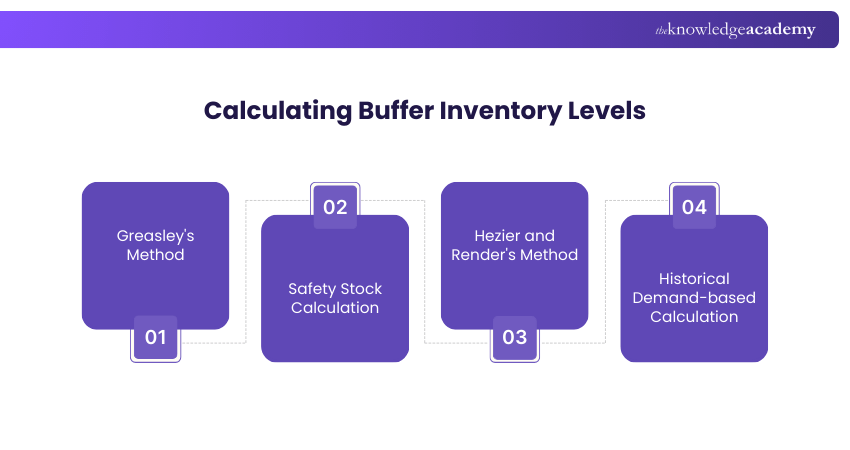
1) Greasley's Method
Greasley’s method involves calculating Buffer stock based on the maximum demand for a product during the lead time. The formula is simple:
Buffer Stock = Maximum Demand During Lead Time - Average Demand During Lead Time
This approach works best when there’s a clear pattern of demand that can be predicted over a certain period. It allows you to keep a cushion in case demand exceeds your regular consumption rate during the lead time.
2) Safety Stock Calculation
The safety stock formula is another commonly used method to calculate Buffer Inventory. This formula helps determine the amount of stock to keep based on demand variability and lead time variability. It is often used in businesses where demand and supply are highly variable. The formula is:
Safety Stock = Z * Standard Deviation of Lead Time Demand
Here, "Z" represents the Z-score, which reflects the desired service level (e.g., 1.96 for a 95% service level). By calculating the standard deviation of lead time demand, businesses can calculate the right amount of safety stock required to meet customer demand, even during fluctuations.
3) Hezier and Render's Method
Heizer and Render’s method is another calculation method used for Buffer Inventory. This method considers factors like demand rate, order lead time, and holding costs. It combines these variables into a formula that calculates the Buffer level to meet the desired service level, ensuring a balance between supply and demand.
4) Historical Demand-based Calculation
This method involves analysing past sales data to determine how much Buffer Inventory is required to handle variations in demand. By looking at historical demand patterns and lead times, businesses can forecast future demand and calculate Buffer stock accordingly.
The advantage of this method is that it considers real-world sales data, making it easier to predict how much extra stock is needed for periods of high demand or delays in supply.
Understand how to use basic budgeting and budget control processes with our Microsoft Dynamics 365 Finance MB310 Course – Register today!
Pros and Cons of Buffer Inventory
Like any business strategy, Buffer Inventory comes with both advantages and disadvantages. Let’s explore both sides:
Pros
Reduces the Risk of Stockouts:
Buffer Inventory ensures that there is always stock available, reducing the chances of running out of products.
Improves Customer Service:
Having Buffer stock available means quicker deliveries and higher customer satisfaction.
Increases Flexibility:
Buffer Inventory allows businesses to adapt quickly to changes in demand or supply disruptions.
Enhances Forecasting:
Regular monitoring of Buffer Inventory levels helps businesses improve their demand forecasting techniques.
Cons
Ties Up Capital:
Buffer Inventory can tie up a significant amount of working capital, which could have been used elsewhere in the business.
Increased Storage Costs:
Storing extra Inventory incurs additional storage and warehousing costs, which may not always be justified.
Risk of Overstocking:
If Buffer Inventory levels are set too high, businesses may end up with excess stock that becomes obsolete or expired.
Inventory Management Complexity:
Managing Buffer Inventory requires additional effort in terms of tracking, auditing, and replenishing stock.
Strategies for Managing Buffer Inventory
To make the most of Buffer Inventory, businesses must adopt effective strategies for managing it. Here are some key tactics:
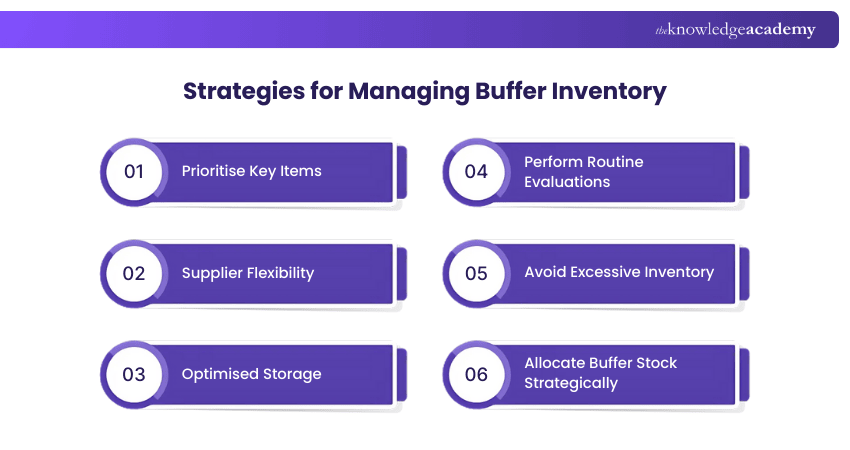
1) Prioritise Key Items
Not all products require the same level of Buffer Inventory. Businesses should prioritise key items, such as bestsellers or high-margin products, to keep larger amounts of Buffer stock. Lower-priority products may not need as much Buffer, freeing up space and capital.
2) Supplier Flexibility
Developing good relationships with suppliers can help ensure quick replenishment of Buffer stock when necessary. This flexibility allows businesses to reduce Buffer stock levels for less critical items while ensuring a steady supply of high-priority products.
Get an understanding of Microsoft Dynamics 365 and its essential services. Join our Microsoft Dynamics 365 Fundamentals (ERP) MB920 Course now!
3) Optimised Storage
Efficient storage is essential for managing Buffer Inventory. Use Inventory management systems to monitor stock levels in up to date and store products in a way that reduces space and handling costs. Automated systems can help simplify the process and ensure accuracy in stock counts.
4) Perform Routine Evaluations
Buffer Inventory levels should not remain static. Businesses should regularly evaluate their Buffer stock levels based on sales data, lead time changes, and market trends. Adjusting it regularly helps keep costs under control while ensuring the business can meet customer demand.
5) Avoid Excessive Inventory
While Buffer Inventory is crucial, businesses should avoid keeping too much stock. Extra Inventory ties up capital and storage space. By calculating the appropriate levels using one of the methods mentioned earlier, businesses can ensure they have enough stock without overstocking.
6) Allocate Buffer Stock Strategically
Buffer Inventory should be allocated strategically across different products and locations. For example, a product with high demand in one region may require more Buffer stock than a similar product in another region. This strategy helps businesses better manage their Inventory and reduce the risk of stockouts in key areas.
Difference Between Buffer Inventory and Safety Stock
Buffer Inventory and safety stock are closely related concepts, but they serve slightly different purposes in Inventory management. These are the
Buffer Inventory:
Refers to extra stock kept on hand to handle uncertainties in both demand and supply.
Acts as a safeguard against any unexpected disruptions or changes.
It can include different types of reserve stock, not just for stockouts but for any unforeseen issues.
Safety Stock:
A specific type of Buffer Inventory.
Designed to protect against stockouts caused by unpredictable fluctuations in demand or supply.
Focused purely on preventing stockouts during periods of uncertainty.
Key Difference:
All safety stock is Buffer Inventory, but not all Buffer Inventory is safety stock.
It is a general reserve of stock, while safety stock is a calculated subset of Buffer Inventory specifically for preventing stockouts.
Conclusion
Buffer Inventory is essential for businesses to meet customer expectations and handle unexpected breakdowns. By managing Buffer stock effectively, businesses can enhance efficiency, improve customer satisfaction and prevent costly stockouts. Hitting the right balance is key to avoiding extra capital being tied up. Understanding the difference between buffer and safety stock, with effective management strategies. It helps businesses create a flexible Inventory system that adapts to market changes.
Get knowledge of building and releasing products with our Microsoft Dynamics 365 Supply Chain Management Course – Join today!
Frequently Asked Questions
What is Another Name for Buffer Inventory?

Another name for buffer inventory is safety stock. It refers to extra inventory that businesses keep preventing stockouts during unexpected demand fluctuations or supply chain disruptions.
What is an Example of a Buffer Inventory?
An example of buffer inventory is the extra stock of a popular product that a retailer keeps on hand to prevent running out of stock during peak shopping periods, such as the holiday season.
What are the Other Resources and Offers Provided by The Knowledge Academy?
The Knowledge Academy takes global learning to new heights, offering over 3,000+ online courses across 490+ locations in 190+ countries. This expansive reach ensures accessibility and convenience for learners worldwide.
Alongside our diverse Online Course Catalogue, encompassing 17 major categories, we go the extra mile by providing a plethora of free educational Online Resources like Blogs, eBooks, Interview Questions and Videos. Tailoring learning experiences further, professionals can unlock greater value through a wide range of special discounts, seasonal deals, and Exclusive Offers.
What is The Knowledge Pass, and How Does it Work?
The Knowledge Academy’s Knowledge Pass, a prepaid voucher, adds another layer of flexibility, allowing course bookings over a 12-month period. Join us on a journey where education knows no bounds.
What are the Related Courses and Blogs Provided by The Knowledge Academy?
The Knowledge Academy offers various Microsoft Dynamics 365 Training, including the Microsoft Dynamics 365 Fundamentals (CRM) MB910, Microsoft Dynamics 365 Supply Chain Management - Functional Consultant MB330, and the Microsoft Power Platform Functional Consultant PL200. These courses cater to different skill levels, providing comprehensive insights into How To Use Microsoft Planner.
Our Microsoft Technical Blogs cover a range of topics related to Microsoft Dynamics 365, offering valuable resources, best practices, and industry insights. Whether you are a beginner or looking to advance your Microsoft Technical skills, The Knowledge Academy's diverse courses and informative blogs have got you covered.

The Knowledge Academy


Global Training Provider
The Knowledge Academy is a world-leading provider of professional training courses, offering globally recognised qualifications across a wide range of subjects. With expert trainers, up-to-date course material, and flexible learning options, we aim to empower professionals and organisations to achieve their goals through continuous learning.

Upcoming Microsoft Technical Resources Batches & Dates
Date
 Microsoft Dynamics 365 Supply Chain Management - Functional Consultant MB330

 If you wish to make any changes to your course, please


