


 Top Rated Course

We may not have the course you’re looking for. If you enquire or give us a call on +44 1344 203999 and speak to our training experts, we may still be able to help with your training requirements.
What is Recruitment? An Overview
Amelia Williams 24 February 2026Recruitment is the process of attracting, screening, interviewing, and hiring qualified candidates, from identifying needs to onboarding. It ensures the right talent consistently joins the right role at the right time. Effective recruitment significantly boosts team performance and supports long-term business growth.

Training Outcomes Within Your Budget!
We ensure quality, budget-alignment, and timely delivery by our expert instructors.
Table of Contents

Recruitment plays a crucial role in building strong, high-performing teams. But What is Recruitment, and why does it matter for every organisation? Understanding the process helps businesses attract the best talent and stay competitive.
From attracting the right candidates to onboarding them effectively, the process shapes the future of any business. With the right strategies, organisations can reduce turnover, boost productivity, and create a positive work culture. Let’s dive into the key steps and strategies involved.
Table of Contents
1) What is Recruitment?
2) Why is Recruitment Important?
3) The Recruitment Process
4) Types of Recruitment
5) Tips for Effective Recruiting
6) Best Practices in Recruitment
7) Benefits of Using a Recruiter
8) What is the End-to-end Recruitment Process?
9) What are the Three Most Important Recruitment Principles?
10) Conclusion
What is Recruitment?
Recruitment meaning actively searching for, interviewing, and hiring qualified candidates to fill positions within an organisation. This process starts with identifying the company's needs and ends with the admission of employees to the organisation. Recruitment can also be interpreted as finding potential employees and encouraging them to apply.
The Recruitment Process is primarily implemented to find individuals who are best qualified for positions within the company. The typical idea behind this process is to hire individuals to help the organisation achieve professional goals. Through Recruitment, organisations also ensure that the company's workforce is aligned with its initiatives and goals.

Why is Recruitment Important?
Recruitment can help organisations overcome the difficulty of finding and attracting the right individuals for particular positions. The right Recruitment process helps consolidate the strength of the company's human resources, boosts team spirit, ensures the company's development, and supports business growth.
Through the selection process, the organisation can attract candidates with the necessary skills whose ethics match its principles. Become a Recruiter who understands how this approach positively affects productivity, staff satisfaction, and retention rates, helping the organisation achieve its most profitable objectives.
The Recruitment Process
Organisations integrate their Recruitment processes depending on their structure and specific needs. We will, however, investigate the general approach to the Recruitment process adopted by most organisations and companies. Here's a complete breakdown of the Recruitment Process:
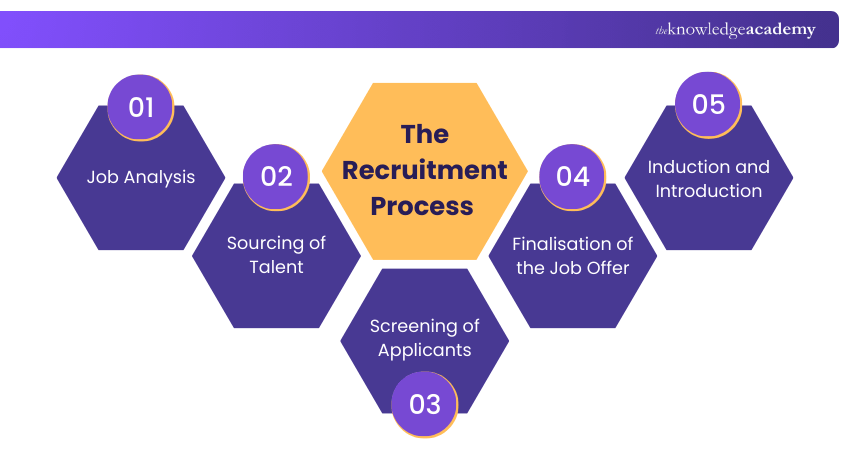
1) Job Analysis
This step allows the Human Resources (HR) Manager to analyse the suitability of potential job applicants against the job role. They develop a detailed job description that includes the title and purpose of the position. Once the job description is created, it is reviewed for accuracy and checked to see if it is an updated version.
The HR department sets the basic requirements an applicant must meet to be considered suitable for a position. They may also include other preferred skills or qualifications beyond the minimum or essential qualifications. Finally, they define a salary range to compensate for the position's duties and responsibilities.
2) Sourcing of Talent
This is the step where the organisation lets everyone know there is an open position, and they are looking for someone to fill it. The organisation uses various methods to advertise an open position. Some of these include networking through word of mouth, posting jobs on various Social Media Platforms, advertising in newspapers, and using the company's reputation to attract candidates.
3) Screening of Applicants
The screening process begins with pre-screening, which narrows down the list of candidates to those who meet or exceed the minimum job requirements. Those who pass this stage move on to an entrance interview, typically conducted over the phone or in person, to assess basic job-relevant skills.
Following this, Hiring Managers administer tests to evaluate candidates' skills. Depending on the position, multiple rounds of interviews, including those with Recruitment Consultants, are held to assess candidates from different perspectives before the final selection is made.
4) Finalisation of the Job Offer
The final stage of the Recruitment process is the review process, where the chosen candidate is offered the job and assigned the specific position. The Recruiter sends an offer, and the applicant responds affirmatively, and then they join forces on an agreement.
5) Induction and Introduction
The signing of the employment contract marks the beginning of the employment process. What follows is the employee's decision and notification of the joining date.
Learn more about the Recruitment process with our Recruitment Training – sign up now!
Types of Recruitment
After learning about What is Recruitment, it’s time to learn its various types. Various Recruiting techniques can help the talent acquisition team attract and filter candidates. Let’s look at some of them:
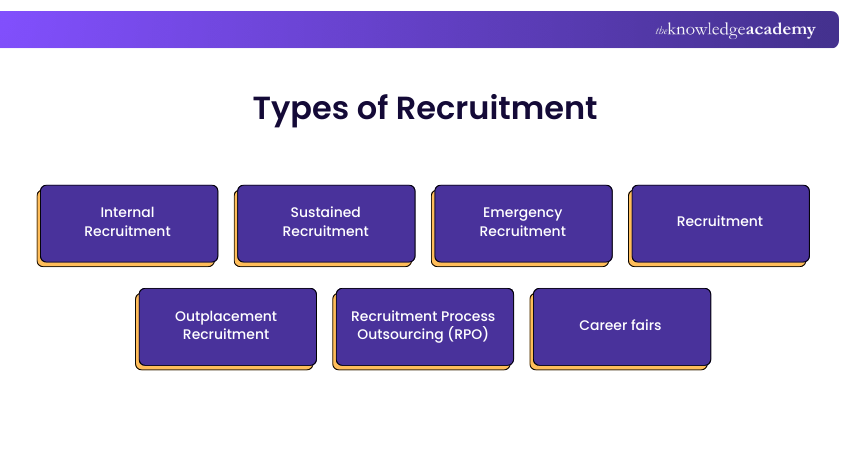
Internal Recruitment
In this type of Recruitment, Hiring Managers use various channels to attract diverse talent. External Recruitment methods include:
a) Job Advertisements: Job openings are posted across platforms, targeting specific skills and demographics to attract the right candidates.
b) Recruitment Agencies: Specialised agencies connect candidates with roles, saving HR Managers time by streamlining the hiring process.
c) Campus Recruitment: HR Managers target recent graduates, offering companies a chance to develop fresh talent and strong work ethics.
External Recruitment
In this type of Recruitment, Hiring Managers opt for different channels to hire candidates, which brings a new variety of skills and knowledge to the organisation. Recruitment Process Outsourcing is a key strategy here, involving multiple external methods to enhance hiring efficiency and effectiveness.
a) Job Advertisements: Several job vacancies are posted regularly on different channels, which attracts many candidates. These advertisements can be tailored to reach the required demographics and candidates with skills.
b) Recruitment Agencies: Several special Recruitment agencies help many candidates find their desired roles. This helps the HR Managers a lot as they don’t have to again go through the entire process.
c) Campus Recruitment: Campus Recruitment is one of the major areas where HR Managers can find their desired candidates. Mostly, these candidates are freshers or graduates, which gives organisations a chance to foster new talents and work ethics.
Join Safer Recruitment Training to learn effective hiring practices and ensure a safer workplace today.
Contingency Recruiting
This type of Recruitment relies on external agencies to fill job vacancies in an organisation. The Recruitment agencies are paid only if a candidate they recommend is hired. Several methods are involved in contingency recruiting:
a) Job Advertisements: Vacancies are posted on various platforms to attract a broad pool of candidates. These ads are tailored to reach the specific skills and demographics needed for the role.
b) Recruitment Agencies: Specialised agencies assist in sourcing candidates, saving HR teams time by managing the candidate search and selection process, only charging when a hire is made.
c) Campus Recruitment: Companies partner with educational institutions to hire fresh graduates, bringing in new talent and fostering potential long-term employees with up-to-date skills and fresh perspectives.
Staffing Recruiting
Staffing recruiting involves the strategic process of matching qualified candidates with temporary or short-term employment opportunities. Typically facilitated by staffing agencies, this approach serves various business needs, including:
a) Temporary Staffing: Filling short-term roles to address seasonal demands, project-based work, or employee absences.
b) Temp-to-hire: Allowing employers to evaluate a candidate's performance on the job before committing to a permanent hire.
c) Project-based Staffing: Providing specialised skills for specific projects with defined timelines.
Learn safe hiring practices with our Safer Recruitment Training – Join now!
Outplacement Recruiting
Outplacement recruiting is a service that assists employees in transitioning to new job opportunities after they’ve been laid off or during organisational changes. Typically offered by employers, this service provides displaced employees with essential resources, including:
a) Career Coaching: Offering guidance on job search strategies, interview preparation, and career planning.
b) Resume and Cover Letter Assistance: Helping employees craft professional resumes and cover letters to improve their chances of landing a new job.
c) Job Search Support: Providing access to job listings, networking opportunities, and job fairs to help employees secure new employment.
d) Emotional Support: Offering counselling services to help employees manage stress and maintain a positive outlook during their transition.
Reverse Recruiting
Reverse recruiting is a process that focuses on helping job seekers, especially those from marginalised or underrepresented groups, secure long-term employment. This service typically includes:
a) Resume Enhancement: Helping candidates refine and tailor their resumes to highlight relevant skills and experiences.
b) Interview Coaching: Offering mock interviews and tips to help candidates perform confidently in real interviews.
c) Personal Branding: Assisting candidates in building a compelling narrative that resonates with potential employers.
d) Ongoing Support: Providing mentorship and guidance throughout the job search process to increase success in securing the right role.
Tips for Effective Recruiting
Effective Recruiting means finding the right candidates quickly and efficiently. The following tips can help you improve sourcing, screening, and hiring decisions.
a) Use Modern Tools: Leverage AI, CRM systems, and databases to source candidates faster from multiple channels.
b) Streamline Screening: Automate resume review, outreach, and communication to save time and improve the candidate experience.
c) Leverage Data: Use analytics to track hiring performance, identify bottlenecks, and refine your recruitment strategy.
Spot future stars – hire the top talent with ease by joining our Hiring Graduates Course now!
Recruit Internally Before Externally
Recruit internally before looking outside the organisation by promoting or transferring existing employees. This helps retain talent, supports career growth, and keeps institutional knowledge in-house. It also makes it easier to match skills to new roles and find the right fit quickly.
Reach out to “Passive” Candidates
Passive candidates are those professionals who are not actively seeking a new job but one who can be receptive to the right opportunity. It is possible to pick up the best talent that may not be noticed in job applications by outreach or networking them individually. Fostering relationships with the passive candidates will broaden your talent pool and give you a greater chance of identifying the most suitable.
Hire the Sure Thing
Focus on candidates who clearly meet the role’s requirements and demonstrate the skills, experience, and cultural fit needed to succeed. Prioritising these “sure thing” hires reduces risk, speeds up onboarding, and increases the likelihood of long-term success within the organisation.
Best Practices in Recruitment
Every company aims to attract the best talent. To achieve this, it's essential to adopt effective Recruitment practices. Here are some key strategies to consider:
1) Define Your Brand
Job seekers often start with well-known brands they trust. Ensure your company’s values and goals are clearly communicated to reflect your brand effectively.
2) Use Social Media
Promote job openings and interact with candidates through social media. Great talent often follows your brand and engages with your content.
3) Invest in Qualified Recruiters
Hire skilled recruiters who can manage the hiring process effectively. Provide ongoing support and training to improve their Recruitment strategies.
4) Leverage Smart Sourcing Tools
Use advanced sourcing tools to lower hiring costs and level the playing field for both small and large companies.
5) Implement Candidate Relationship Management
Establish clear communication channels for candidates, employees, and the organisation to foster a positive relationship throughout the Recruitment journey.
6) Ensure Compliance
Streamline the Recruitment process by automating compliance management while ensuring all documentation is properly managed and archived.
7) Engage Employees in the Hiring Process
Encourage employee involvement in Recruitment, particularly through a strong referral program that helps attract quality candidates from within your organisation.
Unlock the best Recruitment practices with our Recruiting for Success Training – Join today!
Benefits of Using a Recruiter
Using a Recruiter provides several advantages for both employers and job seekers:
1) Wider Talent Pool:
Access to a larger network, including passive candidates not actively applying.
2) Industry Expertise:
Recruiters understand market trends and required skills, ensuring they find the best-fit candidates.
3) Time Efficiency:
Recruiters handle sourcing, screening, and interviews, saving employers valuable time.
4) Confidentiality:
Ensures discretion, especially for sensitive Recruitment processes.
5) Streamlined Process:
Manages every step of hiring, from sourcing to onboarding.
6) Faster Hiring:
Recruiters fill positions quicker, reducing downtime.
7) Support:
Guides both employers and candidates through interviews, salary talks, and contract negotiations.
Recruiters simplify the hiring process, expand talent access, and help make better hiring decisions.
What is the End-to-end Recruitment Process?
The end-to-end Recruitment process covers everything from identifying the need for a new hire to onboarding. It includes job requisition, sourcing candidates, screening resumes, conducting interviews, selecting the best candidate, and ensuring a smooth onboarding experience.
What are the Three Most Important Recruitment Principles?
The process of attracting, selecting, and onboarding the right people to fill a job role is known as recruitment. The three primary principles of time, cost, and quality form a structure for assessing the hiring decisions and trade-offs.
a) Time: The speed of vacancy filing. Rapid hiring is good to sustain productivity, though it may affect other factors.
b) Cost: The overall cost of sourcing, hiring and onboarding personnel, including advertising and recruitment materials.
c) Quality: Ability, performance capacity, and cultural suitability of the candidate in the organisation. To improve the quality further, more time and investment may be required.
Conclusion
Understanding What is Recruitment helps organisations make smarter hiring decisions and build stronger teams. We hope this blog was helpful in clarifying key principles and practical approaches to improve your hiring process. Apply these insights to create a more efficient and effective recruitment strategy.
Master assessment techniques that help build winning teams – Register for our Recruitment Assessment and Selection Training.
Frequently Asked Questions
What are the Latest Trends in Recruiting?

Recruiting trends now emphasise flexibility, tech integration, and people-first strategies. Employers are adopting skills-based hiring, AI-driven processes, and remote work to access wider talent pools. Diversity and inclusion remain key, aiming to build faster, smarter, and more inclusive hiring practices fit for the future.
What are Some Ways to Make the Hiring Process More Efficient?
To streamline hiring, companies can use Artificial Intelligence (AI) for screenings, structured interviews for consistency, skills-based assessments, social media for reach, integrated platforms for communication, and feedback for continuous improvement.
What are the Other Resources and Offers Provided by The Knowledge Academy?
The Knowledge Academy takes global learning to new heights, offering over 3,000+ online courses across 490+ locations in 190+ countries. This expansive reach ensures accessibility and convenience for learners worldwide.
Alongside our diverse Online Course Catalogue, encompassing 17 major categories, we go the extra mile by providing a plethora of free educational Online Resources like Blogs, eBooks, Interview Questions and Videos. Tailoring learning experiences further, professionals can unlock greater value through a wide range of special discounts, seasonal deals, and Exclusive Offers.
What is Knowledge Pass, and how does it work?
The Knowledge Academy’s Knowledge Pass, a prepaid voucher, adds another layer of flexibility, allowing course bookings over a 12-month period. Join us on a journey where education knows no bounds.
What are related HR courses and blogs provided by The Knowledge Academy?
The Knowledge Academy offers various Recruitment Courses, including the Recruiting for Success Training, Hiring Graduates Course and Recruitment Assessment and Selection Training. These courses cater to different skill levels, providing comprehensive insights into Becoming a Recruiter.
Our HR Blogs cover a range of topics related to Recruitment, offering valuable resources, best practices, and industry insights. Whether you are a beginner or looking to advance your Communication skills, The Knowledge Academy's diverse courses and informative blogs have got you covered.

Amelia Williams


Senior Human Resources Consultant and Learning Specialist
Amelia Williams is a highly respected HR professional with over 12 years of experience in human capital management, talent development and workplace policy. She has worked across sectors including education, healthcare and corporate services, focusing on aligning people strategies with organisational goals. Amelia’s writing blends current HR trends with practical solutions for modern workplace challenges.

Upcoming HR Resources – Learn about Human Resources Batches & Dates
Date
 Recruiting for Success Training
Recruiting for Success Training
Fri 14th Aug 2026
Recruiting for Success Training
Fri 23rd Oct 2026
Recruiting for Success Training
Fri 11th Dec 2026

 If you wish to make any changes to your course, please


