


 Top Rated Course

We may not have the course you’re looking for. If you enquire or give us a call on +44 1344 203999 and speak to our training experts, we may still be able to help with your training requirements.
What is Capacity Requirement Planning and How to Plan It?
James Smith 04 February 2026Capacity Requirement Planning (CRP) checks if resources like machines, labour, and materials can meet production demands without overloading. It ensures optimal resource utilisation by balancing production goals and resource capacity. This approach ultimately improves efficiency and helps prevent bottlenecks in the manufacturing process.

Training Outcomes Within Your Budget!
We ensure quality, budget-alignment, and timely delivery by our expert instructors.
Table of Contents

Ever clicked "buy now" only to wait weeks for your order or find it out of stock? That’s where Business Process Improvement (BPI) comes in, helping companies fine-tune their operations for a smooth, hassle-free experience. Companies like Apple have mastered BPI, perfecting their supply chains to deliver seamless service to millions of happy customers. One essential element of these optimised processes is Capacity Requirement Planning.
In this blog, we’ll explore What is Capacity Requirement Planning, its key steps, factors, and benefits. We’ll also discuss its role in modern manufacturing, future trends, KPIs, and provide real-world examples of how CRP helps optimise resources and meet demand efficiently.
Table of Contents
1) What is Capacity Requirements Planning?
2) What are the Steps for Capacity Requirements Planning?
3) Factors Affecting Capacity Requirements Planning
4) Benefits of Capacity Requirement Planning
5) CRP in Modern Manufacturing
6) Future Trends in CRP
7) What is the KPI for Capacity Planning?
8) What is an Example of Capacity Planning?
9) Conclusion
What is Capacity Requirements Planning?
Capacity Requirements Planning (CRP) determines whether a company’s available production capacity can meet its goals. CRP first examines the company’s planned manufacturing schedule and then weighs it against the company’s production capabilities to confirm whether meeting the capacity is realistic.
If the production capacity is found to be inadequate, the company may alter its production goals or take different steps to bring production capabilities in line with capacity. CRP goes hand in hand with manufacturing requirement planning, which ensures an organisation has the physical assets to meet production needs. It also involves evaluating labour availability, equipment efficiency, and shift schedules to optimise resource utilisation and minimise production delays.

What are the Steps for Capacity Requirements Planning?
It’s important to know that CRP depends on having accurate data. Relying on outdated spreadsheets or disconnected systems can lead to errors and misjudgements. To ensure accurate and up-to-date information, companies should implement modern, automated Capacity Planning tools. When planning capacity needs, these steps are important:

Step: 1. Evaluate Current Capacity
To understand your current capacity, gather data on equipment capabilities, time studies, and available work hours. Consider other factors such as absenteeism and supply chain elements like vendor performance and inventory.
1) Collect time studies and live data
2) Evaluate available shifts and working hours
3) Check absenteeism rates and supply chain variables
Step: 2. Create Demand Forecast
An accurate demand plan is essential for Capacity Planning. Use supply chain planning software to forecast demand, identify bottlenecks, and develop a master schedule.
1) Use software for aggregated demand forecasting
2) Calculate work centre capacity
3) Identify potential bottlenecks and plan "what-if" scenarios
Step: 3. Plan Capacity Adjustments
Once you understand capacity and demand, adjust to meet production goals. This may include adding shifts, overtime, outsourcing, or purchasing additional equipment.
1) Add overtime or extra shifts if needed
2) Outsource production tasks when necessary
3) Invest in equipment or training for long-term stability
Gain practical skills for driving sustainable growth strategies. Join our Business Sustainability Course now!
Factors Affecting Capacity Requirements Planning
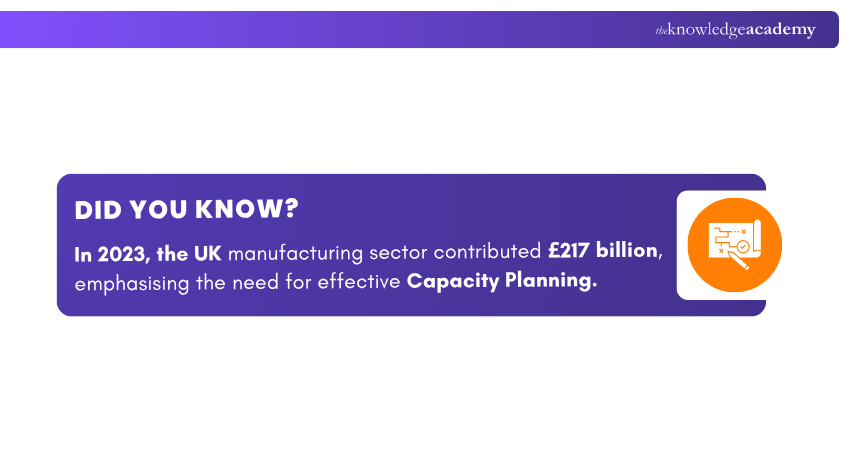
There are various factors that impact Capacity Requirements Planning. These include product types, finances, skilled workforce and equipment capacity. Let’s explore these factors:
1) Product Types
Complex products require more time to produce, lead to production delays, and need more skilled Employees and the most efficient equipment. On the other hand, simple products need less time and can be produced in large quantities within a short period.
2) Finances
A business must have sufficient financial resources to invest in new machinery, expand operations, or hire additional employees. This determines sustainable growth and productivity and enables the organisation to seize opportunities in a competitive market environment.
3) Skilled Workforce
A company relying on unskilled or equally qualified employees without improving their skills or hiring more skilled staff can negatively impact production capacity. A lack of skilled workers or an inability to recruit additional talent can restrict output levels.
4) Equipment Capacity
Maintaining equipment in good condition is vital for an efficient production process. Well-functioning machinery reduces downtime, minimises maintenance delays, and confirms consistent output quality. In Capacity Requirement Planning, reliable equipment is vital for meeting production demands and achieving operational efficiency.
Benefits of Capacity Requirement Planning
Capacity Requirement Planning brings plenty of benefits to the table. As we’ve previously explored, CRP leads to improved Cost Management and efficiency. Let’s look at its key advantages for organisations.
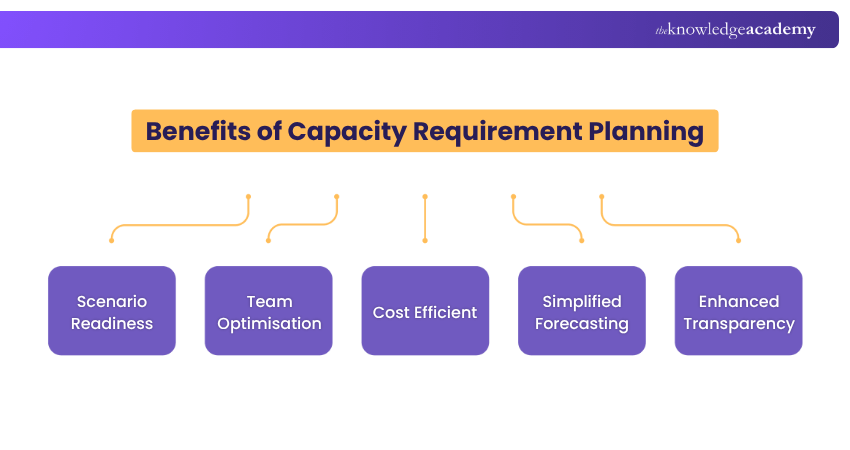
1) Scenario Readiness
A well-prepared Capacity Plan helps the business stay prepared for numerous scenarios. It'll remove a lot of pressure, and if you know the steps to be made for each type of capacity, it'll be easier to meet demand in any period.
2) Team Optimisation
Efficient CRP involves matching the existing team's availability and skill sets with the requirements of upcoming projects. So, if there are limited resources for a project, you'll gain insight into how to add more resources to your team. As a business owner, it's crucial to understand the team’s skill sets, and consequently, CRP has the potential to speed up staffing decisions and mitigate the risk of burnout.
3) Cost Efficient
Effectively managing a team’s capacity involves maximising your resources to adjust to the scope of work that needs to be done. So, you don’t have to pay for more resources than you require, eventually reducing production costs.
Let's say there are 13 team members assigned to Project A, which requires only nine; you can reassign three of those team members to Project B. Such reallocation helps reduce expenses pertaining to Project A.
4) Simplified Forecasting
Capacity Requirement Planning is beneficial for understanding the capacity requirements for current planning as well as future scope. So, the same plan can be used for future projects if Capacity Planning is created for the current project. The template will help as a valuable initial reference point, eliminating the need for predicting capacity needs from the beginning. This can save time and accelerate the Capacity Planning procedure.
5) Enhanced Transparency
With CRP, more inefficiencies can be highlighted, which can be further optimised. Stakeholders can benefit from this data to gain a clear view and determine how they can invest their money and resources.
CRP in Modern Manufacturing
With Industry 4.0 and smart manufacturing, Capacity Requirements Planning has evolved significantly. Today’s systems use technologies like the Internet of Things (IoT), Artificial Intelligence (AI), and Big Data to enable real-time, data-driven planning.
Modern CRP platforms can detect potential issues before they occur and offer quick solutions. They also allow remote monitoring and control, enabling manufacturers to respond rapidly to disruptions or changes.
Learn how to communicate with remote teams by using technology. Join our Managing Remote Teams Course now!
Future Trends in CRP
The future of Capacity Requirements Planning (CRP) will be shaped by new technologies and trends:
1) Predictive Analytics: Using smart systems to predict what resources will be needed and plan.
2) Cloud-based Solutions: More companies will use cloud CRP systems because they are easy to adjust and save money.
3) Integration with IoT: CRP will use IoT devices to get real-time information from the factory floor.
4) Collaborative Planning: CRP will help different teams and outside partners work together better.
5) Sustainability: CRP will help make manufacturing more eco-friendly by reducing waste and saving resources.
What is the KPI for Capacity Planning?
Key Performance Indicators (KPIs) are measurable values that help businesses measure how effectively they are managing their Capacity Planning. These KPIs provide insights into whether a company can meet demand with its available resources, identify potential bottlenecks, and make informed resolutions about future resource allocation.
What is an Example of Capacity Planning?
Capacity planning helps teams make sure they have enough workers for projects. For example, Asana’s tool helps teams assign workers to tasks and see if anyone has too much or too little work. This helps them change things to make sure projects are finished on time without overworking anyone.
Conclusion
Understanding What is Capacity Requirement Planning (CRP) is crucial for optimising resources and meeting demand efficiently. By using CRP, businesses ensure smooth operations, even during peak times. As industries evolve, understanding CRP’s role in modern manufacturing helps stay competitive, ensuring efficient management of inventory, labour and machinery.
Become familiar with Pareto's Law to prioritise tasks more effectively. Join our Management Training for New Managers now!
Frequently Asked Questions
What is the Purpose of Capacity Requirement Planning?

Capacity Requirement Planning (CRP) aims to align an organisation's capacity with its demand to optimise efficiency and maintain customer satisfaction.
What are the Three Key Inputs to Capacity Planning?
The three key inputs to Capacity Planning are demand forecasting, resource availability, and operational constraints. Demand forecasting estimates future needs, resource availability identifies existing capabilities, and operational constraints define limitations such as budget, time, or regulations.
What are the Other Resources and Offers Provided by The Knowledge Academy?
The Knowledge Academy takes global learning to new heights, offering over 3,000+ online courses across 490+ locations in 190+ countries. This expansive reach ensures accessibility and convenience for learners worldwide.
Alongside our diverse Online Course Catalogue, encompassing 19 major categories, we go the extra mile by providing a plethora of free educational Online Resources like Blogs, eBooks, Interview Questions and Videos. Tailoring learning experiences further, professionals can unlock greater value through a wide range of special discounts, seasonal deals, and Exclusive Offers.
What is The Knowledge Pass, and How Does it Work?
The Knowledge Academy’s Knowledge Pass, a prepaid voucher, adds another layer of flexibility, allowing course bookings over a 12-month period. Join us on a journey where education knows no bounds.
What are the Related Courses and Blogs Provided by The Knowledge Academy?
The Knowledge Academy offers various Management Courses, including the Introduction to Supplier Management Course and the Category Management Fundamentals Course. These courses cater to different skill levels, providing comprehensive insights into Why is Teamwork Important.
Our Business Skills Blogs cover a range of topics related to Capacity Requirement Planning, offering valuable resources, best practices, and industry insights. Whether you are a beginner or looking to advance your Business Skills, The Knowledge Academy's diverse courses and informative blogs have got you covered.

James Smith


Digital Marketing Manager and Trainer
James Smith is a digital marketing professional with over a decade of experience in SEO, content strategy, paid media and analytics. He has supported both SMEs and global brands in transforming their digital presence. James’s writing and training are rooted in results-driven tactics and the latest marketing trends.
View Detail
Upcoming Business Skills Resources Batches & Dates
Date
 Business Process Improvement Training
Business Process Improvement Training
Fri 5th Jun 2026
Business Process Improvement Training
Fri 28th Aug 2026
Business Process Improvement Training
Fri 16th Oct 2026

 If you wish to make any changes to your course, please


