


 Top Rated Course


We may not have the course you’re looking for. If you enquire or give us a call on +44 1344 203999 and speak to our training experts, we may still be able to help with your training requirements.
Performance Management System (PMS): A Complete Guide
James Smith 04 February 2026Performance Management Systems align goals, track progress, and support feedback and reviews to boost employee performance and growth. By providing continuous feedback, setting clear expectations, and supporting development, it helps maximise the value employees contribute. Beyond annual reviews, it promotes ongoing dialogue.

Training Outcomes Within Your Budget!
We ensure quality, budget-alignment, and timely delivery by our expert instructors.
Table of Contents
A company can only grow if its people grow too. But without the right tools, it’s easy for goals to get lost, performance to go unchecked, and talent to remain unnoticed. Performance Management Systems (PMS) helps businesses with this by aligning employee efforts with company goals, thus driving better results.
So in a world where talent thrives on feedback and growth, well‑crafted Performance Management Systems are the key to high-performing teams. This blog unpacks everything you need to know about PMS, helping you transform performance reviews into future‑focused conversations that inspire excellence.
Table of Contents
1) What is a Performance Management System?
2) Benefits of a Performance Management System
3) Advancements in Performance Management
4) The Future of Performance Management Systems
5) What are the Three Types of Performance Management Systems?
6) Who Would Use a Performance Management System?
7) Conclusion
What is a Performance Management System?
A Performance Management System (PMS) is a structured process utilised to track and measure employee performance. It uses a mixture of tools, technologies, and performance methods to ensure employee efforts support the organisational goals. This is useful for connecting individual contributions with business success.
It is a collaborative approach where Managers and employees work together to set clear expectations, define scalable goals, and assess progress. Performance Management System involves key activities, such as performance review, appraisals and consistent feedback to improve skills and productivity.
How Does a Performance Management System Work?
The Performance Management system process works through these steps:
1) Set Expectations and Goals: Define clear performance expectations with employees and agree on objectives that align with team and organisational goals.
2) Monitor Performance Regularly: Track progress, observe work activities and hold ongoing conversations about performance throughout the year.
3) Provide Continuous Feedback: Give constructive feedback and support to help employees improve and stay on track toward their goals.
4) Develop Skills and Capabilities: Identify development needs and implement training, coaching, or learning opportunities to boost performance.
5) Evaluate and Review: Assess performance outcomes formally, including appraisals or ratings, and use these results to inform decisions on rewards, recognition, promotions, or improvements.
6) Restart the Cycle: Use insights and outcomes from one cycle to inform the next planning stage, making Performance Management an ongoing process.
Benefits of a Performance Management System
A Performance Management System provides valuable benefits for both the employee and organisation. It is vital for building a motivating workplace and promoting a productive workplace culture. Some of its important benefits include:
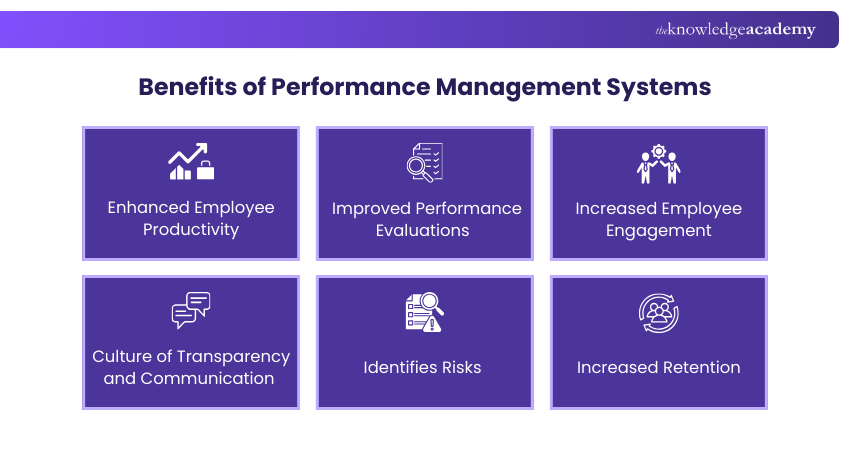
1) Enhanced Employee Productivity
A Performance Management System improves productivity by setting clear goals and providing consistent feedback. It helps employees understand what is expected of them and offers the guidance needed to develop their skills. This clarity keeps employees focused, motivated, and efficient in their work.
2) Improved Performance Evaluations
In traditional appraisals, it used to rely on memory, leading to biased feedback. Modern systems provide an accurate and holistic view by collecting real-time performance data, progress, reviews, and data-driven insights. This results in fair evaluations and helps organisations make informed decisions.
3) Increased Employee Engagement
With clear expectations and regular communication, employees feel confident and committed to their roles. It shows that highly engaged teams are 18% more productive and 23% more profitable for an organisation. A Performance Management System strengthens engagement by encouraging recognition, collaboration, and support from Managers.
4) Culture of Transparency and Communication
By clearly defining metrics, having open discussions, and giving honest feedback, teamwork is bound to grow naturally. Transparent culture prevents misunderstandings and encourages employees to seek help when required. This helps to improve performance, build strong relationships, and boost job satisfaction.
5) Identifies Risks
Challenges such as workplace conflict, missed deadlines, or declining employee wellbeing can reduce productivity and service quality, or even lead to attrition. A strong Performance Management System highlights these risks early through transparent communication and regular check-ins, enabling timely intervention.
6) Increased Retention
While enhancing performance is the primary goal, effective Performance Management also boosts satisfaction and retention. Clear development plans, defined career pathways, and recognition for contributions help employees feel valued, motivated, and more likely to remain with the organisation long term.
Learn to prioritise tasks and manage time effectively. Join our Productivity and Time Management Training now!
Advancements and Trends in Performance Management
The workplace environment is always changing, and so is the way we manage and support our teams to do their best. Let's look at some of the latest shifts in Performance Management Systems that are making things better for everyone involved:
1) Embracing Continuous Performance Management
Continuous Performance Management (CPM) is a more agile and employee-centric approach. It encourages check-ins. Ongoing feedback and goal adjustments to keep employees aligned. Here, Managers track achievements and address performance issues when raised. This helps to improve faster, acknowledge accomplishments proactively, and foster a high-performing workforce.
2) Catering to Deskless and Field Workers
Not everyone sits at a desk or works in an office, but everyone deserves to be supported and to know how they're doing. More companies are finding ways to include deskless and field workers in their Performance Management Systems. This might mean using mobile apps or other tools to share goals, give feedback, and keep these team members in the loop, even if they're not in the office.
3) Adapting to Dynamic Teams
Teams today change often, people join or leave, work from different places, and may belong to more than one team. Performance Management Systems now use flexible ways to set goals and check progress. This helps make sure everyone knows what they need to do, no matter the team size or location.
Build core management skills with Introduction to Management Training – Join today!
The Future of Performance Management Systems
The development of Performance Management Systems continues to be shaped by evolving workplace trends and advancing technologies, including:
1) AI and Predictive Analytics: Artificial intelligence helps organisations spot performance patterns, forecast outcomes, and take proactive action.
2) Remote Workforce Optimisation: Modern systems support hybrid and remote teams, enabling consistent Performance Management across locations.
3) Enhanced Employee Experience: Intuitive platforms and features such as gamification improve engagement and ease of use.
4) Real-time Feedback Integration: Greater emphasis is placed on immediate feedback to resolve issues quickly and recognise achievements promptly.
What are the Three Types of Performance Management Systems?
There are three main types of Performance Management Systems: Balanced Scorecard, Management by Objectives (MBO), and Budget-driven Business Plans. Let’s explore them in detail:
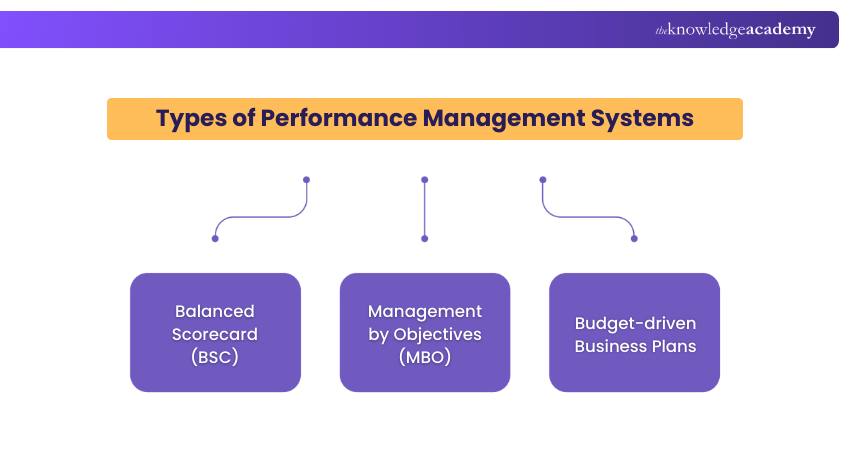
1) Balanced Scorecard (BSC): Used by many companies it looks at four areas: money, customers, internal work, and people. Goals, measures (KPIs), and actions are set for each area. It helps teams work together and keeps strategies on track.
2) Management by Objectives (MBO): This was created by Peter Drucker. The company sets overall goals, then employees set their own goals based on them. Focus is on what to achieve, not always how. Goals are often decided by both Managers and employees.
3) Budget-driven Business Plans: Here, the budget controls the plan. Money is given to projects that fit the budget. Departments plan activities based on last year’s spending. This helps cut costs or find places to invest.
Learn how to develop a continuous improvement plan and schedule. Join our Business Process Improvement Training now!
Who Would Use a Performance Management System?
A Performance Management System is used by everyone in an organisation. Employees set goals and join reviews with Managers, who lead the process and ensure participation. HR designs fair processes and supports both staff and Managers. Senior leaders give open support, which is vital for building a strong performance culture.
Conclusion
Performance Management Systems are more than just a tool; it is a strategy that helps employees and businesses grow together. By setting clear goals, offering feedback, and tracking progress, it builds stronger teams and better results. Whether small or large, any organisation can benefit from adopting it, creating a culture of fairness, productivity, and long-term success.
Develop essential communication, negotiation, and conflict resolution skills. Join our Management Courses now!
Frequently Asked Questions
What Types of Organisations Should Implement a Performance Management System?

Any organisation with employees can use a Performance Management System. It helps the company check how staff are working, give feedback, and see if goals are being met. This makes it easier for both the employees and the business to improve together.
What Broader Business Advantages Does Performance Management Provide?
Performance Management Systems deliver broader values by integrating key business systems, such as payroll, legal, and HR tools. This streamlines workflows and improves the decision-making process. It supports regulatory compliance through secure record keeping, data protection, and alignment with corporate and government requirements.
What are the Other Resources and Offers Provided by The Knowledge Academy?
The Knowledge Academy takes global learning to new heights, offering over 3,000+ online courses across 490+ locations in 190+ countries. This expansive reach ensures accessibility and convenience for learners worldwide.;
Alongside our diverse Online Course Catalogue, encompassing 19 major categories, we go the extra mile by providing a plethora of free educational Online Resources like Blogs, eBooks, Interview Questions and Videos. Tailoring learning experiences further, professionals can unlock greater value through a wide range of special discounts, seasonal deals, and;Exclusive Offers.
What is Knowledge Pass, and how does it work?
The Knowledge Academy’s Knowledge Pass, a prepaid voucher, adds another layer of flexibility, allowing course bookings over a 12-month period. Join us on a journey where education knows no bounds.
What are the Related Courses and Blogs Provided by The Knowledge Academy?
The Knowledge Academy offers various Management Courses, including the Performance Management Training, Management Training for New Managers, and Introduction to Managing People Training. These courses cater to different skill levels, providing comprehensive insights into the Importance of Teamwork.
Our Business Skills Blogs cover a range of topics related to Performance Management Systems, offering valuable resources, best practices, and industry insights. Whether you are a beginner or looking to advance your Performance Management skills, The Knowledge Academy's diverse courses and informative blogs have got you covered.

James Smith


Digital Marketing Manager and Trainer
James Smith is a digital marketing professional with over a decade of experience in SEO, content strategy, paid media and analytics. He has supported both SMEs and global brands in transforming their digital presence. James’s writing and training are rooted in results-driven tactics and the latest marketing trends.
View Detail

 If you wish to make any changes to your course, please


