


 Top Rated Course

We may not have the course you’re looking for. If you enquire or give us a call on +44 1344 203999 and speak to our training experts, we may still be able to help with your training requirements.
How to Write a Resignation Letter: A Step-by-Step-Guide
The Knowledge Academy 31 March 2026Learning How to Write a Resignation Letter can be made easy with format guidelines, awareness of notice periods and professional email samples. It serves as a written record of your departure, typically submitted after verbal notification. The letter must include your name, position, last working day, and a brief expression of gratitude.
Training Outcomes Within Your Budget!
We ensure quality, budget-alignment, and timely delivery by our expert instructors.
Table of Contents
Related Courses

Resigning from a job is like closing one chapter to start another; a thrilling step into new possibilities, yet a careful farewell. Knowing How to Write a Resignation Letter is key to ensuring this transition is handled with tact. A Resignation Letter is your chance to bow out gracefully, leaving a trail of positivity and professionalism.
In this blog, we will walk you through writing a transparent, respectful and polished Resignation Letter. From choosing the right tone to including the necessary details, you’ll learn how to communicate your decision effectively. So let’s dive in and simplify How to Write a Resignation Letter!
Table of Contents
1) What is a Resignation Letter?
2) Steps to Write a Resignation Letter
3) Resignation Letter Templates
4) Tips for Writing a Resignation Letter
5) Is a Resignation Letter Legally Required?
6) Conclusion
What is a Resignation Letter?
The first step to learning How to Write a Resignation Letter is understanding what it exactly is. A resignation letter is a formal document that confirms your decision to leave an organisation and officially records the end of your employment.
It is advisable to inform your manager personally before submitting your resignation letter, allowing them time to plan accordingly. If you work remotely, arrange a conversation via video call. A resignation letter typically includes:
1) A clear statement of resignation
2) Your final working day
3) A note of appreciation
4) Any relevant next steps or key details
5) Your signature

Steps to Write a Resignation Letter
Learning How to Write a Resignation Letter requires careful thought to ensure it is professional and respectful. Follow these simple steps to craft a letter that cements a positive impression and helps you exit gracefully.
1) Begin by Mentioning the Date and Time
The initial step in writing a Resignation Letter is to mention the Date at the top of the document. This ensures the letter is correctly dated for record-keeping purposes. If you’re sending the resignation via email, there is no need to mention the time, as the timestamp will already be visible.
Example:

2) Address the Recipient
Start the letter by formally addressing your recipient. Use their appropriate title, such as "Dear [Manager's Name]" or "To [Supervisor's Name]." Use their full name and designation if you write to HR or upper management.
Example:

3) Clearly State Your Reason for Resigning
After the greeting, get straight to the point. Clearly state that you are resigning and provide a general reason. Avoid being overly specific or negative; maintain a tone of professionalism.
Example:

4) Specify Your Last Working Day
Including your final working day is essential for clarity and to assist in transition planning. A two-week notice period is standard, but check your company’s policies.
Example:

5) Express Your Gratitude
Use this chance to express gratitude to your company for the opportunities and experiences you’ve had. This demonstrates professionalism and helps leave on a positive note.
Example:

6) Offer Transition Support
If applicable, mention how you will assist during the transition period. Whether training your replacement or completing pending tasks, offering help reinforces your professionalism.
Example:

7) End on a Professional Note
End your letter positively, reiterate your appreciation, and sign off with a professional closing.
Example:

Resignation Letter Templates
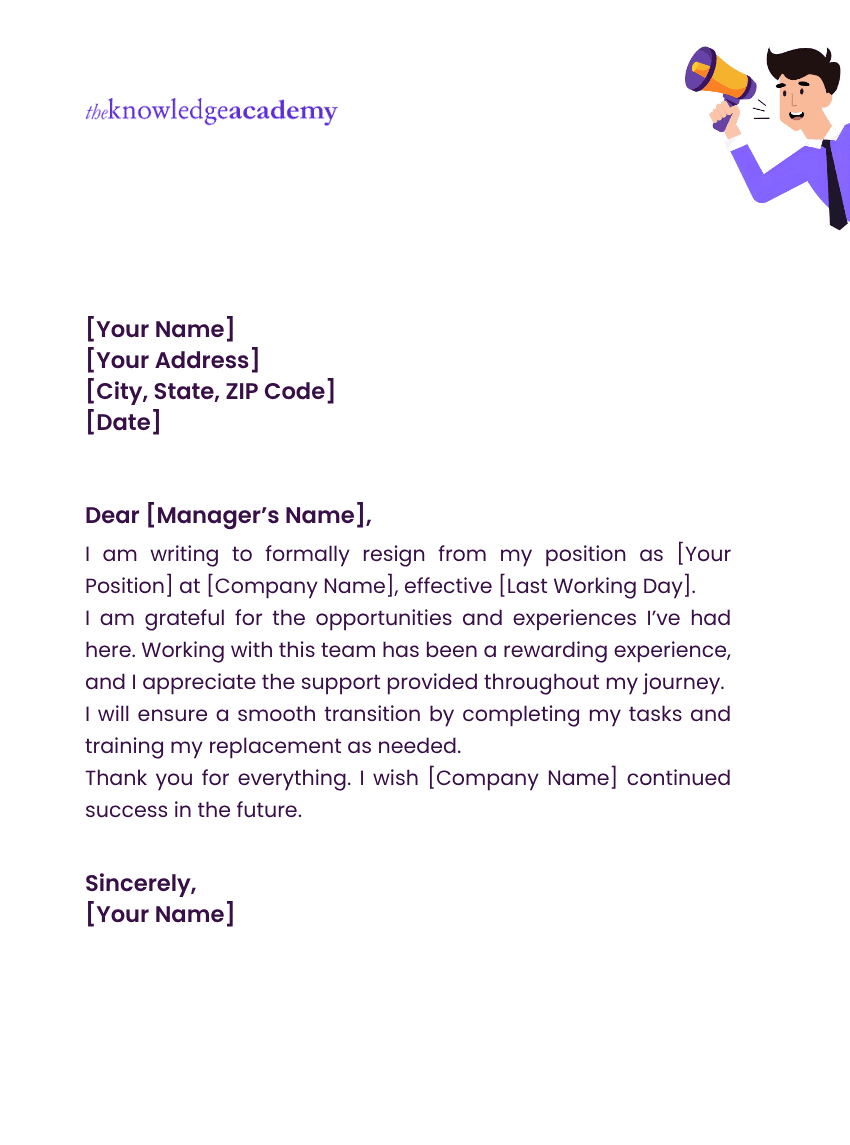
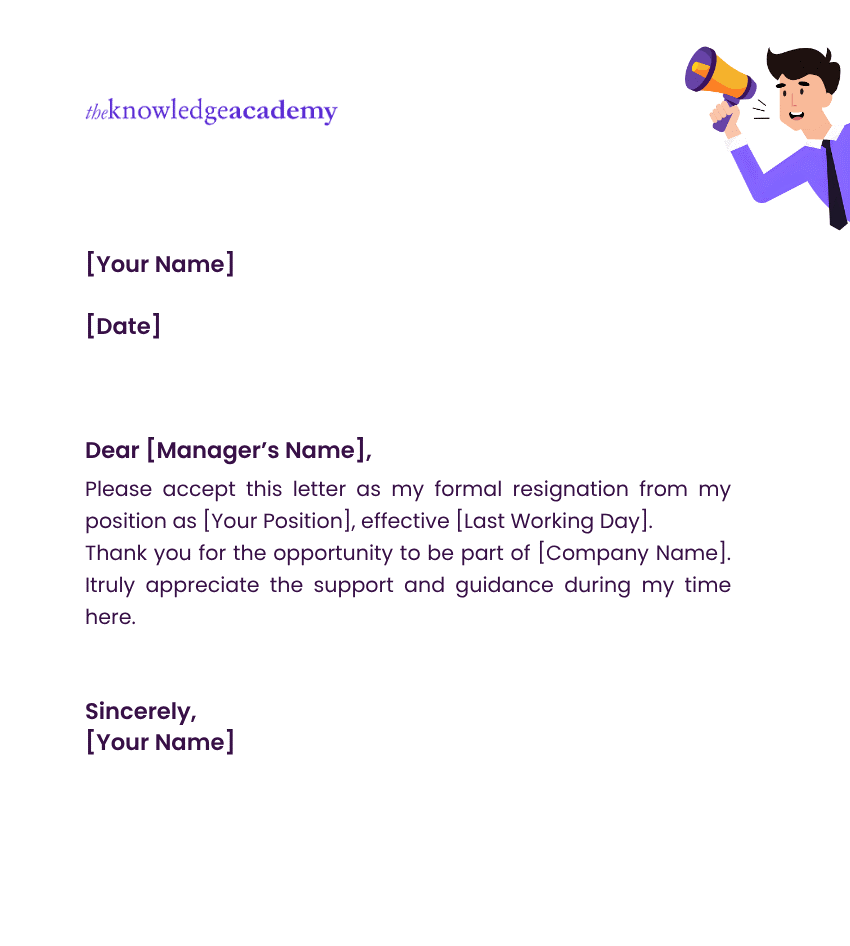
Here are two Resignation Letter Templates that you can use as a reference while writing your own Resignation Letter:
Formal Resignation Letter
Short and Simple Resignation Letter
Tips for Writing a Resignation Letter
Crafting a Resignation Letter is an opportunity to leave your role professionally and positively. These tips on How to Write a Resignation Letter will help you in creating a clear, courteous, and polished letter that ensures a smooth departure.
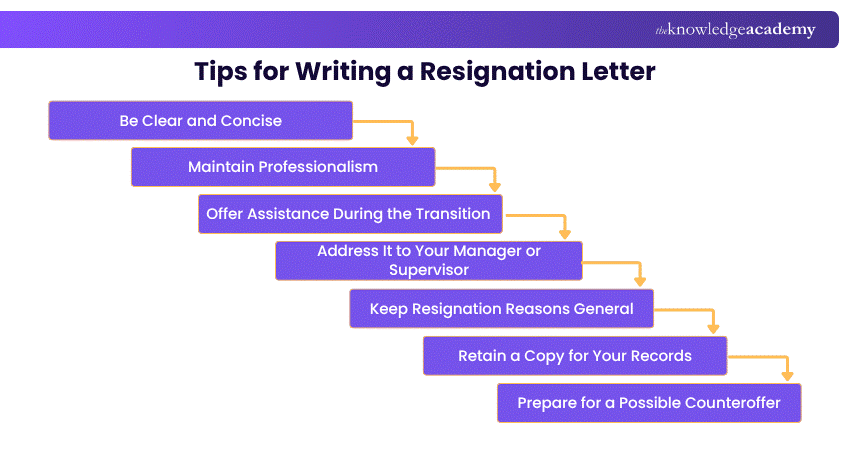
1) Be Clear and Concise
Your Resignation Letter should be direct and to the point. Avoid unnecessary details or rambling sentences. This helps your message remain easy to understand and professionally structured.
2) Maintain Professionalism
Always keep a respectful and professional tone even if you’re leaving under challenging circumstances. A positive tone preserves relationships and reflects well on your professional reputation.
Tell stories that matter - join our Journalism Course and shape the future of media today!
3) Offer Assistance During the Transition
Show your willingness to help during the transition period. It leaves a lasting positive impression. You can offer a helping hand to train your replacement or document key responsibilities for continuity.
4) Address It to Your Manager or Supervisor
Ensure your Resignation Letter is addressed to the appropriate person; typically your direct manager or HR department. This ensures the resignation is formally recognised and processed without delays.
5) Keep Resignation Reasons General
You don’t need to provide detailed explanations. A general reason like "pursuing new opportunities" is sufficient. Keeping it simple avoids unnecessary complications or misunderstandings.
6) Retain a Copy for Your Records
Keep a copy of your Resignation Letter for future reference or as proof of your formal notice. This can be useful for documentation, especially during final settlements or references.
7) Prepare for a Possible Counteroffer
Be mentally prepared for a counteroffer from your employer and carefully evaluate whether it aligns with your goals. Take time to assess long-term career benefits before making your final decision.
Turn people challenges into opportunities for stronger connection - join our Dealing with Difficult People Course and master the art of effective communication!
Is a Resignation Letter Legally Required?
A resignation letter is not always strictly mandated by law, but it's considered a standard practice in employment. In most cases, the requirement to submit a resignation letter comes from your employment contract or company policy, rather than a universal legal rule.
However, in many jurisdictions, resignation is treated as a formal process that typically involves written communication and a notice period. So learning How to Write a Resignation Letter os important because it ensures proper documentation and a smooth transition for both the employee and employer.
Conclusion
Writing a Resignation Letter doesn’t have to be overwhelming. By following the steps outlined in this blog and maintaining professionalism, you can master How to Write a Resignation Letter that leaves lasting positive impression and preserves your relationships. Remember, it’s about exiting with grace, gratitude and professionalism. A well-written Resignation Letter can pave the way for future opportunities and lasting connections.
Build skills for independent career success with Personal Development Courses now!
Frequently Asked Questions
How do I Resign Nicely?

Resign nicely by being professional and respectful. Give proper notice, express gratitude for the opportunity, and keep your explanation brief and positive to maintain good relationships.
Do I Need HR Approval Before Resigning?
No, you typically do not need prior Human Resources (HR) approval to resign. Resignation is an employee’s right, and you can formally initiate it by submitting a resignation letter as per your company’s process. But most organisations need your resignation to be acknowledged by your Manager or HR and for you to serve the notice period.
What are the Other Resources and Offers Provided by The Knowledge Academy?
The Knowledge Academy takes global learning to new heights, offering over 3,000+ online courses across 490+ locations in 190+ countries. This expansive reach ensures accessibility and convenience for learners worldwide.
Alongside our diverse Online Course Catalogue, encompassing 17 major categories, we go the extra mile by providing a plethora of free educational Online Resources like Blogs, eBooks, Interview Questions and Videos. Tailoring learning experiences further, professionals can unlock greater value through a wide range of special discounts, seasonal deals, and Exclusive Offers.
What is The Knowledge Pass, and How Does it Work?
The Knowledge Academy’s Knowledge Pass, a prepaid voucher, adds another layer of flexibility, allowing course bookings over a 12-month period. Join us on a journey where education knows no bounds.
What are the Related Courses and Blogs Provided by The Knowledge Academy?
The Knowledge Academy offers various Personal Development Courses, including the Job Searching Course, Time Management Training, and Dealing with Difficult People Course. These courses cater to different skill levels, providing comprehensive insights into How to Become Self-employed.
Our Business Skills Blogs cover a range of topics related to Content Writing, offering valuable resources, best practices, and industry insights. Whether you are a beginner or looking to advance your Content Writing, The Knowledge Academy's diverse courses and informative blogs have got you covered.

The Knowledge Academy


Global Training Provider
The Knowledge Academy is a world-leading provider of professional training courses, offering globally recognised qualifications across a wide range of subjects. With expert trainers, up-to-date course material, and flexible learning options, we aim to empower professionals and organisations to achieve their goals through continuous learning.

Upcoming Batches & Dates
Date


 If you wish to make any changes to your course, please


