


 Top Rated Course

We may not have the course you’re looking for. If you enquire or give us a call on +44 1344 203999 and speak to our training experts, we may still be able to help with your training requirements.
How to Become a Journalist? Education, Skills Explained
The Knowledge Academy 28 April 2026Earn a Journalism or NCTJ/BJTC qualification, build a strong portfolio, gain internships, develop media skills, and start in local news to grow your career. Practical newsroom experience helps aspiring Journalists strengthen reporting and storytelling skills. It also prepares them to work across digital and broadcast media platforms.

Training Outcomes Within Your Budget!
We ensure quality, budget-alignment, and timely delivery by our expert instructors.
Table of Contents

The world of Journalism is exciting and dynamic that plays a vital role in shaping public discourse and disseminating information. If you're passionate about storytelling, uncovering truths, and making a difference through your words, a career in Journalism might be the perfect path for you and you might often wonder How to Become a Journalist?
From honing your skills to building a portfolio, this blog will arm you with actionable tips and insights to kickstart your journey in the field of Journalism. In this in-detailed blog, we'll explore How to Become a Journalist, whether you have prior experience or not. So read on and master this ever-evolving profession!
Table of Contents
1) Who is a Journalist?
2) How to Become a Journalist?
3) Challenges in Journalism and Overcoming Them
4) Skills Needed to Be a Journalist
5) Traits of Successful Journalists
6) Conclusion
Who is a Journalist?
Journalists take on many roles. They investigate and report stories for newspapers, magazines, radio stations, TV, and online news platforms. Most Journalists work for specific news organisations, but some work as freelancers, contributing to multiple outlets at once.
Their duties can vary depending on the employer. Generally, Journalists pitch story ideas and complete assignments from Editors. They also find and interview sources, which can be used for written articles or recorded for broadcasts.
In addition to interviewing and storytelling, some Journalists also handle editing, presentation, and broadcasting. This is especially common for TV and Radio Journalists, who often edit their own clips and create media packages for their shows.
How to Become a Journalist?
Entering the dynamic world of Journalism requires a combination of skills, determination, and a strategic approach. So, let’s learn the steps on How to Become a Journalist:
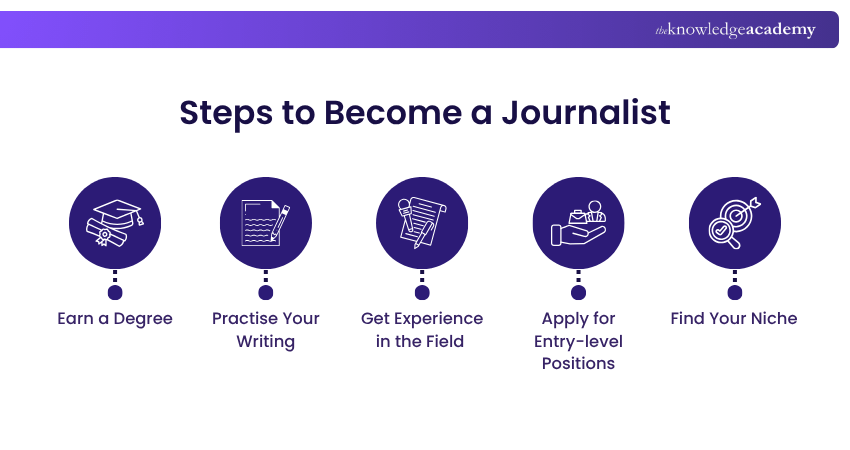
1) Earn a Degree
A degree provides a strong foundation in writing, reporting, media law, and ethics, skills employers value in Journalism. Common choices include Journalism, media, or English degrees. Many universities offer student newspapers and media projects to gather practical experience and build a portfolio.
2) Practise Your Writing
Practising your writing regularly helps you develop the clear, concise communication skills essential for Journalism. Focus on writing short, engaging pieces and use active language to communicate ideas effectively. Regular writing builds confidence sharpens your style and prepares you to produce work that editors will value.
3) Get Experience in the Field
Real‑world experience gives employers proof of your ability to work as a Journalist. You can write for online publications, contribute to blogs or seek work experience and internships with media outlets to build your portfolio. These opportunities help you pitch story ideas, understand newsroom routines, and make industry connections that boost your career prospects.
4) Apply for Entry-level Positions
Many graduates start their Journalism career as Junior Reporters, either after completing a graduate scheme or an internship. A Junior Reporter position is usually your first long-term contract in the industry, which pays relatively low but gives you a solid foundation in the industry.
It also provides income stability, which you can supplement with freelance work and the chance for advancement and professional growth. Therefore, the Junior Reporter role is the first step towards getting started in Journalism career and offers you great support and flexibility in the industry.
5) Find Your Niche
Finding your Niche is an important step for your career. After gaining experience in an entry-level role, you may move up to a Reporter position, where you can specialise in a specific topic. Here are some areas to consider:
a) Entertainment and Lifestyle: Covering celebrities, films, music, and events, or writing about hobbies, wellness, and trends in fashion, travel, or home decor.
b) Investigative: Researching deep issues like crime or fraud to uncover hidden truths. Watchdog Journalism focuses on holding governments accountable for their actions.
c) Opinion: Writing essays, articles, or editorials expressing personal views on current events or topics.
d) Political: Reporting on government, politicians, and elections, helping the public make informed choices.
e) Sports: Covering athletic events, interviews with Coaches and Athletes, or specialising in one sport like Football or Rugby.
f) Trade: Reporting on business trends like mergers, stocks, and industry-specific news in sectors like finance, oil, and agriculture.
These niches offer unique opportunities depending on your interests.Elevate your communication skills with our comprehensive Report Writing Course. Sign up now!
Challenges in Journalism and Overcoming Them
The path to a Journalism career is full of excitement, but it also requires determination and hard work. Whether you're a seasoned professional or just a novice, these obstacles can test your resolve. Let’s have a look at some challenges when learning How to Become a Journalist and how to overcome them:
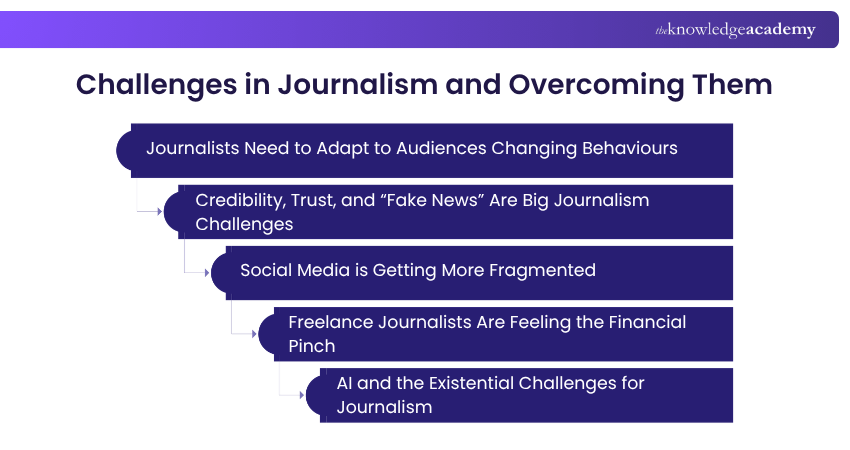
1) Journalists Need to Adapt to Audiences' Changing Behaviours
Journalists face the challenge of keeping up with how audiences consume news, especially as more people turn to Social Media and digital platforms. This requires flexibility in storytelling, understanding where readers spend their time, and tailoring content to shifting online habits.
2) Credibility, Trust, and “Fake News” Are Big Journalism Challenges
Maintaining trust and credibility is a major concern, as journalists must combat misinformation and “fake news.” News organisations need to verify sources, fact-check information and uphold editorial standards to retain audience confidence in a fast-paced media environment.
3) Social Media is Getting More Fragmented
Social Media is both a tool and a challenge. The growing number of platforms and diverse content formats means Journalists must continually adapt to reach audiences effectively across new digital spaces.
4) Freelance Journalists Are Feeling the Financial Pinch
Many freelancers face financial challenges as newsrooms downsize and budgets shrink. Reduced pay and fewer stable positions make it harder to sustain a career and can impact the depth and quality of reporting.
5) AI and the Existential Challenges for Journalism
Artificial intelligence brings opportunities and challenges. While AI can assist with research or drafting, concerns over accuracy, ethics and authenticity require Journalists to balance technology use with professional standards.
Skills Needed to Be a Journalist
Learning How to Become a Journalist requires a combination of technical, analytical and interpersonal skills. The following are the key skills every Journalist needs to succeed:
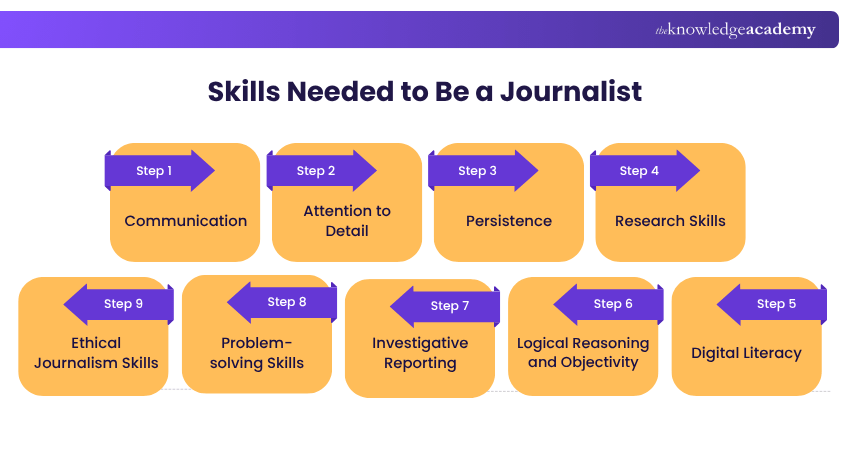
1) Communication
Strong communication is essential for conveying news clearly in writing and speech, conducting interviews, and presenting information confidently. Effective communication also helps build relationships with sources and engage audiences across platforms. Journalists must adapt their style to suit different mediums and audiences.
2) Attention to Detail
Journalists must carefully check facts and information to ensure accuracy and avoid errors or misleading reports. Being detail-oriented also helps in verifying sources, catching inconsistencies, and maintaining high editorial standards. Even small mistakes can impact credibility, so precision is critical.
Want to be better equipped in identifying growth opportunities in your organisation? Sign up for our Strategic Planning and Thinking Course now!
3) Persistence
Being determined helps Journalists keep pursuing sources and information, especially when stories are difficult to uncover. Persistence also allows Reporters to follow through on long investigations and overcome obstacles, ensuring important stories are told. Staying motivated despite setbacks is key.
4) Research Skills
Good research involves gathering information from diverse sources and evaluating data before presenting it to audiences. Strong research skills help Journalists uncover context, background, and supporting evidence for stories. This ensures reporting is accurate, thorough, and trustworthy.
5) Digital Literacy
Journalists must use digital tools, Social Media, and online platforms to find stories and reach audiences in the modern media landscape. Digital literacy also includes understanding analytics, content management systems, and multimedia tools to enhance storytelling. Staying updated with technology trends is crucial.
6) Logical Reasoning and Objectivity
Journalists need to think critically and present unbiased, fair reporting to inform the public accurately. Logical reasoning helps in analysing complex information and separating facts from opinions. Objectivity ensures credibility and trust with audiences.
7) Investigative Reporting
Investigative skills help Journalists dig deeper into issues to expose important facts and cover stories that matter to society. This skill involves connecting dots, identifying patterns, and asking the right questions. Investigative reporting often requires patience, creativity, and attention to detail.
8) Problem-solving Skills
Journalists often face unexpected challenges and must quickly find solutions to meet deadlines and cover stories effectively. Problem-solving skills help manage logistical issues, technical difficulties, or conflicting information. Adaptability and quick thinking are essential in dynamic news environments.
9) Ethical Journalism Skills
Maintaining ethics ensures Journalists report truthfully and responsibly, avoiding sensationalism and misrepresentation. Ethical skills also involve respecting privacy, avoiding conflicts of interest, and upholding professional standards. This builds trust with audiences and protects the integrity of Journalism.
Transform your listening into precision- Join our Audio Transcription Course today!
Traits of Successful Journalists
Journalism is a dynamic and challenging field that requires a distinct set of skills to succeed. Successful Journalists embody traits that help them navigate industry challenges and deliver impactful stories. Key traits include:
1) Curiosity: Drives Journalists to dig deeper, ask probing questions, and uncover stories that might otherwise remain hidden. It fuels investigative work and the pursuit of truth.
2) Ethical Integrity: Upholding strong ethical standards ensures accuracy, fairness, and transparency in reporting. Prioritising truth over sensationalism builds credibility and trust with audiences.
3) Adaptability: The media landscape constantly evolves with new technologies, platforms, and trends. Adaptable Journalists embrace change, learn new tools, and adjust strategies to meet audience needs.
4) Resilience: Journalism often involves rejection, criticism, and tough assignments. Resilient Journalists view setbacks as learning opportunities and persist through challenges to deliver results.
5) Open-mindedness: Being open to diverse viewpoints allows Journalists to present balanced, unbiased narratives that respect differing opinions and experiences.
6) Networking: Building industry connections through events, collaborations, and mentorship provides opportunities for growth, learning, and career advancement.
7) Passion: A strong passion for Journalism drives Journalists to invest time in research, stay committed to their work, and go the extra mile to produce meaningful stories.
8) Effective Communication: Exceptional verbal and written communication skills enable Journalists to convey complex information clearly and compellingly, engaging readers and audiences effectively.
Strengthen client relationships and grow opportunities with Building Business Relationships Training today!
Conclusion
Learning How to become a Journalist is a journey fuelled by curiosity, courage and a passion for storytelling. With the right education, sharp skills and an unwavering commitment to truth, you can shape narratives that matter. As you step into this world, remember, every great story starts with someone willing to ask the right questions. Let that storyteller be you.
Unlock your full potential with Personal Development Courses – elevate your skills and transform your life!
Frequently Asked Questions
What Is the Difference Between Journalists and Content Creators?

Journalists report news and information with accuracy, ethics, and fact-checking, aiming to inform the public. Content creators focus on producing engaging media such as videos, blogs, or social posts, often for entertainment, marketing, or personal branding, without the same strict journalistic standards.
Is it Hard to Become a Journalist?
Journalism is a competitive industry. You need to work under pressure, meet deadlines, and adapt to changing situations. You also need to keep yourself updated with the latest news and trends and follow ethical standards. However, Journalism can also be rewarding and creative, and interesting, as you get to inform and educate the public.
What are the Other Resources and Offers Provided by The Knowledge Academy?
The Knowledge Academy takes global learning to new heights, offering over 3,000+ online courses across 490+ locations in 190+ countries. This expansive reach ensures accessibility and convenience for learners worldwide.
Alongside our diverse Online Course Catalogue, encompassing 17 major categories, we go the extra mile by providing a plethora of free educational Online Resources like Blogs, eBooks, Interview Questions and Videos. Tailoring learning experiences further, professionals can unlock greater value through a wide range of special discounts, seasonal deals, and Exclusive Offers.
What is The Knowledge Pass, and How Does it Work?
The Knowledge Academy’s Knowledge Pass, a prepaid voucher, adds another layer of flexibility, allowing course bookings over a 12-month period. Join us on a journey where education knows no bounds.
What are the Related Courses and Blogs Provided by The Knowledge Academy?
The Knowledge Academy offers various Personal Development Courses, including Journalism Course, Time Management Training and Exceptional Customer Service Training. These courses cater to different skill levels, providing comprehensive insights into Report Writing Format.
Our Business Skills Blogs cover a range of topics related to Journalism, offering valuable resources, best practices, and industry insights. Whether you are a beginner or looking to advance your Journalism skills, The Knowledge Academy's diverse courses and informative blogs have you covered.

The Knowledge Academy


Global Training Provider
The Knowledge Academy is a world-leading provider of professional training courses, offering globally recognised qualifications across a wide range of subjects. With expert trainers, up-to-date course material, and flexible learning options, we aim to empower professionals and organisations to achieve their goals through continuous learning.

Upcoming Business Skills Resources Batches & Dates
Date
 Time Management Training
Time Management Training
Fri 28th Aug 2026
Time Management Training
Fri 11th Dec 2026

 If you wish to make any changes to your course, please


