


 Top Rated Course

We may not have the course you’re looking for. If you enquire or give us a call on +44 1344 203999 and speak to our training experts, we may still be able to help with your training requirements.
How to Become Self-employed: Step-by-step Guide
The Knowledge Academy 27 March 2026Becoming self-employed means working for yourself, earning directly from clients, managing your schedule, and handling your own taxes and business duties. It allows individuals the freedom to use their skills, ideas, and expertise to create their own income while managing their work, clients, and business decisions.

Training Outcomes Within Your Budget!
We ensure quality, budget-alignment, and timely delivery by our expert instructors.
Table of Contents
Many people dream of having the freedom to work on their own terms, choose the projects they enjoy, and control their professional growth. If you have ever thought about turning your skills or ideas into a business, you may have wondered How to Become Self-employed and build a career outside traditional employment.
Learning How to Become Self-employed can open the door to greater flexibility, independence, and new opportunities. However, it also requires planning, discipline, and a clear understanding of the steps involved to manage your own work successfully. In this blog, you will learn about the concept of self-employment, steps for becoming self-employed, its benefits, and more.
Table of Contents
1) Understanding the Concept of Self-employment
2) Steps to Become Self-employed
3) How Business Structure Impacts Self-employment Tax?
4) Benefits of Self-employment
5) Challenges of Self-employment
6) Key Tips for Self-employed Success
7) Conclusion
Understanding the Concept of Self-employment
Self-employment involves earning income directly through one's own business rather than serving an employer as an employee. In self-employment, an individual is responsible for financing and managing their own business, including every aspect of sales, marketing, and financial management.
In certain cases, individuals with disabilities or long-term health conditions may also be eligible for support like Personal Independence Payment, which can provide additional financial stability. Growth opportunities for self-employed individuals may differ significantly depending on the field of work and can fluctuate according to the economy's performance.
Steps to Become Self-employed
Being self-employed means taking responsibility for your business's successes and failures, managing your tax returns, and handling other administrative duties. Understanding the differences between Freelance vs Self-Employed can help you navigate these responsibilities effectively. Here's a step-by-step route to success as a self-employed individual.
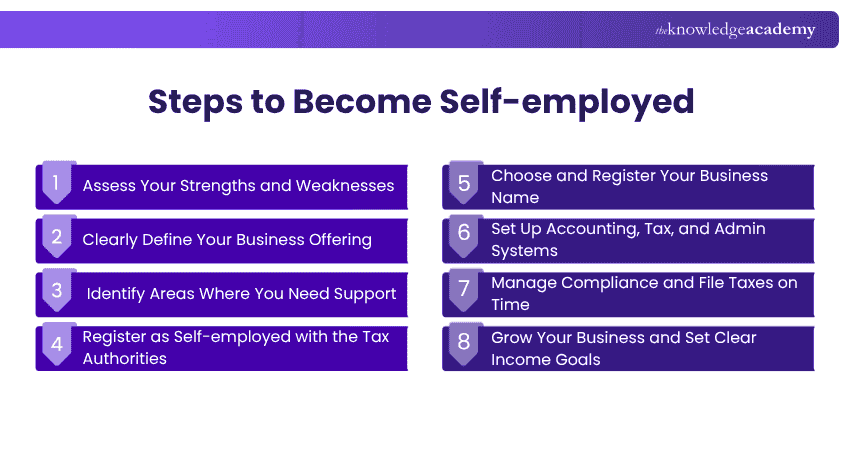
1) Assess Your Strengths and Weaknesses
Knowing your strengths and weaknesses is essential when starting your business. This can be especially helpful if you are a first-time business owner. Since becoming a sole trader involves taking on every responsibility, outlining the strengths and weaknesses can help you decide what areas you need help with to make your business successful.
2) Clearly Define Your Business Offering
This step must not be overlooked. While many new business owners are knowledgeable about their business area, they may need help determining the specific products and services they should offer and identifying their target customer base. Researching this area and understanding the available market for your offer is crucial.
3) Identify Areas Where You Need Support
In the beginning, you'll get hit with a multitude of new information to familiarise yourself with, and it can feel overwhelming. Knowing your exact necessities can help you prioritise the tasks you're good at. Hiring a virtual assistant or an accountant can help you when you start your own business.
4) Register as Self-employed With the Tax Authorities
Once the business offer is defined, it's time to sign on with the Revenue Office before you begin trading. This is where you pay taxes on the income and declare your annual return. You pay income tax not as an employee but as a sole trader, and you can also apply for certain tax reliefs. This is beneficial for getting the business off the ground.
5) Choose and Register Your Business Name
While having a business name is not necessary, some people prefer to incorporate the service into their business name. If you decide to use a business name, you must register it with the Companies Registration Office.
6) Set Up Accounting, Tax, and Admin Systems
When employed by a company, you don't have to worry about keeping track of tax information, invoices, expenses, and other administrative tasks. Once you have your own business, you keep track of and maintain these things in an orderly fashion. The essential records include sales, purchases, and all monies customers receive and what you've paid out. Bank statements and receipts are also vital for your records.
7) Manage Compliance and File Taxes on Time
Once registered as a sole trader, you must pay your income tax, Pay Related Social Insurance (PRSI), and the universal social charge. As a self-employed individual, you pay your taxes under the self-assessment process available on the Revenue's website.
8) Grow Your Business and Set Clear Income Goals
It's easy to go from year to year and try to keep afloat. Being your own boss means you can decide on the pace at which to grow your business. Having a concrete business plan can help you secure work with collaborators and agencies. Building a solid marketing focus into your business can cultivate relationships and win new customers.
Plan your career path confidently with the Career Development Course now!
How Business Structure Impacts Self-employment Tax?
Your business structure affects how your income is taxed and whether you must pay self-employment tax on your earnings. Let's look at common business structures and how they affect self-employment tax below:
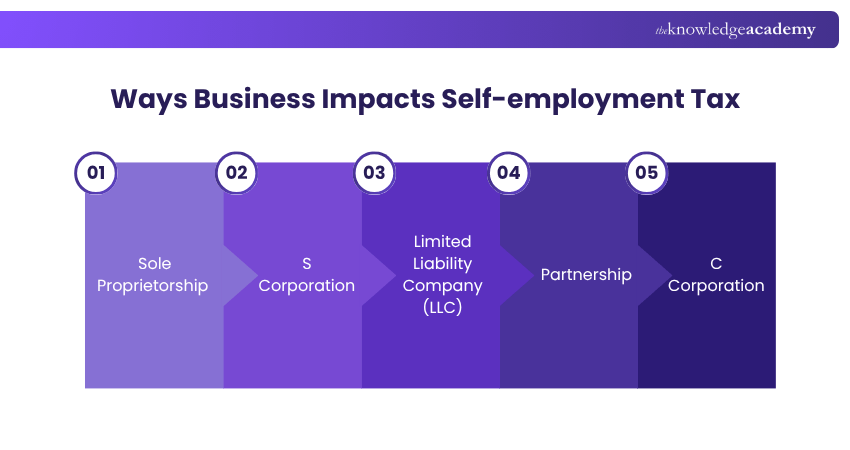
1) Sole Proprietorship: Here, there is no legal separation between the owner and the business. So, the owner must pay the full self-employment tax on the business’s net earnings.
2) S Corporation: In an S corporation, owners can receive a salary that is subject to payroll taxes. Additional profits can be taken as distributions, which are not subject to self-employment tax.
3) Limited Liability Company (LLC): An LLC is often taxed like a sole proprietorship by default. However, it can choose to be taxed as an S corporation, which may help reduce the overall self-employment tax liability.
4) Partnership: In a partnership, each partner reports their share of the business’s net earnings. Like sole proprietors, partners pay self-employment tax on their share of the profits.
5) C Corporation: A C corporation is not subject to self-employment tax in the same way. It pays corporate tax on profits, and owners pay personal tax on any dividends they receive.
Benefits of Self-employment
A self-employed career can be highly rewarding and can offer you flexibility and opportunities beyond traditional jobs. When compared Self Employed vs Employed, self-employment brings with it a plethora of advantages, of which the following three are the most prominent.
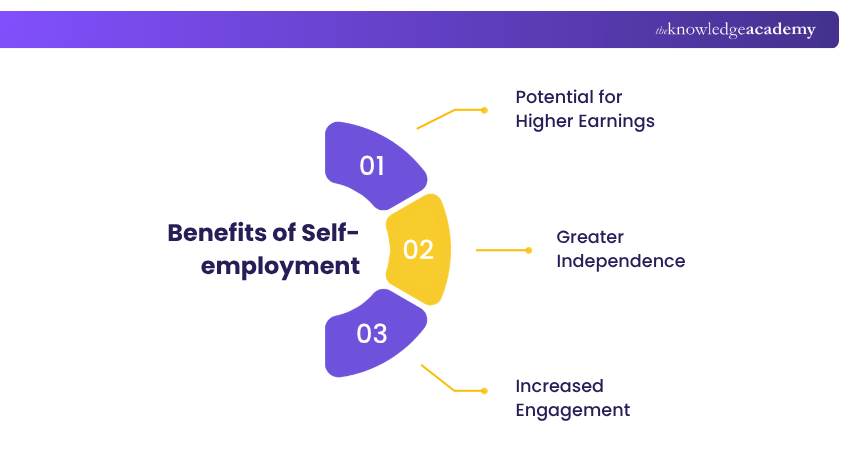
1) Potential for Higher Earnings
Additionally, because you are not working for wages determined by a company, you won't have a limit on the amount of money you can make. Between setting your own rate and taking on as many clients as you want, you typically have greater earning potential than salaried employees.
2) Greater Independence
For those who pursue self-employment as a career option, the best benefits are the sense of autonomy and independence over how and when they work. Depending on the nature of work, self-employed individuals can often control their hours, where they work, and how to complete their job best.
3) Increased Engagement
A self-employed individual dons many hats. You'll be in charge of selling products and services and managing marketing, administrative tasks, and operational duties. In other words, you’ll be completely engaged and rarely be bored if you're self-employed.
Want to be better equipped in identifying growth opportunities in your organisation? Sign up for our Strategic Planning and Thinking Course now!
Challenges of Self-employment
Despite the freedom, engagement and higher earning potential, self-employment carries its fair share of challenges. The most prominent drawbacks of being self-employed includes the following:
1) Managing Your Benefits
Self-employed individuals are often responsible for securing and managing benefits such as retirement savings, healthcare, and paid time off. This can become complicated for business owners who manage these benefits for their employees.
2) Income Instability
One of the biggest concerns involving self-employment is the lack of consistent income. For those whose income is dependent on the clientele or selling offerings that don’t yet have a solid customer base, earnings can fluctuate during a slow month or off-season.
3) Risk of Feeling Overwhelmed
Along with the lack of guaranteed benefits and inconsistent income, the demands of managing diverse business areas (outside of completing tasks related to a particular trade or skill) can overwhelm self-employed individuals.
Strengthen client relationships and grow opportunities with Building Business Relationships Training today!
Key Tips for Self-employed Success
Self-employment can create opportunities to build a business around your skills, interests, and lifestyle. Let’s look at some key tips below that can help you learn How to Become Self-employed and build a rewarding self-employed career:
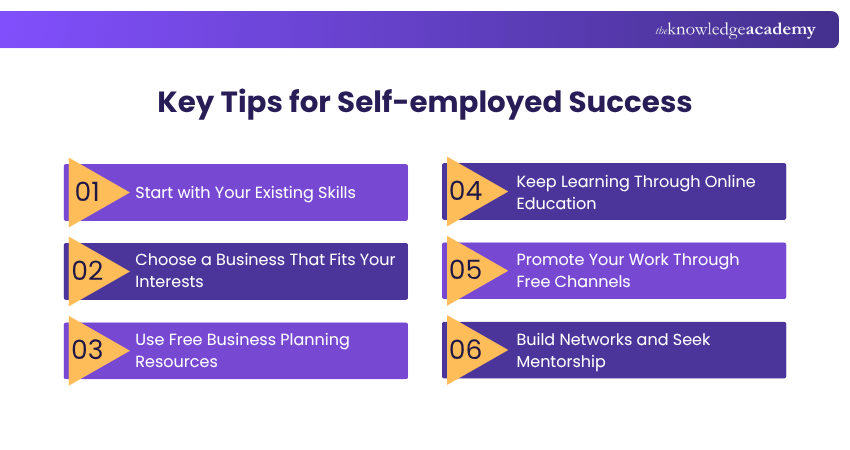
1) Start with Your Existing Skills: Begin with skills or experiences you already have. Talents, such as writing, baking, organising, or technology, can often be turned into practical business opportunities.
2) Choose a Business That Fits Your Interests: Select a business idea that aligns with your interests and lifestyle. Working in an area you enjoy can improve motivation and productivity.
3) Use Free Business Planning Resources: Many organisations provide free tools, templates, and guides to help new entrepreneurs create business plans and understand startup steps.
4) Keep Learning Through Online Education: Free online platforms offer courses on marketing, finance, and entrepreneurship, helping you build essential business skills.
5) Promote Your Work Through Free Channels: Social media platforms, blogs, and online communities allow you to showcase your services and reach potential clients without paying for advertising.
6) Build Networks and Seek Mentorship: Connecting with professional communities, mentors, or support groups can provide guidance, valuable feedback, and new opportunities for growth.
Conclusion
Starting your own venture can be both exciting and rewarding, giving you the freedom to shape your career around your skills and interests. Understanding How to Become Self-employed is the first step toward turning your ideas into a successful and sustainable business. With careful planning, continuous learning, and consistent effort, you can build a stable and fulfilling independent career.
Build skills for independent career success with Personal Development Courses now!
Frequently Asked Questions
Which Skill is Best for Self-employment?

Resourcefulness, networking and decision-making skills are among the most vital for self-employment.
What is Self-employed Income?
Self-employed income includes:
a) Earnings from any independent pursuit of economic activity
b) Income earned by freelancers, sole proprietors, and independent contractors
c) Income reported on a 1099-MISC, 1099-NEC, or 1099-K
What are the Other Resources and Offers Provided by The Knowledge Academy?
The Knowledge Academy takes global learning to new heights, offering over 3,000+ online courses across 490+ locations in 190+ countries. This expansive reach ensures accessibility and convenience for learners worldwide.
Alongside our diverse Online Course Catalogue, encompassing 17 major categories, we go the extra mile by providing a plethora of free educational Online Resources like Blogs, eBooks, Interview Questions and Videos. Tailoring learning experiences further, professionals can unlock greater value through a wide range of special discounts, seasonal deals, and Exclusive Offers.
What is The Knowledge Pass, and How Does it Work?
The Knowledge Academy’s Knowledge Pass, a prepaid voucher, adds another layer of flexibility, allowing course bookings over a 12-month period. Join us on a journey where education knows no bounds.
What are the Related Courses and Blogs Provided by The Knowledge Academy?
The Knowledge Academy offers various Personal Development Courses, including Self-Employment Training, Building Business Relationships Training, and Career Development Course. These courses cater to different skill levels, providing comprehensive insights into What is Flexible Budget.
Our Business Skills Blogs cover a range of topics related to self-employment, offering valuable resources, best practices, and industry insights. Whether you are a beginner or looking to advance your business skills, The Knowledge Academy's diverse courses and informative blogs have got you covered.

The Knowledge Academy


Global Training Provider
The Knowledge Academy is a world-leading provider of professional training courses, offering globally recognised qualifications across a wide range of subjects. With expert trainers, up-to-date course material, and flexible learning options, we aim to empower professionals and organisations to achieve their goals through continuous learning.

Upcoming Business Skills Resources Batches & Dates
Date
 Contract Management Certification Training
Contract Management Certification Training
Thu 13th Aug 2026
Contract Management Certification Training
Thu 22nd Oct 2026

 If you wish to make any changes to your course, please


