


 Top Rated Course

We may not have the course you’re looking for. If you enquire or give us a call on + 1-866 272 8822 and speak to our training experts, we may still be able to help with your training requirements.
What is Compliance: A Complete Overview
Hailey Davis 14 July 2026Compliance ensures organisations follow laws, regulations, and policies, helping maintain ethical standards, reduce risks, and avoid legal penalties. It promotes accountability, transparency, and consistency across operations, while also building trust with stakeholders and supporting long-term organisational success.

Training Outcomes Within Your Budget!
We ensure quality, budget-alignment, and timely delivery by our expert instructors.
Table of Contents

Have you ever thought why businesses follow numerous rules, checks, and standards? From safeguarding customer data to fair employee treatment, every organisation must operate responsibly. This is why understanding What is Compliance is essential for companies to work within the law, act ethically, and maintain trust with everyone.
Organisations require strong Compliance practices to help them stay protected from risks, financial penalties, and reputational damage. In this blog, you will learn about What is Compliance, its types, components, and more in detail. If you are ready to create a safe and fair environment for employees, customers, and society, keep reading ahead to learn more!
Table of Contents
1) What is Compliance?
2) Exploring the Different Types of Compliance
3) How Does it Work?
4) The Benefits of Compliance Procedures
5) Tips for Maintaining Compliance
6) Which Laws are Important for Information Security?
7) What are the Legal Requirements?
8) Careers in the Compliance Domain
9) The Future of Compliance
10) What is a Compliance Audit?
11) What is an Example Compliance?
12) Conclusion
What is Compliance?
Compliance refers to the act of following rules, laws, regulations, and organisational policies set by authorities or governing bodies. It ensures that individuals and organisations operate within defined standards, whether related to legal requirements, ethical practices, or internal procedures.
In a business context, Compliance involves meeting official requirements such as financial regulations, data protection laws, workplace safety rules, and industry standards. By adhering to these guidelines, organisations maintain consistency, reduce risks, and ensure their operations remain lawful and responsible.

Exploring the Different Types of Compliance
Compliance is of various types, focusing on a company’s own rules and employee behaviour to ensure organisations follow regulations set by authorities. Here is a list of the Types of Compliance:

1) Code of Conduct and Ethics Policies
These define the behaviour expected within an organisation. It encourages honesty, transparency, and responsible decision-making, helping to maintain a strong ethical culture.
2) Data Protection and Privacy Policies
Organisations must protect personal and sensitive information by following legal standards such as the General Data Protection Regulation (GDPR). These policies prevent data misuse and ensure secure handling, storage, and processing of information.
3) Financial and Accounting Controls
Internal controls help ensure accurate financial reporting and minimise the number of fraudulent activities. This includes proper bookkeeping, following accounting standards, and reviewing financial activities.
4) Human Resource Policies and Practices
HR Compliance means to treat employees fairly and legally. It involves policies for hiring, ethical workplace conduct, and building an inclusive and safe environment for the workforce.
5) Healthy and Safety Regulation
Organisations must adhere to workplace safety guidelines to protect employees from any harm. This includes regular risk assessments, safety training, and following health and safety standards.
6) Taxation Laws and Regulations
It is important for businesses to file accurate tax returns and pay all taxes on time. It includes corporate tax, payroll tax, and value-added tax (VAT). In case of non-compliance, it can lead to heavy penalties and audits.
7) Employment Laws and Regulations
Organisations must follow legal standards on wages, working hours, anti-discrimination, and workplace safety. This is integral to ensure fair treatment is provided and employees are protected under the law.
8) Environmental Regulations
In many sectors, organisations must manage waste, emissions, and resources responsibly. Here, Compliance supports sustainability practices and safeguards the environment from harm or legal violations.
9) Financial Reporting Standards
Public sector and publicly listed companies must report financial information according to recognised standards such as International Financial Reporting Standards (IFRS) or Generally Accepted Accounting Principles (GAAP).
10) Consumer Protection Laws
These laws ensure businesses provide safe products, fair pricing and truthful information. Compliance also includes properly managing customer complaints and safeguarding consumer rights.
Acquire a better understanding of Effective Compliance by signing up for the Effective Compliance Training now!
How Does it Work?
Compliance works by setting clear standards on how an organisation must operate. These standards come from laws, regulations, and internal policies. The organisation needs to commit to these standards and maintain regular monitoring to keep accuracy in its daily operational practices.
For managing and reducing risks, businesses track Compliance Risk, which refers to the potential negative outcomes when not adhering to rules. While many Compliance Risks involve financial penalties, they also affect reputation, disrupt operations, and long-term success. Thus, organisations must work within the set rules and mitigate any gaps to prevent serious consequences.
The Benefits of Compliance Procedures
The key Benefits of Compliance are described as follows:
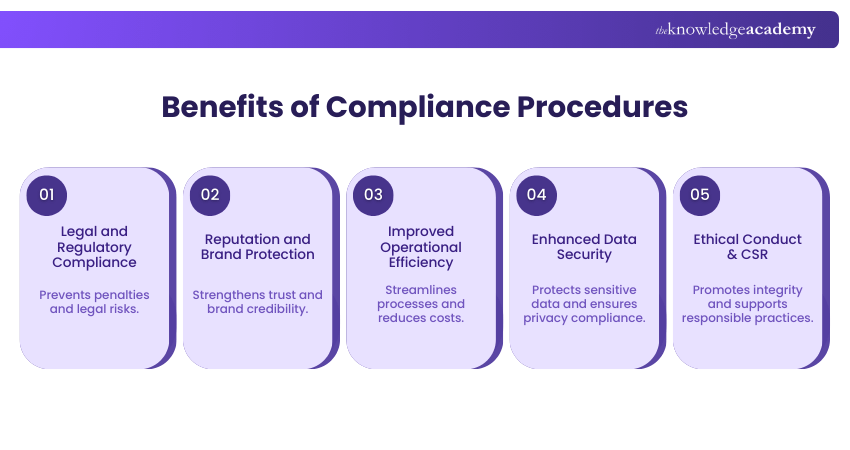
1) Legal and Regulatory Compliance: Organisations can avoid legal penalties, fines, and harm their reputation by ensuring Compliance with laws and regulations. This protects the organisation from costly disputes and keeps operations safe from legal disruptions.
2) Reputation and Brand Protection: It contributes to building a positive reputation and protecting the brand image. It signals trustworthiness, ethical conduct, and dedication to responsible business practices. Customers are more likely to be attracted to organisations that demonstrate strong Compliance values.
3) Improved Operational Efficiency: The practices streamline processes, reduce errors, and enhance operational efficiency, resulting in cost savings and smoother operations. With better systems integrated, teams can enhance productivity and make rapid business decisions.
4) Enhanced Data Security: It helps safeguard sensitive information, preventing data breaches, unauthorised access, and potential legal consequences. Strong data is useful for maintaining customer trust and complying with privacy regulations.
5) Ethical Conduct and Corporate Social Responsibility: It also promotes ethical conduct, ensuring organisations operate with integrity and accountability. It also advances corporate social responsibility by endorsing responsible business practices and sustainability initiatives, showcasing the benefits of corporate social responsibility in fostering a positive impact.
Learn to improve organisational effectiveness and Compliance by signing up for Corporate Governance Training now!
Tips for Maintaining Compliance
An effective Compliance begins by understanding the laws, regulations, and policies applied to the organisation. To ensure Compliance is maintained, here are some of the key tips to follow
1) Conduct Regular Risk Assessments
Modern Compliance standards are risk-based. This means organisations must identify areas that pose the highest risks and direct their focus there. As potential threats emerge or daily operations are disrupted, these assessments need to be updated to keep Compliance measures effective.
2) Ensuring Leadership Accountability
Compliance affects core business operations. This means that leaders and managers must actively support, review, and prioritise Compliance. When management takes accountability, the whole organisation is more likely to follow. Thus, it must be followed by a particular dedicated team, but by everyone in the organisation.
3) Perform Ongoing Audits and Monitoring
If audits are not required legally, regular internal checks are highly important. Audits are useful for cross-checking if everything is running seamlessly and if there are gaps that require corrective measures. Through continuous monitoring, it creates a strong feedback loop to maintain strong Compliance.
Which Laws are Important for Information Security?
Information security laws help protect sensitive data, ensure privacy, and reduce cyber risks. They set rules for how organisations collect, store, and use data while enforcing accountability.
Key laws include:
1) Health Insurance Portability and Accountability Act (HIPAA): Protects healthcare data
2) Gramm-Leach-Bliley Act (GLBA): Secures financial information
3) Payment Card Industry Data Security Standard: Ensures safe handling of card data
4) General Data Protection Regulation (GDPR): Governs global personal data protection
5) Computer Fraud and Abuse Act (CFAA): Prevents hacking and unauthorised access
6) Children’s Online Privacy Protection Act (COPPA): Protects children’s online data
Learn to improve organisational effectiveness and Compliance by signing up for Corporate Governance Training now!
What are the Legal Requirements?
Legal requirements vary based on company size and industry. International businesses must follow the laws of all markets they operate in. Key regulations include:
1) Key global regulations include the Foreign Corrupt Practices Act (FCPA) and the UK Bribery Act; both are aimed at preventing corruption.
2) In Germany, listed companies follow the German Corporate Governance Code (DCGK). Family businesses follow a simplified version.
3) The Supply Chain Act (LKSG), effective from 2023, requires companies to protect human rights and the environment in their supply chains.
4) Anti-money laundering rules like the EU Money Laundering Directives and the German Money Laundering Act also apply.
5) ISO 37301 provides a global standard for building a certifiable Compliance Management system with whistleblower policies.
The EU Whistleblower Directive (2019/1937) protects people who report misconduct. Even though not all countries implemented it on time, companies must still take action.
Careers in the Compliance Domain
Careers in the Compliance domain offer diverse opportunities for individuals seeking roles focused on ensuring ethical and legal adherence within organisations. Some key career paths include:
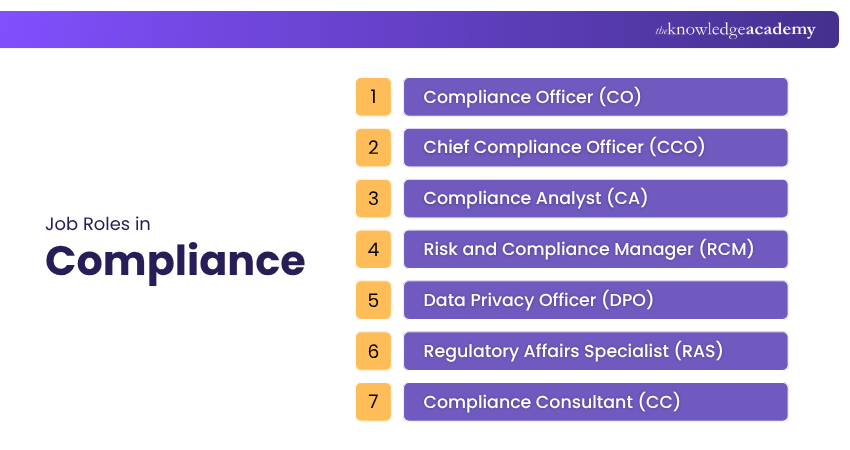
1) Compliance Officer (CO): Compliance officers are responsible for developing, implementing, and monitoring the corresponding programmes within organisations. They ensure adherence to laws, regulations, and internal policies and help identify and mitigate risks.
2) Chief Compliance Officer (CCO): The CCO is a senior executive who oversees an organisation's entire operation. Their responsibilities involve establishing the strategic course of programmes, ensuring regulatory procedure fulfilment, and reporting to senior management and board members.
3) Compliance Analyst (CA): Compliance Analysts assist in the development, implementation, and maintenance of programmes. They conduct risk assessments, monitor activities, and assist in drafting policies and procedures.
4) Risk and Compliance Manager (RCM): Risk Managers focus on identifying and managing risks within organisations. They develop risk mitigation strategies, conduct audits, and ensure adherence to regulatory requirements.
5) Data Privacy Officer (DPO): Data Privacy Officers specialise in establishing Compliance with data protection laws and regulations. They assess data privacy risks, develop privacy policies and procedures, and oversee the implementation of data protection measures.
6) Regulatory Affairs Specialist (RAS): Regulatory Affairs Specialists navigate the complex regulatory landscape, ensuring products, services, or operations comply with relevant laws and regulations. They review regulatory requirements, submit necessary documentation, and liaise with regulatory authorities. If you're preparing for a role in this field, reviewing Regulatory Analyst Interview Questions can help you understand the key responsibilities and expectations involved.
7) Compliance Consultant (CC): Compliance Consultants provide expert advice and guidance to organisations on the necessary matters. They conduct audits, develop frameworks, and help organisations address challenges.
Enhance skills and practices for protecting consumer rights with Consumer Protection Training today!
The Future of Compliance
The future of Compliance will be shaped by advancing technology and evolving regulations. Organisations will move towards more proactive, integrated approaches that support both risk management and long-term growth.
Key trends include:
1) Digital Transformation: AI and cloud tools will improve Compliance tracking and reporting.
2) Real-time Monitoring: Continuous systems will help detect and address risks quickly.
3) Integrated Risk Management: Compliance will align closely with governance and overall risk strategies.
4) Sustainability and ESG Focus: Environmental and ethical Compliance will become more important to stakeholders.
What is a Compliance Audit?
A Compliance audit is a review to ensure a company follows laws, regulations, or internal policies. It checks if practices meet legal and ethical standards in areas like finance, safety, or data privacy.
What is an Example Compliance?
An example of Compliance is a hospital following the Health Insurance Portability and Accountability Act (HIPAA) for securing patient data, limiting access, and training staff to protect privacy.
Conclusion
By understanding What is Compliance, organisations consistently follow laws, regulations, and internal policies. It protects their reputation, reduces risk, and demonstrates strong ethical values. Above all, adopting solid training programmes and staying up to date with new rules helps to promote a culture where Compliance is supported and maintained.
Be compliant with law, regulation, and company policy by signing up for our Compliance Training now!
Frequently Asked Questions
What is the Benefit of a Compliance Plan to the Company?

A Compliance plan helps a company to reduce the risk of legal violations by ensuring all legal and ethical standards are followed. This reduces the chance of regulatory penalties, lawsuits, and reputational damage, helping organisations operate securely.
What are the Five Pillars of Compliance?
The five pillars of Compliance include:
1) Appointing a qualified Compliance Officer
2) Conducting risk assessments regularly
3) Establishing strong internal policies and controls
4) Conduct ongoing monitoring and audits
Performing due diligence to identify and manage risks

Hailey Davis


Compliance Officer
Hailey Davis is an ISO compliance expert with over 10 years of experience in audit, quality management systems (QMS), and regulatory compliance. She has worked with various industries, including manufacturing, healthcare, and technology, ensuring organisations achieve and maintain ISO certifications. Hailey’s content provides practical, actionable insights on navigating compliance challenges and improving business processes.
View Detail

 If you wish to make any changes to your course, please


