


 Top Rated Course

We may not have the course you’re looking for. If you enquire or give us a call on +41 315281584 and speak to our training experts, we may still be able to help with your training requirements.
What is Mental Health Counselling? Meaning, Types, and Benefits
Michael Jones 04 March 2026Mental health counselling offers support, guidance, and coping tools to boost emotional wellbeing, reduce stress, and encourage personal growth. It helps individuals understand their emotions and build healthier thought patterns. Regular counselling can improve relationships, confidence, and overall life satisfaction.

Training Outcomes Within Your Budget!
We ensure quality, budget-alignment, and timely delivery by our expert instructors.
Table of Contents
The process of developing mental well-being is a continuous one that requires constant effort, patience, and the right type of support. Even the smallest and most positive changes can significantly impact one’s life daily. Know-how to improve the mental health of oneself is a powerful tool that gives the person who knows it the ability to be strong and walk the way of life with no doubts.
Table of contents
1) What is Mental Health Counselling?
2) Factors affecting Mental Health
3) The Process of Mental Health Counselling
4)Types of Counselling
5) Benefits of Mental Health Counselling
6) Conclusion
What is Mental Health Counselling?
Mental Health Counselling involves a collaborative relationship between an individual and a Mental Health professional. This partnership facilitates the exploration and resolution of personal, social, or psychological difficulties and promotes personal growth and well-being.

Factors Affecting Mental Health
The reasons affecting mental health include heredity, the condition of the brain at the chemical level, and the history of the patient, which may include the occurrence of traumatic events or stress of a long duration. On the other hand, negative emotional health can result from unhealthy habits such as sleeping less than the required hours, not exercising, and using drugs.
The social aspects are the most important since they cover social life, work pressures, money problems, and community help. Additionally, a clean environment and bonding with people not only protect but also build up mental health.
The process of Mental Health Counselling
Embarking on the journey of Mental Health Counselling can often feel like stepping into the unknown. However, understanding the Counselling process can alleviate concerns and provide a clearer picture of what to expect.
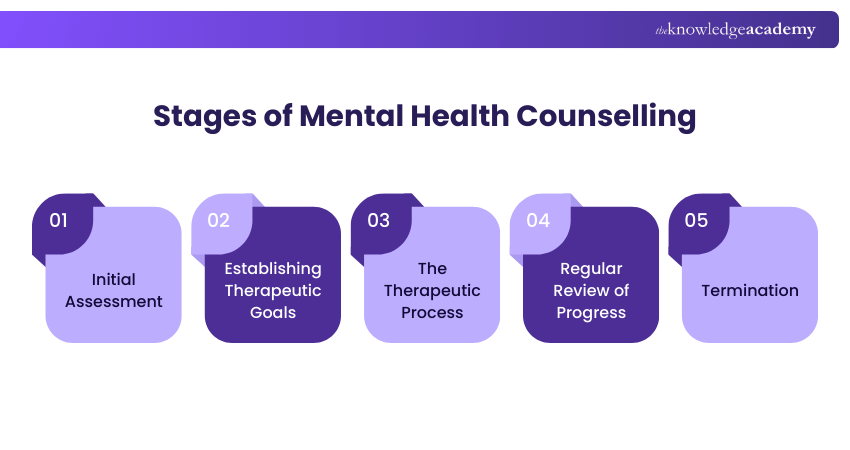
Counselling is a structured process that unfolds over time, typically encompassing several stages. While the exact process may vary depending on the Counsellor and the client's unique needs, the following steps can provide you a general overview:
1) Initial Assessment
The counselling journey usually begins with an initial assessment or intake session. During this stage, the counsellor gathers essential information about the client's background, health history, current challenges, and goals for therapy. This helps the counsellor understand the client's situation, forming the basis for the therapeutic plan, all while adhering to an Ethical Framework in Counselling to ensure confidentiality and professional conduct throughout the process.
2) Establishing Therapeutic Goals
Once the initial assessment is done, the Counsellor and client collaboratively establish therapeutic goals. These goals serve as a roadmap for the Counselling process, helping to guide the direction of therapy. These goals are Specific, Measurable, Achievable, Relevant, and Time-bound, often called SMART goals.
3) The Therapeutic Process
After the goals are defined, the therapeutic process begins. This stage is the heart of Counselling. The aim here is to facilitate change, growth, and healing. It involves various therapeutic techniques tailored to the client's needs and goals, which may include the following
1) Cognitive-behavioural strategies
2) Mindfulness practices
3) Expressive therapies
4) Regular review of progress
Throughout the Counselling process, it's essential to regularly review and assess the client's progress towards their therapeutic goals. This ongoing evaluation ensures that the Counselling remains effective and adjusts as necessary to the client's evolving needs.
5) Termination
The final stage of the Counselling process is termination. This occurs when the client and Counsellor agree that the therapeutic goals have been met or significant progress has been made. This phase involves discussing the client's growth, reflecting on the therapy journey, and planning for the future. It's a time for celebration, reflection, and preparation for continued growth outside the Counselling environment. For a comprehensive understanding of this stage, referring to the 7 Stages of Counselling Process PDF can provide valuable guidance on how to navigate the final steps of the counselling journey and ensure lasting progress.
Remember, the Counselling process is not a straight line; it's a journey with ups, downs, twists, and turns. However, the commitment and support of a skilled Counsellor, utilizing effective Counselling Skills, can lead to profound personal growth and improved Mental Health.
Types of Counselling
There are several Types of Counselling. However, out of these many, the key to a successful Counselling session is to identify with which type of Counselling is the client are comfortable with. Discussed below are some of the popular types of Counselling:
a) Psychoanalysis: This Counselling type helps you evaluate your past. An experienced Counsellor helps you to understand why you act, behave, and think the way you do to-day and how your behaviour is affected by your past experiences.
b) Group therapy: An experienced Counsellor leads a group therapy session. The idea is to build a confidential place where people with same issues come together to share their feelings. It helps them to free their minds and help each other.
c) Behaviour therapy: This therapy mainly focuses on changing unwanted and un-healthy behaviours. It encourages one to develop good habits and behaviour by using rewards.
d) Cognitive therapy: This kind of therapy is based on the basic idea that the way you think can affect your actions and feelings. Counsellors use this therapy to help you change your thinking mechanism to feel better and behave better.
Transform your understanding of Mental Health and well-being with our Mental Health And Wellbeing Training – Sign up now!
Benefits of Mental Health Counselling
Embarking on the journey of Mental Health Counselling can be a life-changing decision. It offers numerous benefits that can significantly enhance an individual's emotional, mental, and overall well-being.
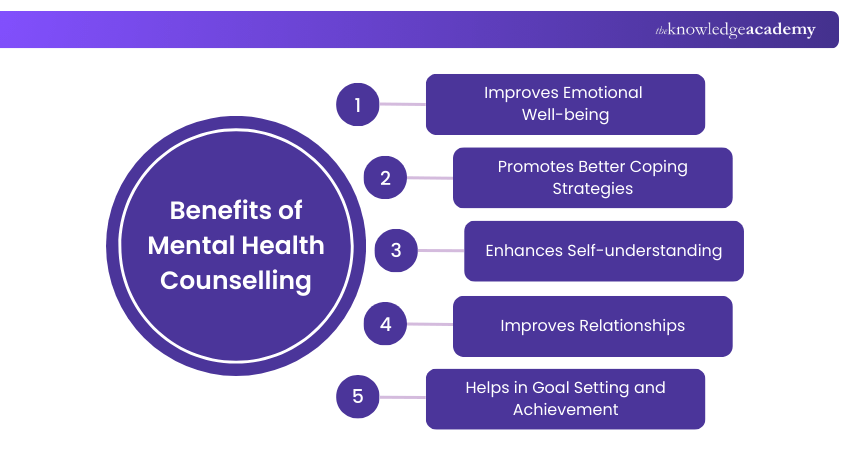
While dealing with specific Mental Health concerns, experiencing challenging life events, or simply wanting to understand yourself better, Counselling can be a powerful tool. Here are some of the key benefits that Mental Health Counselling can provide:
1) Improves Emotional Well-being
One of the primary benefits of Mental Health Counselling is improved emotional well-being. Counselling can provide tools and strategies to manage emotions effectively, reduce stress, and alleviate anxiety and depression. It can also help improve mood, boost happiness, and enhance overall quality of life.
2) Promotes Better Coping Strategies
Life is full of challenges. Counselling equips individuals with healthier coping mechanisms to navigate these challenges. This can involve learning new skills like problem-solving, Stress Management Therapy, and mindfulness, which can be incredibly beneficial in managing life's ups and downs.
3) Enhances Self-understanding
Counselling can help individuals gain a deeper understanding of themselves. It provides a space to explore thoughts, emotions, and behaviours, improving self-awareness and self-esteem. This self-understanding can be a stepping stone to personal growth and self-improvement.
4) Improves Relationships
Interpersonal relationships can often be a source of stress and conflict. Counselling can help improve communication skills, increase empathy, and foster healthier, more fulfilling relationships. Whether it's issues in a marriage, family conflicts, or problems in friendships, Counselling can provide the tools to navigate and improve these relationships.
5) Helps in Goal Setting and Achievement
Counselling can also assist in setting and achieving personal goals. This can range from career goals to personal development goals. With the help of a Counsellor, individuals can define clear, achievable goals and develop strategies to reach these goals.
The benefits of Mental Health Counselling extend far beyond the counselling room. It's a powerful resource that can significantly improve Mental Health, personal growth, and overall quality of life.
Conclusion
Mental wellness gets better if people are supported, understood, and given the chance to use healthier coping skills. When a person is guided appropriately, positive changes in their life become more durable. One of the methods that Mental Health Counselling offers is a very precious road towards long-term personal development and strengthening of character.
Start the Work Place Stress And Mental Health Identification For Manager Course and build a healthier workplace!
Frequently Asked Questions
What are 5 Signs of Poor Mental Wellbeing?

While trying to define the ways in which poor mental wellbeing can be observed, withdrawal, mood changes, sleep issues, irritability, and concentration difficulties become some essential symptoms.
What are Red Flags for Psychosis?
The symptoms of psychosis that can be flagged as red flags consist of the following: total isolation, a decrease in performance, and a rise in suspicion or paranoia. In addition to these, one could also mistakenly see things through one's imagination, have strange or very strong ideas, and keep oneself secluded more than ever before.
What are the Other Resources and Offers Provided by The Knowledge Academy?
The Knowledge Academy takes global learning to new heights, offering over 3,000+ online courses across 490+ locations in 190+ countries. This expansive reach ensures accessibility and convenience for learners worldwide.
Alongside our diverse Online Course Catalogue, encompassing 17 major categories, we go the extra mile by providing a plethora of free educational Online Resources like Blogs, eBooks, Interview Questions and Videos. Tailoring learning experiences further, professionals can unlock greater value through a wide range of special discounts, seasonal deals, and Exclusive Offers.
What is The Knowledge Pass, and How Does it Work?
The Knowledge Academy’s Knowledge Pass, a prepaid voucher, adds another layer of flexibility, allowing course bookings over a 12-month period. Join us on a journey where education knows no bounds.
What are the Related Courses and Blogs Provided by The Knowledge Academy?
The Knowledge Academy offers various Mental Health Courses, including the Mental Health And Wellbeing Training, Mental Capacity Training, and Positive Psychology Course. These courses cater to different skill levels, providing comprehensive insights into Big Five Personality Traits.
Our Health & Safety Blogs cover a range of topics related to Mental Health, offering valuable resources, best practices, and industry insights. Whether you are a beginner or looking to advance your Health & Safety skills, The Knowledge Academy's diverse courses and informative blogs have got you covered.

Michael Jones


Health and Safety Consultant and Compliance Trainer
Michael Jones is a seasoned health and safety expert with more than 15 years of experience in workplace safety, risk management, and compliance training. He has worked across construction, manufacturing, and corporate sectors, helping organisations meet legal requirements and create safer working environments. Michael’s training and writing are known for being practical, clear, and aligned with UK regulations.
View Detail

Upcoming Health & Safety Resources Batches & Dates
Date
 Counselling Course
Counselling Course
Fri 26th Jun 2026
Counselling Course
Fri 2nd Oct 2026
Counselling Course
Fri 11th Dec 2026

 If you wish to make any changes to your course, please


