


 Top Rated Course


We may not have the course you’re looking for. If you enquire or give us a call on +41 315281584 and speak to our training experts, we may still be able to help with your training requirements.
What is Lean Kanban? Methodology, Benefits, and Implementation
The Knowledge Academy 28 April 2026Lean Kanban combines Lean waste-reduction principles with Kanban’s visual workflow system to improve project efficiency, productivity, and delivery. It visualises work, limits work in progress and improves flow for seamless work delivery. This helps identify bottlenecks early, prioritise what matters, and reduce delays.

Training Outcomes Within Your Budget!
We ensure quality, budget-alignment, and timely delivery by our expert instructors.
Table of Contents

Have you ever felt like your team is busy but not really making progress? If so, you’re not alone. Many teams struggle with tracking work, managing flow, and staying on top of priorities. That’s where Lean Kanban comes in. It’s a simple yet powerful way to visualise tasks, reduce waste, and improve how your team works day by day.
Whether you’re dealing with constant changes or looking to boost productivity, this blog will walk you through everything you need to know about Lean Kanban. You will learn about its methodology, benefits, differences, and more. Let’s get started!
Table of Contents
1) What is Lean Kanban Methodology?
2) Key Differences and Similarities Between Lean and Kanban
3) Benefits of Lean Kanban
4) Lean Kanban: Driving Improvements and Respect for People
5) How to Implement Lean Kanban in Three Easy Steps?
6) What is the Lean Kanban Principle?
7) What are the Five Rules of Kanban?
8) Conclusion
What is Lean Kanban Methodology?
Lean Kanban is a Project Management methodology that combines Lean principles with the Kanban system to improve workflows. Agile software development teams use it to visualise tasks, track progress, and improve communication. Lean focuses on improving efficiency by identifying areas for improvement and removing obstacles, while Kanban supports this by visualising work using boards and cards.
Together, the Lean Kanban methodology improves team communication, ensures a smooth flow of work, and supports continuous product delivery. By making work visible and reducing delays, it helps teams deliver value faster while continuously improving their ways of working.

Key Differences and Similarities Between Lean and Kanban
Lean and Kanban are similar in certain regards, but not entirely. Understanding where they align and where they differ helps teams choose the right approach.
Key Similarities Between Lean and Kanban
a) Focus on Customer Value: Both aim to deliver real value by prioritising important work and avoiding unnecessary activities.
b) Emphasis on Efficiency: Each approach works to reduce delays and improve the smooth flow of work.
c) Continuous Improvement Mindset: Teams are encouraged to regularly review processes and make ongoing improvements.
d) Team Collaboration: Both promote shared responsibility, transparency, and open communication.
e) Pull-based Work Systems: Work begins based on the available capacity, preventing overload and burnout.
f) Problem Identification: Both help teams to identify bottlenecks and process issues early so they can be resolved quickly.
Key Differences Between Lean and Kanban
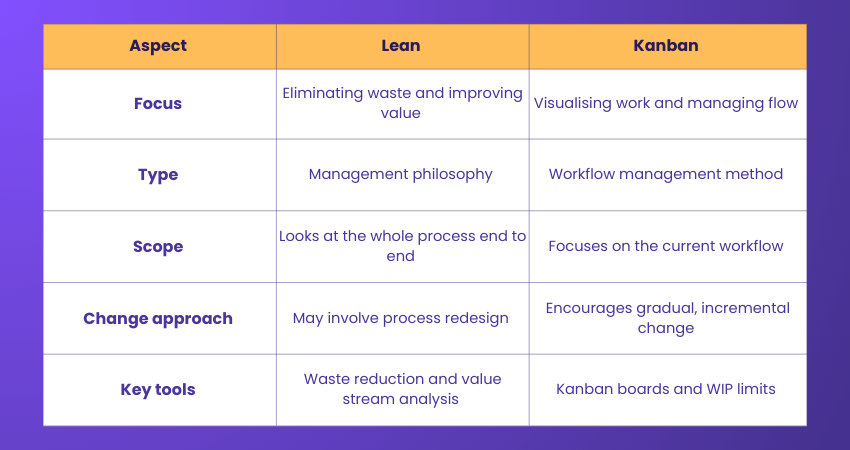
a) Overall Approach: Lean is a broad management philosophy, while Kanban is a practical visual workflow management method.
b) Primary Focus: Lean concentrates on eliminating waste and improving the entire value stream, whereas Kanban focuses on managing and visualising work.
c) Style of Change: Lean involves redesigning processes, while Kanban supports gradual, incremental improvement.
d) Scope: Lean looks at the whole system from start to finish, whereas Kanban focuses on the current workflow.
e) Tools and Practices: Lean uses methods, such as waste analysis and value stream mapping, while Kanban relies on visual boards, work-in-progress limits, and feedback loops.
Benefits of Lean Kanban
With a Kanban system, teams don’t just complete tasks; they improve how they work. Lean Kanban helps teams find what’s slowing them down and fix it. It focuses on clear communication, better planning, and Continuous Development. Below are the key benefits of using Lean Kanban.
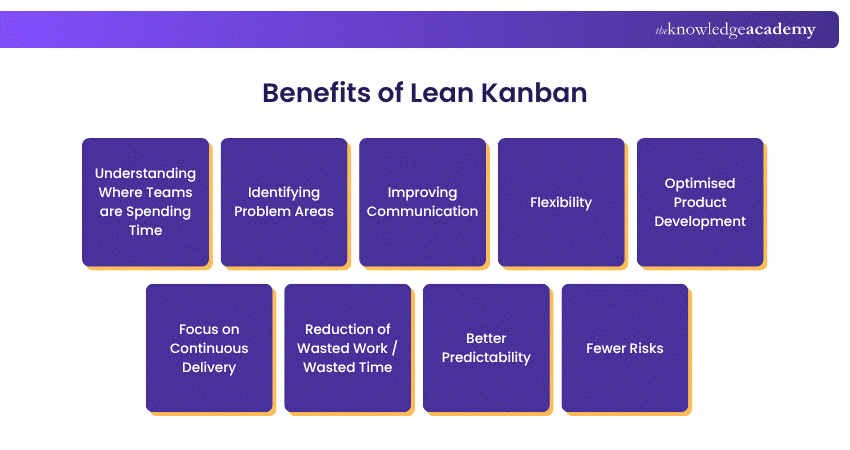
1) Understanding Where Teams are Spending Time
Lean Kanban shows what work is being done and how long each task takes. This helps teams see where most of their time is going. With this knowledge, they can plan better and avoid wasting time. It also helps balance workloads across the team.
a) Track time spent on each task
b) Spot delays or long-running work
c) Use data to plan more efficiently
2) Identifying Problem Areas
It helps teams see where things get stuck. If some tasks take too long or keep moving back, that shows a problem. This could be due to overloaded workflows, unclear processes, or capacity issues. By spotting these issues early, teams can fix them before they grow.
a) Find tasks that keep getting delayed
b) Balance work across team members
c) Improve weak areas in the process
3) Improving Communication
Kanban boards make work clear and visible for everyone. Each team member can see what is being worked on and what needs attention. This makes it easier to stay in sync and reduce confusion. Even remote or cross-functional teams benefit from this shared view.
a) Use boards to show task progress
b) Make updates visible to all teams
c) Reduce back-and-forth communication
4) Flexibility
Kanban doesn’t follow strict timelines or fixed steps. Teams can start work based on real-time demand instead of waiting for a phase to end. It allows changes and new priorities to be added as needed. This makes Kanban great for projects that often shift.
a) Add or update tasks anytime
b) Adjust goals based on feedback
c) Respond quickly to client needs
5) Optimised Product Development
Breaking work into small parts helps teams focus better. It also reduces the time spent on big, detailed planning. Teams can make progress faster and show results sooner. This leads to better teamwork and more value delivered.
a) Shorter planning cycles
b) Focus on current tasks
c) Deliver results more quickly
6) Focus on Continuous Delivery
Kanban supports regular and steady work output. Tasks are finished one by one instead of waiting for a full project to be done. This helps catch mistakes early and keeps the team moving. It’s a smoother way to meet deadlines without pressure.
a) Deliver tasks in small chunks
b) Spot issues early during work
c) Keep projects flowing without pause
7) Reduction of Wasted Work / Wasted Time
It helps teams focus only on what matters. Unnecessary or repeated work is easy to spot and avoid. By seeing the full picture, teams can stop doing tasks that add no value. This saves time and effort for more important things.
a) Avoid duplicated or unclear tasks
b) Focus on priority work
c) Remove steps that add no value
8) Better Predictability
When teams track their progress, they learn how long tasks usually take. This makes it easier to plan future work. Managers can give clients better estimates and meet deadlines more often. Predictable work leads to less stress and better results.
a) Use past data to plan
b) Estimate deadlines more accurately
c) Build trust through reliable delivery
9) Fewer Risks
Kanban splits work into smaller parts so problems can be caught early. If something goes wrong, it won’t slow down the whole project. Teams can respond faster and fix issues before they grow. This leads to a safer and smoother workflow.
a) Break work into smaller steps
b) Catch issues early
c) Avoid large project delays
Turn Lean processes into performance and deliver effective business results with Lean Processes and Tools Training now!
Lean Kanban: Driving Improvement and Respect for People
Lean Kanban fosters continuous improvement and respects people by integrating core principles from Lean methodology and Kanban systems.
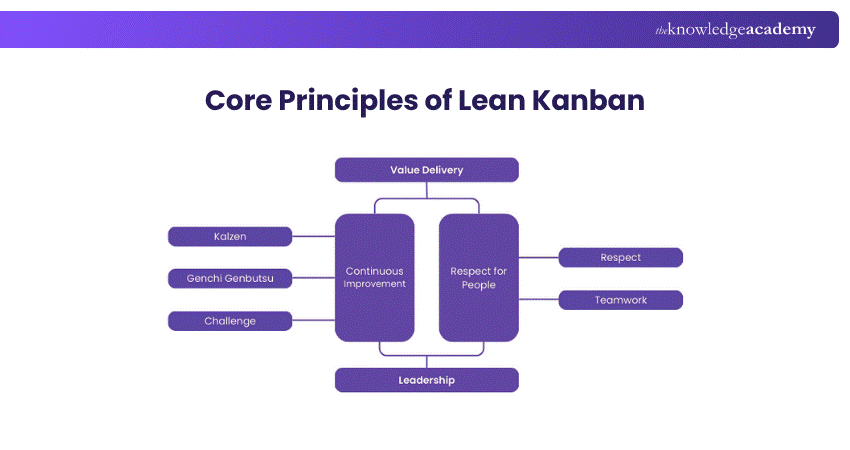
1) Continuous Improvement
Lean Kanban promotes ongoing refinement of processes through its visual management approach. By mapping out workflows on a Kanban board, teams can clearly see and analyse each step of their processes. This visibility helps them identify bottlenecks, inefficiencies, and areas for enhancement.
Teams regularly review and adjust their workflows based on real-time data and feedback, fostering a culture of incremental improvement. This iterative process encourages teams to continually seek out better ways to perform tasks, reduce waste, and enhance overall productivity.
2) Respect for People
Lean Kanban places a strong emphasis on valuing and empowering team members. By providing transparency and involving everyone in the continuous improvement process, it respects the knowledge and insights of all team members.
Kanban metrics play a key role in supporting Kanban boards by promoting open communication, collaboration, and informed decision-making. By helping teams spot issues early and resolve them together, these metrics promote shared ownership and respect. This ensures Lean Kanban supports both process improvement and a supportive team culture.
Kickstart your Lean Management journey with our Certified Lean Foundation Course - Sign up today!
How to Implement Lean Kanban in Three Easy Steps?
Implementing Lean Kanban can streamline your Project Management and drive continuous improvement. By following these three simple steps, you can effectively integrate Lean Kanban into your workflow and enhance efficiency.
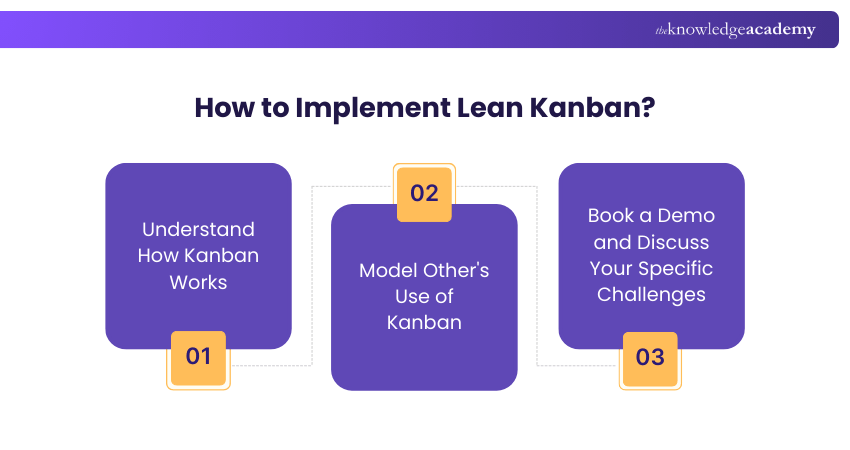
Step 1: Understand How Kanban Works
Start by familiarising yourself with the Principles of Kanban. Learn how it visualises workflows, manages task flow, and identifies bottlenecks. Understanding these fundamentals will provide a solid foundation for effectively applying Lean Kanban in your projects.
Step 2: Model Other’s Use of Kanban
Observe and analyse how other teams or organisations successfully implement Kanban. Studying their practices and adaptations can offer valuable insights and help you adapt the methodology to fit your own team's needs.
Step 3: Book a Demo and Discuss Your Specific Challenges
Schedule a demonstration with a Kanban expert to see the system in action. Use this opportunity to discuss your unique challenges and get tailored advice on how to implement Lean Kanban effectively within your organisation.
Prove your Lean expertise today and lead improvement practices confidently with the Certified Lean Practitioner Course – Join today!
What is the Lean Kanban Principle?
The Lean Kanban principle is about improving how work flows through a process. It helps teams see what needs to be done, what is in progress, and what is finished. The goal is to avoid delays, reduce waste, and deliver results faster.
What are the Five Rules of Kanban?
The basic rules are to visualise the work, limit how much work is in progress, manage flow, make process rules clear, and improve step by step. These rules help teams stay organised and focused. They also make it easier to find and fix problems quickly.
Conclusion
Lean Kanban enhances Project Management by visualising workflows, fostering continuous improvement, and valuing team contributions. Its approach helps teams streamline processes, identify inefficiencies, and adapt swiftly to changes. By implementing Lean Kanban, you can boost productivity and achieve higher-quality outcomes, making it a valuable tool for modern Project Management.
Build a strong foundation of Lean and learn the basics that matter with Lean Training – Register now!
Frequently Asked Questions
How Does Lean Kanban Software Improve Project Delivery Times?

Lean Kanban software improves project delivery by visualising workflows, limiting work-in-progress, and highlighting bottlenecks early. This helps teams to stay focused, collaborate better, maintain continuous flow, and use fast feedback loops to reduce delays and deliver work efficiently.
How do Lean and Kanban Work Together?
Lean and Kanban work together by integrating Lean’s focus on eliminating waste and improving processes with Kanban’s visual workflow management. This combination enhances efficiency, fosters continuous improvement, and ensures work is managed effectively, driving overall productivity.
What are the Other Resources and Offers Provided by The Knowledge Academy?
The Knowledge Academy takes global learning to new heights, offering over 3,000+ online courses across 490+ locations in 190+ countries. This expansive reach ensures accessibility and convenience for learners worldwide.
Alongside our diverse Online Course Catalogue, encompassing 19 major categories, we go the extra mile by providing a plethora of free educational Online Resources like Blogs, eBooks, Interview Questions and Videos. Tailoring learning experiences further, professionals can unlock greater value through a wide range of special discounts, seasonal deals, and Exclusive Offers.
What is The Knowledge Pass, and How Does it Work?
The Knowledge Academy’s Knowledge Pass, a prepaid voucher, adds another layer of flexibility, allowing course bookings over a 12-month period. Join us on a journey where education knows no bounds.
What are the Related Courses and Blogs Provided by The Knowledge Academy?
The Knowledge Academy offers various Lean course, including the Introduction to Lean, Certified Lean Foundation, and Certified Lean Practitioner Course. These courses cater to different skill levels and provide comprehensive insights into Lean Principles.
Our Business Improvement Blogs cover a range of topics related to Lean Management, offering valuable resources, best practices, and industry insights. Whether you are a beginner or looking to advance your Lean Management skills. The Knowledge Academy's diverse courses and informative blogs have got you covered.

The Knowledge Academy


Global Training Provider
The Knowledge Academy is a world-leading provider of professional training courses, offering globally recognised qualifications across a wide range of subjects. With expert trainers, up-to-date course material, and flexible learning options, we aim to empower professionals and organisations to achieve their goals through continuous learning.


 If you wish to make any changes to your course, please


