


 Top Rated Course

We may not have the course you’re looking for. If you enquire or give us a call on +41 315281584 and speak to our training experts, we may still be able to help with your training requirements.
How to Become a Recruiter: Skills, Qualifications, and Career Path
Amelia Williams 15 July 2026To become a recruiter, develop strong communication and networking skills, gain experience in HR or sales, and specialise in a niche to advance your career. Specialising in a specific industry niche helps build expertise, improve hiring outcomes, and create long-term career growth in a competitive recruitment landscape.

Training Outcomes Within Your Budget!
We ensure quality, budget-alignment, and timely delivery by our expert instructors.
Table of Contents
The major backbone of every successful organisation is recruiters who link talent with opportunity. However, how do you get into this exciting profession? Understanding how to become a recruiter is key to building a rewarding profession that blends people skills, strategy, and industry insight.
In this blog, we are going to explore the necessary skills, experience needed, and tips and tricks that will help you start and expand your recruitment profession with confidence.
Table of Contents
1) What is a Recruiter?
2) How to Become a Recruiter?
3) What are a Recruiter's Responsibilities?
4) Recruiter Qualifications and Skills
5) Do You Need any Qualifications to be a Recruiter?
6) What are the 4 Pillars of Recruitment?
7) Conclusion
What is a Recruiter?
A professional who finds, attracts, and hires talent to meet an organisation's needs and goals is known as a Recruiter. They primarily serve as an essential intermediary between employers and prospective employees. They can further guarantee a good fit for everyone involved. Recruiters use multiple techniques, such as exams, background checks, and interviews, to evaluate candidates' qualifications, experience, and cultural fit.
In addition, they are crucial in contract negotiations, hiring process facilitation and occasionally new hire onboarding. Recruiters frequently specialise in specific industries or job kinds. They can work in-house for a particular company or be a part of a Recruitment agency serving numerous clients.

How to Become a Recruiter?
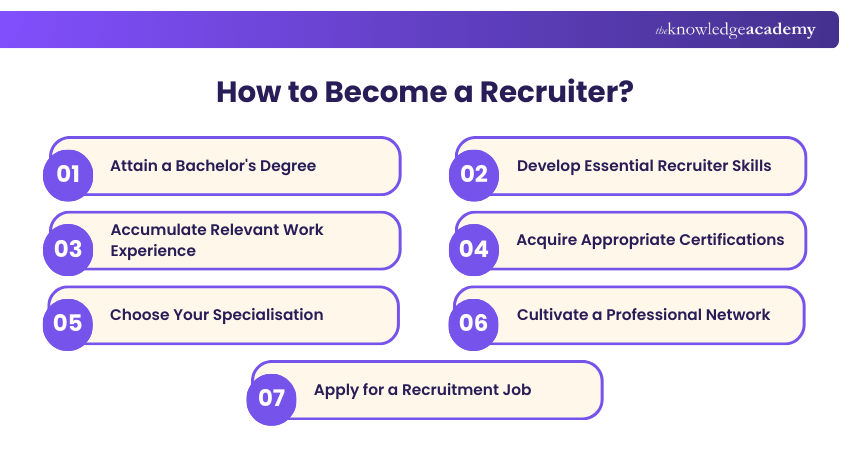
Becoming a Recruiter requires you to follow certain steps. Let’s look at some of these essential steps in the following steps:
1) Attain a Bachelor's Degree
The first step towards Becoming a Recruiter is earning a bachelor's degree. Moreover, degrees in Psychology, Business Administration, or Human Resources can develop your foundation in organisational behaviour, and business operations. This educational background also helps prospective Recruiters to think critically, which is crucial for comprehending the viewpoints during the Recruitment Process.
2) Develop Essential Recruiter Skills
Recruiters must possess a specific set of skills to excel in their role. This includes strong Communication Skills, Negotiation Skills for employment terms, and organisational skills to manage various Recruitment tasks efficiently.
Additionally, developing empathy and intuition helps understand candidate motivations and cultural fit. Technical skills like proficiency in Recruitment software and social media platforms are also essential in modern Recruitment strategies. There are no recruitment-specific degrees, but research from LinkedIn revealed the most popular courses for recruiters are:
a) Psychology
b) Human resources
c) Sociology
d) Communications
e) Political science
3) Accumulate Relevant Work Experience
Gaining practical experience in Recruiting mentor-related fields like Human Resources is crucial. This can involve internships or entry-level positions where you can learn about various aspects of Recruiting.
You'll get experience in sourcing candidates, conducting interviews, and understanding legal compliance. Experience in customer service or sales roles is also beneficial. It helps develop communication and relationship management skills, which are vital in Recruiting.
4) Acquire Appropriate Certifications
The next step in learning How to Become a Recruiter is to know what and how to obtain specialised certifications. Obtaining professional certifications can enhance a Recruiter's credentials and expertise.
Certifications from recognised HR organisations or registered educational institutions. These organisations can provide specialised knowledge in talent acquisition and legal aspects of Recruiting. These certifications often require ongoing education, keeping Recruiters updated on the latest trends and best practices.
Gain all essential skills to become a successful Recruiter – register now for our Recruitment Training!
5) Choose Your Specialisation
In essence, becoming a specialist proves rather useful as a recruiter in as much as it deems it pivotal to specialise in a specific industry or type of position. Whether you are targeting technology, the health care industry, the finance sector, or any other creative position, it is relevant to know and associate with the industry. Specialising helps you develop a great pool of talented candidates and identify where the demand is, therefore providing you with worthwhile customers.
6) Cultivate a Professional Network
Connecting with Recruitment specialists is an essential step. Moreover, joining HR and Recruiting groups is all part of this. Having a strong network can also help you gain access to applicants and industry trends and progress your career. Moreover, networking develops a contact pool that is useful for finding applicants for different positions.
7) Apply for a Recruitment Job
The final step is simple when applying for a job in Recruitment. With a well-crafted cover letter and CV, you'll have the chance to showcase your Recruitment skills during the interview. To increase your chances of success, you can check out our job interview tips and make a lasting impression.
Build hiring expertise and launch a successful recruitment career with our Recruitment Training – Join now!
What are a Recruiter's Responsibilities?
Understanding a recruiter's responsibilities is a key step in learning how to become a recruiter, as the role extends beyond hiring to building long-term talent relationships. The responsibilities can vary across positions of an in-house and an agency, but the core ones are the same. The key responsibilities of a recruiter include:
1) Writing and promoting job adverts to attract suitable candidates
2) Cooperation with hiring managers to establish role requirements and hiring goals
3) Evaluating the applicants by examining their curriculum vitae, conducting interviews, and conducting background checks
4) Shortlisting and recommending qualified candidates from talent networks
5) Negotiating job offers with selected candidates
6) Managing recruitment documentation and supporting onboarding processes
7) Networking with candidates via digital platforms and career events
If you're considering a career as a Recruiter, it's essential to understand the skills that contribute to success in this role. Here are some of the most important skills and qualifications for Recruiters:
1) Communication Skills
Recruiters excel in communication, enabling them to clearly convey information between employers and candidates. It's crucial to build strong relationships with clients, quickly extracting key details about the roles they need to fill and the type of candidates they're seeking.
Establishing trust and rapport with clients can lead to ongoing work and long-term partnerships.
2) Self-motivation
Recruiters are driven and disciplined, thriving on both base salary and performance-based incentives like commissions and bonuses. This motivation often provides Recruiters with the flexibility to manage their schedules and work styles, with a strong focus on achieving results rather than following rigid processes.
3) Organisational Skills
Recruiters often handle multiple priorities and clients simultaneously, making strong organisational skills essential. On any given day, you might be coordinating with several candidates and employers across different industries.
Effective time management and task prioritisation are key to meeting deadlines and keeping everything on track.
4) Sales Skills
Although not always recognised as a sales role, Recruitment is, at its core, a sales-driven profession. As a Recruiter, you sell job opportunities to candidates and candidates to employers. This requires strong sales and negotiation skills, particularly when advocating for fair salaries or advising clients on realistic compensation expectations.
Interpersonal skills are also vital in building successful relationships with both candidates and employers.
Strengthen ethical hiring practices and ensure compliant recruitment with our Safer Recruitment Training – Sign in now!
Recruiter Work Environment and Salary
Recruiters typically work in a professional office environment, spending most of their time at a desk managing candidates, vacancies, and client communications. While standard working hours are usually 9 am to 5 pm on weekdays, the role offers flexibility, with recruiters often managing their own schedules and occasionally attending external meetings or events. Self-motivation and effective time management are essential, as individual performance directly influences success.
On the earnings aspect, the average salary of a recruiter in the UK is approximately £ 27,283 per year, with averages being higher in London and Manchester. Most roles combine a base salary with commission or performance-based bonuses, often linked to successful placements. As recruiters gain experience and progress into senior positions, earning potential can rise significantly beyond the average.
Do You Need any Qualifications to be a Recruiter?
There are no mandatory qualifications required to become a recruiter, making it an accessible career choice. A degree in business, HR, or communications, GCSEs, or A-Levels commonly serve as starting points for many professionals. Practical experience in recruitment, sales, or the HR field is highly valued by employers. Career progression and credibility may also be enhanced by professional training or certifications.
What are the 4 Pillars of Recruitment?
Knowledge of the key pillars of recruitment enables organisations to recruit, hire, and retain appropriate talent in an efficient way. These pillars bring about a systematic method of hiring, which helps succeed in the workforce in the long term. The 4 pillars are:
1) Talent Attraction: The first effort to attract the right individuals is through the strong employer brand and job descriptions. The inclusion of various sourcing channels that include job boards, social networks, and referrals assists in accessing a broader talent pool.
2) Candidate Assessment: Proper evaluation would make applicants fit the job specifications, which is done by interview, skill test, and behavioural test. Hiring decisions can be made more accurate and less biased using technology-based tools.
3) Hiring Process Efficiency: An efficient recruitment practise lowers both time wastage and improves the experience of the candidate. Sound workflow practises, effective communication and applicant tracking solutions allow organisations to acquire the best talent within the shortest time possible.
4) Retention and Onboarding: Recruitment is not stopped after hiring because of organised onboarding and engagement of the employees. Onboarding, career development and helping working environments are also vital and enhance retention and long-term performance.
Assess, shortlist, and select the right candidates with confidence through our Recruitment Assessment and Selection Training – Get started today!
Conclusion
The effective work in the field of recruitment depends on the solid knowledge of the role, the necessary skills, and the basic recruitment practices. By mastering the responsibilities, working environment and essential pillars of recruitment, you can excel in the competitive market with confidence. Knowing How to Become a Recruiter equips you to build a rewarding and long-term career.
Achieve consistent hiring outcomes and stronger teams with our Recruiting for Success Training – Sign in today!
Frequently Asked Questions
Do I Need a Specific Degree to Become a Recruiter?

While there's no mandatory degree, a bachelor's in Human Resources, business, psychology, or a related field is highly beneficial. These disciplines provide essential knowledge and skills relevant to Recruitment, such as understanding organisational behaviour and effective communication.
How Important are Certifications in a Recruiting Career?
Recruiting work can also stand to be improved by certification as these give the holder the courtesy of proving his or her level of expertise and thus increasing his or her marketability. There are some credentials such as CPRW or AIRS that show that a person knows the recruitment process, talent acquisition, and the law.

Amelia Williams


Senior Human Resources Consultant and Learning Specialist
Amelia Williams is a highly respected HR professional with over 12 years of experience in human capital management, talent development and workplace policy. She has worked across sectors including education, healthcare and corporate services, focusing on aligning people strategies with organisational goals. Amelia’s writing blends current HR trends with practical solutions for modern workplace challenges.


 If you wish to make any changes to your course, please


