


We may not have the course you’re looking for. If you enquire or give us a call on +44 1344 203 999 and speak to our training experts, we may still be able to help with your training requirements.
Stakeholder Roles and Responsibilities: A Complete Guide
ByThe Knowledge AcademyLast updated on: 18 November 2026
Stakeholder roles and responsibilities explain how different groups influence organisational decisions and business activities. Explore seven key stakeholder categories, their contributions and six essential responsibilities that support communication, accountability and business relationships.

What's in This Guide?
Wondering who does what in an organisation? Here's what you'll discover:1. Key Stakeholder Roles: Understand how owners, managers, employees, customers, suppliers and external stakeholders contribute to organisational activities.2. Strategic Input and Resources: Explore how stakeholders support planning, decision-making, and resource allocation.3. Risk Management and Compliance: Learn how stakeholders help identify risks, meet requirements, and maintain accountability.4. Communication and Feedback: Discover how stakeholders share information, address concerns and support collaboration.
The meeting ends with: "Everything is under control."
But the reality sounds different:
"I thought someone else was approving that."
"Nobody told us the requirements had changed."
"Who is responsible for resolving this issue?"
The common problem? Unclear stakeholder roles and responsibilities.
Understanding who influences decisions, contributes resources and takes responsibility is the first step towards establishing clarity across an organisation.
Key Roles of Stakeholders
Stakeholders include individuals and groups who influence, participate in or are affected by an organisation's activities. They may be internal or external, with different interests, contributions and levels of authority.
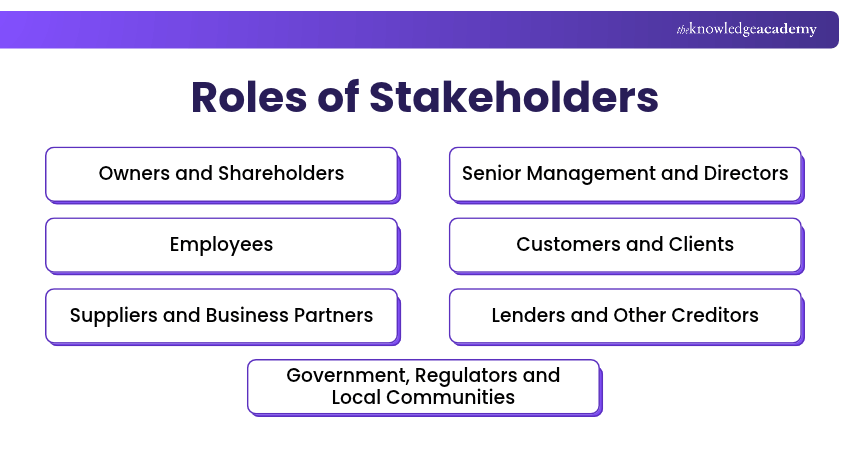
1) Owners and Shareholders
Owners and shareholders hold ownership interests in an organisation and may influence important business decisions through their ownership rights. Depending on the business structure, they may vote on certain matters, appoint directors or provide capital to support organisational activities.
Their involvement helps shape ownership priorities, governance expectations and long-term business objectives. However, shareholders do not necessarily manage daily operations or exercise direct control over business decisions.

2) Senior Management and Directors
Senior management and directors provide organisational leadership and oversight. Directors are responsible for company governance and strategic decisions, while senior managers typically oversee daily operations, implement strategies and coordinate organisational resources.
Their responsibilities depend on the organisation's structure and delegated authority. They also monitor perfo
3) Employees
Employees perform the activities required to support everyday business operations. They apply their expertise, complete assigned tasks and collaborate with colleagues to deliver products, services and other organisational outcomes.
They also communicate operational concerns, identify opportunities for improvement and contribute to workplace performance. Their involvement can provide valuable insights into internal processes and customer needs.
Pro Tip
Create a stakeholder map to identify key internal and external stakeholders. Consider their interests, influence and level of involvement to determine how frequently they should be consulted or informed about organisational decisions.
4) Customers and Clients
Customers and clients purchase, receive or use an organisation's products and services. They communicate their needs, share expectations and provide feedback based on their experiences.
Their input helps businesses understand customer preferences, identify service improvements and assess whether their offerings meet market requirements. Customers may also influence business decisions through purchasing behaviour and feedback.
5) Suppliers and Business Partners
Suppliers and business partners provide materials, products, services or expertise that support organisational operations. Their responsibilities may include fulfilling contractual commitments, coordinating deliveries and meeting agreed quality requirements.
Reliable collaboration with these stakeholders can support operational continuity, improve coordination and help businesses respond to supply chain challenges.
6) Lenders and Other Creditors
Lenders and other creditors have financial relationships with organisations through loans, credit arrangements or unpaid obligations. Lenders provide financing under agreed repayment terms, while other creditors may include suppliers awaiting payment for goods or services.
Their involvement may include assessing creditworthiness, monitoring financial risks and exercising applicable contractual rights. Their influence depends on the nature of their financial relationship with the organisation.
7) Government, Regulators and Local Communities
Government bodies and regulators may establish requirements, oversee compliance or exercise statutory powers affecting organisational activities. Their responsibilities can include inspections, enforcement and issuing approvals where legally authorised.
Local communities and other affected groups may raise concerns about an organisation's environmental, social or economic impact. Their feedback can help businesses understand wider expectations and consider the consequences of their decisions.
Responsibilities of Stakeholders
Stakeholder responsibilities depend on their relationship with the organisation, their authority and their level of involvement. While some stakeholders make decisions and oversee resources, others contribute through their work, financial support, communication or feedback.
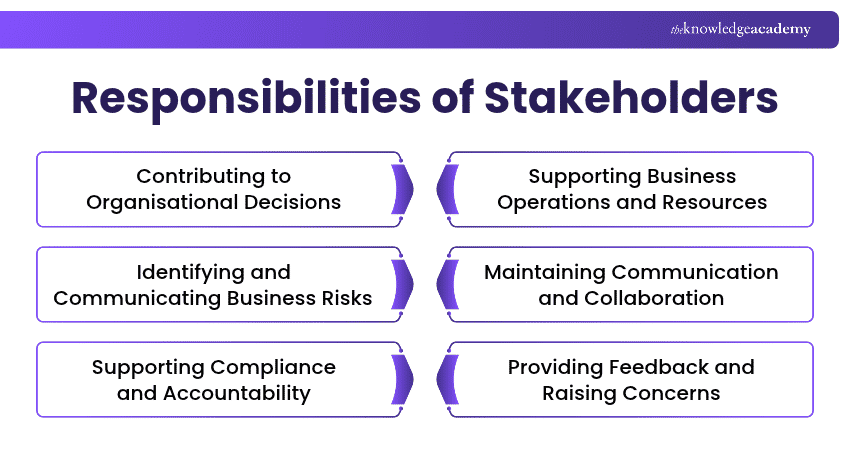
1) Contributing to Organisational Decisions
Relevant stakeholders provide information, operational insights and recommendations that support business planning and organisational objectives. Their contributions help decision-makers assess priorities, evaluate alternatives and understand potential impacts.
Owners, directors and senior managers may also participate in strategic decisions within their respective authority. Other stakeholders, including employees and customers, can contribute perspectives that help organisations make more informed choices.
2) Supporting Business Operations and Resources
Stakeholders contribute different resources that support organisational activities. Employees provide skills and expertise, suppliers deliver goods and services, owners and investors may contribute capital, and lenders may provide financing.
Those with appropriate authority manage budgets, personnel and other organisational resources. These contributions help businesses maintain operations and pursue agreed objectives.
3) Identifying and Communicating Business Risks
Stakeholders can help recognise business risks by sharing technical knowledge, operational concerns and external information. Their observations may reveal issues affecting financial performance, business operations, compliance or organisational reputation.
Managers and designated risk owners can then assess these risks, develop appropriate responses and monitor them according to their responsibilities.
4) Maintaining Communication and Collaboration
Stakeholders exchange relevant information, communicate expectations and coordinate activities with other parties. Clear communication helps reduce misunderstandings and ensures that important concerns reach appropriate decision-makers.
Collaboration also supports effective working relationships between employees, management, customers, suppliers and other external stakeholders.
5) Supporting Compliance and Accountability
Stakeholders with relevant obligations must meet the legal, regulatory, contractual and ethical requirements applicable to their activities. Those with governance or compliance responsibilities may also monitor adherence to relevant standards.
Clear accountability helps organisations identify who holds responsibility for specific decisions, business activities, approvals and obligations.
6) Providing Feedback and Raising Concerns
Stakeholders provide feedback on business activities, products, services and organisational performance. They may identify opportunities for improvement, report dissatisfaction or raise concerns about decisions affecting their interests.
Managers and authorised decision-makers can use this feedback to address issues, improve business practices and respond to stakeholder expectations where appropriate.
Trainer's Insight
takeholder opposition is not always an obstacle to overcome. It may highlight overlooked dependencies, unrealistic assumptions or operational challenges. Investigating the reasons behind resistance can reveal improvements before implementation.
Stakeholder roles and responsibilities shape how organisations make decisions, manage resources and respond to different interests. By understanding the contributions of internal and external stakeholders, businesses can strengthen communication, clarify accountability and make decisions that consider organisational objectives and stakeholder expectations.
Understand the communication process and barriers to effective listening with the BCS Professional Certificate In Stakeholder Engagement Training – Sign up now!

The Knowledge Academy develops accessible learning content across Project Management, IT, Cybersecurity, Data Science, Business Analysis, HR, Accounting and Finance, Leadership and Health and Safety. Its resources combine subject research with clear explanations to help professionals build practical knowledge across a wide range of disciplines.
View Detail

 If you wish to make any changes to your course, please


