


We may not have the course you’re looking for. If you enquire or give us a call on +1 7204454674 and speak to our training experts, we may still be able to help with your training requirements.
Secretary Job Description
ByNilotpal SarmahLast updated on: 30 October 2026
Explore the key duties of a Secretary, essential workplace skills, salary expectations and a practical job description template to understand what the role involves.
What You'll Learn
1. A Secretary helps manage daily administrative tasks, coordinate office activities and support smooth workplace operations.2. Common responsibilities include scheduling meetings, handling correspondence and maintaining office records.3. Communication, organisation, technical proficiency and confidentiality are essential skills.4. Qualifications vary depending on the employer, industry and level of responsibility.5. A Secretary job description outlines the role's duties, skills, qualifications and employment requirements.
Consider these questions:
1) Meetings scheduled and confirmed?
2) Important emails answered?
3) Documents organised and updated?
4) Office supplies checked?
5) Visitors and appointments coordinated?
Who ensures all these tasks are completed without disrupting daily operations?
That's where a Secretary comes in. From managing schedules to handling correspondence, a Secretary helps keep office activities organised and running smoothly. But what exactly does this role involve?
In this blog, we'll explore the Secretary job description, covering key responsibilities, essential skills, qualifications, salary expectations and a practical job description template. So, read on!
Who is a Secretary?
A Secretary is a professional responsible for providing administrative and clerical support to individuals, departments or organisations. Their primary role is to coordinate office activities, manage schedules, organise meetings, handle correspondence, maintain records and assist with various office tasks. They help ensure that everyday administrative tasks are completed efficiently.

Key Responsibilities of a Secretary
A Secretary performs various administrative tasks to support smooth office operations. Responsibilities vary depending on the employer and industry, but the following are some of the most common duties:
1) Managing Communication: Answering phone calls, responding to emails and directing enquiries to relevant individuals or departments.
2) Scheduling Meetings and Appointments: Coordinating calendars, arranging meetings, sending invitations and notifying participants about schedule changes.
3) Preparing Documents: Drafting, formatting, proofreading and organising letters, reports, presentations and other business documents.
4) Maintaining Office Records: Organising physical and digital files, updating databases and ensuring important information is accessible to authorised personnel.
5) Coordinating Travel Arrangements: Booking transport, arranging accommodation and preparing travel itineraries when required.
6) Supporting Office Administration: Monitoring supplies, coordinating deliveries and assisting with routine administrative procedures.
7) Assisting Visitors and Colleagues: Greeting visitors, responding to enquiries and providing administrative assistance to team members.
8) Handling Confidential Information: Managing sensitive records and correspondence carefully while following organisational confidentiality and information security policies.
Example: A Typical Workday of a Secretary
The following example illustrates how these responsibilities may fit into a working day.
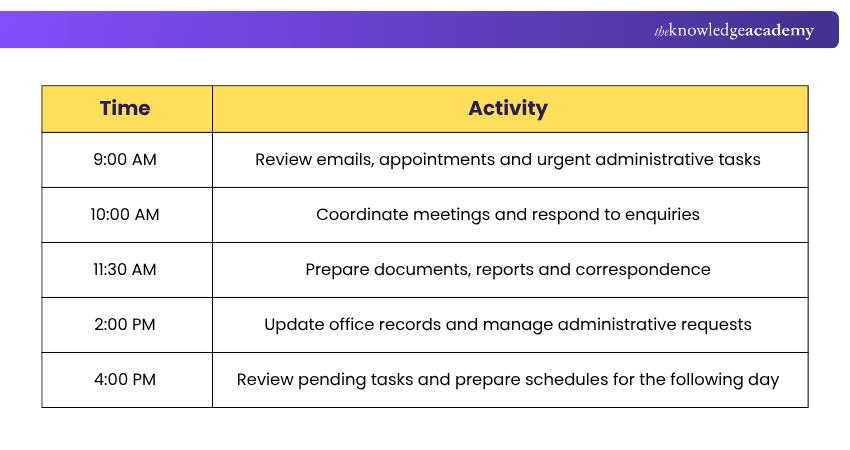
This is an illustrative schedule. Actual working hours and activities depend on the organisation, workload and responsibilities of the position.
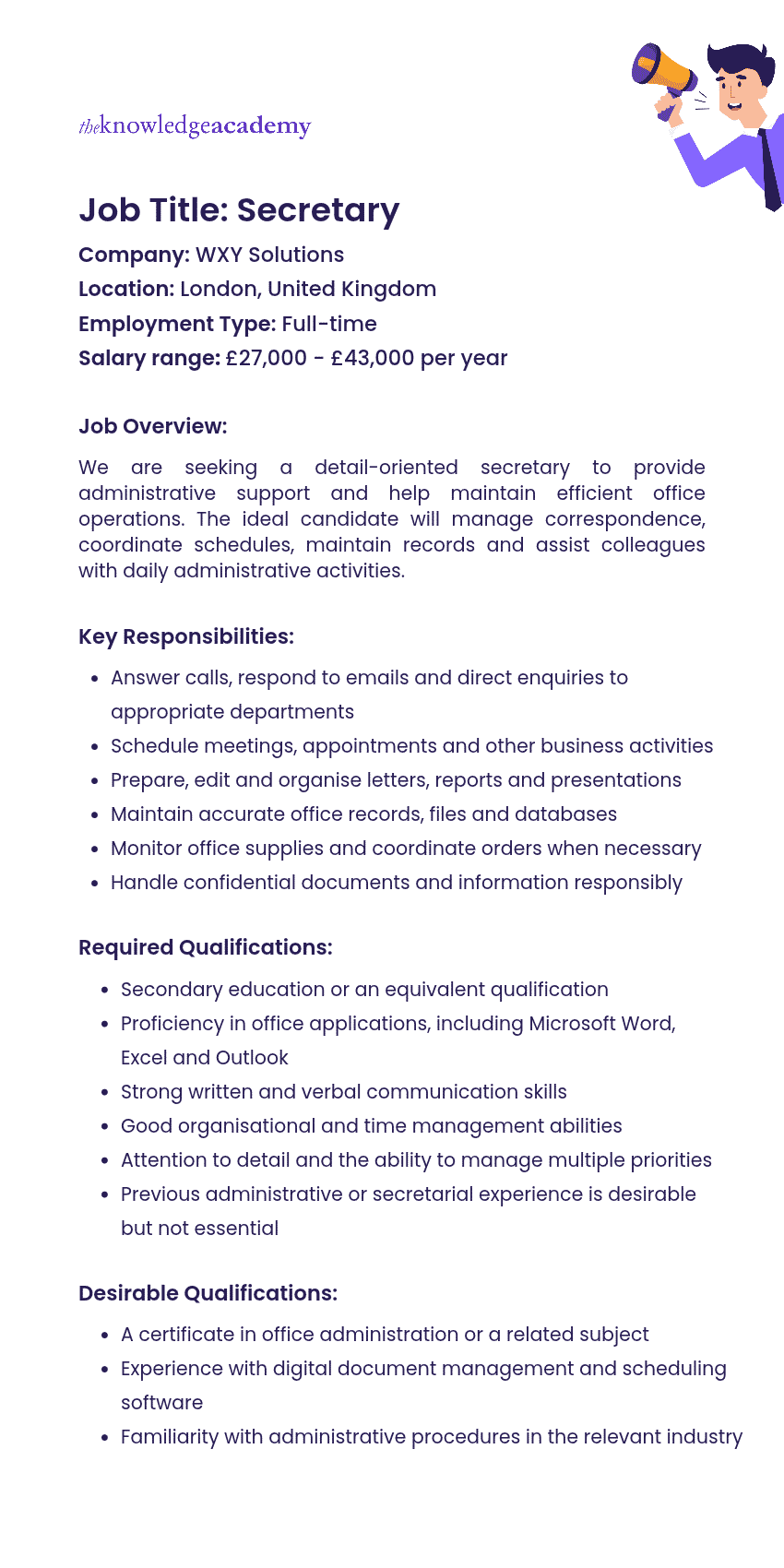
Secretary Job Description Template
A Secretary job description typically includes the job title, role overview, responsibilities, skills and qualifications. Here is an example of Secretary job description template:
Essential Skills of a Secretary
A Secretary needs a combination of communication, organisational, technical and interpersonal skills to perform administrative tasks effectively. Let's check the required skills:
1) Communication Skills
Secretaries communicate regularly with managers, colleagues, clients and external contacts. Clear verbal and written communication helps them share information accurately and respond to enquiries professionally.
Active listening, appropriate email etiquette and professional telephone communication are also important for avoiding misunderstandings and maintaining effective workplace interactions.
2) Organisational Skills
Secretaries often manage appointments, documents and administrative requests simultaneously. Strong organisational skills help them prioritise responsibilities, maintain accurate records and meet deadlines. Effective planning and time management also ensure that meetings, correspondence and administrative activities are coordinated efficiently.
3) Technical Skills
Secretaries use digital tools to prepare documents, manage schedules, maintain records and communicate with colleagues. Familiarity with word processing software, spreadsheets, email platforms and shared calendars is particularly useful. They may also use databases, document management systems, printers and other office equipment depending on their responsibilities.
Trainer's Insight
Modern secretarial work involves more than typing and filing documents. Familiarity with Microsoft 365, shared calendars, spreadsheets and video conferencing tools can help secretaries coordinate tasks and communicate effectively in office-based and hybrid working environments.
4) Interpersonal Skills
Secretaries interact with people across different roles and departments. Good interpersonal skills help them build professional relationships, cooperate with colleagues and provide a positive experience for visitors and clients. Patience, teamwork and the ability to handle difficult conversations professionally are valuable when managing enquiries or resolving routine administrative issues.
5) Professionalism and Confidentiality
Secretaries may handle sensitive documents, employee information and confidential business correspondence. Professionalism involves maintaining discretion, demonstrating reliability and following organisational policies. Integrity, attention to detail and responsible information handling are essential for protecting sensitive information and maintaining trust.
Be the trusted advisor behind business success with the Company Secretary Training – Sign up now!
Quick Checklist: Secretary Job Requirements
Before applying for a secretary position, consider whether you can:□ Communicate clearly through emails, telephone calls and face-to-face conversations□ Organise appointments, documents and office records□ Use common office software and digital tools□ Handle confidential information responsibly□ Meet the education and experience requirements specified by the employer
How to Become a Secretary?
Becoming a Secretary involves developing administrative knowledge, strengthening workplace skills and gaining relevant experience. The following steps can help you prepare for this career:
Step 1: Meet the Educational Requirements
Start with the educational qualifications required for the positions you want to pursue. Additional training in office administration or business studies may improve your preparation. A strong educational foundation can help you better understand business processes, workplace communication and professional office practices.
Step 2: Develop Administrative Skills
Practise essential tasks such as preparing documents, organising schedules, managing emails and maintaining records. Learn to use common workplace software confidently. Improving your time management, attention to detail and multitasking abilities can further enhance your effectiveness in administrative roles.
Step 3: Gain Practical Experience
Look for entry-level administrative positions, internships or other opportunities that involve office coordination, communication and record management. Hands-on experience helps you apply your knowledge in real workplace settings while building confidence and professional networks.
Step 4: Apply for Suitable Positions
Prepare a CV highlighting your organisational abilities, communication skills, software proficiency and relevant experience. Review each job description carefully before applying. Tailoring your application to each role can help you demonstrate how your skills meet the employer's specific requirements.
Become an indispensable part of any organisation with the PA and Secretarial Courses – Sign up now!

Nilotpal Sarmah is a Senior Content Writer with 11+ years of overall experience spanning engineering, operations and content development. His technical knowledge and extensive writing experience enable him to simplify specialised topics across IT and Tech, Business Skills, Project Management, Health and Safety, and ISO and Compliance.
View Detail

 If you wish to make any changes to your course, please


