


We may not have the course you’re looking for. If you enquire or give us a call on + 1-866 272 8822 and speak to our training experts, we may still be able to help with your training requirements.
Home
 Resources
Business Skills
Resource Planning Manager Job Description: Roles, Skills and Qualifications
Resources
Business Skills
Resource Planning Manager Job Description: Roles, Skills and Qualifications
Resource Planning Manager Job Description: Roles, Skills and Qualifications
ByThe Knowledge AcademyLast updated on: 17 November 2026
A Resource Planning Manager oversees resource allocation, capacity planning and utilisation to support organisational goals. Explore the key responsibilities, essential skills and qualifications required for this role, along with a practical Resource Planning Manager job description example.
At a Glance
1. Primary Role: Plan, allocate and monitor organisational resources.2. Key Responsibilities: Forecasting, scheduling, capacity planning and resource optimisation.3. Essential Skills: Analytical thinking, budgeting, communication and decision-making.4. Qualifications: Relevant education, planning experience and optional certifications.
What happens when several teams need the same resources at the same time? Competing priorities, unexpected demands and limited availability can make even well-planned activities difficult to coordinate.
This is where effective resource planning becomes essential. But what does it take to manage these challenges successfully? In this blog, we'll explore the Resource Planning Manager job description, including the responsibilities, skills and qualifications associated with the role.
Who is a Resource Planning Manager?
A Resource Planning Manager is a professional responsible for planning, allocating and monitoring an organisation's resources to support operational and project requirements. These resources may include employees, equipment, materials and other essential assets, depending on the organisation.
They work closely with department heads, operational teams and Project Managers, where relevant, to forecast resource needs, manage capacity and ensure resources are available when required. Their role is important in balancing organisational priorities with available resources while supporting efficient operations.

Key Responsibilities of a Resource Planning Manager
The role of a Resource Planning Manager is pivotal in aligning an organisation's objectives with its operational capabilities. Their key responsibilities include the following:
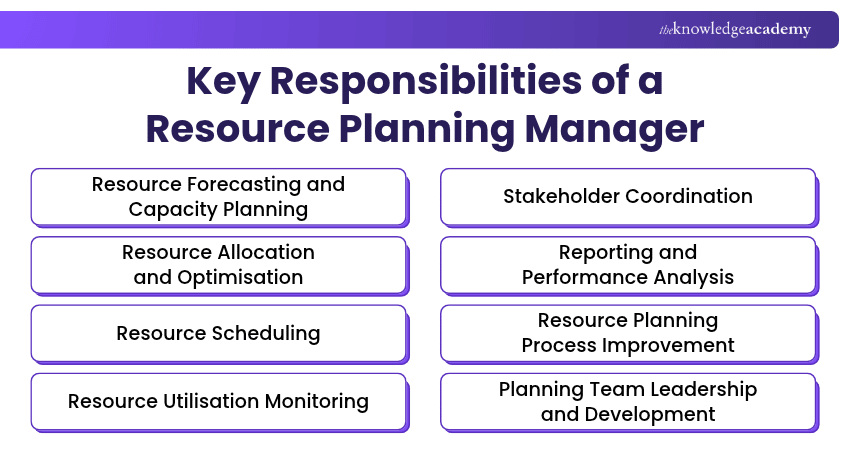
1) Resource Forecasting and Capacity Planning
Resource Planning Managers analyse project requirements, operational demand, workload trends and available capacity to forecast future resource needs. They use data-driven insights to identify potential shortages and plan staffing, equipment and other resources accordingly.
2) Resource Allocation and Optimisation
They allocate resources based on project priorities, availability and operational requirements. This involves balancing workloads, preventing overutilisation or underutilisation and making effective use of available resources.
3) Resource Scheduling
A key duty is developing resource schedules that outline when and where employees, equipment or other resources will be required. They also identify scheduling conflicts and prepare suitable adjustments to minimise disruptions.
Trainer's Insight
A team of ten employees does not necessarily mean ten full-time resources are available for a project. Existing commitments, leave and specific skill requirements all affect capacity. Effective resource planning considers actual availability before making allocation decisions.
4) Resource Utilisation Monitoring
Resource Planning Managers regularly monitor resource availability, usage and capacity. They adjust allocations when project requirements, workloads or resource availability change to keep activities aligned with organisational priorities.
5) Stakeholder Coordination
They collaborate with department heads, operational teams, Project Managers and other relevant stakeholders to understand resource requirements and resolve competing demands. Effective coordination helps ensure that resource planning decisions support project and operational objectives.
6) Reporting and Performance Analysis
Resource Planning Managers prepare reports on resource availability, capacity, utilisation and planning performance. These reports provide stakeholders with insights into resource requirements, emerging constraints and opportunities for improvement.
7) Resource Planning Process Improvement
They identify opportunities to improve resource planning processes, reduce waste and increase operational efficiency. This may involve reviewing planning methods, improving forecasting accuracy and recommending changes to resource management practices.
8) Planning Team Leadership and Development
Where the position includes team management, Resource Planning Managers oversee planners or analysts, provide guidance and establish consistent planning practices. They may also support training and professional development to improve team performance.
Learn to plan with precision and deliver with confidence by signing up for the Project Planning and Control™ (PPC) Foundation and Practitioner Training today!
Essential Skills for a Resource Planning Manager
Resource Planning Managers play an important role in coordinating resources and supporting organisational efficiency. To manage competing priorities and respond to changing requirements, they need a combination of analytical, organisational and managerial skills. Here are some of the essential skills for this role:
a) Resource Planning and Forecasting: Resource Planning Managers must assess resource availability and anticipate future requirements. Strong forecasting skills help them identify capacity gaps, plan allocations, and support operational decisions.
b) Analytical and Problem-solving Skills: They must analyse resource data, identify utilisation trends and resolve planning challenges. These skills support informed decisions and effective resource allocation.
Pro Tip
Compare planned resource utilisation with actual utilisation regularly. Significant differences can reveal inaccurate forecasts, workload imbalances or emerging capacity constraints, allowing you to adjust plans before they affect operational or project delivery.
c) Budget Management: Budget management helps Resource Planning Managers forecast resource costs, monitor expenditure and allocate resources within financial constraints while supporting operational efficiency.
d) Time Management and Scheduling: Resource Planning Managers must prioritise activities, coordinate schedules and manage competing deadlines. These skills help prevent scheduling conflicts and balance resource workloads.
e) Effective Communication and Stakeholder Management: Clear communication helps Resource Planning Managers coordinate with Project Managers, department heads and other stakeholders. They must explain allocation decisions, negotiate priorities and communicate changes effectively.
f) Leadership and Decision-making: Resource Planning Managers must assess competing priorities, make informed decisions and guide planning activities. Strong leadership skills also help them support team members and manage resource-related challenges.
g) Resource Planning Software Proficiency: Resource Planning Managers must be proficient in relevant planning tools, spreadsheets and reporting systems to monitor utilisation, analyse capacity and prepare accurate resource forecasts.
Know how to bring your project plans under control by joining the Microsoft Project Training now!
Qualifications Required to Become a Resource Planning Manager
The qualifications required for a Resource Planning Manager depend on the organisation, industry and scope of responsibilities. While some employers prefer candidates with relevant academic qualifications, practical experience in resource planning and capacity management is also valuable. Here are the key qualifications and experience employers may look for:
1) Educational Qualifications
A degree in business administration, operations management, project management or a related field may be beneficial for aspiring Resource Planning Managers. Such qualifications provide a foundation in business operations, planning and resource management.
However, a specific degree is not always mandatory, as some employers also consider candidates with substantial relevant experience.
2) Relevant Work Experience
Employers often look for candidates with practical experience in resource allocation, scheduling, capacity planning or project coordination.
Experience in forecasting resource requirements, managing competing priorities and analysing utilisation data is particularly valuable. Previous supervisory or team management experience may also be preferred for positions involving direct leadership responsibilities.
3) Professional Certifications
Professional certifications can help Resource Planning Managers strengthen their knowledge and demonstrate relevant expertise.
The Project Management Professional (PMP)® certification may be valuable for professionals working in project-based environments. Training in resource planning software, workforce planning and capacity management can also help develop relevant expertise.
However, professional certifications are generally optional for this role, and their relevance depends on the employer and responsibilities.
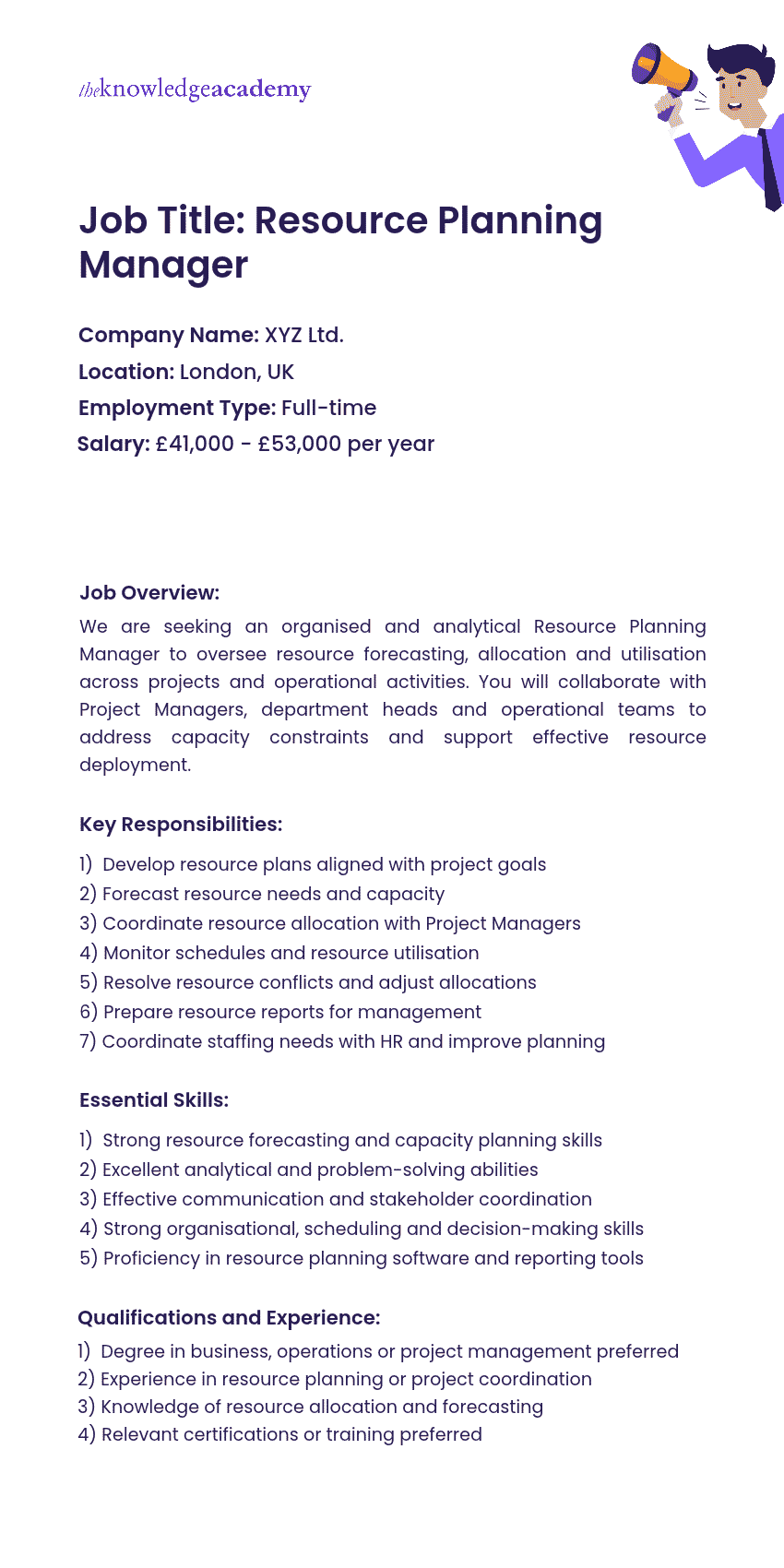
Resource Planning Manager Job Description Example
A Resource Planning Manager job description outlines the responsibilities, essential skills and qualifications required for the position. Here is a sample job description that organisations can adapt to their requirements:

The Knowledge Academy develops accessible learning content across Project Management, IT, Cybersecurity, Data Science, Business Analysis, HR, Accounting and Finance, Leadership and Health and Safety. Its resources combine subject research with clear explanations to help professionals build practical knowledge across a wide range of disciplines.
View Detail

 If you wish to make any changes to your course, please


