


We may not have the course you’re looking for. If you enquire or give us a call on + 1-866 272 8822 and speak to our training experts, we may still be able to help with your training requirements.
Is Software Development a Good Career?
ByThe Knowledge AcademyLast updated on: 18 November 2026
Software development offers diverse career opportunities, competitive salaries and room for professional growth. Discover what makes it a rewarding career, the challenges involved and how AI is shaping its future.

In a Nutshell
1. Software development continues to play an important role as organisations adopt digital technologies.2. AI-assisted development is changing everyday tasks and the skills expected of developers.3. Problem-solving, technical judgement and the ability to work with evolving tools remain valuable.4. Practical experience and continuous learning can help aspiring developers prepare for future opportunities.
If AI can write code, why should I become a Software Developer? It's a question worth asking.
AI tools can now assist with coding, debugging and testing, changing how developers approach their work. But building reliable software involves more than generating code. It requires understanding user needs, designing solutions, solving problems and making technical decisions.
So, does software development still offer a promising career path? Let's take a closer look at the opportunities, AI's impact and future career prospects to help you make an informed decision.
Why Software Development is a Good Career Choice?
Software development can be a rewarding career for people who enjoy technology, logical thinking and solving practical problems. Its appeal comes from a combination of employment opportunities, career progression and the satisfaction of creating useful digital products.
Here are five reasons to consider a career in software development:
1) Growing Demand for Software Developers
Businesses rely on software to manage operations, deliver services and improve customer experiences. As organisations adopt new digital technologies, they continue to need developers who can design, build, maintain and improve applications.
The World Economic Forum's Future of Jobs Report 2025 ranks Software and Applications Developers fourth among the fastest-growing roles globally by 2030. This suggests promising long-term opportunities, although demand varies by specialisation, experience and employment market.

2) Opportunities Across Different Industries
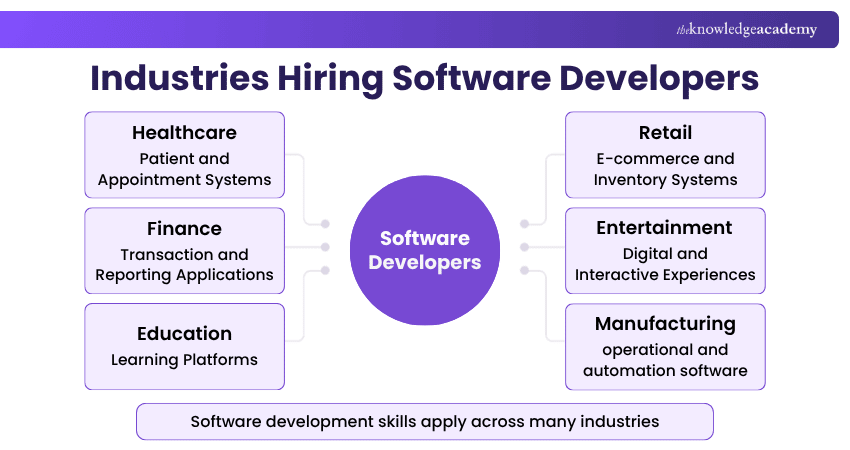
Software development is not limited to technology companies. Developers contribute to healthcare platforms, financial applications, educational tools, retail systems, entertainment services and manufacturing technologies.
For example, a developer working in healthcare might help create software for managing patient appointments. Someone in finance might develop applications that process transactions or support financial reporting.
This variety allows developers to apply their technical abilities to industries that match their interests and explore different types of projects throughout their careers.
3) Career Growth and Advancement
Software development offers several opportunities for career progression. Developers commonly begin in junior positions and take on more complex responsibilities as their technical knowledge and experience increase.
With experience, they can progress into positions such as Senior Software Developer, Technical Lead, Software Architect or Engineering Manager.
Some developers prefer advanced technical work, while others move towards team leadership or project management. This flexibility allows individuals to shape their careers around their strengths and long-term ambitions.
Trainer’s Pro Tip
Do not focus only on job titles when planning your progression. Compare the skills required for senior development, architecture and leadership roles, then identify which technical and interpersonal abilities you need to strengthen next.
4) Flexible Working Opportunities
Many software development responsibilities can be performed using digital tools, including programming environments, code repositories and online collaboration platforms.
As a result, some employers offer remote, hybrid or flexible working arrangements. These options can help developers organise their working routines while collaborating with colleagues across different locations.
However, flexibility depends on the employer, project requirements and role. Positions involving secure systems, specialised equipment or close on-site coordination can require regular office attendance.
5) Creative and Rewarding Work
Software development combines technical knowledge with creative thinking. Developers must understand what users need, consider possible solutions and determine how to turn ideas into working applications.
For example, improving an online booking system involves more than writing code. A developer must consider how customers navigate the application, how information is processed and how potential errors are handled.
Seeing a solution work successfully can provide a strong sense of achievement, particularly when the software makes everyday tasks easier for users.
Build broader skills across software development, architecture and modern engineering practices with our Software Engineering Courses – Register today!
Software Development Roles and Salaries in the UK
Software development includes several career paths, each involving different responsibilities and technical skills. The table below compares common career paths and their indicative annual salary ranges.
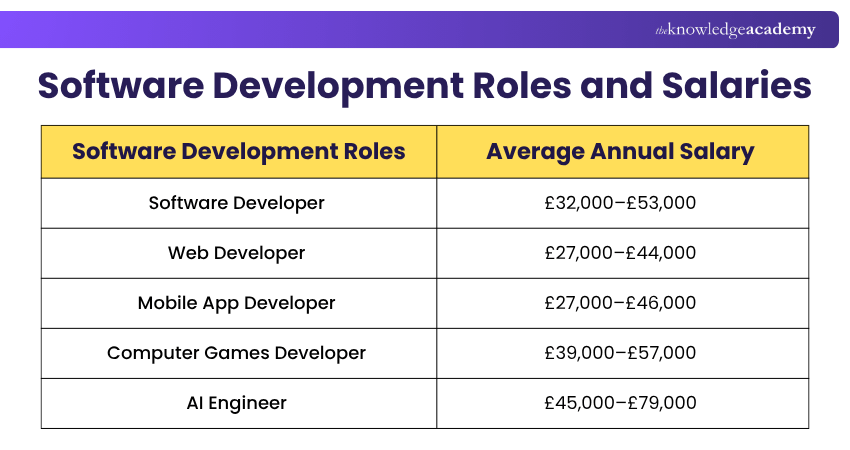
Source: Glassdoor
The figures represent indicative earnings from starting to experienced levels, rather than guaranteed salaries. Actual earnings depend on factors such as technical expertise, professional experience, employer, location and job responsibilities. Specialist knowledge and progression into senior positions can also influence earning potential.
Challenges of a Software Development Career
Although software development offers valuable opportunities, the profession comes with challenges that are important to understand before entering the field. Below are some of the challenges that you need to consider:
1) Continuous Learning Requirements: Programming languages, frameworks and development tools evolve regularly. Developers must keep their skills updated by exploring new technologies, learning security practices and adapting to changing project requirements.
2) Competitive Entry-level Job Market: Securing a first development role can be challenging when applicants have similar qualifications. Building practical projects, gaining experience and creating a strong portfolio can help candidates demonstrate their technical abilities.
3) Tight Deadlines and Complex Projects: Changing requirements, unexpected errors and delivery deadlines can make projects demanding. Developers must manage priorities, solve technical problems and collaborate with team members while maintaining software quality.
How is AI Changing Software Development Careers?
Artificial Intelligence (AI) is changing the day-to-day responsibilities of Software Developers, from writing code to identifying errors and improving applications. It is also creating new opportunities and shifting the skills employers value. Here's how AI is influencing Software Development careers and what it means for aspiring professionals:
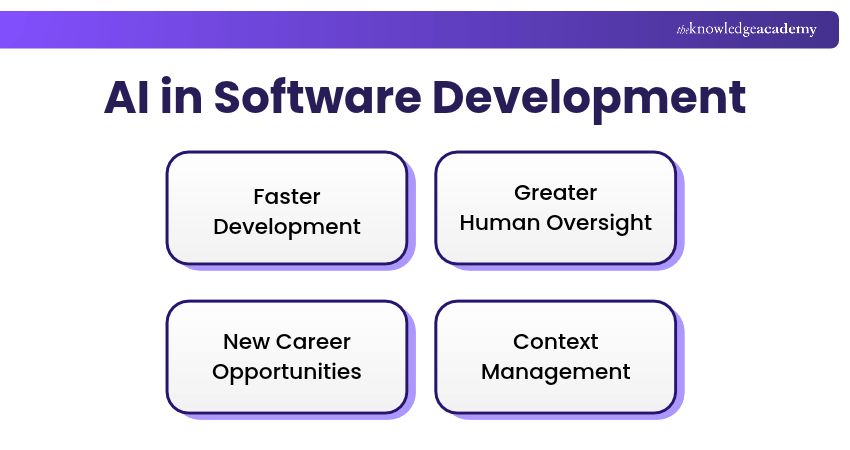
1) Faster Development: AI tools help generate code, identify errors and automate routine tasks.
2) Greater Human Oversight: Developers must review AI-generated code for accuracy, security and performance.
3) New Career Opportunities: AI creates opportunities in intelligent automation, language models and AI-powered applications.
4) Context Management: Developers need to provide AI tools with relevant requirements, code context and constraints so generated suggestions can be evaluated and applied appropriately.
Stack Overflow's 2026 Developer Survey found that 48% of respondents trust AI output when they can easily verify it, while only 7% trust it for important work decisions. This highlights the continued importance of human judgement and verification in software development workflows.
Quick Check
Why is human oversight still important when developers use AI tools?A. AI tools cannot generate codeB. AI-generated outputs still need to be checkedC. Developers no longer need programming knowledgeD. AI removes the need for software testingAnswer: B. AI-generated outputs still need to be checked
Learn to apply AI across coding, testing and development workflows with our Generative AI in Software Development Training – Join now!
How to Start a Career in Software Development?
Starting a career in software development requires a combination of technical knowledge, practical experience and problem-solving skills. Whether you're a beginner or switching careers, following a structured approach can help you build the right foundation. Here are the key steps to begin your journey in software development:
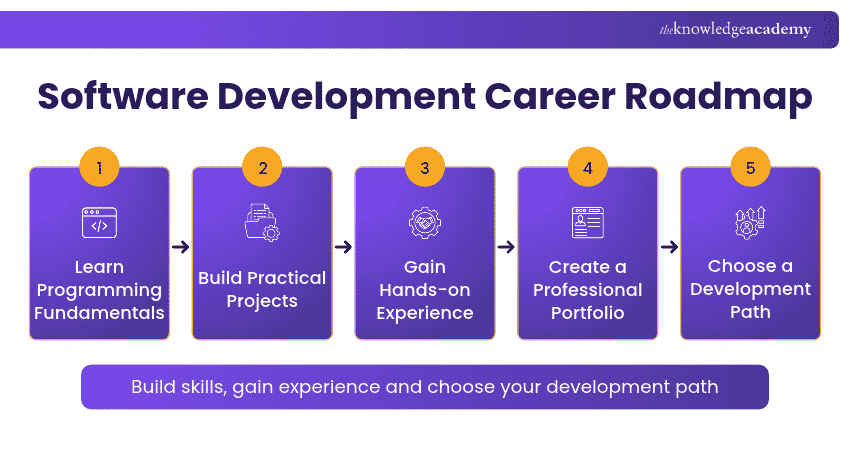
1) Learn Programming Fundamentals: Start with Python, JavaScript, Java or C# and understand essential concepts such as variables, functions, loops and data structures.
2) Build Practical Projects: Create applications such as task managers, expense trackers or booking systems to strengthen your coding and problem-solving skills.
3) Gain Hands-on Experience: Explore internships, apprenticeships or open-source projects to learn testing, version control and collaborative development practices.
4) Create a Professional Portfolio: Showcase your best projects, technical skills and code repositories to demonstrate your abilities to potential employers.
5) Choose a Development Path: Explore areas such as front-end, back-end, mobile, games or AI development and focus on the technologies most relevant to the roles that interest you.
Build practical programming foundations in Python and Java with our Introduction to Programming with Python and Java Training – Sign up today!
Is Software Development the Right Career for You?
Software development is a good career choice for individuals who enjoy solving problems, working with technology and turning ideas into practical solutions. However, personal interests and working preferences are just as important as salary potential.
Consider the following questions before choosing this career:
1) Do you enjoy solving logical problems? Developers regularly investigate issues and develop solutions through structured thinking.
2) Are you willing to keep learning? Staying effective requires adapting to new tools, technologies and development practices.
3) Can you work patiently through difficult tasks? Debugging and improving software often involve repeated testing and refinement.
4) Do you enjoy collaborating with others? Software development commonly involves teamwork and communication with people from different technical backgrounds.
5) Are you interested in creating useful technology? Understanding how software supports users can make development work more meaningful.
If these responsibilities match your interests, software development offers a career path worth exploring. Trying a beginner programming project is one practical way to test whether you enjoy the work before committing to more extensive training.
Remember
Your first development role does not have to define your long-term path. Skills such as programming, testing, version control and problem-solving can transfer across web, mobile, games and other development areas.
Software development can be a strong career choice for people who enjoy technology, problem-solving and continuous learning. Career opportunities remain broad, but long-term growth depends on practical experience, adaptable technical skills and the ability to work effectively with evolving technologies such as AI.

The Knowledge Academy develops accessible learning content across Project Management, IT, Cybersecurity, Data Science, Business Analysis, HR, Accounting and Finance, Leadership and Health and Safety. Its resources combine subject research with clear explanations to help professionals build practical knowledge across a wide range of disciplines.
View Detail

 If you wish to make any changes to your course, please


