


We may not have the course you’re looking for. If you enquire or give us a call on 44 1344 203 999 and speak to our training experts, we may still be able to help with your training requirements.
Competitive Intelligence Analyst Job Description
ByThe Knowledge AcademyLast updated on: 18 November 2026
A Competitive Intelligence Analyst helps organisations understand competitors, spot market trends and make informed business decisions. Explore the job description, key responsibilities, essential skills and qualifications required for this analytical role.

At a Glance
1. Primary Role: Provide competitive insights that support business strategy and planning.2. Key Responsibilities: Monitor competitors, conduct research, assess market developments and prepare intelligence reports.3. Essential Skills: Research, communication, data analysis, strategic thinking and industry knowledge.4. Qualifications: Relevant education, research experience and analytical knowledge.5. Job Description Example: Provides a practical overview of duties, required skills and qualifications.
In today's competitive business environment, understanding competitors and responding to market changes can help organisations maintain their position. This is where a Competitive Intelligence Analyst plays an important role.
By gathering reliable information and analysing competitive developments, these professionals provide insights that guide business planning. But what exactly does this role involve, and what skills and qualifications are needed to succeed? Let's explore the Competitive Intelligence Analyst job description in detail.
Who is a Competitive Intelligence Analyst?
A Competitive Intelligence Analyst is a professional responsible for gathering, assessing and interpreting information about competitors, market trends and industry developments. Their primary goal is to provide organisations with reliable insights that support informed business decisions.
These analysts collect information from sources such as company reports, industry publications, market research and publicly available business data. They then examine patterns, identify competitive threats and opportunities, and communicate their findings to relevant stakeholders.

Key Responsibilities of a Competitive Intelligence Analyst
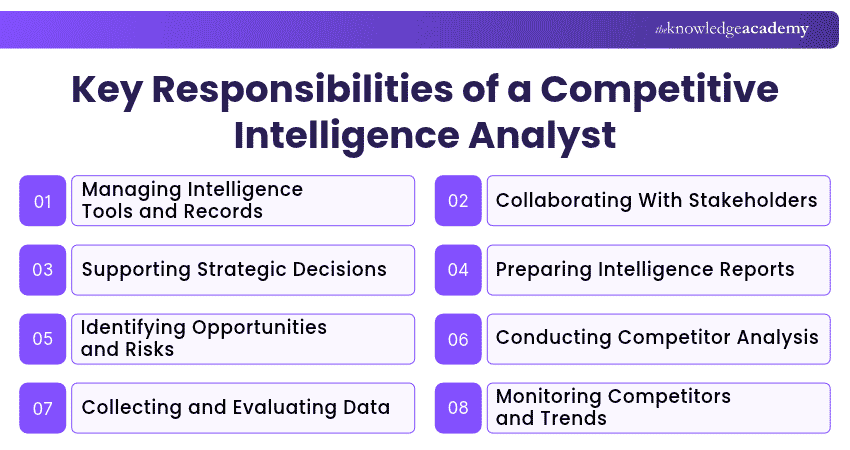
A Competitive Intelligence Analyst combines research, analysis and strategic thinking to help organisations understand their competitive environment. The main responsibilities include:
1) Monitoring Competitors and Industry Trends
Competitive Intelligence Analysts continuously monitor competitors' activities, market developments and emerging industry trends. This involves tracking product launches, business strategies, partnerships and other developments that may influence an organisation's market position.
2) Collecting and Evaluating Information
They gather information from company websites, financial reports, industry publications, research databases and other appropriate sources. Analysts must also assess the reliability of this information and ensure that research activities follow applicable laws, ethical standards and organisational policies.
3) Conducting Competitive Analysis
A central responsibility is examining competitors' strengths, weaknesses, offerings and market positioning. Analysts may use competitor benchmarking, SWOT analysis and other research methods to compare competitors' strengths, weaknesses and market positioning.
Trainer's Insight
Effective competitive intelligence goes beyond gathering information to understanding its implications for the organisation. Analysts should connect their findings to business decisions, such as identifying market opportunities, responding to competitor strategies or improving product positioning.
4) Identifying Market Opportunities and Risks
Competitive Intelligence Analysts study changing customer preferences, market dynamics and competitor activities to spot opportunities and possible risks. Their findings help organisations understand external developments that may influence product, marketing or business decisions.
5) Preparing Intelligence Reports
They transform research findings into structured reports, competitor profiles, dashboards and presentations. These reports highlight important developments, explain their potential business implications and provide information that stakeholders can use when evaluating strategic options.
6) Supporting Strategic Decision-making
Competitive Intelligence Analysts contribute to strategic planning by presenting relevant insights and evidence-based recommendations. They may support decisions related to market entry, competitive positioning, product development or business expansion.
7) Collaborating With Stakeholders
They work with departments such as marketing, sales, product development and senior management to understand intelligence requirements. Regular communication helps ensure that research findings address relevant business questions and reach the people responsible for making decisions.
8) Maintaining Intelligence Tools and Research Records
Competitive Intelligence Analysts use research databases, spreadsheets, data visualisation tools and intelligence platforms to organise and analyse information. They also maintain accurate records, document sources and update research findings to support reliable reporting.
Learn to see beyond numbers and discover business insights with the BCS Foundation Certificate in Business Analysis Training now!
Essential Skills for a Competitive Intelligence Analyst
Competitive Intelligence Analysts need analytical, technical and professional skills to assess market information and support business decisions. Here are some of the essential skills:
a) Research Skills: Competitive Intelligence Analysts gather and evaluate information from reliable sources to monitor competitors, identify industry trends and uncover potential business opportunities.
Pro Tip
Before including competitor information in a report, cross-check important claims against reliable sources. Company announcements, regulatory filings and credible industry publications can help verify findings and reduce the risk of making recommendations based on incomplete or misleading information.
b) Communication Skills: Strong communication skills help analysts present complex findings clearly through reports, presentations and stakeholder discussions, supporting informed business decisions.
c) Data Analysis Skills: Data analysis helps analysts identify patterns and trends in market information. Tools such as Excel, SQL and Power BI support analysis, reporting and data visualisation.
d) Strategic Thinking: Strategic thinking helps analysts assess competitive threats, anticipate market changes and identify opportunities that align with organisational objectives.
e) Industry Knowledge: Understanding competitors, market dynamics, industry trends and relevant regulations helps analysts interpret information accurately and provide meaningful recommendations.
Qualifications Required to Become a Competitive Intelligence Analyst
A Competitive Intelligence Analyst typically needs relevant education, practical research experience and familiarity with business analysis techniques. However, requirements may vary depending on the industry, employer and level of responsibility. Common qualifications and requirements include:
a) Educational Background: Employers commonly look for candidates with a bachelor's degree in business administration, marketing, economics, finance, data analytics or a related field. Equivalent professional experience may also be considered for some positions.
b) Relevant Work Experience: Experience in market research, business analysis, competitive analysis or strategic research can help candidates develop the practical capabilities required for the role. Entry-level positions may accept relevant internships or research projects, while senior positions often require more extensive experience.
c) Technical Knowledge: Familiarity with Excel, research databases, data visualisation software and analytical methods is valuable. Knowledge of SQL, Power BI or specialised competitive intelligence platforms may be required for positions involving more advanced analysis.
d) Professional Certifications and Training: Relevant training in competitive intelligence, market research, business analysis or data analytics can support professional development. However, certifications are generally supplementary rather than universal requirements for this role.
Competitive Intelligence Analyst Job Description Example
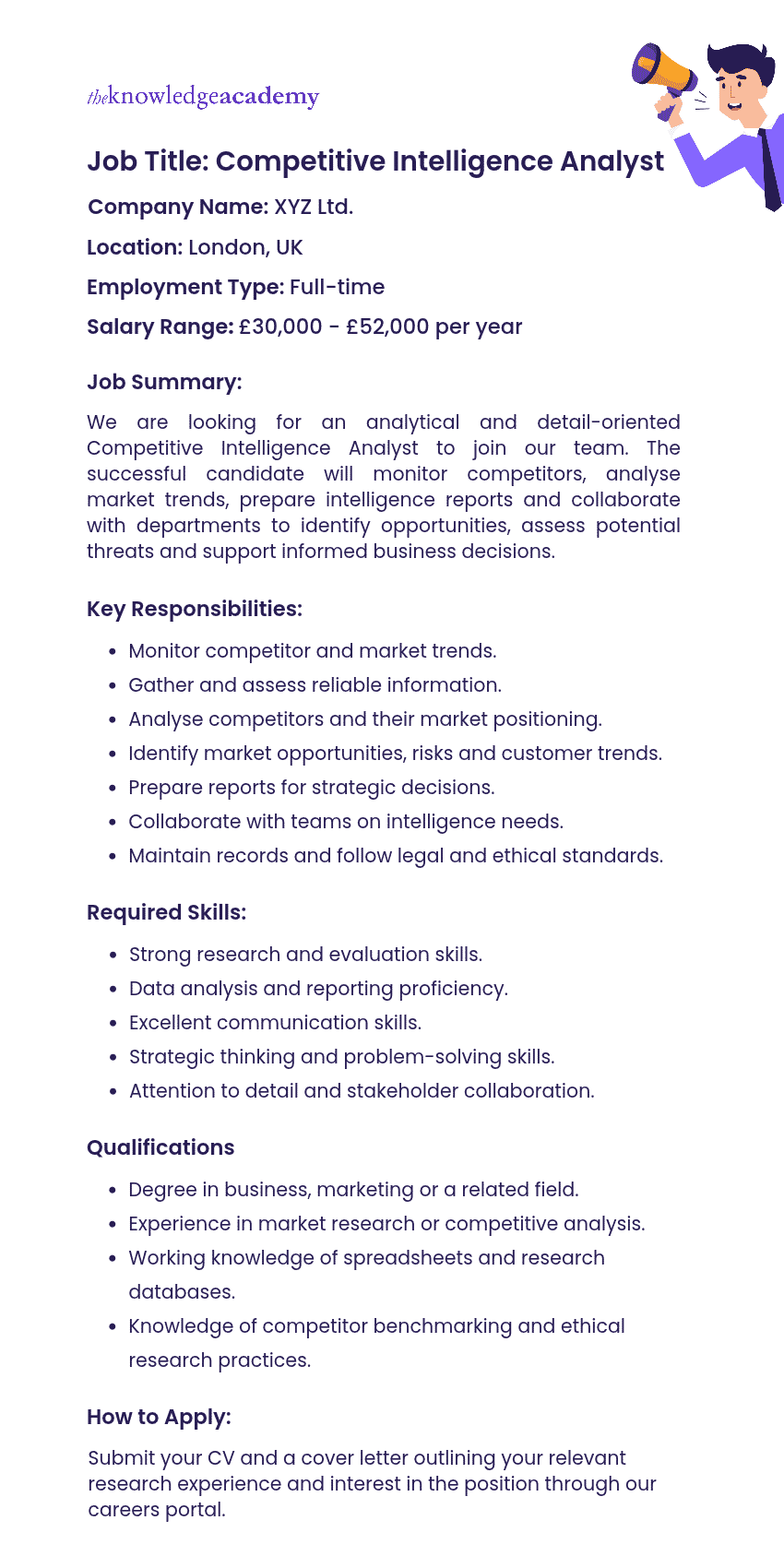
The following Competitive Intelligence Analyst job description provides a practical example that organisations can adapt to their requirements:
Develop strategic thinking skills to understand competitors and identify opportunities with the Strategic Planning and Thinking Course - Join now!

The Knowledge Academy develops accessible learning content across Project Management, IT, Cybersecurity, Data Science, Business Analysis, HR, Accounting and Finance, Leadership and Health and Safety. Its resources combine subject research with clear explanations to help professionals build practical knowledge across a wide range of disciplines.
View Detail

 If you wish to make any changes to your course, please


