


 Top Rated Course

We may not have the course you’re looking for. If you enquire or give us a call on +44 1344 203 999 and speak to our training experts, we may still be able to help with your training requirements.
ISO 9001 Audit | Process & Checklist
The Knowledge Academy 14 July 2026An ISO 9001 Audit helps to meet quality standards, improve processes, and boost customer satisfaction while maintaining full compliance with ISO requirements. This audit helps the organisation to understand the true state of its quality system, evaluate processes, identify gaps and build a strong improvement culture.

Training Outcomes Within Your Budget!
We ensure quality, budget-alignment, and timely delivery by our expert instructors.
Table of Contents
Are you confident that your company's Quality Management System (QMS) meets the highest standards? An ISO 9001 Audit is the key to unlocking this assurance. This systematic evaluation identifies gaps in your processes, verifies compliance, and ensures continuous improvement. Whether internal or external, these audits enhance business operations, ensuring regulatory compliance and exceeding customer expectations.
In this blog, we'll understand ISO 9001 Audits, exploring their types, processes, and benefits. From understanding what an Audit entails to discovering how it can transform your business, we'll cover everything you need to know. Ready to take your Quality Management to the next level? Let's get started!
Table of contents
1) What is an ISO 9001 Audit?
2) Types of ISO 9001 Audits
3) Benefits of ISO 9001 Audits
4) What is the Internal ISO 9001 Audit Process?
5) How is ISO Audit Done?
6) How Many Days Does ISO Audit Take?
7) Conclusion
What is an ISO 9001 Audit?
An ISO 9001 Audit is a structured process used to evaluate whether an organisation’s Quality Management System (QMS) aligns with the ISO 9001 standard. It ensures that business operations consistently meet customer and regulatory requirements while driving continual improvement.
During an audit, auditors review documentation, interview employees, and assess processes to verify compliance. This helps organisations identify areas of improvement, strengthen internal controls, and maintain consistent quality across products and services.
What to Expect From an ISO 9001 Audit?
During an ISO 9001 audit, auditors will examine your organisation’s processes, policies, and procedures to confirm they comply with ISO 9001 requirements.
The purpose is to identify any non-conformities or improvement areas within the Quality Management System (QMS). This enables you to implement corrective actions and control measures to maintain compliance and ensure ongoing alignment with the standard.
Types of ISO 9001 Audits
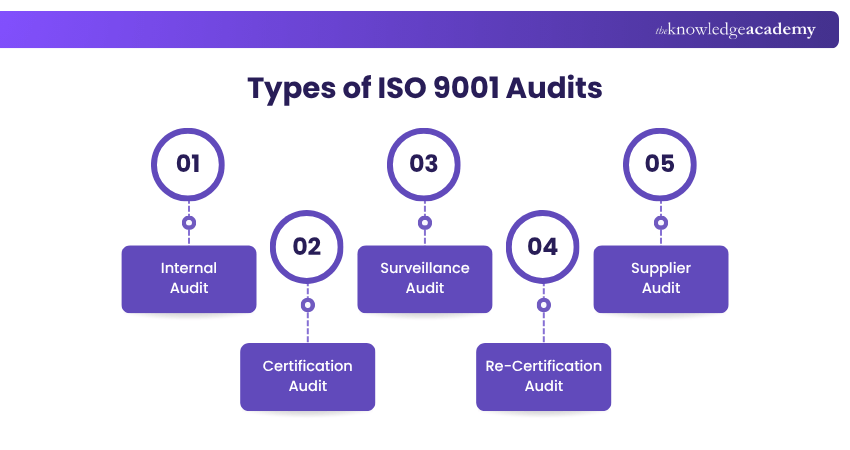
ISO 9001 Audits fall into five main categories:
1) Internal Audit
2) Certification Audit
3) Surveillance Audit
4) Re-certification Audit
5) Supplier Audit
Each plays a crucial role in ensuring compliance with ISO 9001 standards and maintaining a high-quality management system.
1) Internal Audit
An Internal Audit is performed by the organisation itself, either through trained employees or external auditors hired for this purpose. It checks whether internal processes comply with ISO 9001 standards.
This audit helps identify non-conformities, assess process effectiveness, and implement improvements before external certification. It is mandatory and should be conducted at least once a year.
2) Certification Audit
A Certification Audit is conducted by an external certification body to determine compliance with ISO 9001 requirements. It happens in two stages:
a) Stage 1: Reviews documentation and system readiness.
b) Stage 2: Involves on-site evaluation to verify implementation.
Upon successful completion, the organisation receives ISO 9001 certification.
3) Surveillance Audit
A Surveillance Audit is carried out annually by the certification body to ensure the organisation continues meeting ISO 9001 standards. It checks whether processes remain compliant and effective after certification.
Though no new certificate is issued, corrective actions may be required if non-conformities are found.
4) Re-Certification Audit
A Re-Certification Audit occurs every three years to renew the ISO 9001 certificate. It is similar to the initial certification audit but focuses on sustained compliance and continual improvement.
Once completed, a new certificate is issued for the next three-year period.
5) Supplier Audit
A Supplier Audit is conducted by a company to assess and verify its suppliers’ compliance with quality requirements. It helps ensure suppliers maintain standards and deliver reliable, high-quality products or services.
These audits may occur during supplier selection, poor performance, or as part of periodic reviews.
Benefits of ISO 9001 Audits
ISO 9001 Audits are a cornerstone of Quality Management Systems, offering many advantages beyond mere compliance. Here are some of the key Benefits of ISO 9001:
a) Enhanced Quality Assurance: By identifying and addressing inconsistencies and opportunities for improvement within the QMS, Benefits of ISO 27701 include helping organisations continuously deliver high-quality goods or services. This enhances customer satisfaction, reduces defect rates, and improves product quality.
b) Greater Customer Confidence: An ISO 9001 Certification shows a dedication to excellence and customer fulfilment. By assuring customers that the company regularly employs strong methods to satisfy their expectations, it increases client confidence.
c) Increased Efficiency and Productivity: Organisations enhance procedures, eliminate of waste, and streamline operations through the Audit process. Increased production, reduced costs, and improved operational efficiency are the results of this.
Gain an understanding of the fundamental principles of the QMS with our ISO 9001 Lead Implementer Course- sign up now!
d) Compliance and Risk Mitigation: Organisations can better comply to the regulatory and legal requirements of their sector by conducting ISO 9001 Audits. They also help in risk identification and prevention, which minimises the chance of costly errors or legal issues.
e) Competitive Advantage: Having ISO 9001 Certification gives you a competitive edge because it is often required by clients and in procurement processes. As many businesses prefer doing business with recognised suppliers, it opens up new markets and possibilities for business.
What is the Internal ISO 9001 Audit Process?
An ISO 9001 Internal Audit helps organisations assess the true status of their operations, offering process owners valuable insights to make systems more efficient, accurate, and streamlined. Below are the five key steps for conducting an effective internal audit.
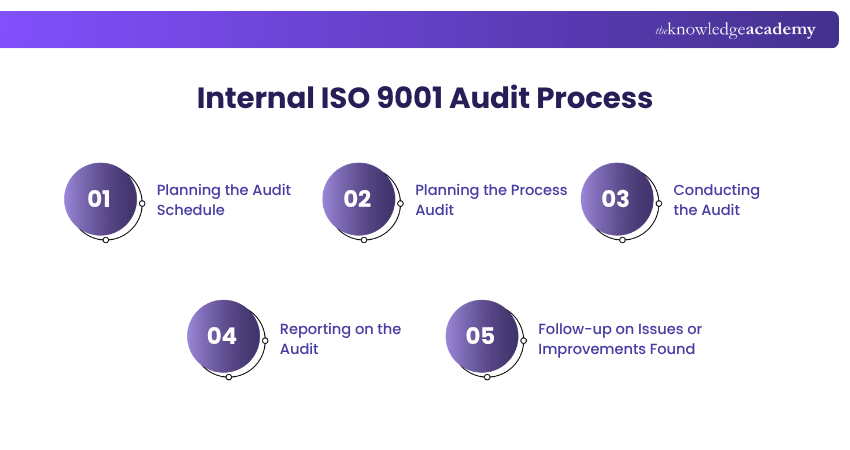
1) Planning the Audit Schedule
Begin by creating a structured annual audit schedule, outlining which processes will be reviewed and when. Planning in advance builds trust, allows process owners to complete improvement projects on time, and helps gather constructive feedback.
2) Planning the Process Audit
Develop a specific audit plan for each process. The auditor and process owner agree on the audit date, review past audit results, and identify focus areas. A well-prepared plan ensures the process owner gains maximum value from the audit.
3) Conducting the Audit
The audit starts with a brief opening meeting to confirm the plan. The auditor then examines records, interviews employees, reviews data, or observes operations. The aim is to verify process effectiveness while also providing constructive suggestions for improvement.
4) Reporting on the Audit
Following the audit, a closing meeting is held to discuss findings. Areas of strength and opportunities for improvement are shared, followed by a written report to ensure proper tracking and accountability for future action.
5) Follow-up on Issues or Improvements
Post-audit follow-up is essential. Any identified issues must be checked to ensure they are resolved, and completed improvement projects should be assessed for measurable benefits. This promotes continuous improvement and strengthens the organisation’s quality culture.
Looking to improve your processes? Get the ISO 9001 Procedures PDF today and learn how to implement effective quality management procedures in your organisation.
How is ISO Audit Done?
ISO audit is a planned process in which internal auditors check the organisation's processes through a checklist. Before the audit begins, the auditors explain the purpose, method and timing to the auditee. Documents and employee performance are compared against ISO standards. When problems are found, solutions are discussed, and all results are presented in the management review meeting.
How Many Days Does ISO Audit Take?
The duration of the ISO audit is not fixed. It depends on the size of the company, locations and complexity of the processes. Usually, the initial audit takes between 5 to 10 days. It has both stage 1 and stage 2. In small companies, it takes fewer days, but in big and complex firms, it takes more time. Follow-up audits are conducted every year subsequently, but they are shorter.
Unlock the power of quality management! Grab the ISO 9001 PDF and learn how to enhance efficiency and compliance across your organisation.
Conclusion
ISO 9001 Audits are crucial in creating a culture of quality, continual improvement, and customer satisfaction. By referring to resources like the ISO 9001:2015 Standard PDF, organisations can better understand Audit requirements and implement effective practices. Embracing these Audits ensures compliance and propels organisations toward enhanced performance, competitiveness, and a bright future in an ever-evolving business landscape.
Learn the techniques and phases of conducting an Internal Audit by signing up for our ISO 9001 Internal Auditor Course now!
Frequently Asked Questions
How Often Should ISO 9001 Be Audited?

ISO 9001 requires internal Audits at least once a year, but organisations may conduct them more frequently based on risk factors. External Audits include Certification Audits (every 3 years) and surveillance Audits (annually) to ensure continued compliance and improvement of the Quality Management System.
What Happens if You Fail an ISO Audit?
Failing an ISO Audit means non-conformities were found. Organisations receive a Corrective Action Plan (CAP) and must address the issues within a set timeframe. If unresolved, certification may be delayed, suspended, or revoked. However, fixing non-conformities promptly ensures compliance and improves overall Quality Management practices.

The Knowledge Academy


Global Training Provider
The Knowledge Academy is a world-leading provider of professional training courses, offering globally recognised qualifications across a wide range of subjects. With expert trainers, up-to-date course material, and flexible learning options, we aim to empower professionals and organisations to achieve their goals through continuous learning.


 If you wish to make any changes to your course, please


