


 Top Rated Course

We may not have the course you’re looking for. If you enquire or give us a call on +44 1344 203 999 and speak to our training experts, we may still be able to help with your training requirements.
How to Make Arabic Coffee: Learn to Brew It Perfectly
The Knowledge Academy 06 December 2025Arabic coffee, or Qahwa, is brewed from light-roast beans with aromatic spices like cardamom and served unsweetened as part of rich Middle Eastern tradition. This method brings out its warmth and depth, creating a truly authentic experience. It is perfect for serving guests or enjoying a comforting daily ritual that feels soothing.

Training Outcomes Within Your Budget!
We ensure quality, budget-alignment, and timely delivery by our expert instructors.
Table of Contents

The process of learning How to Make Arab Coffee is a delightful way to get acquainted with one the oldest coffee-making traditions in the world. The rich scent, strong taste, and warm spices turn each coffee mug into a special one. Let's dive into the following blog and explore the process of making Arabic Coffee.
Table of Contents
1) What is Arabic Coffee?
2) Ingredients & Equipment Required for Arabic Coffee
3) How to make Arabic Coffee?
4) Benefits of Arabic Coffee
5) Traditions in Drinking Arabic Coffee
6) Conclusion
What is Arabic Coffee?
Arabic coffee, or qahwa, is a customary Middle Eastern beverage produced with Arabica beans that are roasted lightly and mixed with fragrant spices like cardamom, clove, and saffron. The drink's pale golden colour and unique taste make it different from common coffee.
The beverage has an important place in Middle Eastern hospitality and is usually presented in tiny cups together with dates. It is more than just a drink, but it signifies warmth, generosity, and the cultural ritual of guest receiving.

Ingredients & Equipment Required for Arabic Coffee
The level of roasting of the coffee beans determines the characteristics of Arabic Coffee and gives it taste. The style of making this beverage varies from person to person, but the following are always used to prepare the beverage:
a) Two tablespoons of Ground Arabica coffee
b) One tablespoon of Ground Cardamom
c) Water
d) Grinder
e) Mortar and Pestle
f) Thermos
g) Stove
h) Pot
Unlock opportunities for leadership roles in various industries with our Facilitation Skills Training – Join now!
How to Make Arabic Coffee?
Arabic Coffee is one of the most exotic beverages in the world. To make it, you need to follow the below steps:

Step 1: Gather All Ingredients and Spices
Get your Arabic coffee grounds, cardamom and any other optional spices you like ready. Ensure all the ingredients are fresh in order to have the best taste during brewing.
Step 2: Boil Water in a Pot or Dallah
Fill your Briki or Dallah with water and put it over medium heat until it boils vigorously to a limpid solution; the rich flavors of coffee actually refined.
Step 3: Add Arabic Coffee to the Boiling Water
Put Arabic coffee into boiling water while mixing it. Let the grounds steep well so that the whole thing comes together satisfactorily.
Step 4: Let the Coffee Simmer Gently
Reduce the heat and allow the coffee to simmer gently so that it does not spill over. This gradual simmering not only enhances the strength but also reveals the traditional Arabic coffee scent.
Step 5: Add Cardamom and Optional Spices
Stir in cardamom powder and any other spices you plan to add, like clove or saffron and drop them in. Stir very slightly to let them infuse nicely with the tea.
Step 6: Allow the Coffee to Rest and Settle
Remove the coffee pot from heat and let it cool for a few minutes. In this period, the coffee grounds will naturally settle to the bottom.
Step 7: Strain the Coffee if Needed
By running your coffee through a sieve, you'll get a nice, free-flavoured cup of coffee, clearing away unwanted residue and retaining the characteristics of bouquet!
Step 8: Pour the Coffee into a Dallah for Serving
Pour the brewed coffee into the traditional dallah for serving. This will keep the drink warm longer and give a real touch to the presentation.
Step 9: Serve Arabic Coffee in Finjan Cups
According to tradition, the coffee is first poured into small Finjan cups and then offered to guests in small amounts. Arabic coffee has to be tasted with tiny sips and is normally accompanied by dates.
Understand sustainability practices for greener facilities. Join our Facilities Management Training now!
Benefits of Arabic Coffee
Benefits in health and wellness are found in Arabic coffee that render it much more than just a traditional drink.
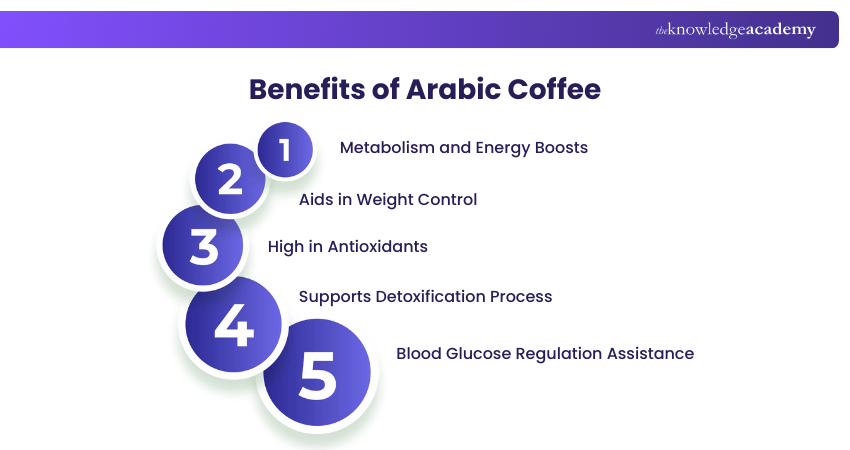
1) Metabolism and Energy Boosts: The caffeine naturally found in Arabic coffee increases the activity of the central nervous system and makes a person more aware. It can also give a little support to metabolism and make the burning of energy in the body more efficient.
2) Aids in Weight Control: There is evidence that Arabic coffee may work through appetite reduction and improvement of the digestive system. These minor effects, along with diverse consumption, can lead to better control of body weight.
3) High in Antioxidants: The drink contains antioxidants that act as guards to the cells, preventing damage and also reducing inflammation. These antioxidants also work to the benefit of hair and skin by supporting the former and improving the latter.
4) Supports Detoxification Process: Moderate consumption of coffee has been associated with a better functioning liver. It might even reduce the risk of cirrhosis and help with the body's own purification.
5) Blood Glucose Regulation Assistance: Arabic coffee may trigger insulin receptors more effectively and facilitate the "at-home" blood sugar levels, thus making it a friend to those wishing to have more control over their glucose levels.
Traditions in Drinking Arabic Coffee
There are certain traditions that come with Arabic coffee that are quite meaningful when it comes to hospitality, respect, and cultural tradition.
a) Symbol of Hospitality: Arabic coffee being offered is a custom in many Arab families that signifies the welcoming of guests and their respect.
b) Specific Serving Rituals: From the Dallah, coffee is poured into small Finjan cups, which are filled only one-third full so that more servings can be made.
c) Guest Etiquette: The guest indicates he is done by softly shaking the cup, which is a polite way of saying he does not want to be served again.
d) Order of Serving: The oldest or most prestigious guest is usually the first to get served, which is a sign of thankfulness and admiration.
e) Cultural Significance: The whole procedure is a reflection of the generosity, the hospitable nature and the cultural profundity of sharing coffee during social occasions.
Conclusion
Getting to know How to Make Arabic Coffee means getting to know the variety of flavour, culture and tradition. Each cup narrates the tale of friendliness, the offering of one's best, and the closeness of relations. With proper materials and basic methods, the same ancient custom can be exercised at home by anyone.
Want to learn skills in phone Repair and coffee brewing? Join our Industry Training today!
Frequently Asked Questions
What is the Correct Coffee-to-water Ratio for Arabic Coffee?

As a general rule, three cups of water per two to three tablespoons coffee grounds is a good yardstick, but you should adjust this based on a cup-by-cup orientation.
What is the Difference Between Saudi Coffee and Arabic Coffee?
Saudi coffee is characterised by a light roasting along with spices like cardamom, saffron, or cloves.
What are the Other Resources and Offers Provided by The Knowledge Academy?
The Knowledge Academy takes global learning to new heights, offering over 3,000+ online courses across 490+ locations in 190+ countries. This expansive reach ensures accessibility and convenience for learners worldwide.
Alongside our diverse Online Course Catalogue, encompassing 19 major categories, we go the extra mile by providing a plethora of free educational Online Resources like Blogs, eBooks, Interview Questions and Videos. Tailoring learning experiences further, professionals can unlock greater value through a wide range of special discounts, seasonal deals, and Exclusive Offers.
What is The Knowledge Pass, and How Does it Work?
The Knowledge Academy’s Knowledge Pass, a prepaid voucher, adds another layer of flexibility, allowing course bookings over a 12-month period. Join us on a journey where education knows no bounds.
What are the Related Courses and Blogs Provided by The Knowledge Academy?
The Knowledge Academy offers various Industry Courses, including the Facilitation Skills Training, Facilities Management Training, and Import Export Course. These courses cater to different skill levels, providing comprehensive insights into International Trade.
Our Business Skills Blogs cover a range of topics related to Arabic Coffee, offering valuable resources, best practices, and industry insights. Whether you are a beginner or looking to advance your Business skills, The Knowledge Academy's diverse courses and informative blogs have got you covered.

The Knowledge Academy


Global Training Provider
The Knowledge Academy is a world-leading provider of professional training courses, offering globally recognised qualifications across a wide range of subjects. With expert trainers, up-to-date course material, and flexible learning options, we aim to empower professionals and organisations to achieve their goals through continuous learning.

Upcoming Business Skills Resources Batches & Dates
Date
 Basic Barista Course
Basic Barista Course
Fri 1st May 2026
Basic Barista Course
Fri 24th Jul 2026
Basic Barista Course
Fri 16th Oct 2026

 If you wish to make any changes to your course, please


