


 Top Rated Course


We may not have the course you’re looking for. If you enquire or give us a call on +55 8000201623 and speak to our training experts, we may still be able to help with your training requirements.
What is a Performance Review? A Comprehensive Guide
Olivia Taylor 12 March 2026A Performance Review is a two-way discussion between manager and employee to assess performance, give feedback, and plan development. Typically conducted annually or semi-annually, it serves as a feedback mechanism and a development tool, helping employees understand their strengths, areas for improvement, and career growth opportunities.

Training Outcomes Within Your Budget!
We ensure quality, budget-alignment, and timely delivery by our expert instructors.
Table of Contents
At some point in your career, you’ve probably sat across from a manager waiting to hear feedback on your work. That conversation is part of What is a Performance Review. It is about reflecting on your journey, celebrating accomplishments, and identifying areas where you can improve. When approached with the right mindset, it can become a meaningful checkpoint in your career.
At its core, it is a dialogue between employees and employers that fosters clarity, motivation, and alignment. It helps individuals see where they excel, where they can improve, and how they can grow within the organisation. In this blog, you will explore What is a Performance Review, its different types, examples, and more.
Table of Contents
1) What is a Performance Review?
2) What Do You Do in a Performance Review?
3) What Not To Do During Performance Reviews?
4) Different Types of Performance Reviews
5) Tips for Conducting Effective Employee Performance Reviews
6) Performance Review Examples
7) What are the Five Words of Performance Review?
8) Is a Performance Review a PIP?
9) Conclusion
What is a Performance Review?
A Performance Review refers to a formal assessment in which a manager evaluates an employee’s performance at work. Also known as an employee evaluation or a performance appraisal, it is a key component of the Performance Management Cycle and can be structured in numerous ways to effectively identify strengths and weaknesses, give constructive feedback, and set goals for the future.
It is usually a two-way, personalised conversation between managers and employees focused on performance, development, and impact. Performance reviews are an essential element of ongoing performance management, helping to guide improvement and drive success for the employee, team, and organisation.

What Do You Do in a Performance Review?
Performance Reviews begin with self-evaluation, where employees are asked to reflect on their work over the past year or the time they’ve been with the organisation. This is an opportunity to look back at the initiatives you’ve taken, the accomplishments you have achieved, and the mistakes you’ve learned from. The goal is to be honest, specific, and focus on concrete examples that show how you’ve contributed to your team.
A well-prepared self-assessment demonstrates your willingness to grow and improve. By sharing clear examples of your impact, you give your manager a picture of your performance and set the stage for constructive feedback. This reflection process helps you take ownership of your career development and ensures that your Performance Review becomes a meaningful conversation about progress and future goals.
The Face-to-face Meeting
Your Performance Review may take place in a one-on-one meeting with your manager. This is your chance to discuss your achievements, contributions, and the impact you’ve made on the company. Make sure to prepare notes beforehand to ensure you can confidently share specific examples that highlight your strengths and progress.
In some cases, you may also be asked to provide feedback on your colleague's performance. Keep this conversation constructive and professional, focusing on collaboration, problem-solving, and areas for improvement, since your peers will see your comments as part of their evaluation.
What Not to Do During Performance Reviews?
Performance Reviews help support employee growth while building trust and teamwork. By avoiding common mistakes, you can keep the process clear, respectful, and useful for both managers and team members.
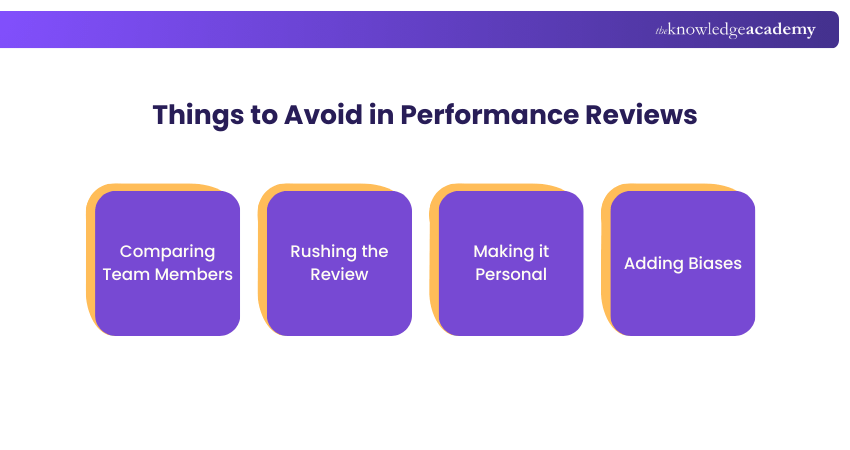
1) Comparing Team Members
Remind managers to talk only about the employee in the review, not compare them to others. Comparing people can make them feel bad, cause problems in the team, and take focus away from their own progress. It's better to talk about the person’s own goals, challenges, and wins to help them grow in a healthy way.
2) Rushing the Review
A quick, rushed review can make the employee feel like they don’t matter. Managers should set aside quiet, focused time for each review. Talking calmly about goals, problems, and progress shows that you care about the person’s growth and helps them feel respected and important.
3) Making it Personal
Performance Reviews work best when they talk about what the person did at work, not about their personality or feelings. Managers should talk about actions and results, not make personal comments. This keeps the review fair and respectful, helps build trust and makes it easier for the person to improve.
4) Adding Biases
Most employees don’t feel their Performance Reviews are fair or clear. That’s why it’s important for managers to be fair and honest. They should look at real work and facts, not just personal opinions or feelings. A fair review gives everyone the same chance to grow and helps build a team based on trust and respect.
Learn the art of leading with impact with Management Courses – Join now!
Different Types of Performance Reviews
Performance Reviews come in different types, based on the business goals leaders want to achieve. Each type provides unique insights into employee performance and helps you gain an insightful understanding of What is a Performance Review. Let’s look at them below:
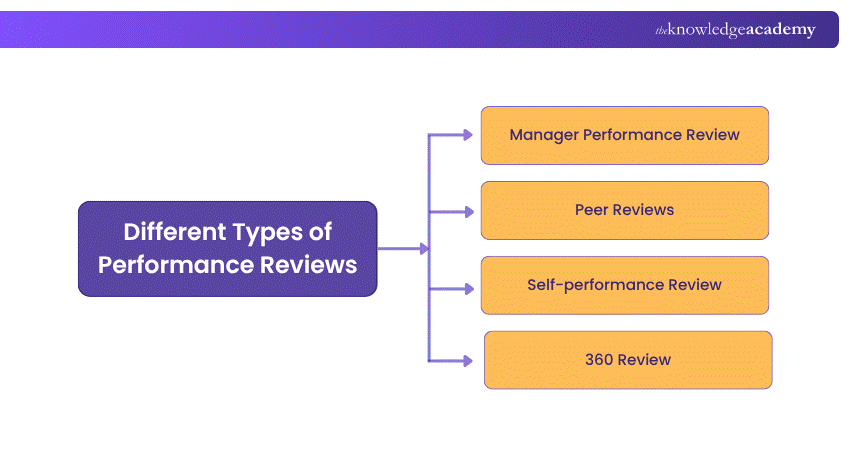
1) Manager Performance Review
A Manager Performance Review is feedback delivered by the person who directly oversees an employee’s responsibilities and goals. It evaluates how well individuals meet expectations, contribute to team success, and adapt to changing priorities. A strong manager review guides employees toward sharper skills, stronger results, and greater confidence.
2) Peer Reviews
Peer Reviews allow colleagues to share feedback based on collaboration, communication, and shared outcomes. Since peers see aspects of performance that managers may miss, their input helps highlight teamwork, problem-solving, and actions that influence success. When used effectively, peer reviews build trust, reinforce accountability, and strengthen team culture.
3) Self-performance Review
A Self-performance Review gives employees the chance to reflect on their own work quality, strengths, and improvement areas. It encourages self-assessment without negative self-talk, helping individuals recognise achievements and identify where they need support. Managers and HR teams use self-appraisals to make informed decisions about training, resource allocation, and employee career development.
4) 360 Review
A 360 Review combines feedback from managers, peers, direct reports, and sometimes external partners to provide a holistic view of performance. This helps employees gain an extensive understanding of their strengths, challenges, and working styles. This comprehensive approach identifies blind spots, fosters balanced growth, and supports long-term professional development.
Learn how to develop a continuous improvement plan and schedule. Join our Business Process Improvement Training now!
Tips for Conducting Effective Employee Performance Reviews
Consider these tips to ensure that the Performance Review goes in a timely and smooth manner:
1) Set Your Intention: Start with a performance review checklist and set your objectives with a Performance Management template.
2) Run Performance Reviews Frequently: Performance Reviews are more impactful when they occur more than once a year. Bi-annual or quarterly feedback enables professionals to keep a finger on the pulse of their performance.
3) Take a Growth-minded Approach: It's all about walking the fine line between praise and critique. While celebrating people’s accomplishments is essential to fuel motivation, pointing out poor performance is equally important.
4) Make the Conversation Two-way: Managers and team members must maintain a two-way conversation between them. Keeping an open line of communication nurtures an honest, respectful, and long-term relationship.
5) Keep Professionals in the Know: Provide team members (especially new employees) with ample notice of the Performance Review date and also an overview of the discussion topics.
6) Mediate: It's not unusual for tensions to arise between a manager and a team member. You must work to tip the scales in a positive direction so that each side finds common ground and works towards an agreement.
7) Analyse and Organise the Results: To ensure Performance Reviews are impactful, the results must be examined, and the low performance levels must be investigated. Entering the results into the company’s Performance Management software can help you easily track work performance.
Build trust, inspire teams, and drive results with Introduction to Management Training now!
Performance Review Examples
While each company have its own set of Performance Review questions, here are some examples that can help navigate meaningful conversations and highlight what drives your people. Let's look at them below:
1) Questions About Achievements, Strengths, and Weaknesses
These questions encourage employees to reflect on accomplishments and identify areas for growth. They help individuals discover what they are most proud of, where they excel, and where they need support. Let’s look at some of the examples below:
1) What are you most proud of achieving this past quarter or year?
2) What skills and strengths have you used to excel in your role?
3) What areas do you want to improve moving forward?
4) Have there been any lapses or issues? Why did they happen, and how can you avoid them in the future?
5) What steps can you take to grow and develop in the coming quarter or year?
2) Questions About Goals and Development
These questions help employees set clear goals and chart a path for professional growth. They highlight motivation, alignment with company objectives, and strategies for overcoming challenges. Let’s look at some of the examples below:
1) What motivates you to work productively?
2) Did you meet your goals? Which ones?
3) What do you need to do to achieve your goals?
4) How do your goals align with the organisation’s objectives?
5) What blockers or challenges have made progress difficult?
6) What tools or resources could help overcome these challenges?
7) What goals can you set for the next quarter or year?
3) Questions About Interpersonal Relationships
These questions focus on teamwork, communication, and feedback to strengthen collaboration. They help identify how employees connect with managers and colleagues, and whether their trust and cooperation are strong. Let’s look at some of the examples below:
1) How helpful was the feedback you received this quarter or year?
2) To what extent does your manager support you in your role?
3) Is there a way your manager could better help you perform your duties?
4) Are you satisfied with the cooperation and collaboration on your team?
5) Do you trust your team and manager?
Step into leadership with confidence with the Introduction to Managing People Training today!
What are the Five Words of Performance Review?
The five main words used in a Performance Review are:
1) Communication: How clearly and effectively one shares ideas
2) Collaboration: Willingness and ability to work with others
3) Leadership: Initiative, guidance, and decision-making ability
4) Time Management: Productivity and meeting deadlines
5) Adaptability: Flexibility in facing changes and challenges
Is a Performance Review a PIP?
A Performance Improvement Plan (PIP) is a written note that shows what part of your work your boss thinks is bad. It gives clear goals you must meet in a short time. Sometimes, a PIP helps you do better. But many times, it is a step before losing your job. A bad review can also show problems and may lead to warnings or job loss.
Conclusion
A Performance Review is a chance to reflect, grow, and strengthen the connection between employees and their organisations. The process provides valuable insights that drive both individual development and team success. Understanding What is a Performance Review can help professionals turn it into a powerful opportunity for career growth and meaningful dialogue.
Gain skills like multitasking, setting goals, and creating action plans. Join our Productivity and Time Management Training now!
Frequently Asked Questions
What is the 5-Word Performance Review?

A 5-Word Performance Review is a concise feedback method using just five impactful words to summarise an employee’s performance. It’s meant to be clear, memorable, and motivational, ideal for quick recognition or reflection.
What is the Primary Purpose of Performance Reviews?
The main objective of Performance Reviews is to provide information on employee performance for decision-making regarding compensation, promotions, and development plans. It helps in gathering intelligence for organisational strategies.
What are the Other Resources and Offers Provided by The Knowledge Academy?
The Knowledge Academy takes global learning to new heights, offering over 3,000 online courses across 490+ locations in 190+ countries. This expansive reach ensures accessibility and convenience for learners worldwide.
Alongside our diverse Online Course Catalogue, encompassing 17 major categories, we go the extra mile by providing a plethora of free educational Online Resources like Blogs, eBooks, Interview Questions and Videos. Tailoring learning experiences further, professionals can unlock greater value through a wide range of special discounts, seasonal deals, and Exclusive Offers.
What is The Knowledge Pass, and How Does it Work?
The Knowledge Academy’s Knowledge Pass, a prepaid voucher, adds another layer of flexibility, allowing course bookings over a 12-month period. Join us on a journey where education knows no bounds.
What are the Related Courses and Blogs Provided by The Knowledge Academy?
The Knowledge Academy offers various Management Courses, including the Art of Performance Review Training, Performance Management Training, and the Introduction to Managing People Course. These courses cater to different skill levels, providing comprehensive insights into Quality Management.
Our Business Skills Blogs cover a range of topics related to Performance Reviews, offering valuable resources, best practices, and industry insights. Whether you are a beginner or looking to advance your Business Skills, The Knowledge Academy's diverse courses and informative blogs have got you covered.

Olivia Taylor


Chartered Accountant and Financial Training Specialist
Olivia Taylor is a qualified chartered accountant with over a decade of experience in financial management, auditing and corporate reporting. Having worked with leading firms in both the public and private sectors, Olivia brings clarity to complex financial topics. Her writing focuses on helping professionals build confidence in key areas of accounting, compliance and financial planning.
View Detail

 If you wish to make any changes to your course, please


