


 Top Rated Course


We may not have the course you’re looking for. If you enquire or give us a call on +1800812339 and speak to our training experts, we may still be able to help with your training requirements.
What is Virtual Networking? Explained in Detail
John Davies 24 November 2025Virtual Networking creates and manages virtual versions of physical computer networks. It offers flexibility, scalability, and security to your network. Examples of Virtual Networking include Virtual Private Network (VPN), Virtual Local Area Network (VLAN), Virtual Extensible Local Area Network (VXLAN), and many more.

Training Outcomes Within Your Budget!
We ensure quality, budget-alignment, and timely delivery by our expert instructors.
Table of Contents
Are you still thinking to implement a virtual network to your organisation? What are you hesitating for? When the whole world is digitalised and exploring all the dead ends of the virtual world, what holds you back from taking the first step? You will never regret choosing Virtual Networking over your physical network. Come along with this blog to know What is Virtual Networking, and this will erase all your doubts about it.
Let's start the journey of knowing what Virtual Networking is and get it done for your organisation!
Table of Contents
1) What is Virtual Networking?
2) How Virtual Networking Works?
3) Types of Virtual Networking
4) Benefits of Virtual Network
5) Challenges of Virtual Network
6) Examples of Virtual Networking
7) Conclusion
What is Virtual Networking?
Virtual Networking is a kind of technology which allows you to create and manage the networks of a physical computer virtually, as an overlay with hardware like cables, switches and routers. It can merge multiple physical networks into a single virtual network or even segregate a physical network into multiple individual virtual networks.
It uses software rather from traditional hardware to have the virtual network of your physical devices. It even allows you to move the virtual network machine to various locations without rearranging it.

How Virtual Networking Works?
Virtual Networking doesn’t change the primary setup of physical networks that have routers, switches, and cables. Instead, it offers an overlay of virtual connections between devices and physical networks. To put it in simple terms, Virtual Networking adds a digital connection to your devices or networks.
In most cases, Virtual Networks are managed by a software called Virtual Networking Stack, which checks the data traffic and ensures that the data reaches its destination. It even helps in determining where a specific kind of data should be stored and maintained.
Types of Virtual Networking
The most familiar types of Virtual Networking are Virtual Private Network, Virtual LAN and Virtual Extensible LAN. Let’s see what these types are.
1) Virtual Private Network (VPN)
Virtual Private Network (VPN) refers to a protected connection of devices to the central network over the internet. It helps in providing secured, encrypted and privatised access from any devices to the network. It is mostly preferred in workplaces to protect private files and data from any security breaches when a device is connected to access from a network.

2) Virtual Local Area Network (VLAN)
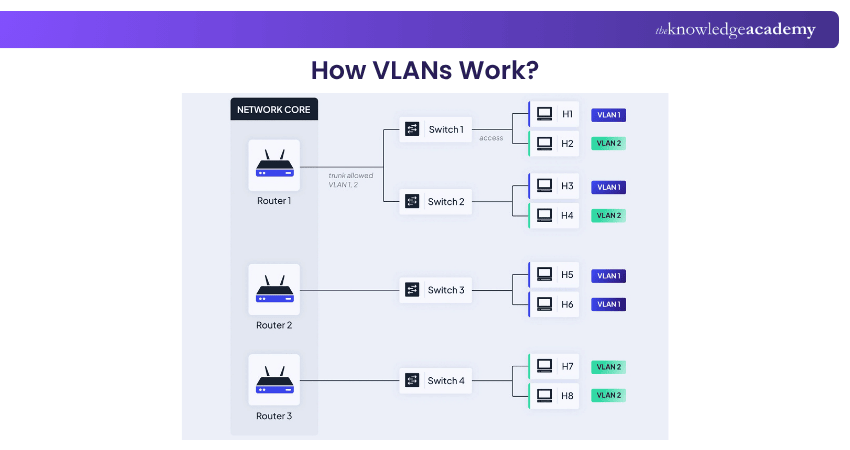
Virtual Local Area Network (VLAN) could be defined as a virtual connection of several devices and networks of LANs into a single network and these are connected in a logical manner. They are secured and maintain segmented traffic among the devices.
3) Virtual Extensible Local Area Network (VXLAN)
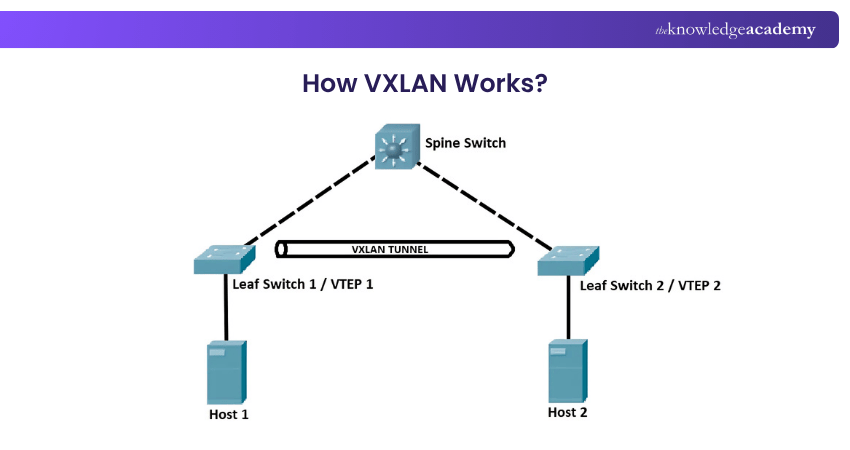
Virtual Extensible Local Area Network (VXLAN) helps in creating multiple VLANs on top of a single physical network. It encapsulates the Ethernet connection which is the warehouse of data within the IP packets. Compared to VLANs, VXLANs can create a large number of virtual networks.
Benefits of Virtual Network
There are numerous benefits of virtual networks, as witnessed over time. Let's have a look at those benefits:

1) Security
With Virtual Networking, you can accomplish improved access controls and can direct the traffic to individuals, groups and devices. This creates better security for your network. The more secure your network is, the less troublesome its function is.
2) IP Mobility
You can manage your IP address by hiding it while accessing the network. It enables easy mobility for the Virtual Machines (VM) across the network. It also helps in making disaster recovery and load balancing works flexible.
3) Simplification
The resources are managed by segregating them and thus are simplified for easy access. Even the data is stored in a way that is easily accessible and exchangeable to the users of the network.
4) Management
Instead of managing everything from a network in a physical mode, virtual network helps in managing them virtually. Through segregation of data and virtual joining devices, it provides better management for user access.
Are you planning to create your own network? Register for our Introduction to Networking Training today!
Challenges of Virtual Network
Afte knowing what is Virtual Network, it is evident that it possesses lot of benefits. However, it also has its own challenges.
1) Troubleshooting
To manage the networks in a virtual connection requires complex procedures and sometimes it needs troubleshooting. During the troubleshooting steps, you might have to consider both virtual network and physical layers since an issue might arise from anywhere.
2) Extra Layers of Management
The management of virtual network is done for both physical and virtual layers. This process makes it challenging for network administration since physical layers are additionally required to be managed.
3) Potential Security Exposure
When there is a vulnerability found in a single virtual machine or a misconfiguration with the network or devices, it could lead to security attacks for the whole virtual network. This makes it highly concerning since the whole network might be at fault.
Be familiar with the necessary skills to manage risk with our Security Management, Planning, and Asset Protection Training immediately!
Examples of Virtual Networking
Below are some examples of Virtual Networking:
1) Load Balancing
Load Balancing is used to optimise the performance and scalability of the network while focusing on distributing the network traffic between devices.
2) Hypervisor/Virtual Servers
A hypervisor is used to run multiple virtual machines at the same time over one physical server. It will act as a bridge between the virtual machines and the hardware of the devices.
3) Cloud Computing
To connect, store and deliver the data in any cloud-based applications, it requires network virtualisation. It delivers the data and all computing services over the internet.
4) Software-defined Data Center (SDDC)
Software-defined Data Center (SDDC) gets the help of Virtual Networking to virtualise the data infrastructure and to allocate the virtual resources as per the need.
Conclusion
In this blog, we explored What is Virtual Networking, its various forms, benefits, examples, and the challenges faced with it. In this digital era, why are you still living with physical servers instead of switching to virtual ones? Make your accessibility and storage as easy as turning on your system with Virtual Networking!
Understand the concepts of virtualisation and hypervisors with our Introduction to Virtualisation Technologies Course – Register now!
Frequently Asked Questions
What are the Advantages and Disadvantages of Networking Virtually?

Virtual Networking has both advantages and disadvantages. The advantages would include its flexibility, convenient accessibility, wider reach, and cost effectiveness. The disadvantages are its complex security, privacy threats, and impersonal interactions.
Is VPN a Virtual Network?
Yes, Virtual Private Network (VPN) is a form of Virtual Network. It is widely used in companies and organisations for secured network connections.
What are the Other Resources and Offers Provided by The Knowledge Academy?
The Knowledge Academy takes global learning to new heights, offering over 3,000 online courses across 490+ locations in 190+ countries. This expansive reach ensures accessibility and convenience for learners worldwide.
Alongside our diverse Online Course Catalogue, encompassing 19 major categories, we go the extra mile by providing a plethora of free educational Online Resources like News updates, Blogs, videos, webinars, and interview questions. Tailoring learning experiences further, professionals can maximise value with customisable Course Bundles of TKA.
What is The Knowledge Pass, and How Does it Work?
The Knowledge Academy’s Knowledge Pass, a prepaid voucher, adds another layer of flexibility, allowing course bookings over a 12-month period. Join us on a journey where education knows no bounds.
What are the Related Courses and Blogs Provided by The Knowledge Academy?
The Knowledge Academy offers various IT Support and Solution Training, including VPN Training, Introduction to Networking Training and Security Management, Planning, And Asset Protection Training. These courses cater to different skill levels, providing comprehensive insights into What is a Server.
Our IT Infrastructure & Networking Blogs cover a range of topics related to Virtual Private Network, offering valuable resources, best practices, and industry insights. Whether you are a beginner or looking to advance your Networking skills, The Knowledge Academy's diverse courses and informative blogs have got you covered.

John Davies


Cyber Security Governance & Assurance Specialist
John Davies is a cybersecurity expert specialising in governance, risk management, and compliance. With over 15 years in the field, he has led enterprise-wide security programmes across finance, healthcare and public sector organisations. His content provides practical guidance on building secure environments, managing risk and aligning with regulatory frameworks.


 If you wish to make any changes to your course, please


