


 Top Rated Course

We may not have the course you’re looking for. If you enquire or give us a call on +1800812339 and speak to our training experts, we may still be able to help with your training requirements.
Marketing Compliance: What it is and Why it Matters
The Knowledge Academy 11 February 2026Wondering about Marketing Compliance? It ensures that all promotional activities meet legal standards, protecting businesses from penalties and enhancing brand trust. This blog covers the importance of Marketing Compliance, key regulations to follow, and strategies to maintain ethical practices.

Training Outcomes Within Your Budget!
We ensure quality, budget-alignment, and timely delivery by our expert instructors.
Table of Contents

In the rapidly moving domain of advertising and promotions, Marketing Compliance ensures companies follow industry standards, laws, and ethical instructions. This ensures the protection of both the company and its customers by avoiding deceitful content. Failure to comply may result in businesses facing significant penalties, harm to their reputation, and decreased customer loyalty.
Comprehending Marketing Compliance is essential for brands that aim to blend creativity with legal obligations. Companies need to successfully maneuver through a challenging terrain of data protection policies and honest advertising in order to stay competitive and dependable.
Table of Contents
1) What is Marketing Compliance?
2) Why is Compliance Marketing Important?
3) Types of Compliance
4) Key Features of Marketing Compliance Software
5) How to Maintain Marketing Compliance?
6) Foundations of Marketing Compliance
7) How Marketing Compliance Impacts Your Role
8) Challenges for Creative Teams in Managing Marketing Compliance
9) Conclusion
What Is Marketing Compliance?
Marketing Compliance involves making sure that your organisation follows legal regulations, industry norms, and ethical principles in its marketing endeavors. It guarantees that businesses uphold transparency, integrity, and fairness while also safeguarding the rights and privacy of consumers.
Regulations are determined by various entities based on the industry and geographical location. Numerous organisations are subject to a combination of federal and state government regulations, industry associations, international organisations and the legal system. They frequently collaborate to maintain regulatory harmony and exchange information.
Marketing Compliance should not just be a task to complete; it needs to be integrated into every aspect of your marketing strategy, influencing your communication, audience selection, data gathering, and advertising methods.

Why is Compliance Marketing Important?
Marketing Compliance is essential for businesses, regardless of their size. It provides a diverse array of advantages, such as:
a) Reducing Risk: Following regulations can greatly decrease the chances of facing legal repercussions such as penalties, fines, and lawsuits for businesses. This contributes to safeguarding the financial stability and reputation of the company.
b) Brand Reputation Protection: Ensuring compliance means that marketing efforts are in harmony with ethical norms and meet consumer expectations. This aids in preserving a favorable brand reputation and establishing trust with clients.
c) Consumer Trust: When businesses make compliance a priority, they show dedication to fair and honest practices, earning consumer trust. This helps build trust with customers, resulting in higher brand loyalty and customer contentment.
d) Boosted Sales and Income: An excellent track record in meeting regulations can bring in fresh clients and keep current ones. This can result in higher sales, earnings, and market presence.
e) Improved Market Entry: Businesses can broaden their reach and enter new markets more effortlessly by adhering to regulations in diverse markets.
Types of Compliance
When considering Marketing Compliance, a subset of the broader Types of Compliance, we typically focus on legal requirements, but there are also rules regarding brand use and advertising standards that need to be followed.
a) Regulatory Compliance: Meeting Legal Requirements
Regulatory compliance means adhering to laws and regulations governing marketing practices. These regulations vary across jurisdictions, media, and industries, often focusing on data protection, disclosure, consumer rights, fair advertising, and anti-spam practices.
Disclosure and transparency are crucial in Marketing Compliance. For example:
a) Consumers must know when they are engaging with marketing materials and not mistake them for editorial or independent content.
b) They must be shielded from unfair and deceptive advertising, avoiding false claims, bait-and-switch tactics, or other misleading practices.
c) Spamming is prohibited. Consumers are protected from unsolicited and intrusive marketing messages.
Regulatory compliance goes beyond legal adherence – it is also an ethical obligation, as trust is fundamental to business.
b) Brand Compliance: Ensuring Consistency and Integrity
Brands represent values, emotions, experiences, and perceptions, influencing consumer attitudes and behaviors. They are individual personalities that reside in the minds of individuals. And just like any character, they develop gradually. Ensuring brand compliance involves maintaining a consistent brand image across all touchpoints.
It's more than just correctly using a logo or trademark; it's making sure that every interaction with your audience represents your brand's personality and values.
It is accomplished by making sure that all endeavors are in consistent alignment. This uniformity is crucial in establishing trust, as clients start to link your brand with specific traits and anticipations.
By following brand compliance rules, you can establish a consistent and engaging brand presence on different platforms like your website, social media, advertisements, and product packaging.
c) Advertising Compliance: Ethical and Legal Ad Practices
Adherence to ethical and legal standards in advertising is the main focus of advertising compliance. Usually governed by advertising regulation agencies, their main objective is to guarantee that advertisements are honest, clear, and not deceptive. Ensuring compliance in advertising includes false or misleading ads, endorsements, and comparative advertising.
Marketers can easily access standards, and any violations are typically discovered through internal assessment or feedback from consumers. Marketers must have a strong understanding of these standards and instructions and be proactive in staying informed about any changes.
Key Features of Marketing Compliance Software
Marketing compliance software was created to provide excellent, collaborative user experience for creative teams, while also including compliance features. To obtain software that adheres to regulations, be sure to check for these characteristics:
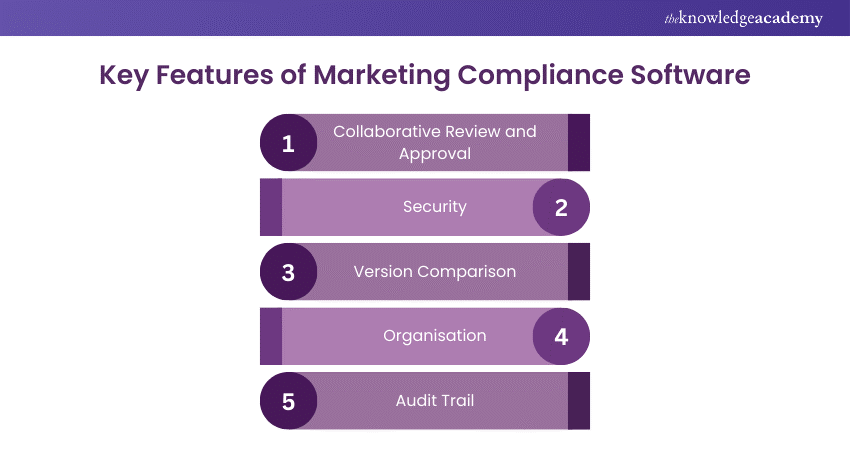
a) Collaborative Review and Approval: Remote creative teams are accustomed to collaborating in real-time on shared documents and engaging in live discussions. Compliance tools function in a similar manner - however, each comment, reply, and attachment are stored for future use. This type of documentation can be useful during a compliance audit.
b) Security: Data hacks have increased in frequency in the past few years. To safeguard both customer and employee data and adhere to regulations, it is important to ensure the security of your software selections.
c) Version Comparison: Creative teams frequently engage in iterative processes, which can become cumbersome when switching back and forth among various file versions. Using appropriate software allows you to easily generate new versions with a simple click and also compare two versions simultaneously.
d) Organisation: The top Marketing Compliance software will prioritise organisation in its design, providing your company with a versatile structure and choices for managing projects in the way that works best for you.
e) Audit Trail: If the regulatory commission visits, you need to show that all your paperwork is in order. This includes every iteration of a regulated advertisement or website layout, all the necessary approvals for content and design, every feedback on a shared document, and the documentation of creative data analysis.
How to Maintain Marketing Compliance?
It goes without saying that there are many challenges in maintaining Marketing Compliance. Achieving and maintaining compliance can prove to be a difficult task, as it involves overcoming many challenges and obstacles. Let's take a look at some typical obstacles organisations encounter in maintaining compliance.
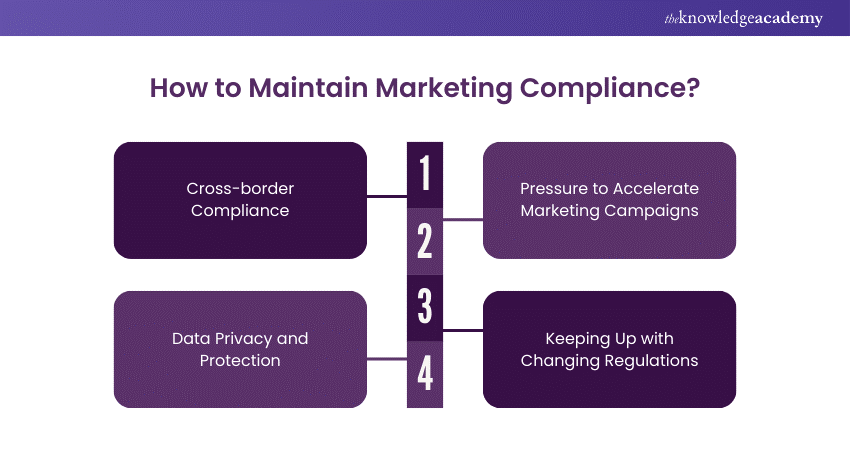
1) Cross-border Compliance
a) Challenges of Cross-Border Compliance: Operating in different locations increases the complexity of adhering to diverse marketing regulations.
b) Importance of Comprehensive Understanding: Businesses must invest in a thorough understanding of marketing rules in each jurisdiction.
c) Legal Obligations: Recognising and adhering to the specific legal requirements of each area is essential.
d) Cultural and Social Factors: Understanding cultural and social influences is critical, as these factors shape consumer expectations and attitudes.
2) Pressure to Accelerate Marketing Campaigns
a) Fast-Paced Marketing Industry: The marketing sector often demands rapid campaign rollouts.
b) High-Pressure Environment: This urgency is especially pronounced in retail, e-commerce, and news industries.
c) Need for Caution: Quick execution must be balanced with adherence to compliance considerations.
d) Risks of Rushing: Launching campaigns without thorough research can lead to accidental breaches of regulations.
3) Data Privacy and Protection
a) Integration of Digital Technology: Digital technology is now deeply embedded in daily life, impacting various aspects for better or worse.
b) Significance of Data Protection: Safeguarding personal data has become critically important.
c) Stricter Data Privacy Regulations: Increasingly strict rules require careful management of personal information.
d) Impact on Trust: Effective data management is essential for Marketing Compliance and building consumer trust.
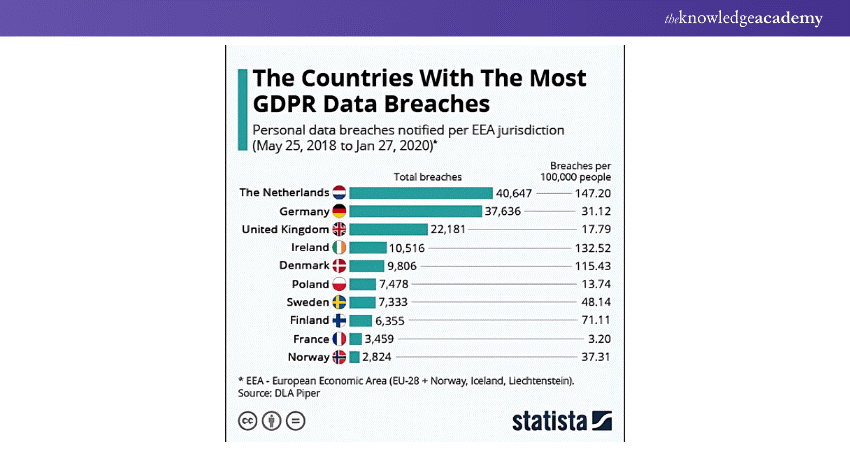 Source: Statista
4) Keeping Up with Changing Regulations
a) Ongoing Effort: Compliance in marketing demands continuous attention and flexibility, not a one-time task.
b) Regulatory Changes: Regulatory bodies frequently update regulations and standards to address new challenges and protect consumer interests.
c) Adapting to Technology: Regulations also evolve to incorporate the latest technological advancements.
d) Challenges of Staying Updated: Keeping up with changing marketing laws and regulations can be overwhelming.
Foundations of Marketing Compliance
Marketing compliance practices are established on the fundamental principles of ethical and legal marketing practices. Even though they require time and money to create, getting them right can result in saved reputations. These principles promote openness, truthfulness, and equity in the market.
Let's explore essential basic elements that support successful Marketing Compliance initiatives.
Training and Education
Frequent training sessions provide employees with knowledge about regulations, internal policies, and best practices. They serve as a connection between rules, company policies, and recommended methods. This enables the marketing team to make informed choices and stay current with compliance standards.
In the end, having knowledgeable and well-educated staff not only helps in recognising Marketing Compliance risks, but also enables them to actively find solutions and prevent expensive violations.
Monitoring and Auditing
Continuously reviewing and evaluating marketing activities can help in detecting compliance risks and departures from policies. Monitoring can come in different forms, such as inspecting ads and promotional material to ensure they meet the company's ethical and legal criteria.
Internal audits review processes and procedures to evaluate their adherence to internal and external standards. Independent evaluations, required in certain sectors, are frequently carried out by external specialists or regulatory agencies, providing an unbiased viewpoint and reinforcing a company's dedication to following regulations.
Boost your skills of auditing with our Optimised Digital Store Training Sign up now!
Software and Tools
Incorporating specialised Marketing Compliance tools into creative workflow software is a strategic decision that not only simplifies compliance processes but also provides numerous benefits. These tools are created to simplify procedures by automating complex and time-consuming compliance checks.
They are able to quickly recognise and fix possible violations, making sure that marketing campaigns follow regulatory standards and company policies.
Policies and Procedures
Policy and procedure documentation serve as the lead for ensuring Marketing Compliance. They serve as a detailed set of rules that control marketing actions, guaranteeing compliance with various laws, regulations, and standards specific to the industry.
The policies should include advertising claims, data privacy, intellectual property rights (IPR), and ethical standards. Clear and established instructions must be in place and approved to ensure adherence to laws and regulations.
Accountability and Enforcement
Clearly outlined protocols for reporting adherence issues and repercussions foster responsibility and deter instances of non-conformity. Reporting systems give team members the ability to reveal potential compliance violations without worrying about facing retaliation.
Having clear consequences for behavior that does not follow the rules serves as a strong deterrent. When employees and stakeholders are aware that not following the set policies and procedures will have consequences, they are more likely to comply with the regulations.
How Marketing Compliance Impacts Your Role
Everybody has a responsibility to fulfill in ensuring Marketing Compliance. It is crucial to understand the compliance responsibilities and standards of various roles in your organisation to reduce compliance risk in marketing production, communication, and approval processes. Let's examine the marketing roles that enforce Marketing Compliance daily.
Content Creators
If this is your responsibility, you are leading the way in producing content that influences how the brand is perceived and encourages customer interaction. While you may not be tasked with creating the Marketing Compliance strategy, your work is crucial to ensuring that creative ideas meet necessary marketing standards.
Enhance the art of content with our Content Marketing Course - Register now!
General Counsel
Understanding and adhering to marketing regulations is a crucial aspect of your job, particularly in industries with strict regulations. You are responsible for providing guidance on legal and compliance issues pertaining to marketing plans and specific promotions. You assist in reducing the risks linked to non-compliance at all levels.
You also have a crucial part in creating and revising internal policies to guarantee that marketing adheres to laws and regulations. This may encompass information, security, confidentiality, marketing regulations, and social networking utilisation.
Creative Operations or Project Managers
If you work in creative operations or project management, you understand the significant influence Marketing Compliance has on your responsibilities. It further complicates an already challenging position.
The main role is to supervise the organisation, implementation, and completion of marketing projects, guaranteeing they are done punctually, within the budget, and up to the required standards. Considering compliance in this equation results in a significant increase in your responsibilities.
Marketing Technology (MarTech) Managers
Your responsibility is crucial in choosing, putting them into action, and overseeing the technology tools that assist your marketing team. As the importance of Marketing Compliance increases, your role is likely to undergo significant changes.
When selecting technology for your organisation, it is important to make sure the tools are suitable for your marketing team and are in compliance with relevant regulations.
Unlock the power of marketing Technology with our MarTech Training
Challenges for Creative Teams in Managing Marketing Compliance
Managing Marketing Compliance can be a struggle for creative teams. The rules are constantly being modified. You need to maintain your creative passion. Your marketing strategies must continue to be successful while avoiding any regulatory pitfalls.
It takes a careful balancing act, a level of technical expertise, a significant amount of time, and a well-thought-out plan. Below are a few Marketing Compliance obstacles that you could encounter:
Compliance and AI Management
You might already be utilising artificial intelligence to enhance your creative efficiency. Still, these tools are not yet reliable and fall short of matching human logic and reasoning. Employing artificial intelligence in the creative process necessitates following particular workflow steps to ensure adherence to regulations.
Using Technology and Tools
Utilising technology to ensure adherence in marketing is now crucial. Yet, the effectiveness of technology relies on the individuals and procedures it helps, making it essential to establish a clear compliance workflow and foster a culture of compliance within your creative team.
Cross-Team Collaboration
Ensuring your marketing adheres to the regulations involves collaborating effectively with your legal and compliance colleagues. This requires excellent project management skills and a process that guarantees the correct individuals are involved at the appropriate times.
Creating for Multiple Markets
If the audience is located globally or in various regions, you will need to navigate through a variety of compliance regulations. Planning, implementing, evaluating, authorising, and launching campaigns is similar to solving a puzzle.
Learn how to expand globally and enhance your skills with International Expansion Course- Register today!
Staying Creative While Adhering to Guidelines
Let's make it clear, your goal in this game is to create outstanding, influential content. Balancing compliance with creativity requires a deep understanding of limits while still having the freedom to think outside the box (figuratively).
Conclusion
Marketing Compliance is crucial for maintaining ethical standards and adhering to regulations. It ensures campaigns meet legal requirements, protecting companies from fines, reputational damage, and loss of trust. By promoting consumer confidence and positioning brands as reliable and transparent, compliance contributes to sustainable growth.
Advance your marketing skills with our Introduction To Marketing Training - Join today!
Frequently Asked Questions
How Can Marketing Compliance Software Help?

Marketing Compliance software simplifies the complexity of Marketing Compliance. These tools offer automated methods for handling and overseeing compliance demands. Marketing compliance software comes with various important features like data privacy, consent management, content review and compliance monitoring.
How to Reduce Compliance?
Reducing compliance isn’t advisable as it can lead to legal issues and damage trust. Instead, streamline compliance processes by automating tasks, training staff regularly, and staying updated on regulations. This ensures efficiency while maintaining ethical standards and protecting your company’s reputation.
What are the Other Resources and Offers Provided by The Knowledge Academy?
The Knowledge Academy takes global learning to new heights, offering over 30,000 online courses across 490+ locations in 220 countries. This expansive reach ensures accessibility and convenience for learners worldwide.
Alongside our diverse Online Course Catalogue, encompassing 19 major categories, we go the extra mile by providing a plethora of free educational Online Resources like News updates, Blogs, videos, webinars, and interview questions. Tailoring learning experiences further, professionals can maximise value with customisable Course Bundles of TKA.
What is The Knowledge Pass, and How Does it Work?
The Knowledge Academy’s Knowledge Pass, a prepaid voucher, adds another layer of flexibility, allowing course bookings over a 12-month period. Join us on a journey where education knows no bounds.
What are the Related Courses and Blogs Provided by The Knowledge Academy?
The Knowledge Academy offers various Marketing Courses,including the Strategic Marketing Course, Content Marketing Course and the Marketing Budget Course. These courses cater to different skill levels, providing comprehensive insights into Brand Strategy.
Our Digital Marketing Blogs cover a range of topics related to Marketing Management, offering valuable resources, best practices, and industry insights. Whether you are a beginner or looking to advance your Marketing skills, The Knowledge Academy's diverse courses and informative blogs have got you covered.

The Knowledge Academy


Global Training Provider
The Knowledge Academy is a world-leading provider of professional training courses, offering globally recognised qualifications across a wide range of subjects. With expert trainers, up-to-date course material, and flexible learning options, we aim to empower professionals and organisations to achieve their goals through continuous learning.

Upcoming Digital Marketing Resources Batches & Dates
Date
 Strategic Marketing Course
Strategic Marketing Course
Fri 8th May 2026
Strategic Marketing Course
Fri 14th Aug 2026
Strategic Marketing Course
Fri 9th Oct 2026

 If you wish to make any changes to your course, please


