


 Top Rated Course

We may not have the course you’re looking for. If you enquire or give us a call on +1800812339 and speak to our training experts, we may still be able to help with your training requirements.
Blockchain Explorers: An Ultimate Guide
Richard Harris 13 July 2026Blockchain Explorer lets users search for Blockchain data, view transactions, wallet addresses, and blocks, making complex information easy to access. It simplifies Blockchain analysis by providing real-time insights into transactions and balances. Users can easily track wallet activity, verify details, and explore network data.

Training Outcomes Within Your Budget!
We ensure quality, budget-alignment, and timely delivery by our expert instructors.
Table of Contents

Imagine you’ve invested in several Cryptocurrencies and want an easy way to track everything without opening multiple wallets. A Blockchain Explorer makes this simple. Just enter your wallet address to instantly see your full transaction history, current balances, pending transfers, and real-time network fees, all in one place.
In this blog, we’ll explain what a Blockchain Explorer is and why it’s essential for crypto users. We’ll cover how it works, the best explorers, their pros and cons, future trends, and how to withdraw money safely.
Table of Contents
1) What is a Blockchain Explorer?
2) Why Use Blockchain Explorer?
3) What Does a Blockchain Explorer Include?
4) How Does a Blockchain Explorer Work?
5) List of the Best Blockchain Explorers
6) Benefits of Using Blockchain Explorer
7) Limitations of Blockchain Explorer
8) Future of Blockchain Explorer
9) How Do I Withdraw Money From Blockchain Explorer?
10) What is the Best Browser for Blockchain?
11) Which Cloud is Best for Blockchain?
12) Conclusion
What is a Blockchain Explorer?
A Blockchain Explorer is a user-friendly tool that works like a search engine for public Blockchains. It lets users view, search, and analyse transactions, wallet addresses, blocks, and network data in real time. By simplifying complex data, it ensures transparency and makes tracking on-chain activities easier. Each Blockchain needs its own explorer, like Bitcoin or Ethereum.
For anyone managing Blockchain or Cryptocurrency systems, a Blockchain Explorer is essential. It allows users to check transaction history, amounts, fees, sender and receiver details, and wallet balances easily. Acting as a reliable tool for verification, it helps confirm transactions, track assets, and build trust and visibility within Blockchain networks.

Why Use Blockchain Explorer?
Blockchain Explorer is a simple yet powerful tool that helps users track, check, and understand Blockchain data with ease. Whether you are an investor, trader, developer, or beginner, it provides real-time information about transactions, wallets, and network performance. Below are the key uses and benefits of using a Blockchain Explorer:
a) Check Transaction History and Wallet Balances: See the full history of any wallet, including money sent, received, and current balances for personal and contract addresses.
b) Validate Wallet Addresses Before Sending Crypto: Check if a wallet address is correct before sending crypto to avoid mistakes or losing money.
c) Confirm Successful Transactions: Track your transaction in real time and confirm if the money reached the right person by checking confirmations.
d) Troubleshoot Delayed or Failed Transactions: Find out why a transaction is stuck or delayed. See unconfirmed transactions, double spend, orphaned blocks, and confirmation stages.
e) Monitor Gas Fees and Network Charges: Get live updates on gas prices and network fees to choose the best time to make transactions and save costs.
f) Support Smarter Financial Decisions: Use details about transactions, blocks, and mining to plan better investments and make informed choices.
g) Aid for Developers and Wallet Programmers: Developers use explorers to test, check, and fix wallets to ensure they work properly.
What Does a Blockchain Explorer Include?
Blockchain Explorer features a user-friendly and easy-to-navigate interface to simplify the task for Blockchain users. The bottom and front interface of the best Blockchain Explorer includes several transactions, the latest blocks, calculated hash rates, and several transactions. Let's take a look at some of the significant components of the Explorer:
a) Search Bar: The search bar allows users to search for particular data or information related to Blockchain.
b) Transactions Details: This Explorer includes detailed data on all transactions. You'll be able to access information such as the address of the recipient and sender, details related to the token endorsed, and the time and data related to a transaction.
c) Block Details: Users will be able to analyse the data of each block. They will be able to count the total transactions in a particular block. Besides, it enables users to gather data like block height and the time and date when a block was inserted.
d) Address Details: With the help of a Blockchain Explorer, you'll be able to count the incoming and outgoing transactions related to a specific address.
e) Volume of Transactions: The total volume of the transactions indicates the number of transactions entered on the Blockchain during the last 24 hours. The total transaction volume includes transactions that have not been updated yet. Usually, these are transferred again to the user's spending wallet.
f) Network Information: Blockchain Explorer enables users to obtain detailed information about a network. It gives an overview of the network's status, level of difficulty, and the volume of transactions processed via the network.
g) Hash Rate Data: Blockchain Explorer allows you to forecast the computing resources used by miners of the Blockchain. Usually, the hash rate data of a Blockchain is directly related to its safety.
h) Mempool Size: The tool is used to keep an estimate of all the activities that are processed through the Blockchain network. Besides, it helps to keep a count of blocks that should be included on this network in future.
Gain insights into the real-world applications of Blockchain. Join our Web3 Professional Certification now!
How Does a Blockchain Explorer Work?
A Blockchain Explorer is like a search engine for Blockchain networks, allowing users to track transactions, view blocks, and explore wallet addresses. Here’s how it works:
a) Real-time Data Access: Provides instant updates on transactions, blocks, and wallet addresses within a Blockchain network.
b) Search and Verification: Users can enter a transaction ID, wallet address, or block number to access detailed transaction history, amounts transferred, fees, and timestamps.
c) Block Updates: Whenever a new block is added, the explorer updates, ensuring accurate and up-to-date information.
d) Merkle Tree Structure: Helps organise transactions efficiently, allowing verification without scanning the entire Blockchain, improving speed and security.
e) Transparency & Accessibility: Users, from investors to enthusiasts, can verify transactions and explore Blockchain activity with ease.
A Blockchain Explorer simplifies Blockchain data, making it easier to monitor and understand transactions in the decentralised world.
List of the Best Blockchain Explorers
The Best Blockchain Explorers allow you to view important information. Besides, these Explorers should work with the compatibility of the wallet provider. A suitable Blockchain Explorer should offer support to the coins you're trading.

A) Blockchain.com

Cryptocurrency users prefer to use Blockchain.com. Blockchain.com Explorer helps users access detailed information related to transactions. So, it enables users to gather information like public addresses, transactions, blocks and data included in the blocks. This Blockchain Explorer also helps users collect essential data related to transactions in each block, circulation, and on-chain volume.
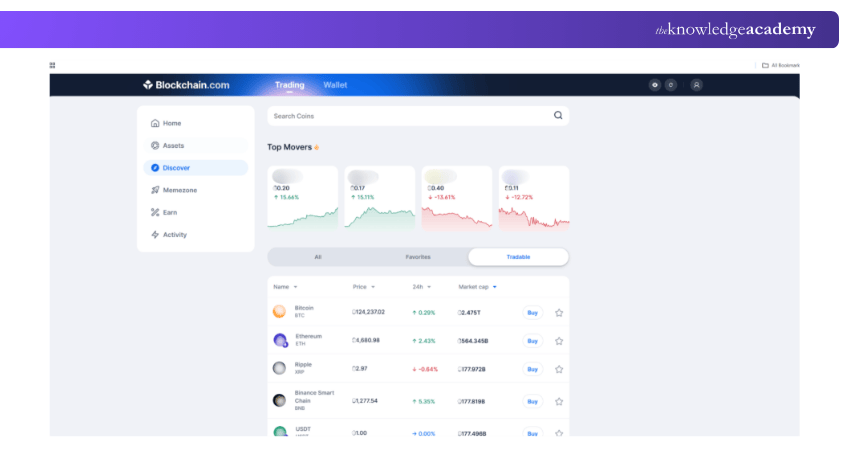 If you're looking for numerous chains, there's no better option than Blockchain.com. This is one of the best Blockchain Explorers as it is suitable for Dogecoin, Dash, Cardano, Mondero, Ripple, Litecoin, Groestlcoin, Ethereum, Bitcoin Cash, Bitcoin, and Bitcoin SV.
B) Tokenview
Tokenview includes all the features an ideal Blockchain Explorer should have. Tokenview has the edge over the other Blockchain Explorers as it supports over a hundred cryptocurrencies. Apart from working as an incredible Bitcoin Blockchain browser, Tokenview offers support to renowned chains such as Ethereum, Bitcoin Cash Blockchain, and so on.
Tokenview features useful tools that allow users to view all pending transactions, active wallets, block rewards winners, daily trading volumes, and so on. However, as this Blockchain Explorer is responsible for supporting tons of data, the user can experience slow loading times.
C) Etherscan
Etherscan is a Blockchain Explorer designed specifically for the Ethereum network. It allows users to search, track, and verify transactions with ease. Ethereum users can validate and confirm transactions quickly, making it a trusted tool for anyone dealing with Ethereum-based activities.
Etherscan also offers a powerful API that supports the development of decentralised applications (DApps). These DApps help collect and analyse additional data related to the Ethereum Blockchain, making Etherscan an essential platform for developers, traders, and Blockchain enthusiasts.
D) BTC.com
If you're a crypto trader, BTC.com is one of the best Blockchain Explorers available today. It’s ideal for Bitcoin holders thanks to its simple interface and free access. As a major mining pool, BTC.com appears frequently on block reward charts and lets you explore transactions, block details, and data for Bitcoin, Ethereum, and Bitcoin Cash networks.
With its easy-to-use interface, BTC.com lets you search transactions and access an in-built calendar. You can track transaction fees, rich lists, historical data, and unconfirmed transactions. A unique feature is the ability to see how many times a Bitcoin address appears online, and it also supports 25 different languages for global users.
Learn strategies for profitable Cryptocurrency Trading with our Cryptocurrency Trading Training – Join now!
E) BlockCypher
BlockCypher is open-source software that comprises enormous information. The information provided by Blockcypher isn't limited to the standard Blockchain data. BlockCypher offers additional data such as Blockchain confirmation predictions, Bitcoin public address notifications, and estimated costs related to hardware wallets.
Due to its sleek user interface, this Blockchain Explorer allows you to easily view data and real-time information. BlockCypher works only for Grin, Dogecoin, Dash, and Bitcoin.
F) Etherchain

Etherchain and Etherscan are usually mixed up among users because they look similar. Etherchain can be used to obtain information regarding Ethereum Blockchain and active hard forks. You can access data like figures on network consumption and mining and the entirety of the Ethereum economy.
A distinct feature of Etherchain is that it is placed on the top right corner of the page. The total transferred Ether is represented with the colour green.
G) Blockchair
Blockchair easily falls under the category of a few of the world’s best Blockchain Explorers. It offers information on cryptocurrencies like Bitcoin, Ripple, Ethereum, and more.
One of the most important features of Blockchair is that it allows you to search for embedded text data in Bitcoin blocks. It also allows access to data like transaction fees, mempool size, and more. It is also used for tasks like comparing mining, network, and Bitcoin statistics.
H) Solscan.io
Solcan.io helps you procure useful information by scanning the Solana Blockchain. Being well-informed about this helps in making improved trading decisions.
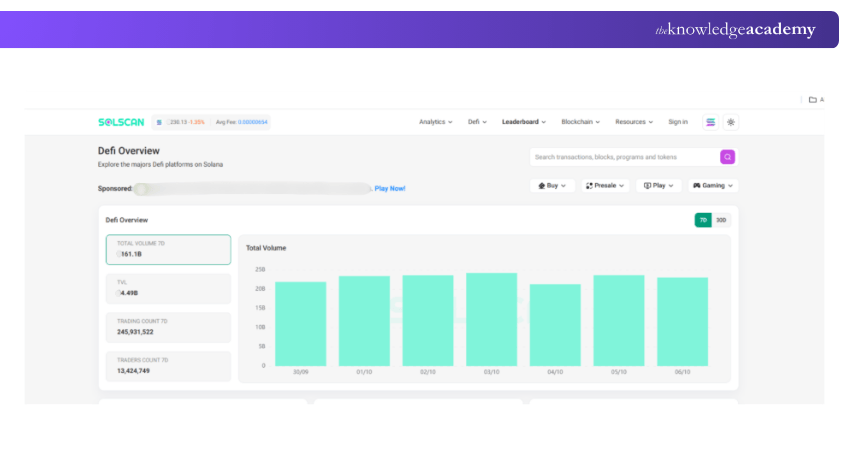
Some of the uses of Solscan are that they help you scan the Blockchain to find data on transactions (transaction amounts, address of sender and receiver), Smart Contracts, and more. It helps you get a better grasp on market trends too.
I) CardanoScan

CardanoScan is a Blockchain Explorer made for the Cardano (ADA) network. It lets you search and track transactions, check wallet balances, and see block details. Its easy-to-use design makes it simple for anyone to explore Cardano’s data.
With CardanoScan, you can also view stake pools, rewards, governance updates, and smart contracts. It is very useful for ADA holders, developers, and investors who want real-time information about the Cardano Blockchain.
J) Tradeblock
TradeBlock is a web-based platform providing real-time Blockchain data, including transaction history, network statistics, and market insights. Supporting multiple cryptocurrencies like Bitcoin, Ethereum, and Litecoin, it helps users track price charts, trading volume, and market capitalisation.
With a user-friendly interface, TradeBlock Explorer offers seamless navigation and advanced analytical tools like charts and graphs, making it easy to visualise Blockchain data. Its extensive analytics make it a valuable resource for traders and analysts exploring the digital asset landscape.
K) Blocktrail
The Blocktrail Explorer serves as a digital map, enabling users to navigate the complex web of cryptocurrency transactions, including Bitcoin and Litecoin. It provides a transparent and detailed view of Blockchain activity, allowing anyone to explore the network with ease.
With this block explorer, users can access both real-time and historical data on Bitcoin addresses, transactions, and overall network activity. The platform also supports searches via QR codes, offering a convenient way to track transactions. Additionally, users can bookmark specific addresses for quick reference, making it a powerful tool for monitoring Blockchain movements efficiently.
Learn how to create and deploy your own tokens. Join our Ethereum Developer Training now!
K) Bitcoin.com
Bitcoin.com is a comprehensive platform offering a range of services for cryptocurrency enthusiasts. It provides a user-friendly wallet for storing and managing your digital assets, along with up-to-date news and educational resources to keep you informed about the latest developments in the crypto world.
Additionally, Bitcoin.com features a Blockchain Explorer that allows you to easily search and verify transactions on both the Bitcoin and Bitcoin Cash networks. Whether you're new to cryptocurrencies or a seasoned user, Bitcoin.com aims to make your experience seamless and informative.
M) Polygon
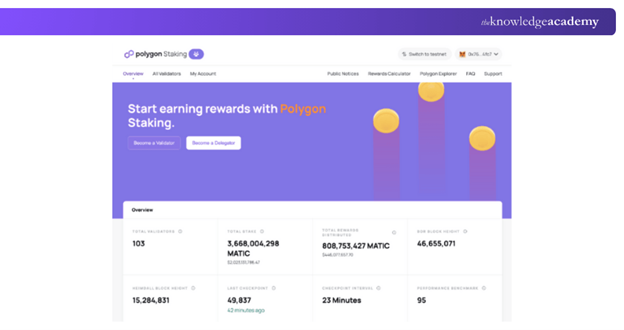
Polygon (POL) is a cryptocurrency and a Blockchain platform that makes using Ethereum faster and cheaper. It helps connect different Blockchains that work with Ethereum and supports developers in building Web3 apps and other Blockchain-based projects.
The POL token is used to keep the Polygon network secure, vote on important updates, and pay transaction fees. This makes Polygon useful for investors, developers, and businesses who want quick, low-cost, and reliable Blockchain solutions.
N) Dogecoin
The Dogecoin Blockchain works using a system called Proof of Work (PoW). This means that miners use powerful computers to solve difficult mathematical problems. When they solve these problems, they confirm transactions and add them to the Blockchain.
In return for their work, miners earn Dogecoin (DOGE) coins as a reward. They can keep these coins, use them, or sell them in the market. This process keeps the Dogecoin network safe, secure, and running smoothly.
O) Mintscan
Mintscan is an open-source Blockchain Explorer made by Cosmostation for the Cosmos ecosystem. It works like Etherscan does for Ethereum and helps users track and research Blockchain data.
With Mintscan, you can see transactions, check Blockchain metrics, view governance proposals, and monitor IBC (Inter-Blockchain Communication) accounts. It also lets users stake tokens directly, making it easy to manage and track activities on Cosmos-based networks.
Benefits of Using Blockchain Explorer
Blockchain Explorer functions like a search engine for Blockchain networks, providing valuable insights for both individuals and businesses. Here’s the benefits of using Blockchain Explorer:
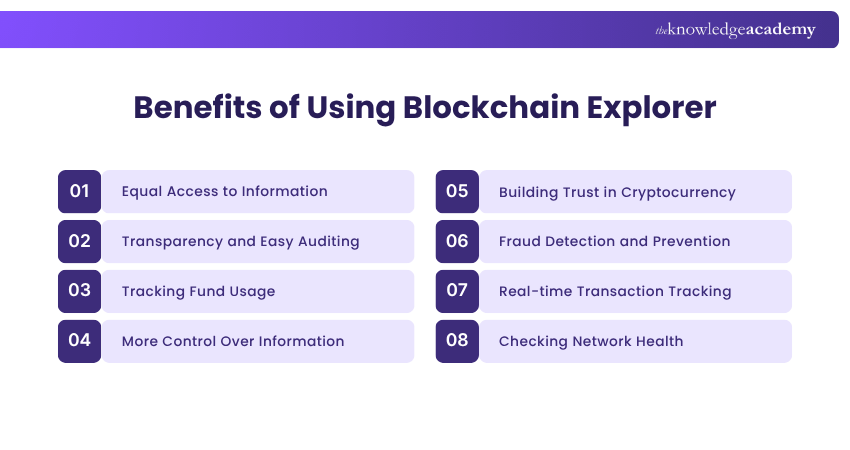
a) Equal Access to Information: A Blockchain Explorer gives everyone, from individuals to big companies, the same access to transaction data. This transparency builds trust and removes the chance of hidden transactions.
b) Transparency and Easy Auditing: Anyone can check transactions, wallet balances, and network activity. This makes it simple to audit companies and organisations, ensuring accountability in Blockchain projects.
c) Tracking Fund Usage: For investors, Blockchain Explorers show how startups or businesses use their funds in real time. This transparency builds confidence and helps them make better decisions.
d) More Control Over Information: Explorers like Etherscan let users track funds, check smart contracts, and verify activities on the Blockchain. This gives users better control over their assets and transactions.
e) Building Trust in Cryptocurrency: The growth of cryptocurrency depends on trust. By letting users verify transactions themselves, Blockchain Explorers help create a transparent and reliable crypto ecosystem.
f) Fraud Detection and Prevention: With detailed transaction histories, users can spot suspicious activity, track stolen funds, and prevent fraud. This is very helpful for businesses, exchanges, and regulators handling crypto.
g) Real-time Transaction Tracking: Blockchain Explorers allow users and businesses to monitor transactions instantly. Companies can track payments, miners can confirm rewards, and users can ensure their transfers are successful.
h) Checking Network Health: Explorers show network congestion, gas fees, and block confirmations. This helps users choose the best time to send transactions quickly and cheaply.
Limitations of Blockchain Explorer
While Blockchain Explorers are very useful for tracking transactions, they also have some limitations that affect their speed, usability, and accessibility.
a) Scalability Issues: As Blockchain networks grow, explorers may slow down because they handle a huge amount of data, leading to longer response times.
b) High Energy Use: Explorers depend on Blockchain nodes to confirm transactions. In proof-of-work systems, this process uses a lot of energy and computing power.
c) Unclear Regulations: Because Blockchain is decentralised, there are still no clear legal rules in many regions. This can make accessing or using Blockchain data risky in terms of compliance.
d) Irreversible Transactions: Once a Blockchain transaction is confirmed, it cannot be changed or reversed. Any mistakes or fraud remain permanent on the Blockchain.
e) Lack of Standardisation: Different explorers use different formats and systems, making it hard to share data or work across multiple Blockchains.
f) Complexity for Beginners: For new or non-technical users, explorers can be confusing because they include technical terms like hash rates, block heights, and consensus mechanisms.
g) Smart Contract Risks: Explorers show smart contract data, but if the contract code has errors, it can lead to security issues and even financial losses if not audited properly.
Future of Blockchain Explorer
Blockchain Explorers are tools that let you view and track transactions on a Blockchain network. As Blockchain technology evolves, these explorers are becoming more advanced and user-friendly. In the future, we can expect several improvements:
a) Enhanced Transparency: Blockchain Explorers will offer clearer and more detailed views of transactions, making it easier for users to understand and verify information.
b) Improved User Experience: With more intuitive designs, users will find it simpler to navigate and access the data they need.
c) Advanced Features: Future explorers might include tools that allow for better analysis of transaction patterns and network activities.
d) Integration with Financial Systems: As Blockchain becomes more integrated into financial systems, explorers will play a key role in providing transparency and security, helping users trust and verify financial transactions.
These advancements will make Blockchain Explorers even more valuable for anyone looking to engage with Blockchain technology.
Acquire knowledge of the mechanics of Bitcoin, Bitcoin mining, and anonymity with our Bitcoin and Cryptocurrency Course – Join now!
How do I Withdraw Money From Blockchain Explorer?
Blockchain Explorer is a tool for tracking and verifying transactions but does not allow withdrawals. To withdraw cryptocurrency, you need to use a crypto wallet or an exchange platform. Here’s how:
1) Log in to Your Wallet or Exchange
a) Access your cryptocurrency wallet or exchange account (e.g., Blockchain.com, Binance, Coinbase).
2) Select "Withdraw"&
a) Navigate to the withdrawal section in your account.
3) Choose the Cryptocurrency
a) Select the crypto you want to withdraw (e.g., Bitcoin, Ethereum).
4) Enter the Destination Address
a) Provide the wallet address where you want to send the funds.
b) Double-check the address to avoid sending funds to the wrong place.
5) Enter the Amount
a) Specify how much cryptocurrency you wish to withdraw.
6) Review and Confirm the Transaction
a) Check all details before confirming.
b) Some platforms require two-factor authentication (2FA) for added security.
Important Considerations:
a) Transaction Processing Time: Withdrawals can take time depending on network congestion.
b) Network Fees: A small fee is required for processing, which varies based on the Blockchain.
c) Security Measures: Always verify addresses and enable 2FA to protect your funds.
What is the Best Browser for Blockchain?
The best browser for Blockchain depends on what you need, but it should support decentralised applications (dApps), crypto wallets, and secure Blockchain interactions. These browsers make using Blockchain networks easier and safer.
Some popular options include:
a) Brave Browser: Comes with a built-in crypto wallet, ad-blocker, Web3 integration, and even lets you learn crypto while browsing.
b) Opera Crypto Browser: Features a native crypto wallet, free VPN, and supports multiple Blockchains for smooth Web3 access.
c) Firefox or Chrome (with extensions): Works well with Blockchain extensions like MetaMask to manage wallets and interact with dApps.
These browsers are popular because they support Web3, protect your privacy, and make it easy to trade, stake, and use decentralised apps.
Which Cloud is Best for Blockchain?
The best cloud for Blockchain depends on what your project needs, like security, speed, and easy setup. Big cloud companies provide special tools to help you build and manage Blockchain apps easily.
Some of the top options are:
a) Amazon Web Services (AWS): Offers secure and scalable Blockchain services that are easy to manage.
b) Microsoft Azure: Lets you create, launch, and manage Blockchain apps with simple tools.
c) Google Cloud: Known for fast speed, data handling, and hosting Blockchain nodes.
d) IBM Blockchain Platform: Great for business use, with strong security and simple setup.
These cloud platforms are popular because they make it easy to build, manage, and grow Blockchain networks and Web3 apps.
Conclusion
Blockchain Explorer helps users track transactions, check wallet balances, and view block details in real time. Whether you are an investor, developer, or beginner, it makes understanding Blockchain data easier. It also supports smarter decisions while managing your cryptocurrency activities effectively. It is a must-have tool for exploring and analysing Blockchain networks.
Develop skills to implement secure and transparent transaction systems. Join our Blockchain Training now!
Frequently Asked Questions
What is the Best Search Engine for Blockchain?

The best search engine for Blockchain depends on your needs. Use Etherscan for Ethereum, BTC.com for Bitcoin, or CardanoScan for Cardano. For multi-chain searches, Blockchair and Blockchain.com are great options to track transactions, wallets, and blocks in one place.
What's the Best Blockchain Explorer?
The best Blockchain Explorer depends on your needs. Etherscan is ideal for Ethereum users, BTC.com works best for Bitcoin, and CardanoScan suits Cardano holders. For multiple Blockchains, tools like Blockchair and Blockchain.com offer wider support, helping users track transactions, wallet balances, and network data easily.

Richard Harris


Senior Full Stack Developer and Technology Educator
Richard Harris is a highly experienced full-stack developer with deep expertise in both frontend and backend technologies. Over his 12-year career, he has built scalable web applications for startups, enterprises and government organisations. Richard’s writing combines technical depth with clear explanations, ideal for developers looking to grow in modern frameworks and tools.


 If you wish to make any changes to your course, please


