


 Top Rated Course


We may not have the course you’re looking for. If you enquire or give us a call on + 1-866 272 8822 and speak to our training experts, we may still be able to help with your training requirements.
What is Email Encryption? Types, Methods, and How It Works
The Knowledge Academy 25 April 2026Curious about what is Email Encryption? It’s a secure method to protect emails from unauthorised access by encoding their content. This blog explores its types, how it works, and its key advantages. Learn why encryption is vital in today’s digital world and how to safeguard your communications from rising cyber threats.

Training Outcomes Within Your Budget!
We ensure quality, budget-alignment, and timely delivery by our expert instructors.
Table of Contents
Imagine sending a postcard that anyone can read. Now, think of putting that postcard in an unbreakable vault that only the recipient can open. That's what Email Encryption does—it turns your regular emails into secure, private messages using advanced security.
Email Encryption is more than just a technical word in a world full of cyber threats; it's your defence against hacking and snooping. Let's explore how it works, its importance, and the key to its robust security.
Table of Contents
1) What is Email Encryption?
2) Different Types of Email Encryption
3) How Does Email Encryption Work?
4) Methods of Email Encryption
5) Advantages of Email Encryption
6) Conclusion
What is Email Encryption?
The technology of Email Encryption prevents unauthorised individuals from reading your emails. It works by encrypting an email so that only the person who is supposed to receive it can decrypt and see it.
Emails are susceptible to interception since they are sent via networks in plain text when they are not encrypted. Even if your message is intercepted, encryption makes sure that the contents cannot be decrypted without the right decryption key.
Different Types of Email Encryption
There are several methods to encrypt emails, each with its own advantages and use cases.
Pretty Good Privacy (PGP)
1) Uses a public and private key system.
2) Provides a unique, unbreakable lock for your messages.
3) Only the recipient can unlock and read your email.
Secure multi-purpose Internet Mail Extension (S/MIME)
1) Uses public and private keys, similar to PGP.
2) Often pre-installed in email clients like Outlook and Gmail.
3) User-friendly for corporate users.
Transport Layer Security (TLS)
1) Secures emails in transit between servers.
2) Not end-to-end encryption, as it doesn't protect the message once it reaches the recipient's server.
3) Adds a vital layer of protection during transmission.
Start mastering marketing today with our Introduction to Marketing Training and gain strategic business skills!
How Does Email Encryption Work?
Email Encryption is like putting your email into a secure envelope that only the intended recipient can open. Here's a simple breakdown of how it works:
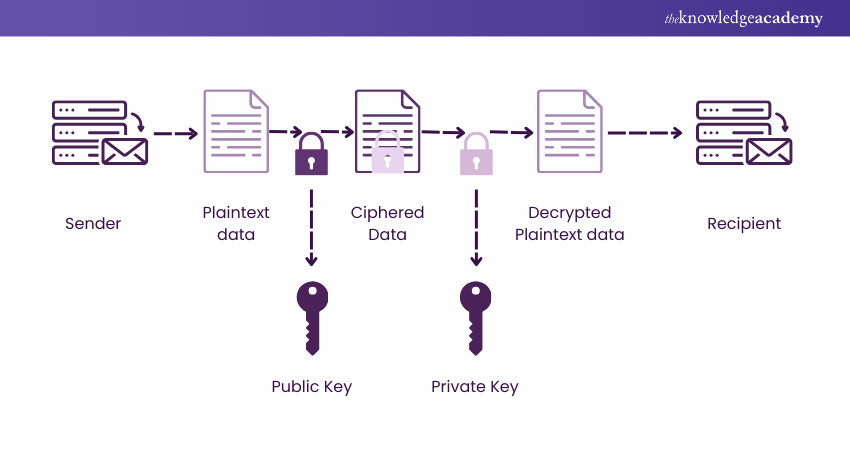
Step 1. Encryption
When you send an email, it's turned into a coded message using a special method. This scrambles the content, making it unreadable to anyone who intercepts it.
Step 2. Keys
Encryption uses keys to lock (encrypt) and unlock (decrypt) the email. These keys are unique codes that only the sender and the recipient have.
a) Public Key: Shared with anyone who wants to send you an encrypted email.
b) Private Key: Kept secret and used to decrypt the emails you receive.
Step 3. Sending the Email
Once encrypted, the email is sent through the internet. Even if someone intercepts it, they can't read it without the correct key.
Step 4. Decryption
When the recipient gets the email, they use their private key to decrypt it. This turns the coded message back into its original readable form.
Methods of Email Encryption
Several practical methods are available for encrypting emails based on the level of security required.
TLS Encrypted Email
TLS encrypts emails in transit between servers, protecting them from interception. While it’s widely supported, it does not encrypt the email once it reaches its destination.
Encrypted PDF
For specific Secure Internal Communication, some users send sensitive information as encrypted PDF attachments. The recipient must enter a password to access the file, adding an additional layer of security.
Web Portal Encryption
Some organisations use web portals for Email Encryption. The sender uploads their email to a secure portal, and the recipient accesses it after logging in with their credentials.
Advantages of Email Encryption
The benefits of Email Encryption are numerous and essential for personal and professional communication:
a) Enhanced Privacy: Prevents unauthorised access to sensitive information.
b) Data Security: Safeguards emails from interception and data breaches.
c) Compliance: Helps organisations meet regulatory requirements such as GDPR, HIPAA, and others.
d) Trust Building: Demonstrates a commitment to data protection, enhancing trust among clients and partners.
Take control of your Marketing future – register for our Email Marketing Course today!
Conclusion
Email Encryption is crucial in today's world of cyber threats. By learning What is Encryption and using the right encryption methods, you can protect sensitive information, follow regulations, and build trust in your communications. Start protecting your email conversations now because, in Cyber Security, it's always better to prevent problems than to fix them later. For instance, regularly clearing your email history can enhance your security. One important step is to Clear Search History in Gmail, which helps minimise the risk of exposing sensitive information through past searches.
Elevate your brand visibility and business growth through expert Marketing Courses- join now!
Frequently Asked Questions
What are the Three Options of Email Encryption?

The three options for Email Encryption are:
a) Transport Layer Security: Encrypts email transport
b) End-to-End Encryption: Encrypts email content
c) Digital Signatures: Ensures authenticity and integrity
What Tool is Used to Encrypt Emails?
Emails are frequently encrypted using tools like Pretty Good Privacy and Secure/Multi-purpose Internet Mail Extensions. For security and privacy during email exchanges, these integrate symmetric and public-key encryption.
What are the Other Resources and Offers Provided by The Knowledge Academy?
The Knowledge Academy takes global learning to new heights, offering over 3,000+ online courses across 490+ locations in 190+ countries. This expansive reach ensures accessibility and convenience for learners worldwide.
Alongside our diverse Online Course Catalogue, encompassing 19 major categories, we go the extra mile by providing a plethora of free educational Online Resources like Blogs, eBooks, Interview Questions and Videos. Tailoring learning experiences further, professionals can unlock greater value through a wide range of special discounts, seasonal deals, and Exclusive Offers.
What is The Knowledge Pass, and How Does it Work?
The Knowledge Academy’s Knowledge Pass, a prepaid voucher, adds another layer of flexibility, allowing course bookings over a 12-month period. Join us on a journey where education knows no bounds.
What are the Related Courses and Blogs Provided by The Knowledge Academy?
The Knowledge Academy offers various Marketing Courses, including Email Marketing Course, Marketing Budget Course and Gmail Course for Productive Email Management Training. These courses cater to different skill levels, providing comprehensive insights into Add Me To Search.
Our Digital Marketing Blogs cover a range of topics related to Email Marketing, offering valuable resources, best practices, and industry insights. Whether you are a beginner or looking to advance your Marketing skills, The Knowledge Academy's diverse courses and informative blogs have got you covered.

The Knowledge Academy


Global Training Provider
The Knowledge Academy is a world-leading provider of professional training courses, offering globally recognised qualifications across a wide range of subjects. With expert trainers, up-to-date course material, and flexible learning options, we aim to empower professionals and organisations to achieve their goals through continuous learning.


 If you wish to make any changes to your course, please


