




We may not have the course you’re looking for. If you enquire or give us a call on +800 312616 and speak to our training experts, we may still be able to help with your training requirements.
What is Project Audit: A Comprehensive Guide
BySaurav SharmaLast updated on: 25 September 2026
Delve into the world of project audits, a key aspect of project management. This blog explains the audit process, its importance, and how it's conducted. It highlights the benefits, providing crucial insights for Project Managers, auditors, and professionals striving for project excellence.
Quick Look
1. Project audits objectively review project performance, processes, controls, and compliance.2. They help identify risks, inefficiencies, and areas for improvement.3. Common types include process, performance, compliance, and project financial audits.4. The audit process typically includes planning, execution, reporting, and follow-up.5. Audit findings can support better decisions, stronger governance, and future project improvement.
Project management involves various complex processes, from planning and execution to monitoring and evaluation of projects. As projects grow in complexity and importance, the need for a systematic and thorough assessment becomes undeniable. One essential aspect of effective project management is project audit. But what is project audit?
A project audit is a systematic and objective examination of a project's processes, outcomes, and performance. It aims to assess the project's effectiveness, identify areas for improvement, and assess whether project objectives align with the organisation's goals and standards. In this blog, you are going to learn in detail about what is project audit, its types, the steps involved and the benefits of conducting these audits.
What is Project Audit?
A project audit is a systematic and objective review of selected aspects of a project, such as governance, processes, controls, performance, compliance, and outcomes. It serves as a strategic tool in the realm of project management, providing a meticulous examination of every facet of a project’s lifecycle. This analysis aims to ensure that the project aligns with organisational goals, industry standards, and best practices.
It acts as a diagnostic check, illuminating both the accomplishments and the pitfalls, allowing Project Managers and stakeholders to make data-driven decisions. Through project audits, organisations gain valuable insights into resource allocation, risk management, team performance, and overall project health. Ultimately, project audit empowers organisations to refine strategies, optimise processes, and enhance project outcomes, ensuring that every project undertaken becomes a stepping stone toward organisational excellence.

Importance of Project Audit
Project audits hold a pivotal role in the landscape of project management, supporting accountability, transparency, and continuous improvement. Its significance can be outlined through several key points:
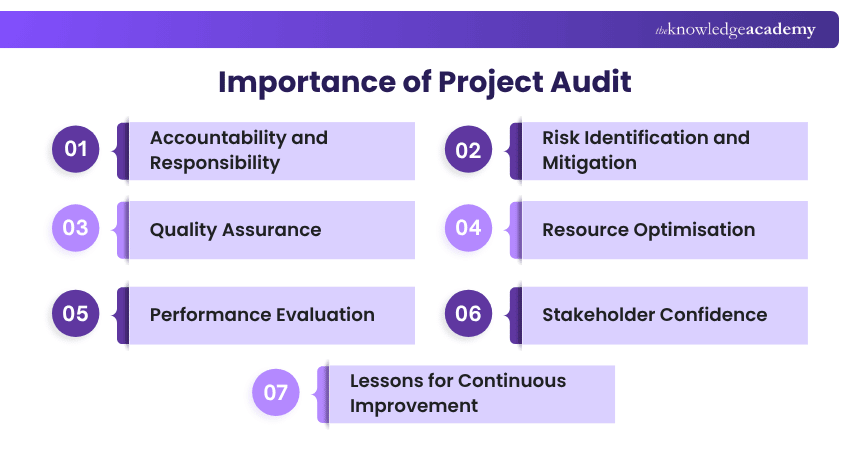
a) Accountability and Responsibility: Project audits establish clear accountability, helping clarify whether team members are responsible for their designated tasks and outcomes, fostering a sense of ownership and dedication.
b) Risk Identification and Mitigation: Audits can reveal unaddressed risks, weaknesses in controls, or gaps in the project’s existing risk-management approach.
c) Quality Assurance: Audits can assess whether project processes and deliverables conform to defined quality criteria, requirements, and applicable standards.
d) Resource Optimisation: Through evaluation, audits analyse resource allocation and utilisation, enabling organisations to optimise resources, reduce wastage, and enhance cost-effectiveness.
e) Performance Evaluation: Audits provide a comprehensive overview of project performance, allowing organisations to assess the effectiveness of strategies, identify bottlenecks, and make data-driven decisions for future projects.
f) Stakeholder Confidence: Well-conducted audits instil confidence in stakeholders, assuring them that projects are being managed efficiently, leading to stronger partnerships and support.
g) Lessons for Continuous Improvement: Audit findings serve as a valuable source of lessons learned, guiding organisations in refining their project management processes and fostering a culture of constant improvement and innovation.
Build a strong project management foundation with the Introduction to Project Management Course – Join now!
Types of Project Audit
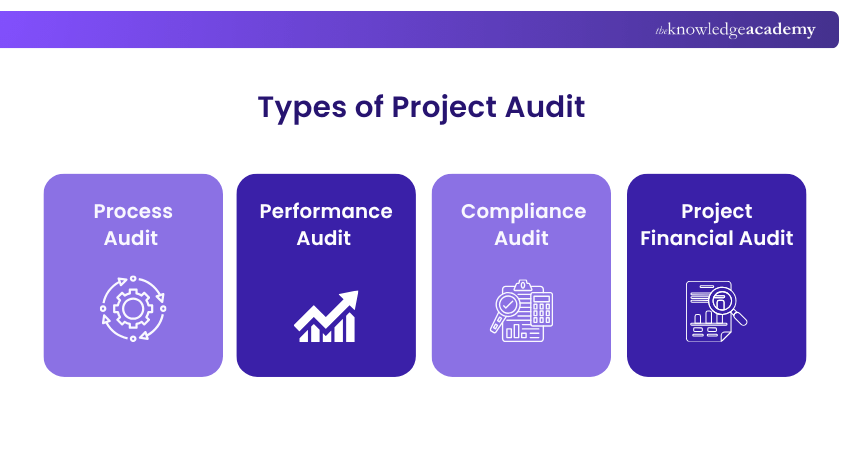
Project audits come in various forms, each designed to focus on specific aspects of a project’s performance, compliance, or management. Understanding these types is crucial for tailoring the audit process to meet the unique needs of the project. Here are the common types of project audits:
1) Process Audit
Process audits concentrate on evaluating the project management processes and methodologies employed during project execution. It assesses whether the operations are efficient, effective, and aligned with industry best practices. This type of audit helps in identifying bottlenecks, inefficiencies, and areas where process improvements are necessary.
2) Performance Audit
Performance audits assess selected aspects of project performance, such as schedule, cost, deliverables, outcomes, or stakeholder requirements. By analysing these aspects, performance audits offer insights into the project's effectiveness in meeting objectives and satisfying stakeholders.
3) Compliance Audit
Compliance audits assess whether the project adheres to legal, regulatory, and organisational guidelines. This is particularly important in industries with strict regulations, such as healthcare or finance. Compliance audits help minimise legal risks and ensure that the project activities align with established standards and regulations.
4) Project Financial Audit
Project financial audits concentrate on the project’s financial aspects. This includes a detailed review of project budgets, expenditures, financial controls, and adherence to economic policies. They can improve financial transparency, identify control weaknesses, and highlight potential misuse or inefficiency.
Quick Audit Readiness Check
☐ Are the audit objectives clearly defined?☐ Is supporting project evidence available?☐ Are audit criteria agreed in advance?☐ Is there a process for tracking recommendations?3–4 checks: You are well prepared.0–2 checks: Strengthen the audit setup first.
Steps Involved in Conducting a Project Audit
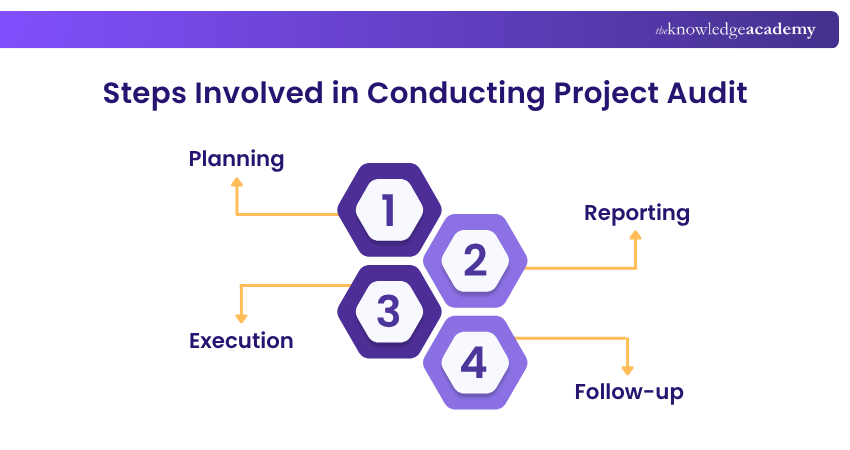
A project audit is a systematic and structured process aimed at evaluating various aspects of a project to ensure its effectiveness, compliance, and alignment with organisational goals. The audit process involves several key steps, each crucial in providing a comprehensive analysis of the project's performance. These are the steps involved in a project audit:
1) Planning
a) Define Objectives: The first step in any project audit is to define the audit objectives clearly. This involves determining what aspects of the project will be audited, such as processes, deliverables, budget management, or compliance with regulations.
b) Assemble the Audit Team: Formulate a team of skilled auditors with expertise in project management, financial analysis, compliance, and other relevant areas. The team should have the required competence and sufficient independence from the work being audited to support an objective assessment.
c) Develop Audit Plan: Create a detailed audit plan outlining the methodologies, tools, and techniques to be used during the audit. Determine the scope, project timeline, and resource requirements for the audit process.
2) Execution
a) Data Collection: Gather relevant data and documentation related to the project. This includes project plans, contracts, financial records, progress reports, communication logs, and stakeholder feedback. Data can be collected through interviews, surveys, direct observations, and document reviews.
b) Interviews and Stakeholder Engagement: Conduct interviews with project team members, stakeholders, and other relevant parties. Engaging with key stakeholders provides valuable insights into their expectations, concerns, and perceptions regarding the project.
c) On-site Observations: In some instances, auditors may conduct on-site visits to observe project activities firsthand. This direct observation helps in understanding the actual implementation of project processes.
3) Reporting
a) Analysis of Findings: Analyse the collected data and evaluate it against predetermined benchmarks, industry standards, and organisational objectives. Identify patterns, trends, strengths, weaknesses, and areas for improvement.
b) Preparation of Audit Report: Document the audit findings, conclusions, and recommendations in a comprehensive report. The information should be structured, clear, and concise, making it easy for stakeholders to understand the audit outcomes.
c) Incorporate Visuals: Utilise charts, graphs, and other visual aids to present data effectively. Visual representations enhance the clarity of the report and provide a quick overview of key findings.
Bonus Tip: Separate audit findings from recommendations. First establish what the evidence shows, then decide what action is appropriate.
4) Follow-up
a) Implementation of Recommendations: Where appropriate, the audit report may include recommendations. Management or the responsible project stakeholders should then define and implement corrective actions. Proposals should be Specific, Measurable, Achievable, Relevant, and Time-bound (SMART).
b) Monitoring and Evaluation: Establish a follow-up mechanism to track the implementation of recommendations. Regular monitoring helps verify whether corrective actions are taken and improvements are made as per the audit findings.
c) Feedback and Continuous Improvement: Gather input from project stakeholders regarding the implemented changes. Use this feedback to assess the impact of the audit recommendations and identify further areas for improvement. This continuous improvement loop is essential for enhancing future project management practices.
Strengthen project monitoring and control skills with our Project Planning and Control™ (PPC) Foundation and Practitioner Training - Sign up soon.
Benefits of Conducting Project Audits
Project audits, far from being mere assessments, offer several benefits that contribute significantly to the success of projects and the overall growth of organisations. Here’s an in-depth exploration of these advantages:
1) Enhanced Decision-making
Project audits provide actionable insights and data-driven recommendations, enabling Project Managers and stakeholders to make informed decisions. By understanding the project’s strengths and weaknesses, organisations can devise strategies that lead to more effective decision-making at various project stages.
2) Stakeholder Confidence
A successfully conducted project audit provides confidence in stakeholders, including clients, investors, and team members. When stakeholders are assured that projects are managed efficiently and transparently, it fosters trust, resulting in stronger relationships and sustained support.
3) Process Optimisation
Through rigorous evaluation, project audits identify inefficiencies and bottlenecks in project processes. Armed with this knowledge, organisations can optimise workflows, streamline operations, and enhance project efficiency. This may contribute to cost savings and more efficient resource use.
4) Proactive Risk Management
Project audits are invaluable for identifying potential risks and challenges early in the project lifecycle. By proactively addressing these risks, organisations can develop risk mitigation strategies, reducing the likelihood of project delays or failures.
5) Quality Assurance
Audits ensure that project deliverables meet established quality standards and client expectations. By validating the quality of work, organisations can uphold their reputation, gain customer satisfaction, and establish themselves as providers of high-quality services or products.
6) Knowledge Transfer and Learning
Audit findings serve as repositories of knowledge and experience. Lessons learned from audits offer invaluable insights into both successes and failures. This knowledge transfer facilitates organisational learning, allowing teams to avoid past mistakes and adopt best practices for future projects.
7) Continuous Improvement
Project audits create a culture of continuous improvement within organisations. By analysing audit results and implementing recommendations, organisations foster an environment where learning from past experiences becomes integral to the project management process. Continuous improvement ensures that each project iteration is more refined and successful than the last, enhancing the organisation’s overall effectiveness.
Elevate your project performance and credibility with Project Management Certification Training – Join now!

Saurav Sharma is a Marketing Head with 9+ years of experience in performance marketing, SEO, paid advertising and growth strategy. His data-informed approach, project oversight and strategic leadership provide practical expertise across Business Skills, Project Management, and Leadership and Management.
View Detail

 If you wish to make any changes to your course, please


