


We may not have the course you’re looking for. If you enquire or give us a call on + 1-866 272 8822 and speak to our training experts, we may still be able to help with your training requirements.
What is PMP in Healthcare: A Comprehensive Guide
ByDavid EvansLast updated on: 10 October 2026
This blog explores what PMP means in healthcare, why it matters and the skills that healthcare Project Managers need to deliver projects safely and effectively.
Quick Preview
1. PMP is a PMI certification held by Project Managers who plan, run and oversee healthcare initiatives.2. Healthcare projects must balance schedule and budget with patient safety, regulation and service quality.3. PMP-certified Project Managers help control risk, coordinate multidisciplinary teams and reduce disruption to patient care.4. Key skills include regulatory awareness, patient safety-focused risk management and change management.5. Piloting changes on a small scale helps avoid disrupting clinical workflows.
Just like any other sector, healthcare needs strong project management. A Project Manager tracks a healthcare project from start to finish, delegating work, spotting challenges, proposing solutions and keeping to schedule and budget. Many hold the Project Management Professional (PMP) certification, which shows they have the knowledge and experience to do this.
They also keep communication flowing between departments, the hospital board and anyone else involved in the process. Understanding what PMP means in healthcare, and why it matters, shows how these professionals help deliver projects safely and efficiently.
Understanding PMP in Healthcare
Project Management Professional (PMP) is a globally recognised certification offered by the Project Management Institute (PMI). In healthcare, PMP-certified professionals apply project management principles to plan, execute and oversee initiatives such as hospital expansions, healthcare technology implementations, and process improvements.
Healthcare project management involves coordinating multidisciplinary teams, managing resources, controlling risks, and ensuring projects meet organisational objectives. Professionals in this field must also consider patient safety, regulatory requirements, and service quality while delivering projects within defined timelines and budgets.
Importance of PMP in Healthcare
Healthcare projects affect patients, staff and the quality of care, so poor delivery can have serious consequences. PMP-certified Project Managers bring a structured approach to reducing that risk. Here are the key reasons it matters:
1) Patient Safety: Structured risk management helps identify and address risks to patients and staff before a project goes live, such as a new system or a redesigned ward.
2) Regulatory Compliance: Healthcare projects must meet health and safety, data protection and clinical governance requirements. A structured approach builds compliance checks into planning and delivery instead of leaving them to the end.
3) Budget and Resource Control: Healthcare budgets are often tightly managed. Tracking cost, scope and resources helps keep projects such as equipment installations and technology rollouts from overrunning.
4) Multidisciplinary Coordination: Projects involve clinicians, administrators, IT teams and suppliers, each with different priorities. A Project Manager aligns them around shared objectives and timelines.
5) Smoother Technology Implementation: Electronic health records, telehealth platforms and similar systems affect daily clinical work. Planning, testing and staff training reduce disruption to patient care during rollout.
6) Clear Stakeholder Communication: Regular reporting keeps the hospital board, department heads and clinical staff informed about progress, risks and changes, so decisions rest on current information.
Prepare yourself to lead teams with our Project Management Ready Course - Join today!
Essential Skills for Healthcare PMP
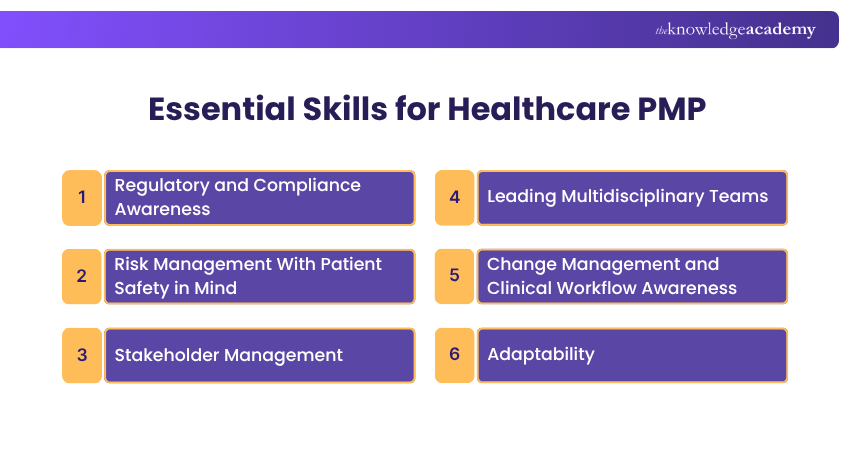
Healthcare projects combine clinical, regulatory and technical demands, so Project Managers in this sector need skills beyond general project management. Here are the essential skills:
1) Regulatory and Compliance Awareness
Healthcare projects operate under strict rules, such as health and safety requirements, data protection and clinical governance. Project Managers need to know which rules apply to a project and build the required checks, approvals and documentation into the plan.
2) Risk Management With Patient Safety in Mind
Risks in healthcare include threats to patient safety and continuity of care as well as delays and cost overruns. Project Managers need to identify these early, assess their potential impact on patients and staff and agree on responses before a project goes live.
3) Stakeholder Management
Healthcare stakeholders range from clinicians and administrators to board members and suppliers, and they often hold different priorities. Project Managers need to understand those priorities, communicate in terms each group values and keep everyone informed as plans change.
4) Leading Multidisciplinary Teams
Project Managers often lead teams that include people who do not report to them, such as doctors, nurses and technical specialists. Influence, credibility and clear expectations matter more than formal authority, and bringing different professions towards one goal is central to the role.
5) Change Management and Clinical Workflow Awareness
New systems and processes affect how clinical staff work every day, so a technically sound project can still fail if it disrupts care routines. Project Managers need to understand clinical workflows, involve staff early and support them through the transition with training and clear communication.
Trainer’s Pro Tip
A project can meet its technical requirements yet create difficulties for healthcare staff. Use a small-scale pilot in a controlled setting to observe how proposed changes affect everyday clinical workflows before expanding implementation.
6) Adaptability
Adaptability enables healthcare Project Managers to respond effectively to changing regulations, evolving healthcare technologies and unexpected project challenges. This skill helps them adjust project plans, manage emerging risks, and maintain progress while meeting organisational and patient care requirements.
Understand key concepts of project management frameworks with PMP Certification Training - Join now!

David Evans creates accessible resources that help professionals understand different approaches to planning and delivering projects. His content addresses changing requirements, collaborative working and the practical demands of contemporary project environments.
View Detail

 If you wish to make any changes to your course, please


