


 Top Rated Course

We may not have the course you’re looking for. If you enquire or give us a call on 01344203999 and speak to our training experts, we may still be able to help with your training requirements.
What is Ethical Hacking: A Complete Guide
John Davies 20 August 2026Ethical Hacking is the authorised practice of identifying security vulnerabilities before attackers can exploit them. This blog covers its benefits, types, phases, and key challenges.

Training Outcomes Within Your Budget!
We ensure quality, budget-alignment, and timely delivery by our expert instructors.
Table of Contents
Key Takeaways
1. Kaizen is a continuous improvement approach that encourages ongoing improvements to processes and ways of working.2. Everyone can contribute to Kaizen, from frontline employees to organisational leaders.3. Kaizen focuses on root causes and waste, helping teams improve processes rather than repeatedly fixing symptoms.4. Tools such as PDCA, 5S and the Five Whys can help organisations turn continuous improvement into practical action.5. Kaizen has no final destination. Successful improvements become new standards and the starting point for further improvement.
Your security team discovers a vulnerability in a customer-facing application just before a major launch.
What would you do?
A. Launch as planned and fix it later
B. Investigate the vulnerability and assess its impact
C. Take the entire application offline
The best choice is B. Investigating the vulnerability first helps the team understand its severity, potential impact and the appropriate action to take.
This is where Ethical Hacking plays an important role. Keep reading to explore What is Ethical Hacking, how authorised security testing works and how it helps organisations identify and address vulnerabilities before attackers can exploit them.
What is Ethical Hacking?
Ethical Hacking is the authorised practice of testing computer systems, networks and applications to identify and assess security vulnerabilities. Ethical Hackers use permitted techniques within a defined scope to uncover weaknesses that malicious attackers could potentially exploit.
Once testing is complete, Ethical Hackers document their findings, explain the potential risks and recommend suitable remediation measures. This helps organisations address security weaknesses and strengthen their overall Cyber Security.

Benefits of Ethical Hacking
Ethical Hacking proactively tests systems and enhances security to minimise cyber risks and strengthen overall organisational resilience. The key benefits of Ethical Hacking are:
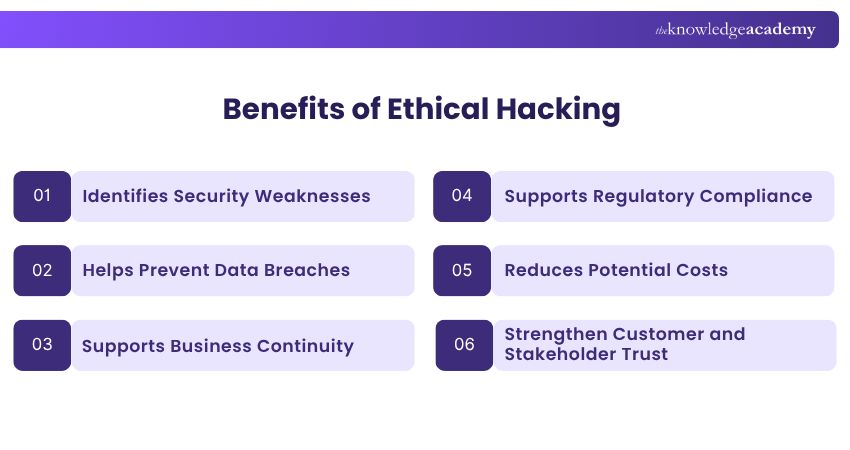
1) Identifies Security Weaknesses: Ethical Hacking helps identify security gaps in systems, networks and applications before Hackers can find and exploit them.
2) Helps Prevent Data Breaches: By identifying and addressing vulnerabilities early, organisations can reduce opportunities for attackers to gain unauthorised access to sensitive business and customer data.
3) Supports Business Continuity: Identifying and addressing vulnerabilities can reduce the likelihood or impact of cyber incidents that cause system downtime and operational disruption.
4) Supports Regulatory Compliance: Security testing can provide evidence and insights that support compliance with applicable Cyber Security, contractual and data protection requirements.
5) Reduces Potential Costs: Finding and addressing vulnerabilities early can help organisations avoid some of the financial, operational and reputational costs associated with successful cyber incidents.
6) Strengthen Customer and Stakeholder Trust: Strong Cyber Security practices can demonstrate to customers, partners and investors that an organisation takes data security seriously, helping strengthen confidence and trust.
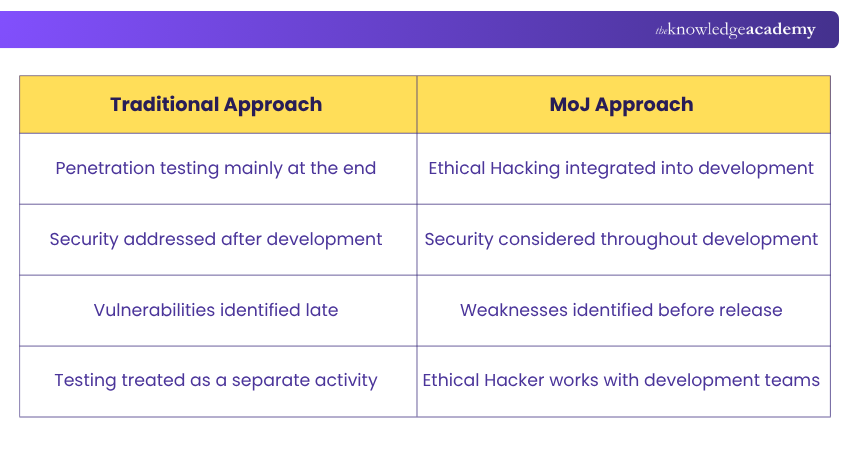
These benefits become clearer when Ethical Hacking is built into security from the start rather than treated as a final check.
Real-world Case Study: Ministry of Justice
The UK Ministry of Justice (MoJ) incorporated Ethical Hacking into the testing of its digital services. For example, its Help With Fees service was tested by the MoJ's Ethical Hacker before progressing towards public beta, showing how security testing can be considered during service development rather than only after release.
Types of Ethical Hacking
Before exploring the different types, try matching each security target with the most relevant type of Ethical Hacking:
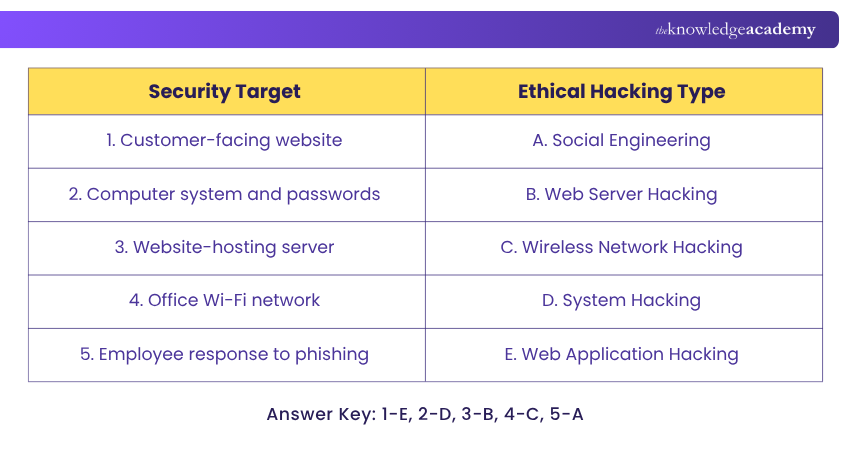
Now let's explore the five common types of Ethical Hacking and see how each one focuses on a different security target:
1) Web Application Hacking
This type scans websites and web-based applications for vulnerabilities that could be exploited by Hackers. Ethical Hackers test login forms, search boxes and data entry points. They seek weaknesses or errors in the code that can compromise security. The aim is to ensure the security of the user's data and the website itself. Key areas of focus include:
a) Identifying vulnerabilities in application code and configuration
b) Testing authentication and access controls
c) Assessing user input handling for security weaknesses
d) Evaluating how vulnerabilities could affect application data and functionality
2) System Hacking
This involves testing a computer system to find and fix security issues. Ethical Hackers try to gain access just like real Hackers would. They check if passwords, files, or settings can be broken into. This helps protect important data on computers. Key areas of focus include:
a) Testing authentication and password controls
b) Assessing system configurations for weaknesses
c) Evaluating user permissions and privilege controls
d) Identifying vulnerabilities that could allow unauthorised access
3) Web Server Hacking
Web Server Hacking focuses on assessing the servers that host websites and web applications. Ethical Hackers examine server configurations, software, access controls and exposed services for security weaknesses. Identifying and addressing server-level vulnerabilities helps reduce risks affecting hosted websites, applications and data.
a) Assessing server configuration weaknesses
b) Identifying vulnerable or outdated server software
c) Testing access controls and exposed services
d) Evaluating weaknesses that could affect hosted applications or data
4) Wireless Network Hacking
Wireless Network Hacking involves assessing Wi-Fi and other wireless networks for security weaknesses. Ethical Hackers examine authentication, encryption, passwords and network configurations to determine whether attackers could gain unauthorised access or compromise data transmitted over the network. Key areas of focus include:
a) Securing Wi-Fi from unauthorised users
b) Protecting data transmitted over the network
c) Preventing unauthorised network access
d) Checking for weak or default passwords
5) Social Engineering
This is when Hackers trick people into giving away private information. Ethical Hackers test how easy it is to fool staff with fake emails or calls. They help train employees to spot and avoid such tricks. It's about protecting the human side of security. Key areas of focus include:
a) Testing employee responses to authorised phishing simulations
b) Assessing awareness of information-disclosure risks
c) Identifying weaknesses in human security procedures
d) Providing findings that can support security awareness improvements
Understand vulnerability assessment and penetration testing techniques with our Mastering Metasploit Framework Training – Join now!
Phases of Ethical Hacking
Ethical Hacking typically follows a structured process, although the exact phases may vary depending on the scope and type of assessment. Here are six common phases:
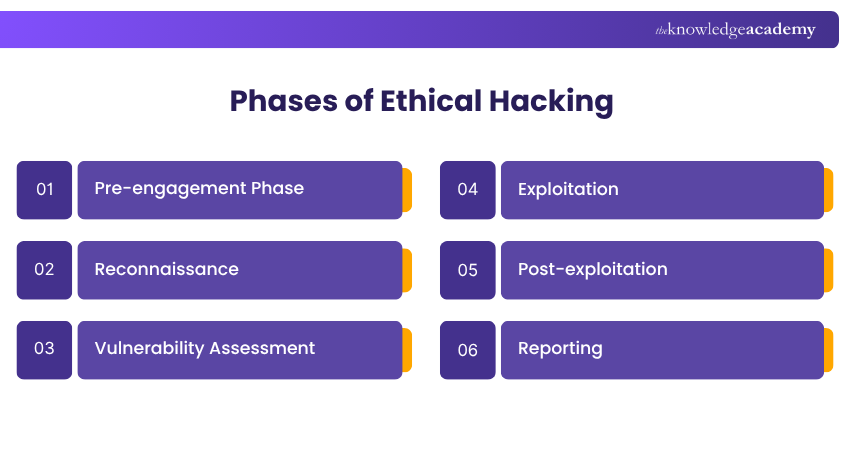
1) Pre-engagement Phase
The Ethical Hacker works with the client to define the goals, scope and testing requirements. This includes establishing rules of engagement, obtaining authorisation and completing necessary agreements before testing begins.
2) Reconnaissance
The Ethical Hacker gathers information about the target, such as IP addresses, domains, network infrastructure and publicly available data. Techniques such as Open-Source Intelligence (OSINT) and authorised network scanning help identify potential areas for further assessment.
3) Vulnerability Assessment
During this phase, the Ethical Hacker uses various tools and techniques to identify vulnerabilities in the target system or network. This may involve vulnerability scanning, analysing configuration weaknesses and assessing the effectiveness of security controls. The aim is to identify vulnerabilities that an attacker could potentially exploit.
4) Exploitation
The Ethical Hacker attempts to exploit identified vulnerabilities within the authorised scope to assess their impact. This may involve gaining access or escalating privileges to understand what an attacker could potentially achieve.
5) Post-exploitation
After gaining access, the Ethical Hacker assesses the potential impact of the compromise. Depending on the agreed scope, this may include privilege escalation, lateral movement and evaluating access to sensitive systems or data.
6) Reporting
During the reporting stage, the Ethical Hacker documents the findings, identified vulnerabilities, potential risks and recommended remediation measures. The report should be clear, concise and actionable, helping the client understand the findings, prioritise vulnerabilities and address identified security weaknesses.
💡 Ethical Hacker's Pro Tip:
As a beginner, focus not just on finding vulnerabilities but on understanding their impact and clearly documenting how they can be fixed.
Challenges to Ethical Hacking
While Ethical Hacking can strengthen an organisation's Cyber Security, its effectiveness depends on factors such as testing scope, methodology, available time and tester expertise. Key challenges include:
Limited assessment scope may leave some vulnerabilities undiscovered
Rapidly evolving cyber threats require continuous learning and skill development
False positives and false negatives can affect the accuracy of security assessments
Strict legal, regulatory and ethical compliance must be maintained throughout testing
Reality Check:
MYTH:Ethical Hacking can identify every security vulnerability in an organisation.REALITY:Ethical Hacking only assesses the agreed scope and testing conditions. New vulnerabilities, evolving threats and false results can still leave security gaps.
Conclusion
Understanding What is Ethical Hacking is shows how authorised security testing can help organisations uncover vulnerabilities and assess their potential impact. When performed within a clearly defined scope and followed by effective remediation, Ethical Hacking can strengthen security controls, reduce cyber risks and help organisations make better-informed security decisions.
Develop the skills to assess system security, detect vulnerabilities and protect organisations from cyber threats with our Ethical Hacking Professional Course- join now!
Frequently Asked Questions
What is the Difference Between Ethical Hacking and Penetration Testing?

Ethical Hacking is a broad approach to identifying and assessing security weaknesses using authorised techniques. Penetration testing is a more focused security assessment that attempts to exploit identified vulnerabilities within an agreed scope to determine their potential impact.
How Much Does an Ethical Hacker Earn?
According to Glassdoor, Ethical Hackers in the UK earn an average base salary of around £48,000 per year, with typical salaries ranging from £35,000 to £64,000 annually. Earnings vary based on experience, certifications, industry, employer, and location.
Will AI Replace Ethical Hackers?
AI is unlikely to replace Ethical Hackers completely. While AI can automate threat detection, vulnerability scanning, and routine security tasks, human expertise is still essential for critical thinking, ethical decision-making, and tackling complex cyber threats.

John Davies


Cyber Security Governance & Assurance Specialist
John Davies is a cybersecurity expert specialising in governance, risk management, and compliance. With over 15 years in the field, he has led enterprise-wide security programmes across finance, healthcare and public sector organisations. His content provides practical guidance on building secure environments, managing risk and aligning with regulatory frameworks.


 If you wish to make any changes to your course, please


