




We may not have the course you’re looking for. If you enquire or give us a call on +40 316317743 and speak to our training experts, we may still be able to help with your training requirements.
System Architecture: Components and Types Explained
ByThe Knowledge AcademyLast updated on: 03 October 2026
System architecture is a blueprint that outlines how different parts of a system work together. This blog explores system architecture, its key components and its types like monolithic and microservices to help you choose the right one. Discover how effective architecture enhances performance, security, and scalability for modern systems.
What You Should Know
1. System architecture defines how a system's components are structured, connected and designed to work together.2. Hardware, software, interfaces, system structure and security are important architectural considerations.3. Different architecture types, such as monolithic, microservices, layered and event-driven architecture, are suited to different system requirements.4. There is no single best architecture for every system, so factors such as scalability, performance, security and maintainability should guide the choice.5. Effective system architecture can support performance, scalability, security, maintainability and flexibility.
Are you curious about how complex systems work together so effortlessly? System architecture is like the master plan that outlines how each part of a system collaborates to create a harmonious and efficient operation. In this blog, we'll discuss the essential components of system architecture and explore various types to help you find the perfect fit for your needs.
Whether you're a beginner or a tech enthusiast, this blog shows you how smart architecture can enhance performance, security, and scalability. Dive in to discover the world of system architecture!
What is System Architecture?
System architecture is the conceptual model for defining the structure, behaviour, and views of a system. It provides a comprehensive blueprint that outlines how different components of a system interact and work together to achieve specific objectives.
System architecture is essential for ensuring that all parts of a system align with the overall goals and requirements. It encompasses both hardware and software components, system interfaces, and security considerations, all of which are crucial for maintaining a cohesive and secure system.

Key Components of System Architecture
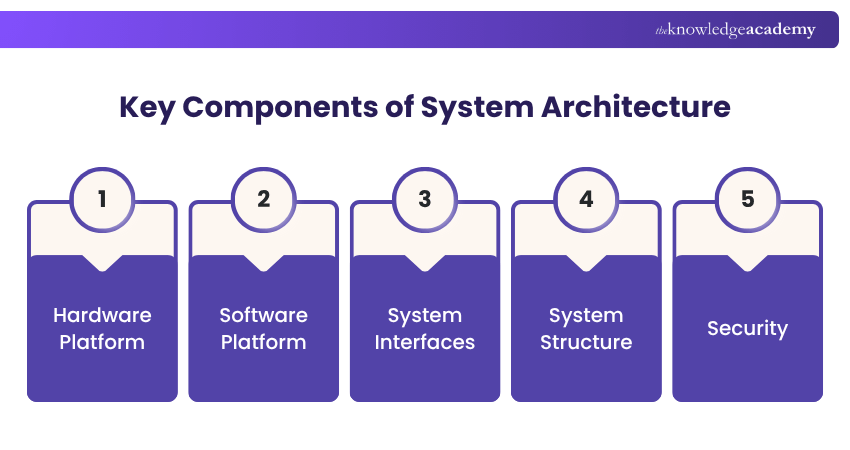
When designing a system architecture, several key components must be considered to ensure the system functions smoothly and efficiently. These components form the backbone of the architecture and influence its performance and scalability:
1) Hardware Platform
The hardware platform is the physical foundation of a system. It includes servers, storage devices, network equipment, and other hardware components. When choosing hardware, it's essential to consider factors such as processing power, storage, and network connectivity. The hardware platform should be scalable to accommodate future growth and advancements in technology.
2) Software Platform
The software platform includes the operating systems, applications, and other software components that run on the hardware. Picking the right software platform is crucial for achieving optimal performance and compatibility. It should support the system's functionality and be adaptable to changing needs and technological advancements.
3) System Interfaces
System interfaces define how different components of a system communicate with each other. They include Application Programming Interfaces (APIs), protocols, and data formats. Well-designed interfaces ensure seamless communication between components and enable interoperability with external systems. Clear and standardised interfaces reduce the risk of errors and enhance system flexibility.
Pro Tip
Clearly document how components exchange information, including their APIs, protocols and data formats. Well-defined interfaces can make integration, testing and maintenance easier.
4) System Structure
The system structure outlines the organisation and arrangement of components within the system. It determines how data flows, how processes are executed, and how components interact. A well-structured system ensures efficient resource utilisation and simplifies maintenance and troubleshooting. System Architects must carefully design the structure to achieve optimal performance and reliability.
5) Security
Security is a critical component of system architecture. It involves protecting the system from unauthorised access, data breaches, and other threats. Security measures include authentication, encryption, access controls, and intrusion detection systems. A robust security framework ensures that sensitive data is safeguarded and that the system remains resilient against cyberattacks.
Develop the skills needed to oversee successful software projects with Software Development Lifecycle Training – Register today!
Types of System Architectures
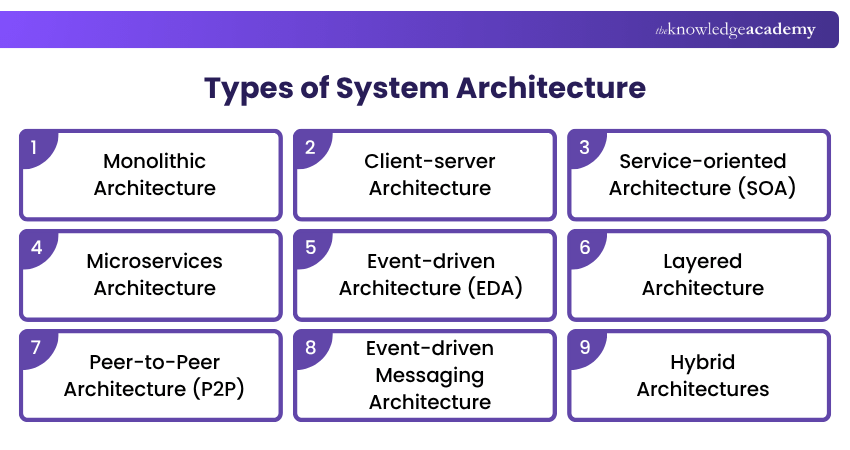
System architectures can be classified into various types, each with its own characteristics and use cases. Here are some of them:
1) Monolithic Architecture
It is a traditional approach where all components of a system are tightly integrated into a single unit. In a monolithic system, all functions are interdependent, and changes to one part can affect the entire system. While monolithic architecture is simple to develop and deploy, it can become challenging to maintain and scale as the system grows.
Example: Many legacy applications and early software systems are built on monolithic architecture.
2) Client-server Architecture
Client-server architecture is a distributed model where the system is divided into clients and servers. Clients request services from servers, which process the requests and return responses. This architecture can simplify centralised management of shared services and resources. It's often used in web applications, where the web browser is the client, and the server runs the application.
Example: Email services, where the email client interacts with the email server.
3) Service-oriented Architecture (SOA)
Service-oriented Architecture (SOA) is a modular approach that organises a system as a collection of services. Each service serves as a self-contained unit that performs a function and communicates with other services through interfaces. SOA promotes reusability and scalability, making it suitable for complex and evolving systems.
Example: A banking system where different services handle account management, transaction processing and customer support.
4) Microservices Architecture
Microservices architecture is part of SOA's evolution, where a system is composed of small, independently deployable services. Each service is responsible for a specific functionality and can be developed, tested, and deployed independently. This architecture enhances agility and scalability, allowing organisations to quickly adapt to changing requirements.
Example: E-commerce platforms, where separate microservices manage product catalogues, orders, and payments.
5) Event-driven Architecture (EDA)
It is a design pattern that focuses on responding to changes or events in the system. Components within an EDA system communicate through event notifications, enabling real-time processing and decision-making. This architecture is well-suited for systems that require rapid responses to dynamic conditions.
Example: Stock trading platforms that react to market changes in real time.
6) Layered Architecture
Layered architecture organises a system into layers, each with a specific responsibility. Common layers include presentation, business logic, data access, and database layers. This architecture promotes the separation of concerns and simplifies maintenance by isolating changes to specific layers.
Example: Web applications that separate user interfaces, application logic and data management.
7) Peer-to-Peer Architecture (P2P)
Peer-to-Peer (P2P) architecture is a decentralised model where each node in the system acts as a client as well as a server. Nodes can share resources and communicate directly with each other without depending on a central server. P2P architecture is resilient and scalable, making it suitable for distributed systems.
Example: File-sharing networks where users share files directly with one another.
8) Event-driven Messaging Architecture
Event-driven messaging architecture combines elements of EDA and messaging systems to enable asynchronous communication between components. Messages are sent and processed based on events, allowing for flexible and scalable system interactions. This architecture is ideal for systems with high concurrency requirements.
Example: Notification systems that send alerts based on specific triggers.
9) Hybrid Architectures
Hybrid architectures combine elements of multiple architectural styles to create a customised solution. This approach allows System Architects to leverage the strengths of different architectures and address specific challenges. Hybrid architectures offer flexibility and adaptability for diverse use cases.
Example: A social media platform that uses microservices for content delivery and a layered architecture for user authentication.
Learn the key to modern software engineering excellence with our Software Engineering Courses – Sign up now!
Benefits of Using System Architecture
Implementing a well-defined system architecture offers numerous benefits, such as:
1) Improved Performance: A clear architecture ensures efficient resource allocation and optimal system performance.
2) Scalability: Properly designed architectures accommodate future growth and evolving user needs.
3) Maintainability: Modular architectures simplify maintenance and troubleshooting, reducing downtime and costs.
4) Security: A robust architecture includes security measures that protect against threats and vulnerabilities.
5) Flexibility: Adaptable architectures allow for easy integration of new features and technologies.
6) Collaboration: A shared architectural framework promotes collaboration among development teams and stakeholders.
Trainer's Insight
Architecture is about managing trade-offs. An approach that improves independent scalability or deployment may introduce additional complexity elsewhere, so priorities should be established before making a decision.
How to Choose the Right System Architecture?
Choosing a system architecture involves balancing technical requirements with the complexity and long-term needs of the system. Instead of selecting an architecture simply because it is widely used, consider what the system actually needs to achieve.
Important factors include:
1) System Size and Complexity: Consider the number of components, interactions and functions the architecture needs to support.
2) Scalability Requirements: Determine whether the entire system or individual components may need to scale as demand grows.
3) Performance Needs: Consider response times, workloads and how efficiently components need to communicate.
4) Security Requirements: Identify sensitive data, access requirements and areas that require additional protection.
5) Maintainability: Consider how easily components can be updated, tested and troubleshot.
6) Integration Requirements: Identify external applications, services and systems that need to communicate with the architecture.
7) Team Capabilities: Consider whether the team has the skills and resources required to build, deploy and maintain the chosen architecture.
8) Future Requirements: Think about how easily the architecture can accommodate changing business and technical needs.
Architecture Selection Checklist
Before finalising your architecture, ask:
□ What level of scalability is required?□ What performance requirements must be met?□ How complex is the application?□ What security requirements apply?□ Do components need independent deployment?□ Which external systems require integration?□ How frequently are requirements likely to change?□ Does the team have the necessary expertise?□ How important is operational simplicity?□ Which architectural trade-offs are acceptable?
Improve your ability to deliver efficient solutions with Systems Development Essentials Training – Join now!

The Knowledge Academy develops accessible learning content across Project Management, IT, Cybersecurity, Data Science, Business Analysis, HR, Accounting and Finance, Leadership and Health and Safety. Its resources combine subject research with clear explanations to help professionals build practical knowledge across a wide range of disciplines.
View Detail

 If you wish to make any changes to your course, please


