




We may not have the course you’re looking for. If you enquire or give us a call on +44 1344 203 999 and speak to our training experts, we may still be able to help with your training requirements.
The Role of Digital Marketing in Modern Business
ByAishwarya UnniLast updated on: 23 September 2026
Explore the role of digital marketing in modern business and gain a comprehensive understanding of its significance. Learn how it expands brand visibility, engages with a targeted audience, generates quality leads, drives website traffic, and more in detail.
Quick Overview
1. Digital marketing helps businesses improve their online visibility and reach a wider audience.2. It enables more targeted communication with potential customers across different digital channels.3. Businesses can use it to generate leads, drive website traffic, and support customer acquisition.4. Digital marketing also helps strengthen customer relationships through personalised and ongoing engagement.5. When used effectively, digital marketing can support informed decision-making and long-term business growth.
Many modern businesses rely on digital marketing strategies to reach their audiences and achieve marketing goals. It amalgamates a wide range of activities, each playing a unique role in promoting products or services in the online realm.
Therefore, it’s crucial to understand the role of digital marketing for businesses to leverage its potential and and remain competitive in increasingly digital markets. This comprehensive blog will explore the role of digital marketing in modern businesses and how they contribute to overall business growth. So, read on!
The Role of Digital Marketing in Business Growth
Digital marketing is the use of online channels and technologies to promote products or services and connect with target audiences. It plays a key role in business growth by helping organisations reach wider audiences, build brand awareness, generate leads, and strengthen customer relationships.
Through channels such as search engines, social media, email, and online advertising, businesses can connect with potential customers, track performance, and adjust their strategies based on measurable results. Let’s explore the key ways digital marketing supports business growth:
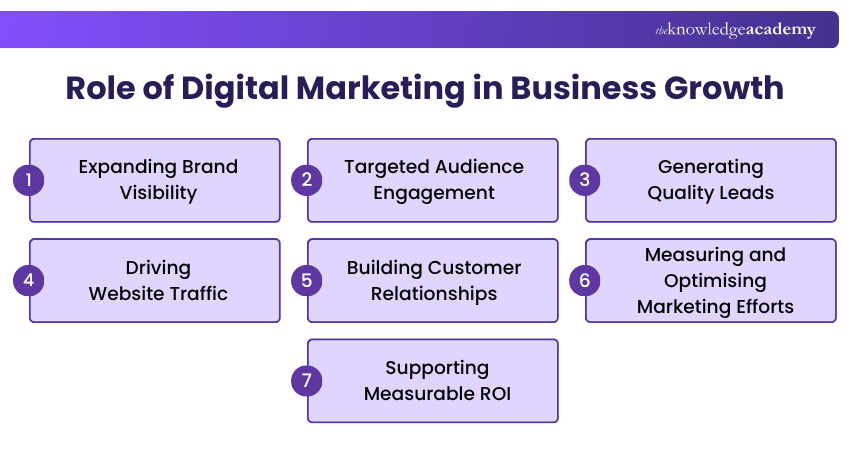
1) Expanding Brand Visibility
Digital marketing allows businesses to enhance their brand visibility and reach a wider audience. Through various channels like search engines, social media platforms, and email campaigns, businesses can promote their products or services to wider audiences, including customers in international markets.
With the implementation of effective digital marketing strategies, businesses can increase their online presence. This ensures that their brand remains visible to their target audience.

2) Targeted Audience Engagement
One of the key roles of digital marketing is that it can target specific audiences. Through Search Engine Optimisation (SEO), businesses can improve their visibility for relevant search queries and reach users actively searching for related information, products, or services. This ensures that their website is visible to users actively searching for products or services in their industry.
Further, social media marketing helps businesses target specific demographics, interests, and behaviours, ensuring that their content reaches the right audience. Moreover, engaging with the target audience through personalised messaging and tailored content fosters stronger connections and increases the likelihood of conversions.
3) Generating Quality Leads
Digital marketing can help businesses generate and nurture potential leads for businesses. By leveraging various lead-generating tools, businesses can capture valuable information from potential customers, like email addresses or contact details.
This allows businesses to nurture these leads through targeted email marketing campaigns. It also provides them with relevant information and incentives to convert into customers. By employing lead scoring and segmentation techniques, businesses can focus their resources on leads that are more likely to convert. As a result, they can optimise their sales funnel and improve their chances of conversion.
4) Driving Website Traffic
A well-executed digital marketing strategy can help increase traffic to a business’s website. Through SEO efforts, businesses can improve their website's organic rankings, increasing visibility and click-through rates.
Further, social media marketing and paid advertising campaigns can also drive targeted traffic to specific landing pages or product pages. By attracting more visitors to their websites, businesses have a greater opportunity to showcase their offerings, educate potential customers, and ultimately drive conversions.
5) Building Customer Relationships
Another key role of digital marketing is that it facilitates ongoing customer engagement and relationship building. Through social media platforms, businesses can interact with their customers, respond to inquiries, and address concerns promptly. Engaging customers through email marketing allows businesses to provide valuable content, personalised recommendations, and exclusive offers.
This can strengthen customer relationships and support loyalty. Through this, businesses can continuously nurture and retain their customer base. As a result, this may contribute to repeat purchases and positive word-of-mouth referrals.
6) Measuring and Optimising Marketing Efforts
Digital marketing also provides businesses with extensive data and analytics to measure the success of their marketing campaigns. Through various tools and platforms, businesses can track website traffic and user behaviours. They can also keep an eye on conversion rates and other key performance indicators.
This data-driven approach allows businesses to gain insights into their functioning, enabling them to optimise their marketing efforts and allocate resources effectively. By continuously monitoring and analysing campaign performance, businesses can make data-backed decisions to refine their strategies and maximise their Return on Investment (ROI).
7) Supporting Measurable ROI
One of the aspects that sets digital marketing apart is that it helps businesses achieve impressive ROI. It focuses on the amount of money invested in a marketing campaign and helps monitor the investment made and the returns generated.
It is more results-driven with optimum tracking of the investment made and its significant return. Digital marketing offers a more cost-effective way to run ads and reach larger target markets.
Enhance your social media prowess and drive impactful digital marketing campaigns with our Social Media Marketing Course - Join now!
Components of Digital Marketing
The components of digital marketing are the key channels and techniques businesses use to promote their products or services online and connect with target audiences. Let’s check the main components of digital marketing and how each contributes to an effective online strategy:
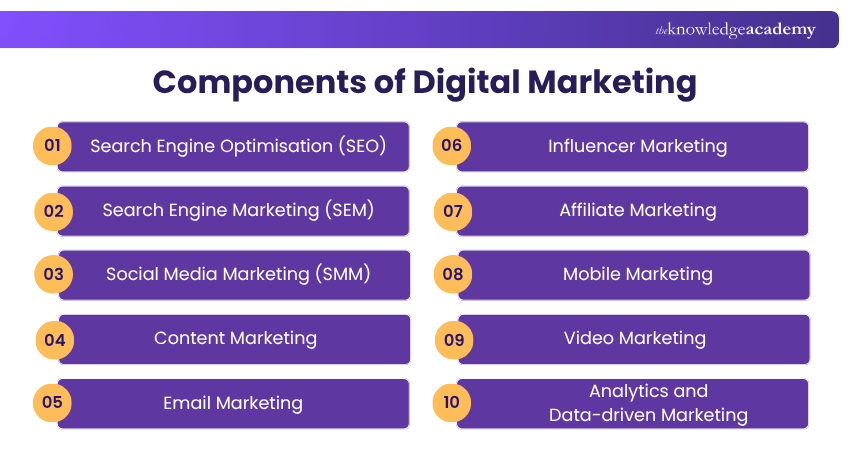
1) Search Engine Optimisation (SEO): SEO focuses on improving a website's visibility in search engine results. It involves optimising web pages, creating quality content, and obtaining backlinks to enhance organic rankings.
2) Search Engine Marketing (SEM): Paid advertising through SEM and Pay-Per-Click (PPC), along with display and remarketing campaigns, aims to increase visibility on search results. It helps businesses reach targeted audiences quickly and drive relevant traffic to their websites
3) Social Media Marketing (SMM): SMM utilises social media platforms to engage with the audience, build brand awareness, and drive traffic to the website. It involves creating compelling content, running ads, and leveraging influencer partnerships.
4) Content Marketing: Content marketing emphasises the creation and distribution of valuable, consistent, and relevant content. It helps attract and retain a defined audience. It includes blogs, articles, videos, infographics, and more.
5) Email Marketing: Email marketing involves sending targeted messages directly to a subscriber's inbox. It helps nurture leads, build customer relationships, and promote products or services effectively.
6) Influencer Marketing: Influencer marketing involves collaborating with individuals who have established audiences or influence within a particular niche.
7) Affiliate Marketing: Affiliate marketing enables businesses to partner with affiliates who promote their products or services in exchange for a commission. It helps expand the reach and drive sales through affiliate referrals.
8) Mobile Marketing: Mobile marketing focuses on reaching customers through their mobile devices. It includes mobile ads, SMS marketing, mobile apps, and optimising websites for mobile users.
9) Video Marketing: Video marketing utilises engaging videos to promote products, services, or brands. It includes creating informative tutorials, product demonstrations, testimonials, and viral videos to captivate the audience.
10) Analytics and Data-driven Marketing: Analytics and data-driven marketing involve gathering and analysing data to make informed decisions. It helps measure the success of marketing campaigns, identify trends, and optimise strategies for better results, aligning with future trends in digital marketing.
Learn to make data-driven decisions to improve search rankings with our SEO Course - Join today!

Aishwarya Unni is a Copywriter with 2+ years of experience in reporting, web content, blogs, email marketing, and case studies. Her journalism background, combined with her research and writing experience across Business Skills and Human Resources, helps her create clear, engaging content for different audiences.
View Detail

 If you wish to make any changes to your course, please


