




We may not have the course you’re looking for. If you enquire or give us a call on +40 316317743 and speak to our training experts, we may still be able to help with your training requirements.
Project vs Program vs Portfolio Management: Key Differences
ByGrace MitchellLast updated on: 03 October 2026
Project, program and portfolio management differ in scope, objectives and strategic focus. Projects deliver specific outputs, programs coordinate related work to realise benefits and portfolios align investments with organisational strategy. Understanding these approaches helps organisations improve planning and resource allocation. It also ensures initiatives remain aligned with long-term business objectives.
Have you ever wondered why some initiatives are called projects, programs or portfolios? It's a common point of confusion. Although projects, programs and portfolios are closely connected, each serves a different management purpose.
Understanding the differences among project, program and portfolio management helps organisations choose the right approach, allocate resources effectively and align work with strategic priorities. In this blog, you'll explore what each approach means, how they differ and when to use each one for the best results.
What is Project Management?
Project management involves applying knowledge, skills, tools and techniques in a project to meet project requirements and to achieve specific goals within defined constraints. It supports the planning, execution, monitoring and completion of temporary work that delivers a unique product, service or result.

What is Program Management?
Program management is the coordinated management of a group of related projects that work together to achieve benefits and outcomes that would be difficult to obtain by managing the projects separately. Instead of managing each project separately, program management focuses on aligning them, coordinating resources, managing dependencies, and ensuring they collectively deliver long-term business benefits.
What is Portfolio Management?
Portfolio management involves selecting, prioritising and overseeing projects, programs and other strategic work so that investments remain aligned with organisational objectives. Unlike project or program management, portfolio management focuses on choosing the right initiatives, allocating resources effectively and maximising business value across the organisation.
Management Ladder
Project → Program → PortfolioDelivery → Benefits → Strategy
Note: This shows their typical management focus, not a mandatory organisational hierarchy.
Key Differences Between Project vs Program vs Portfolio Management
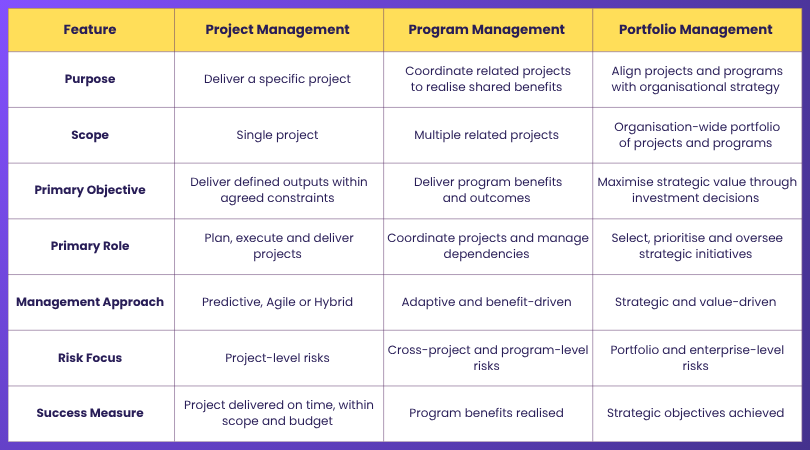
Project, program and portfolio management operate at different levels of organisational work. Projects focus on delivery, programs coordinate related initiatives for benefits and portfolios guide strategic investment choices.
At a Glance
Project Management: Focuses on execution and deliveryProgram Management: Focuses on coordination and benefitsPortfolio Management: Focuses on strategic alignment and investment decisions
1) Scope
Here are the key differences in the scope of project, program and portfolio management:
1) Project Management
Project management focuses on planning and executing tasks to meet specific project requirements. A Project Manager defines the project scope, develops schedules, allocates resources, manages risks and tracks progress. They ensure the project is delivered in line with agreed scope, schedule, cost, quality and stakeholder requirements.
2) Program Management
Program management focuses on coordinating related projects to achieve shared outcomes and benefits. Program Managers define program goals, coordinate resources, manage dependencies and oversee program-level risks. They also ensure projects remain aligned with organisational objectives and collectively deliver the intended benefits.
3) Portfolio Management
Portfolio management has a broad strategic scope, overseeing selected projects, programs and other work grouped to support organisational objectives. By providing a broader strategic view, it helps optimise resources, manage portfolio-level risks and maximise strategic value.
2) Objectives
Now, let’s compare the objectives of project, program and portfolio management:
1) Project Management
The objective of project management is to deliver defined outputs within the agreed scope, schedule, cost and quality requirements. Project Managers work with stakeholders to define objectives, develop project plans, coordinate teams, manage risks, monitor progress and ensure successful project delivery.
2) Program Management
The objective of Program Management is to deliver coordinated benefits across related projects. Program Managers define program goals, develop strategies, manage project interdependencies, allocate resources and monitor progress. They also resolve issues and ensure the program delivers its intended value.
3) Portfolio Management
The objective of portfolio management is to select, prioritise and oversee investments that support organisational strategy. Portfolio Managers align initiatives with business goals, evaluate portfolio components based on strategic alignment, expected value, risk, resource capacity and organisational priorities.
Gain certification in program management for career advancement with the Program Management Professional (PgMP)® Certification Training – Join today!
3) Roles
Here are the main differences between the roles involved in project, program and portfolio management:
1) Project Management
a) Project Leadership: Project Managers lead individual projects and provide direction throughout the project lifecycle.
b) Delivery Accountability: They are accountable for ensuring the project works towards its defined objectives and expected deliverables.
c) Team Coordination: Project Managers provide a central point of coordination between project teams and stakeholders.
d) Project-level Oversight: They maintain oversight of project performance and ensure activities remain aligned with agreed requirements.
2) Program Management
a) Program Leadership: Program Managers provide coordinated leadership across related projects within a program.
b) Benefits Focus: They maintain focus on achieving intended program outcomes and benefits beyond individual project deliverables.
c) Cross-project Coordination: Program Managers provide oversight across projects where dependencies and shared priorities exist.
d) Strategic Connection: They connect coordinated project activities with broader program and organisational objectives.
3) Portfolio Management
a) Strategic Oversight: Portfolio Managers provide strategic oversight of projects, programs and other portfolio components.
b) Investment Focus: They maintain focus on whether portfolio investments continue to support organisational priorities.
c) Portfolio-level Direction: Portfolio Managers provide direction across portfolio components rather than managing individual project delivery.
d) Strategic Alignment: They help ensure the overall portfolio remains aligned with organisational objectives.
4) Responsibilities
Here are the key differences between the responsibilities associated with project, program and portfolio management:
1) Project Management
Project Managers oversee day-to-day project activities. They manage schedules, budgets, risks and milestones while coordinating with stakeholders to ensure deliverables meet quality standards. Their focus is on achieving project objectives within the agreed constraints.
2) Program Management
Program Managers oversee related projects to achieve shared objectives. They develop program strategies, manage dependencies, coordinate teams and address cross-project risks. They also engage stakeholders, provide governance and monitor overall program progress and benefits.
3) Portfolio Management
Portfolio Managers evaluate the strategic value and risks of projects within the portfolio. They allocate resources, prioritise investments and adjust the portfolio as business needs change. They also monitor performance and ensure the portfolio remains aligned with organisational strategy.
Who Focuses on What?
Project Manager: Tasks, timelines, costs and deliverablesProgram Manager: Dependencies, benefits and cross-project coordinationPortfolio Manager: Priorities, resources, risk and strategic value
Learn how to effectively implement business analysis frameworks with the PMI Project Management Ready Training - Register Now!
5) Approach
Below are the differences between project, program and portfolio management in terms of their approach:
1) Project Management
Project management follows predictive, Agile or hybrid approaches based on project requirements. Predictive projects are planned in advance, Agile projects deliver work iteratively and hybrid projects combine both methods. The chosen approach depends on factors such as project complexity, requirement stability, stakeholder needs and regulatory requirements.
2) Program Management
Program management takes a coordinated and benefits-focused approach, adapting governance and delivery as priorities, dependencies and organisational needs change.
3) Portfolio Management
Portfolio management takes a strategic approach by selecting, prioritising and overseeing projects and programs that support organisational goals. Portfolios are regularly reviewed to rebalance resources, adjust priorities and maximise strategic value.
6) Risk Management
The following explains how risk management differs across project, program and portfolio management:
1) Project Management
Project Managers identify, assess and manage risks that could affect a specific project. They develop response plans and monitor risks throughout the project to minimise delays, cost overruns, scope changes and quality issues while identifying potential opportunities.
2) Program Management
Program Managers manage risks that may affect multiple projects or overall program benefits. They address risks arising from project dependencies, shared resources, organisational changes and external factors while coordinating responses across project teams.
3) Portfolio Management
Portfolio Managers assess risks that could impact the entire portfolio. They evaluate strategic, market and resource risks, develop portfolio-level risk strategies and adjust priorities to protect organisational objectives and support portfolio value.
Project, program and portfolio management can operate together at different organisational levels. Projects deliver defined outcomes, programs coordinate related work to realise benefits and portfolios help organisations prioritise investments in line with strategy.
Elevate your portfolio management skills with the Portfolio Management Professional PfMP® Certification Training – Join now!

Grace Mitchell creates practical Project Management content covering project delivery, governance, stakeholde engagement and programme coordination. Her knowledge of established methodologies helps readers understand complex project environments and approach project delivery with greater structure and confidence.
View Detail

 If you wish to make any changes to your course, please


