




We may not have the course you’re looking for. If you enquire or give us a call on 01344203999 and speak to our training experts, we may still be able to help with your training requirements.
IT Programme Management: An Introduction
ByVishnu SankarLast updated on: 17 October 2026
IT programme management coordinates related technology projects and activities to achieve shared strategic objectives and benefits. Explore its key aspects, best practices, challenges, and career paths, and learn how governance, resources, risks, dependencies, and stakeholders are managed across complex IT programmes.
Quick Overview
1. IT programme management coordinates related technology projects towards shared strategic objectives.2. It focuses on governance, resources, risks, dependencies, stakeholders and value delivery.3. Programme management has a broader strategic focus than managing an individual project.4. Predictive, Agile and hybrid approaches can support different IT programme environments.5. Strong leadership, technical understanding and stakeholder management are valuable for IT Programme Managers.
Information Technology (IT) plays an important role in how organisations operate, deliver services, and pursue strategic goals. Managing large technology initiatives requires more than technical expertise; it also involves coordinating projects, resources, stakeholders, risks, dependencies, and expected benefits across the wider programme.
It is a discipline that focuses on overseeing and delivering large-scale IT initiatives, ensuring they are aligned with business goals and executed efficiently. This blog will explore what IT programme management is, its purpose, framework, and some viable career options.
What Is IT Programme Management?
IT programme management involves coordinating related technology projects and programme activities to achieve strategic objectives and realise intended benefits. It provides oversight across multiple related projects, helping organisations manage dependencies, resources, risks, stakeholders, governance, and outcomes while keeping technology initiatives aligned with wider business goals. IT programme management serves multiple purposes within an organisation:
a) Strategic Alignment: Linking IT programmes to the organisation's goals and objectives.
b) Resource Utilisation: Optimising the allocation of budget, personnel, and technology.
c) Risk Management: Identifying and mitigating potential programme risks.
d) Integration and Coordination: Ensuring collaboration and alignment across projects and stakeholders.
e) Governance and Control: Establishing structures and mechanisms for oversight and accountability.
f) Value Delivery: Maximising the value generated by IT programmes.
Trainer Insight
Focus on the connections between projects. A delay, resource constraint or technology dependency in one project can influence outcomes across the wider programme.

Distinction Between Project Management and Programme Management
While project management focuses on delivering individual projects, programme management takes a broader perspective by coordinating related projects and other programme activities. It focuses on strategic alignment, governance, dependencies, stakeholders, and benefits that need to be managed across the programme rather than within a single project.
Key Aspects of IT Programme Management
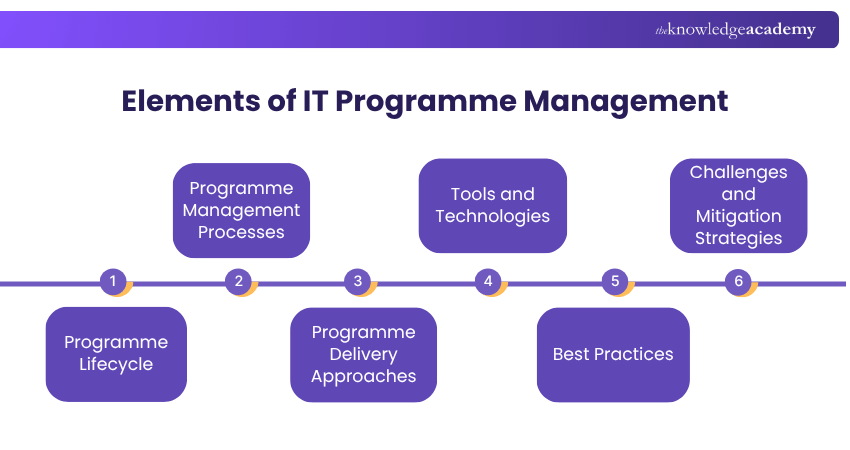
IT programme management operates within a framework that provides structure, processes, and methodologies to effectively manage and deliver complex IT programmes. Understanding this framework is essential for successful programme execution. Here are the key components of the framework.
1) Programme Lifecycle
The programme lifecycle covers the programme from its initial definition through coordinated delivery and eventual closure. It includes establishing strategic objectives and expected benefits, coordinating programme components and dependencies, monitoring benefits and performance, transitioning outcomes into the organisation, and closing the programme in a controlled way.
2) Programme Management Processes
Programme management processes encompass activities and tasks that ensure effective programme delivery. These processes include programme scoping, stakeholder identification and management, risk assessment and mitigation, change management, performance monitoring, and others. Adhering to these processes helps ensure the programme is managed systematically and efficiently.
3) Programme Delivery Approaches
IT programmes may contain projects and workstreams that use different delivery approaches depending on their objectives and requirements. Predictive, agile, and hybrid approaches can all operate within a programme, and Programme Managers need to coordinate dependencies, governance, resources, and benefits across these different ways of working.
Common Mistakes to Avoid
1. Treating a programme as one large project2. Focusing only on individual project performance3. Failing to manage cross-project dependencies4. Using unclear governance structures5. Poor communication between project teams6. Losing sight of expected programme benefits
4) Tools and Technologies
IT programme management uses various programme management tools and technologies to support programme execution and collaboration. These tools include project management software, collaboration platforms, document management systems, and analytics tools. They help Programme Managers track progress, manage resources, facilitate communication, and provide insights for informed decision-making.
5) Best Practices
Effective IT programme management involves setting clear strategic objectives and expected benefits, defining appropriate governance, managing dependencies and resources, engaging stakeholders, and reviewing programme performance regularly. A Programme Management Office (PMO) can also provide governance and support where this suits the organisation's structure and needs. Continual review and improvement help the programme remain aligned with changing priorities and expected outcomes.
6) Challenges and Mitigation Strategies
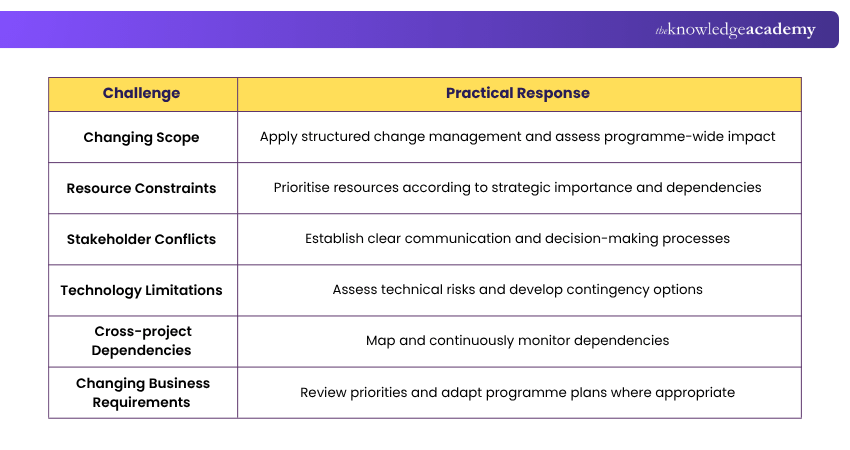
IT Programme management comes with its share of challenges. These challenges include scope creep, resource constraints, stakeholder conflicts, technology limitations, and changing business requirements. Effective Programme Managers anticipate these challenges and develop mitigation strategies to address them. Strategies may involve proactive risk management, effective communication, Agile adaptation, contingency planning, and stakeholder collaboration to navigate obstacles. Here are some challenges to watch out for:
Develop skills to support successful project delivery across complex business environments with PMP® Certification Training – Register today!
Viable Career Paths in IT Programme Management
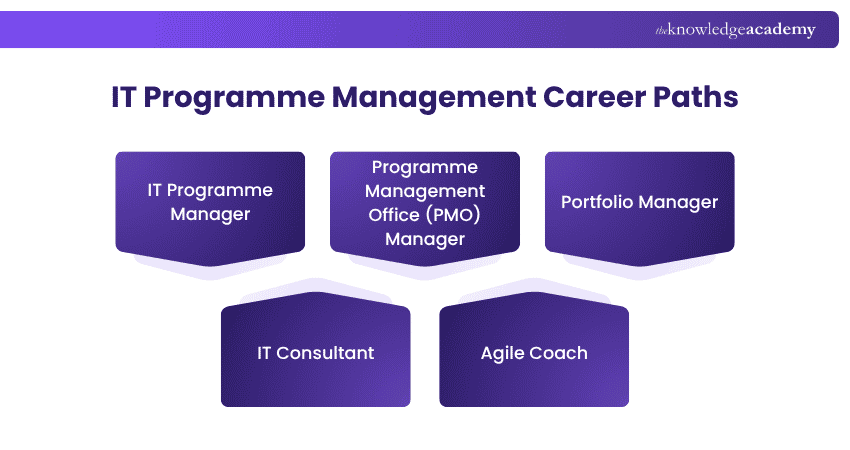
The following are some of the career paths that you can take for a successful career in this domain:
1) IT Programme Manager
As an IT Programme Manager, you would lead and oversee large-scale IT programmes and initiatives. You would collaborate with stakeholders, define programme objectives, develop strategic plans, allocate resources, and ensure successful programme execution. This role requires strong leadership skills, the ability to manage complexities, and a deep understanding of technology and business alignment.
2) Programme Management Office (PMO) Manager
As a PMO Manager, you would establish and manage a programme management office (PMO) that provides governance, coordination, and support. Your responsibilities could include:
a) Developing standardised processes and methodologies
b) Providing guidance and mentoring to Programme Managers
c) Ensuring consistent programme delivery
This role requires good organisational and communication skills and a focus on driving efficiency and continuous improvement.
Take your portfolio management skills to the next level with our Portfolio Management Professional (PfMP®) Certification Training now!
3) Portfolio Manager
As a Portfolio Manager, you would oversee a portfolio of IT programmes and projects within an organisation. Your role would involve:
a) Prioritising projects based on strategic objectives
b) Allocating resources
c) Monitoring programme performance
d) Ensuring alignment with the organisation's goals
This career path requires strong analytical and decision-making skills. It also requires balancing competing priorities and managing a diverse range of projects!
4) IT Consultant
IT Consultants specialising in programme management provide expert advice and guidance to organisations. They help clients optimise their IT investments, define programme strategies, implement best practices, and drive successful programme delivery. This career path offers opportunities to work with various clients and industries, requiring strong consulting and communication skills and in-depth knowledge of programme management approaches.
5) Agile Coach
Agile Coaches help organisations and teams adopt and improve agile ways of working. In an IT programme environment, they may support teams working across programme components, coach stakeholders, facilitate collaboration, and help scale suitable agile practices. This role requires a strong understanding of agile principles, excellent coaching and facilitation skills, and the ability to support cultural and organisational change.
Recommended Degrees and Certifications for IT Programme Management
A career in this domain often requires a combination of education, experience, and industry-recognised credentials. Here is a list of degrees and certificates that are popular and beneficial for professionals pursuing a career in IT programme management.
a) Bachelor's Degree in IT or Computer Science: It provides a solid foundation in technology fundamentals and prepares individuals for entry-level roles.
b) Master's Degree in IT or MBA: It equips professionals with advanced IT strategy, leadership, and business analytics knowledge for senior-level positions.
c) PMP® Certification: It validates project management knowledge and experience across people, processes, business priorities, and different ways of working.
d) PgMP® Certification: It shows proficiency in strategic programme management, governance, and stakeholder engagement.
e) ITIL Foundation (Version 5): It builds understanding of digital product and service management, value creation, the ITIL Value System, guiding principles, lifecycle thinking, and continual improvement.
f) CPPM Certification: It builds essential skills to lead, manage, and deliver complex projects and programmes effectively.
g) PMI-ACP® Certification: It validates the ability to apply agile principles and practices across approaches such as Scrum, Lean, and Kanban and can be useful for professionals working in agile programme environments.
Become a certified Agile Project Manager with the PMI-ACP® Certification Training – Join now!
Career Readiness Checklist
Before pursuing IT programme management roles, consider whether you have developed:
□ IT or technology understanding□ Project and programme delivery experience□ Leadership capabilities□ Governance knowledge□ Risk and dependency management skills□ Stakeholder communication skills□ Strategic and business awareness□ Relevant professional qualifications

Vishnu Sankar is a Senior Content Writer with 5+ years of experience across content development, software development, web development and system administration. His technical background and professional training support his expertise in IT and Tech, while his extensive research and writing experience covers Project Management and Health and Safety.
View Detail

 If you wish to make any changes to your course, please


