




We may not have the course you’re looking for. If you enquire or give us a call on +44 20 4538 6376 and speak to our training experts, we may still be able to help with your training requirements.
Factors Affecting Leadership: Explained
ByThe Knowledge AcademyLast updated on: 10 October 2026
Dive deep into the intricacies of factors affecting leadership. Explore the internal and external factors that shape and influence effective leadership in an organisation. Uncover the delicate interplay between these factors, and you'll gain a comprehensive understanding of what drives and sustains effective leaders.
What’s Coming Up?
1. How organisational conditions can influence leadership approaches2. Key internal factors such as culture, team dynamics, communication and resources3. External influences including economic conditions, technology, competition and cultural context4. How internal and external factors interact to shape leadership decisions5. Why leadership approaches may need to change across different situations
Leadership is influenced by a range of internal and external factors that can shape how leaders make decisions, communicate, and guide their teams. Understanding how leaders adapt to external changes while aligning internal strategies with external goals is essential for driving growth, fostering a positive work culture, and achieving long-term success. Leadership styles can vary depending on factors such as organisational culture, team dynamics, business conditions, and the wider external environment.
However, there are certain factors that affect leadership. In this blog, we will dive into the factors affecting leadership as well as the interplay between these elements that shape leadership styles. So, read on!
Factors Affecting Leadership
Leadership is the ability to guide, influence, and support individuals or groups in working towards shared goals. It involves influencing and motivating others, fostering collaboration and achieving collective success.
Effective leadership empowers people to unlock their full potential while fostering positive transformation within organisations and communities. Let's delve deeper into the various factors that influence leadership and shape its impact.
Internal Factors
Internal factors have a profound impact within organisations. These factors are closely tied to the company's internal workings and culture, shaping how leaders lead their teams. The following are some of the internal factors that affect leadership:
1) Organisational Culture: Organisational culture plays a pivotal role in defining leadership styles. A supportive and empowering culture fosters participatory leadership, encouraging open communication and collaborative decision-making. In contrast, a hierarchical culture may lead to a more autocratic leadership style, centralising decision-making authority with the leader.
2) Team Dynamics: Team dynamics also influence leadership approaches. A cohesive and aligned team might benefit from a democratic leadership style, where collaboration and mutual respect drive decision-making. However, in teams facing conflicts, a more directive leadership style might be necessary to restore harmony and provide clear direction.
3) Company Values: Company values serve as a moral compass, guiding leaders' actions. Effective leaders align their styles with these core values, inspiring trust and ethical decision-making among their team members.
4) Communication Channels: Communication channels can influence how much employees participate in decision-making. Open communication and feedback can support greater involvement, while predominantly top-down communication may limit employee input.
5) Resource Availability and Constraints: The availability of people, time, budgets, technology and other resources can affect leadership priorities and decision-making. Limited resources may require leaders to prioritise activities, manage trade-offs and communicate constraints clearly, while greater resource availability can provide more flexibility in how teams pursue their objectives.
6) Skills and Competencies: A leader’s knowledge, experience, communication ability, problem-solving skills, and decision-making capabilities can influence how effectively they guide a team. Strong leadership competencies can help leaders handle challenges, communicate expectations clearly, resolve conflicts, and adapt their approach to different situations.

External Factors
External factors play a crucial role in shaping the leadership style of individuals leading organisations or teams. These factors are beyond the direct control of the leader and are often influenced by the external environment in which the organisation operates. Let's dive deeper into the key external factors affecting leadership style:
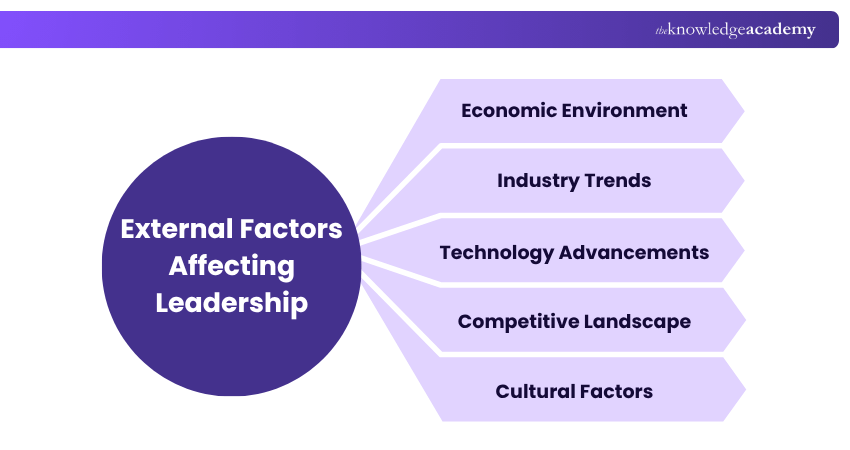
1) Economic Environment: Economic conditions can influence organisational priorities and leadership decisions. Depending on the organisation and its strategy, leaders may adjust investment, growth plans, cost management, or risk controls in response to changing economic conditions.
2) Industry Trends: Every industry experiences ongoing changes and trends that demand adaptability from leaders. Leaders need to stay abreast of the latest developments and innovations within their industry. Adapting to relevant industry trends and technologies can help organisations remain competitive and respond to changing market demands.
3) Technology Advancements: Rapid advancements in technology have transformed the business landscape. Leaders increasingly need sufficient digital awareness and willing to embrace new digital tools and solutions to enhance efficiency and productivity. Leaders with a strong understanding of digital technologies may be better equipped to evaluate new tools, support digital initiatives, and guide organisational change.
4) Competitive Landscape: The level of competition in an industry also influences leadership styles. Competitive conditions can influence leadership priorities, such as innovation, efficiency, customer retention, or market positioning. The specific approach will depend on the organisation’s strategy and market context.
5) Cultural Factors: Leaders operating in diverse cultural environments need to be sensitive to cultural nuances. Cultural context can influence expectations around communication, authority, decision-making, and teamwork. Leaders may need to adapt their approach while also considering organisational values, individual differences, and local workplace practices.
Leadership Check
Ask yourself:
1. How does your team respond to your leadership approach?2. Does your communication style encourage useful feedback?3. Are external changes affecting your current priorities?4. Do your leadership decisions align with organisational values?
Become a more effective and influential leader with Leadership Skills Training – Sign up soon!
The Interplay of External and Internal Factors
The relationship between external and internal factors significantly influences leadership styles and organisational outcomes. Here's how they are interplayed:
1) Adaptation to External Changes: Leaders may need to adapt their strategies in response to external changes, such as economic conditions, industry trends, and technological advancements.
2) Alignment of Internal Strategies: Leaders may need to adjust organisational priorities, resources and processes in response to changes in customer needs, regulations, technology, competition or economic conditions.
3) Impact of Organisational Culture: The internal culture of an organisation influences how it engages with external stakeholders and shapes its reputation.
4) Validation of Internal Strategies: The effectiveness of internal strategies can be assessed using external indicators such as customer feedback, market performance, and stakeholder responses.
5) Navigating External Constraints and Opportunities: Leaders navigate external constraints, such as government regulations, and leverage opportunities for innovation and growth.
6) Perception and Reputation: External perceptions of an organisation's internal culture impact its reputation and brand loyalty.
7) Resilience and Growth: Understanding the dynamic interplay empowers leaders to make informed decisions for sustainable growth and resilience amidst evolving business landscapes.
Myth vs Reality
Myth: One leadership style works in every situation.Reality: Leadership approaches often need to adapt to the team, task, organisation, and wider environment.
Enhance your leadership skills with the Leadership and Management Skills Course - Sign up now!

The Knowledge Academy develops accessible learning content across Project Management, IT, Cybersecurity, Data Science, Business Analysis, HR, Accounting and Finance, Leadership and Health and Safety. Its resources combine subject research with clear explanations to help professionals build practical knowledge across a wide range of disciplines.
View Detail

 If you wish to make any changes to your course, please


