


 Top Rated Course

We may not have the course you’re looking for. If you enquire or give us a call on +44 1344 203 999 and speak to our training experts, we may still be able to help with your training requirements.
Digital Transformation Jobs: A Detailed Guide
The Knowledge Academy 27 August 2026Discover Digital Transformation Jobs that help organisations improve processes and achieve their transformation goals.

Training Outcomes Within Your Budget!
We ensure quality, budget-alignment, and timely delivery by our expert instructors.
Table of Contents
Key Takeaways
1. Digital Transformation Jobs combine technology, strategy, data, processes, and organisational change.2. Career opportunities range from analytical and specialist positions to consulting, management and senior leadership roles.3. Employers value a mix of technical expertise, strategic thinking, communication, and problem-solving skills.4. Technologies such as AI, Cloud Computing, automation, and data analytics are shaping many Digital Transformation roles.5. Continuous learning is important as digital tools, technologies, and business requirements continue to evolve.
Imagine an organisation beginning a major Digital Transformation. Its plans might include:
Replacing manual spreadsheets with automated workflows
Moving business systems to the Cloud
Using data dashboards for faster decision-making
Introducing AI or automation into everyday processes
Helping employees adopt new digital tools
Technology enables these changes, but people are needed to make them work. Organisations need professionals who can plan initiatives, manage implementation, improve processes and help employees adapt.
That is where Digital Transformation Jobs come in. These professionals connect technology with business needs and turn digital initiatives into practical improvements. So, what career opportunities does Digital Transformation offer? Let’s explore the key job roles in this blog!
What is Digital Transformation?
Digital Transformation is the process of integrating digital technologies into different areas of an organisation to improve how it operates, delivers value, and responds to changing customer and market needs. It can involve technologies such as Cloud Computing, Artificial Intelligence (AI), automation, data analytics, and digital platforms.
However, Digital Transformation involves more than simply adopting new technology. It often requires organisations to redesign processes, develop employee capabilities, use data effectively, and adapt their culture and ways of working. Its goal is to create a more efficient, Agile, innovative, and customer-focused organisation.

Career Scope in Digital Transformation
Digital Transformation offers career opportunities across industries as organisations modernise systems, automate processes and use evolving technologies. Its career scope includes:
1) Multiple Entry Routes: Professionals can enter from IT, Business Analysis, Project Management, operations, consulting and Change Management backgrounds.
2) Technology and Data Careers: Professionals can specialise in digital technologies, data analysis, automation and technology implementation.
3) Project and Programme Leadership: Career progression can lead towards managing digital projects, programmes and wider transformation initiatives.
4) Change and Adoption Roles: Professionals can specialise in helping organisations and employees adopt new technologies, processes and ways of working.
5) Strategic Leadership Opportunities: Experienced professionals may move into senior roles responsible for shaping Digital Transformation strategies and overseeing organisation-wide initiatives.
6) Cross-industry Opportunities: Digital Transformation skills can be applied across industries where organisations are modernising operations, processes and customer experiences.
Top Digital Transformation Jobs
Digital Transformation involves people who identify opportunities, introduce technologies, improve processes and help organisations manage change. Here are some of the key careers to consider in Digital Transformation:
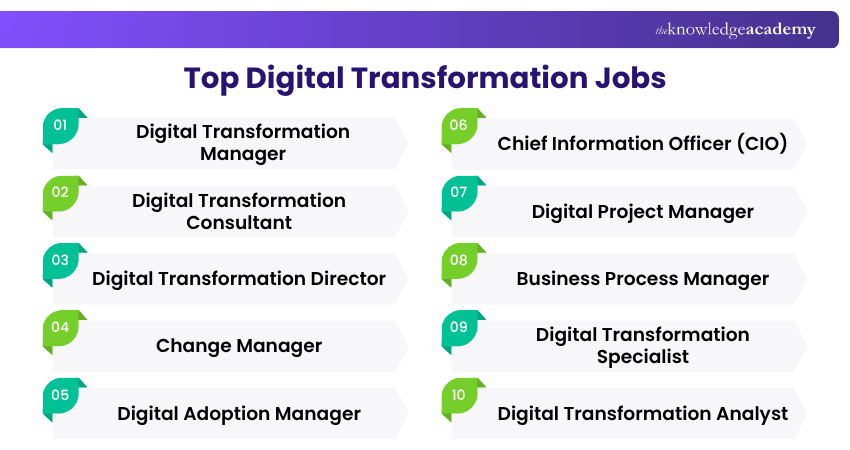
1) Digital Transformation Manager
A Digital Transformation Manager plans and coordinates initiatives that use technology and process improvements to support organisational objectives. They often work across departments to ensure transformation programmes remain aligned with wider business priorities.
Key Responsibilities Include:
a) Develop and implement transformation initiatives
b) Coordinate teams and stakeholders
c) Identify opportunities for digital improvement
d) Monitor transformation projects and outcomes
e) Manage transformation risks, resources and delivery
2) Digital Transformation Consultant
Digital Transformation Consultants help organisations evaluate their existing operations and identify opportunities for technology-enabled improvement. They may advise clients on strategy, operating models, processes, technologies and transformation programmes.
Key Responsibilities Include:
a) Assess current processes and digital capabilities
b) Identify transformation opportunities
c) Recommend suitable strategies and solutions
d) Support implementation programmes
e) Measure transformation outcomes and recommend improvements
3) Digital Transformation Director
A Digital Transformation Director typically operates at a senior level and oversees broader transformation strategies and programmes. The role connects business objectives with technology, processes and organisational change.
Key Responsibilities Include:
a) Define transformation priorities
b) Lead major transformation programmes
c) Coordinate senior stakeholders
d) Oversee investment and resources
e) Track strategic outcomes and organisational impact
Worth Knowing!
A good example of Digital Transformation is Netflix. It evolved from a DVD rental business into a global streaming service, transforming how it delivers entertainment and operates at scale.
4) Change Manager
Change Managers focus on the people side of transformation. They help employees and stakeholders understand, adopt and sustain changes introduced through new technologies, processes or organisational structures.
Key Responsibilities Include:
a) Assess the impact of organisational change
b) Develop Change Management plans
c) Communicate the purpose and benefits of change
d) Support training and adoption
e) Monitor resistance and readiness
Support teams through transitions and drive successful business transformation with Change Management Certification Training – Sign up soon!
5) Digital Adoption Manager
Digital Adoption Managers help employees adopt new digital tools, platforms and processes. Their work can improve technology utilisation and help organisations realise greater value from digital investments.
Key Responsibilities Include:
a) Plan digital adoption initiatives
b) Identify barriers to technology adoption
c) Coordinate digital tool training and user support
d) Monitor adoption and engagement
e) Work with stakeholders to improve user experiences
Trainer’s Insight
Digital Transformation is multidisciplinary. You do not necessarily need a purely technical background; experience in operations, Project Management, consulting, business analysis or change management can provide a strong foundation.
6) Chief Information Officer (CIO)
A Chief Information Officer is a senior executive responsible for an organisation's technology strategy and IT capabilities. Depending on the organisation, the CIO may also play a major role in enterprise-wide Digital Transformation.
Key Responsibilities Include:
a) Develop technology strategy
b) Oversee IT operations and investments
c) Manage technology-related risks
d) Evaluate emerging technologies and their business value
e) Align technology capabilities with business priorities
Learn how to leverage technology to create employee-centric workplaces with Digital Transformation in HR Training. Sign up now!
7) Digital Project Manager
A Digital Project Manager coordinates projects involving digital products, platforms, systems or process changes. They help ensure projects meet agreed objectives while managing schedules, budgets, resources and stakeholders.
Key Responsibilities Include:
a) Define project objectives and coordinate requirements
b) Develop project plans and schedules
c) Coordinate project teams
d) Manage risks and dependencies
e) Monitor and report project progress
8) Business Process Manager
Business Process Managers analyse and improve how work moves through an organisation. During Digital Transformation, they can help redesign workflows before or alongside automation and technology implementation.
Key Responsibilities Include:
a) Map existing business processes
b) Identify inefficiencies and bottlenecks
c) Design improved workflows
d) Establish process measures
e) Support continuous improvement
9) Digital Transformation Specialist
A Digital Transformation Specialist supports initiatives designed to improve business operations through digital technologies and new working practices. Responsibilities vary by organisation and transformation programme.
Key Responsibilities Include:
a) Assess business needs and digital capabilities
b) Research technologies and solutions
c) Support implementation projects
d) Coordinate with business and technology teams
e) Monitor transformation outcomes
10) Digital Transformation Analyst
Digital Transformation Analysts use data and Business Analysis techniques to understand existing operations and identify opportunities for digital improvement.
Key Responsibilities Include:
a) Gather business requirements
b) Analyse processes and performance data
c) Identify improvement opportunities
d) Analyse and compare potential digital solutions
e) Track transformation metrics and outcomes
Pro Tip
Don’t rely on the job title alone. Compare the responsibilities, required skills and scope, as similar Digital Transformation roles can have very different titles across organisations.
How to Start a Career in Digital Transformation?
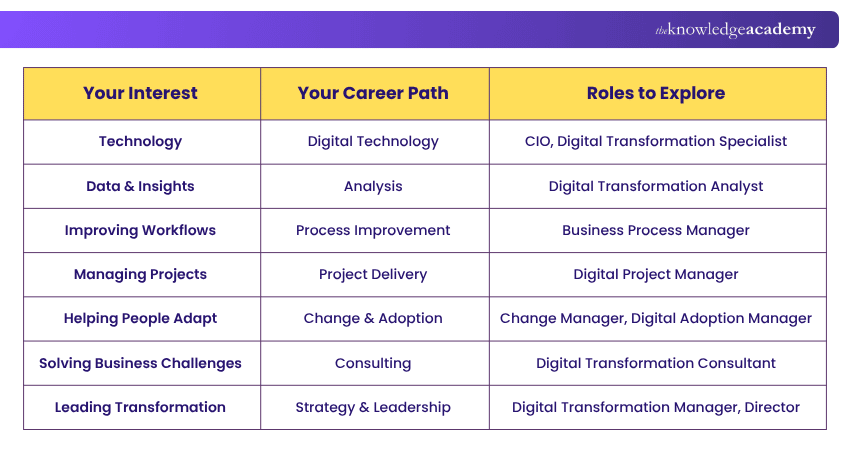
There is no single route into Digital Transformation. Professionals can enter from technology, operations, Project Management, Business Analysis, consulting, data or Change Management backgrounds. A practical career path can involve the following steps:
1) Build Business and Digital Foundations: Learn how organisations use technology, data and processes to achieve business objectives.
2) Identify Your Preferred Career Direction: Decide whether you are most interested in technology, data, projects, processes, people or strategy.
3) Develop Relevant Skills: Build capabilities such as Business Analysis, Project Management, Change Management, data analysis and digital strategy according to your chosen path.
4) Gain Practical Experience: Participate in technology implementations, process improvements, automation initiatives or organisational change projects where possible.
5) Build Cross-functional Experience: Digital Transformation rarely happens within one department. Working with different teams can help you understand how technology changes affect the wider organisation.
6) Progress Towards a Specialism: As you gain experience, you may specialise in consulting, digital adoption, transformation management, process improvement or strategic leadership.
Conclusion
Digital Transformation Jobs offer career paths across technology, data, processes, projects, organisational change and strategy. It’s a combination of digital, business, and interpersonal skills, including practical transformation experience. You can develop a successful career by supporting organisations through digital and workplace transformation.
Make sure your business evolves the right way with Digital Transformation Training – Register today!
Frequently Asked Questions
How is AI Used in Digital Transformation?

AI can accelerate Digital Transformation by automating tasks, supporting predictive analytics, improving personalisation and enabling faster data-driven decisions. When aligned with business needs, it can improve efficiency, innovation and customer experiences.
Which Companies Work in Digital Transformation?
Organisations seeking Digital Transformation support can work with different types of service providers, including:
a) Global technology and consulting firms like Accenture
b) Strategic management consultancies like Deloitte Digital and McKinsey & Company
c) Agile technical software partners like Endava and Itransition
What are the Latest Trends in Digital Transformation?
Digital Transformation is focusing more on autonomous AI agents, hyperautomation and sustainable cloud practices rather than experimental hype. Organisations now prioritise secure multi-cloud architectures and human-centric adoption models.
What are the Benefits of Digital Transformation?
Digital Transformation helps organisations improve efficiency, make smarter choices with data and serve customers better through new technology. Companies that embrace digital tools can achieve faster growth and improved profitability.

The Knowledge Academy


Global Training Provider
The Knowledge Academy is a world-leading provider of professional training courses, offering globally recognised qualifications across a wide range of subjects. With expert trainers, up-to-date course material, and flexible learning options, we aim to empower professionals and organisations to achieve their goals through continuous learning.


 If you wish to make any changes to your course, please


