


 Top Rated Course

We may not have the course you’re looking for. If you enquire or give us a call on +44 1344 203 999 and speak to our training experts, we may still be able to help with your training requirements.
CC vs BCC: Which One Should You Use in Different Scenarios?
The Knowledge Academy 16 July 2026CC (Carbon Copy) and BCC (Blind Carbon Copy) send email copies to others. CC makes recipients visible to all, while BCC hides them for privacy and fewer replies. CC is useful for keeping team members informed in open communication. BCC is often used when sending emails to large groups to protect recipient details.

Training Outcomes Within Your Budget!
We ensure quality, budget-alignment, and timely delivery by our expert instructors.
Table of Contents
Have you ever wondered about the differences between Carbon Copy (CC) and Blind Carbon Copy (BCC) in your emails? Choosing between these two options might seem trivial, but getting it right can greatly impact your communication. The debate of CC vs BCC is more than just a technical detail - it’s about how you manage transparency and privacy in your emails.
In this blog, we’ll explore the key difference between BCC and CC, providing insights into when to use each feature. Mastering CC vs BCC improves email etiquette, ensures privacy, and keeps your communications clear and effective. Ready to dive into the world of Email Management? Let’s explore the best practices for using CC and BCC!
Table of Contents
1) What is Carbon Copy?
2) What is Blind Carbon Copy?
3) Differences Between CC and BCC
4) When and When Not to Use CC
5) When and When Not to Use BCC
6) CC and BCC Best Practices for Email Marketing
Conclusion
What is Carbon Copy?
CC stands for Carbon Copy. It is used to send a copy of an email to additional recipients, allowing everyone in the CC field to see who else has received the email. CC is particularly useful when you need to keep multiple parties informed without addressing them directly.
For instance, in group communications, CC helps keep both management and employees in the loop without involving them in the conversation. It’s also effective when you expect responses from those included in the CC field, ensuring that everyone is aware of the ongoing discussion.
Example of Carbon Copy
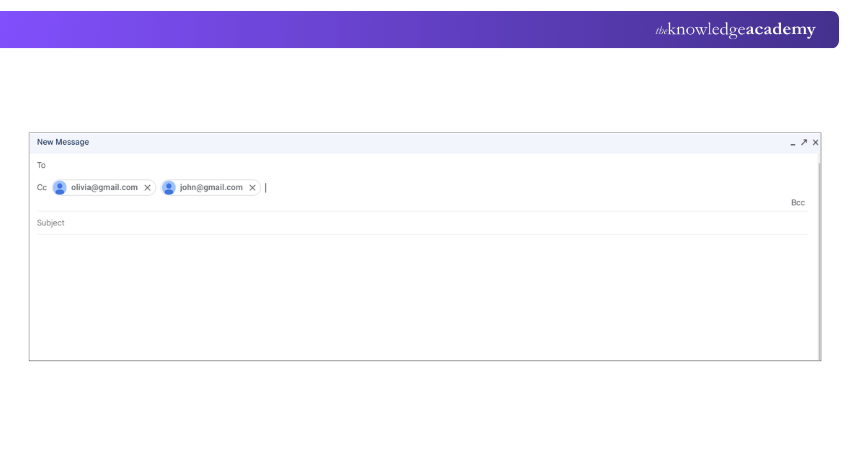
In this example, Olivia and John are kept in CC, meaning both can see each other's email addresses and are aware that they received the same message from the sender.
What is Blind Carbon Copy?
BCC stands for Blind Carbon Copy. It allows you to send an email to multiple recipients without revealing the list of recipients to each other. This characteristic is particularly useful when sending emails to a large group, as it ensures the privacy of each recipient by concealing their email addresses.
BCC is often used in large organisations to distribute newsletters or other mass communications. Additionally, BCC is ideal for sending impersonal or bulk emails where privacy and discretion are important.
Example of Blind Carbon Copy
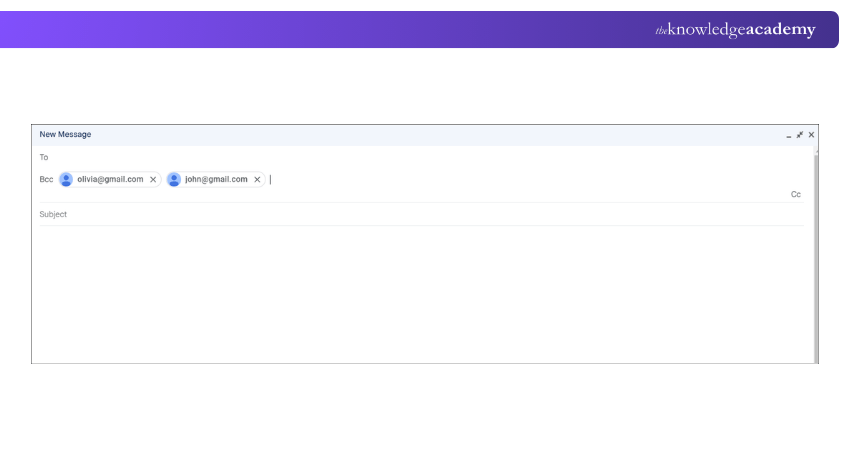
In this example, Olivia and John are placed in BCC, so neither can see the other's email address, and they won’t know if the other person received the same message.
Differences Between CC and BCC
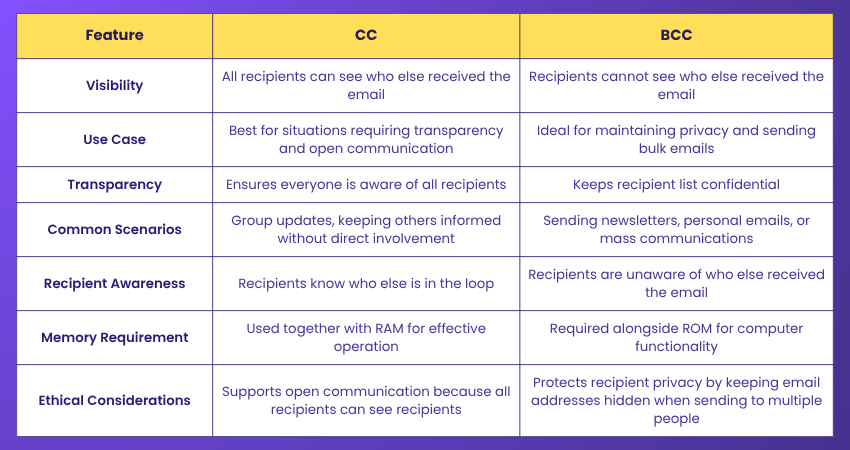
To better understand the difference between CC and BCC, the following table highlights their distinct features and appropriate usage scenarios.
Unlock the secrets to compelling web and email copy with our Web And Email Copywriting Course - transform your writing skills today!
When and When Not to Use BCC
The BCC field can be helpful when one needs to send emails to a group of people without revealing their names and addresses. It is used to control communications and guard recipient details.
When to Use BCC:
a) Protect Recipient Privacy: BCC is useful when you are sending emails to a general audience that might not be particularly familiar with one another. It does not allow recipients to see email addresses.
b) Prevent Reply-All Messages: Using BCC reduces the risk of recipients replying to the entire group, which helps keep inboxes free from unnecessary responses.
When Not to Use BCC:
a) In the case of Transparency: Do not use BCC where it is known that other people should be considered part of the conversation. Unknown recipients can be confusing and mistrustful.
b) In the case of Direct or Personal Communication: In more casual communications or personal emails, one should maintain an open and visible communication instead of concealing the recipients with the BCC.
Enhance your email marketing knowledge and drive results with our expert-led Email Marketing Course designed for impactful communication!
When and When Not to Use CC
The proper use of the CC field will retain clear and professional email messages. It does not need any direct response of others because they can be informed.
When to Use CC:
a) Maintain Transparency: Use CC where recipients are expected to be aware of other recipients of the email. This will facilitate the clarity and prevent multiplication of efforts in team discussions.
b) Keep Team Members Informed: The updates of colleagues on the decisions, updates of a project or the ongoing discussions that their knowledge is useful, but their input is not needed can be kept with the help of CC.
When Not to Use CC:
a) Eliminate Unnecessary Recipients: Do not include those who are not directly involved in the conversation. When there is a large number of recipients, it will saturate inboxes and lower the degree of relevance of the message.
b) Sensitive or Secretive Subjects: Never use CC in a message with confidential information and all people who have this information will know who the other people are.
CC and BCC Best Practices for Email Marketing
Using CC and BCC correctly helps organisations maintain professionalism and protect recipient privacy in email communication. The following practices can help improve email marketing effectiveness:
Use CC only when necessary: The CC field should include people who need to stay informed but are not expected to respond to the email.
Secure reciprocity: In cases where sending emails to a group of people who are not aware of one another, it is best to use BCC in order to conceal the email address of the recipients and ensure confidentiality.
Keep it short in CC: When there are many recipients added to the CC field, it may cause confusion and the unnecessary reply-all messages in email chains.
BCC: To avoid clogging your inbox with reply-alls: BCC will not only cut down on messages that are irrelevant to you since they are sent to a large audience; it will also help maintain a well-organised mailbox.
Bulk email marketing: Use the email marketing tools to use bulk email marketing, rather than using the BCC method of sending mass email, the email marketing tools will assist in managing the mailing lists and also monitor the performance of the campaign.
Elevate your productivity with our Gmail Course For Productive Email Management Training – Sign up today!
Conclusion
Mastering CC vs BCC transforms your email communication. By knowing when to use CC for open visibility and BCC for discreet privacy, you refine your email skills. Elevate your email game, protect privacy, and keep your messages both clear and impactful with these savvy techniques.
Master the art of email etiquette with our comprehensive E-mail Etiquette Training - boost professionalism and communication skills today!
Frequently Asked Questions
What is the Purpose of a BCC?

The purpose of BCC is to send an email to multiple recipients. It keeps their addresses hidden from each other, ensuring privacy and reducing visible email clutter.
What is the Maximum Limit to CC?
The purpose of BCC is to send an email to multiple recipients. It keeps their addresses hidden from each other, ensuring privacy and reducing visible email clutter.

The Knowledge Academy


Global Training Provider
The Knowledge Academy is a world-leading provider of professional training courses, offering globally recognised qualifications across a wide range of subjects. With expert trainers, up-to-date course material, and flexible learning options, we aim to empower professionals and organisations to achieve their goals through continuous learning.


 If you wish to make any changes to your course, please


