




We may not have the course you’re looking for. If you enquire or give us a call on 01344203999 and speak to our training experts, we may still be able to help with your training requirements.
Advantages of Assertiveness: A Complete Guide
ByShristi RoyLast updated on: 19 September 2026
Discover the compelling world of assertiveness. Learn about the myriad benefits of assertive communication. Whether you're looking to refine your interpersonal skills or simply curious about assertiveness, this blog provides a comprehensive insight into the advantages it offers.
In a world where effective communication plays a pivotal role, understanding the advantages of assertiveness remains crucial. Assertiveness can support strong interpersonal connections and personal growth by encouraging clear and respectful communication.
From professional settings to intimate relationships, the advantages of assertiveness go beyond the realm of mere expression. They encapsulate the power to convey thoughts, needs, and emotions while maintaining a respectful equilibrium.
Developing assertiveness can also help you become more conscious of your communication patterns and recognise your preferred approaches in different situations. Let's learn more about it!
What are the Advantages of Assertiveness?
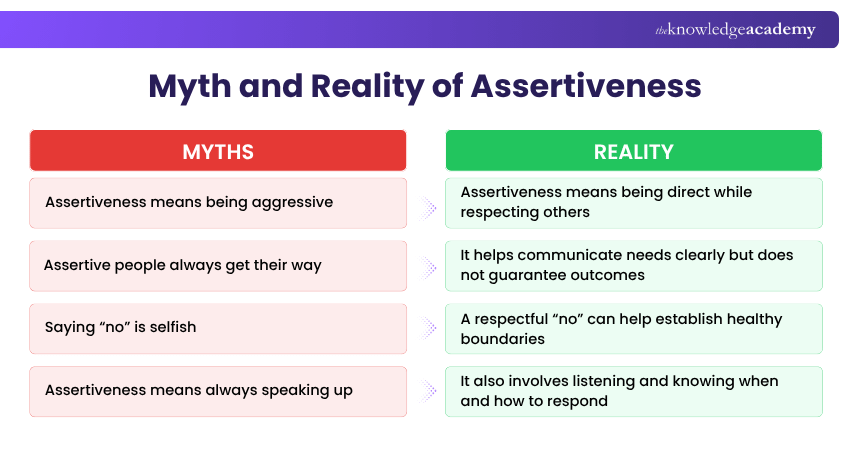
Assertiveness is a skill to express oneself confidently, assert personal rights, and communicate in a direct and respectful manner. Assertiveness strikes a balance between aggression and passivity, promoting open dialogue while considering the rights and feelings of others.
Additionally, assertive communication allows individuals to express their thoughts, feelings, and needs clearly, leading to improved understanding and stronger relationships. Practising assertiveness can also help individuals develop confidence in advocating for their rights and expressing their opinions.
Moreover, they also feel empowered to assert themselves in various situations, such as in the workplace, personal relationships, and social interactions. Assertiveness can offer several benefits across these situations. Here are some of the key advantages of assertiveness:
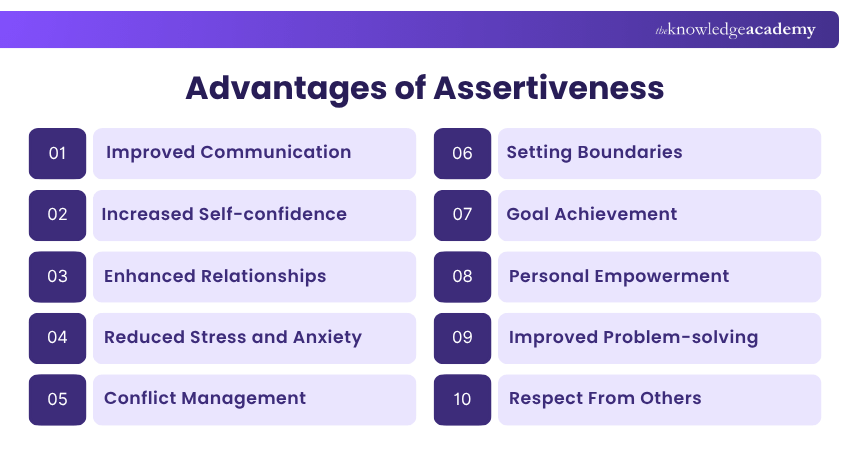
1) Improved Communication
One of the key advantages of assertiveness is improved communication. Assertive communication can help individuals convey their thoughts and feelings clearly, directly, and confidently.
When they actively listen to others, assertive individuals foster understanding and promote meaningful dialogue. By being assertive in their communication, individuals create an atmosphere of mutual respect and healthy dialogue. This fosters better connections and deeper relationships with others, both personally and professionally.

2) Increased Self-confidence
Increased self-confidence is a significant benefit of assertiveness. When individuals embrace this approach or these skills, they develop a strong belief in their abilities and self-worth. Assertive behaviour allows them to express themselves confidently, stand up for their rights, and voice their opinions without fear of judgment.
Furthermore, as assertive individuals navigate various situations, their self-assurance grows, leading to a positive impact on personal and professional endeavours. Greater self-confidence may also help individuals approach new challenges, pursue their goals, and communicate more effectively in relationships.
Trainer’s Insight
Assertiveness is not about being louder or getting your own way. It is about communicating your position clearly while recognising that other people have needs, opinions, and boundaries too.
3) Enhanced Relationships
By embracing assertive communication, individuals foster trust, mutual respect, and understanding in their interactions with others. When they express themselves honestly and openly, assertive individuals create a foundation for deeper emotional connections. As a result, they encourage stronger bonds with family, friends, colleagues, and partners.
Moreover, assertive individuals are not afraid to address issues or concerns, demonstrating confidence in their communication. Therefore, they foster a more authentic and meaningful exchange of ideas. More importantly, enhanced relationships, supported by assertiveness, contribute to healthier dynamics, effective conflict resolution, and a greater sense of emotional support.
4) Reduced Stress and Anxiety
Assertiveness may help reduce stress in situations where people struggle to express their needs, concerns, or boundaries. When individuals communicate concerns promptly and directly, they may be less likely to internalise frustration or allow misunderstandings to build
Furthermore, assertive individuals are confident in setting boundaries and saying "no" when needed. This helps prevent overwhelming commitments and anxiety-inducing situations. Assertive communication can therefore contribute to a greater sense of control in some situations, although its effects on stress and anxiety can vary between individuals and circumstances.
5) Conflict Management
Conflict management is one of the crucial advantages of being assertive. When individuals are assertive, they can address conflicts directly and constructively. By expressing their concerns and needs while respecting the perspectives of others, assertive individuals facilitate open and honest dialogue.
Furthermore, they actively listen, seek mutual understanding, and work towards finding mutually beneficial solutions. This proactive approach to conflict resolution fosters healthier relationships and minimises misunderstandings and hostility.
Learn the ropes of business communication attitudes and emotional skills by signing up for the Nonverbal Communication Training now!
6) Setting Boundaries
Setting boundaries is a fundamental aspect of assertiveness. Assertive individuals communicate their limits, needs, and expectations clearly and confidently. They can say “no” when necessary and communicate their personal rights, limits, and well-being needs clearly.
Additionally, setting boundaries can help individuals cultivate healthier relationships and reduce the risk of undue pressure or stress. This practice empowers them to prioritise self-care and make choices aligned with their values.
Bonus Tip
Use “I” statements when expressing a need or boundary. Instead of saying, “You never listen to me,” try, “I’d like to finish explaining my point before we move on.” This keeps the focus on your needs without unnecessarily blaming the other person.
7) Goal Achievement
Goal achievement can be supported by assertiveness. Assertive individuals can communicate their needs, present their ideas, and negotiate effectively, which may help them pursue personal and professional objectives. By expressing themselves confidently and pursuing their aspirations, they exhibit a proactive approach to personal and professional growth.
Another advantage of assertiveness is that it can help individuals address challenges, communicate priorities, and remain focused on their objectives. These behaviours can support progress towards career, personal, or self-improvement goals, although successful outcomes also depend on factors beyond assertiveness.
8) Personal Empowerment
Personal empowerment can be supported by developing assertiveness. As individuals become more comfortable expressing their needs, setting boundaries, and communicating their values, they may develop a stronger sense of agency in their decisions and interactions. This newfound self-assurance leads to a greater belief in their capabilities and potential for growth.
Moreover, developing assertiveness can help individuals make decisions that reflect their values, approach challenges with greater confidence, and communicate their choices more clearly. Over time, these behaviours may strengthen their sense of agency and confidence in personal and professional situations.
9) Improved Problem-solving
Improved problem-solving is a notable advantage of assertiveness. Assertive communication can help individuals address challenges confidently and constructively. By expressing their concerns and actively engaging in finding solutions, they foster a positive environment for collaborative problem-solving.
Furthermore, assertiveness encourages individuals to approach issues with a constructive mindset, seeking resolutions that benefit all parties involved. This approach can support collaborative problem-solving by encouraging individuals to discuss potential solutions openly and consider different perspectives.
10) Respect From Others
When individuals assert themselves respectfully, they communicate their views, needs, and boundaries with confidence while recognising the rights of others. This approach can encourage mutual respect and clearer interactions with colleagues, friends, and acquaintances.
Furthermore, expressing themselves confidently and standing up for their rights can help others understand their position and boundaries. While assertiveness cannot guarantee respect from others, it can contribute to clearer, more respectful, and more constructive interactions in social and professional settings.
Keep This in Mind
1. Assertiveness is about clear and respectful communication, not getting your own way.2. Respect other people’s needs, opinions, rights, and boundaries while expressing your own.3. Saying “no” respectfully is an important part of maintaining healthy boundaries.4. Adapt your communication approach to the situation and people involved.5. Assertiveness is a skill that develops with consistent practice.
Strengthen your communication skills for better personal and professional interactions with the Communication Skills Courses – Register now!

Shristi Roy is a Content Writer with experience in journalism, article writing and web content development. Her experience researching and writing about Business Skills and Accounting and Finance enables her to communicate specialised information through clear, engaging narratives.
View Detail

 If you wish to make any changes to your course, please


