

Music Courses

Not sure which course to choose?

Speak to a training expert for advice if you are unsure of what course is right for you. Give us a call on +44 20 4538 6376 or Enquire.

Skills Gained from Music Courses

The Music Courses offer learners a foundation in music theory, performance, composition, and basic sound production. By working with musical instruments, audio concepts, and creative methods, professionals strengthen their understanding of music structure and develop confidence in creative expression across various musical styles.

These courses help build skills in:

  • Music Theory Fundamentals: Develop an understanding of melody, harmony, rhythm, scales, and basic song structure for structured musical learning.
  • Instrument Performance Skills: Build practical playing techniques across instruments such as keyboard, drums, violin, harmonica, and ukulele.
  • Rhythm and Timing Control: Strengthen timing, coordination, tempo control, and rhythmic accuracy for improved musical performance.
  • Creative Music Composition: Learn how to structure musical pieces, create original tunes and melodies, and arrange basic compositions.
  • Audio Mixing Capabilities: Acquire introductory knowledge of sound balance, track layering, and mixing techniques to improve audio quality.
  • Live Performance Techniques: Establish confidence in performing live music, including basic stage presence and performance coordination.
  • DJ Performance Basics: Learn beat matching, creative track transitions, and dynamic set flow for live DJ performances.
     

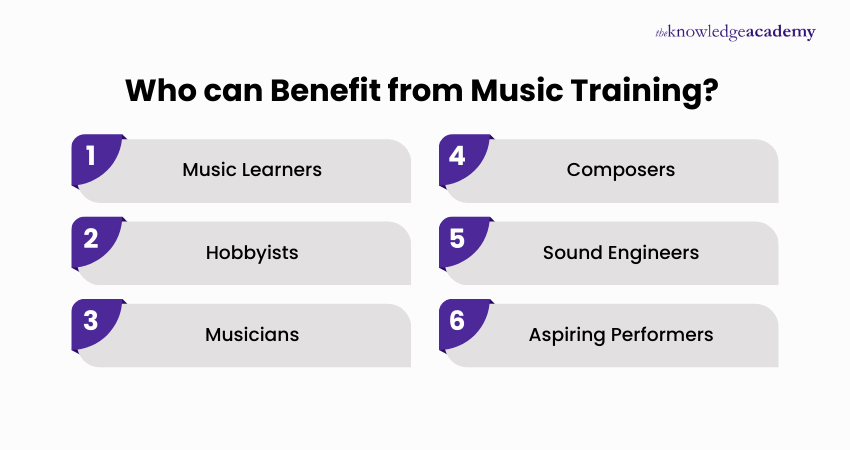
Who can Benefit from Music Training?

Music Training is suitable for learners at different stages of their musical journey, whether they are complete beginners, aspiring performers, or experienced professionals looking to refine their skills. These courses are designed to support creative growth, technical improvement, and performance confidence across various musical interests.

Who can Benefit from Music Training

Learners who can benefit include:

  • Music Learners: Develop core musical skills by learning rhythm, notes, fundamental theory, and simple instrument techniques.
  • Hobbyists: Expand musical skills, explore creative expressions, learn new instruments, and improve performance confidence.
  • Musicians: Refine playing techniques, improve timing and accuracy, expand musical repertoire, and strengthen performance consistency across instruments.
  • Composers: Create original melodies, develop harmonies, structure songs, arrange compositions, and strengthen overall music-writing capabilities.
  • Sound Engineers: Manage sound balance, control audio flow, apply mixing techniques, and support recording and live sound environments.
  • Aspiring Performers: Enhance live performance skills, build stage confidence, and improve coordination and performance techniques for public or professional stages.
Show more blue-arrow

Music Courses FAQs

For beginners, the best music courses are those that offer a basic understanding of music theory, an introduction to reading music, and foundational lessons in a chosen instrument or voice training. Look for courses labeled as "Introduction to Music" or "Beginner [Instrument/Voice] Lessons."

Music courses provide structured training, technical exercises, and professional feedback, all of which are crucial for honing singing or instrument skills. They often cover essential techniques, posture, breath control (for singers), finger placement (for instrumentalists), and musical expression.

Completing a music course can lead to various career paths including professional musician, music teacher, music therapist, audio engineer, music producer, composer, music director, or a role in music marketing and management.

Online music courses offer flexibility and convenience, often with a wide range of resources like video tutorials and digital tools. In-person learning, however, provides direct interaction, immediate feedback, and hands-on experience. Both formats have unique benefits, and the choice depends on individual learning preferences and lifestyle.

Music theory is essential as it provides the foundation for understanding how music works. It covers the basics of rhythm, harmony, melody, structure, and notation. This knowledge is crucial for reading music, composing, and understanding the language and mathematics of music, which is vital for any musician.

Please see our Music Courses available in Bahrain

The Knowledge Academy is one of the Leading global training provider for Music Courses.

The training fees for Music Courses in Bahrain starts from $1595

Show more down

Why we're the go to training provider for you

icon

Best price in the industry

You won't find better value in the marketplace. If you do find a lower price, we will beat it.

icon

Trusted & Approved

Recognised by leading certification bodies, we deliver training you can trust.

icon

Many delivery methods

Flexible delivery methods are available depending on your learning style.

icon

High quality resources

Resources are included for a comprehensive learning experience.

barclays Logo
deloitte Logo
Thames Water Logo

"Really good course and well organised. Trainer was great with a sense of humour - his experience allowed a free flowing course, structured to help you gain as much information & relevant experience whilst helping prepare you for the exam"

Joshua Davies, Thames Water

santander logo
bmw Logo
Google Logo

Looking for more information on Music Courses

cross

Exclusive Deals Big Savings This March!

Grab up to 40% OFF and level up your skills this spring! march-madness

WHO WILL BE FUNDING THE COURSE?

close

close

Thank you for your enquiry!

One of our training experts will be in touch shortly to go over your training requirements.

close

close

Press esc to close

close close

Back to course information

Thank you for your enquiry!

One of our training experts will be in touch shortly to go overy your training requirements.

close close

Thank you for your enquiry!

One of our training experts will be in touch shortly to go over your training requirements.